Artwork
Porträt des Emperor Joseph II (1741-1790)
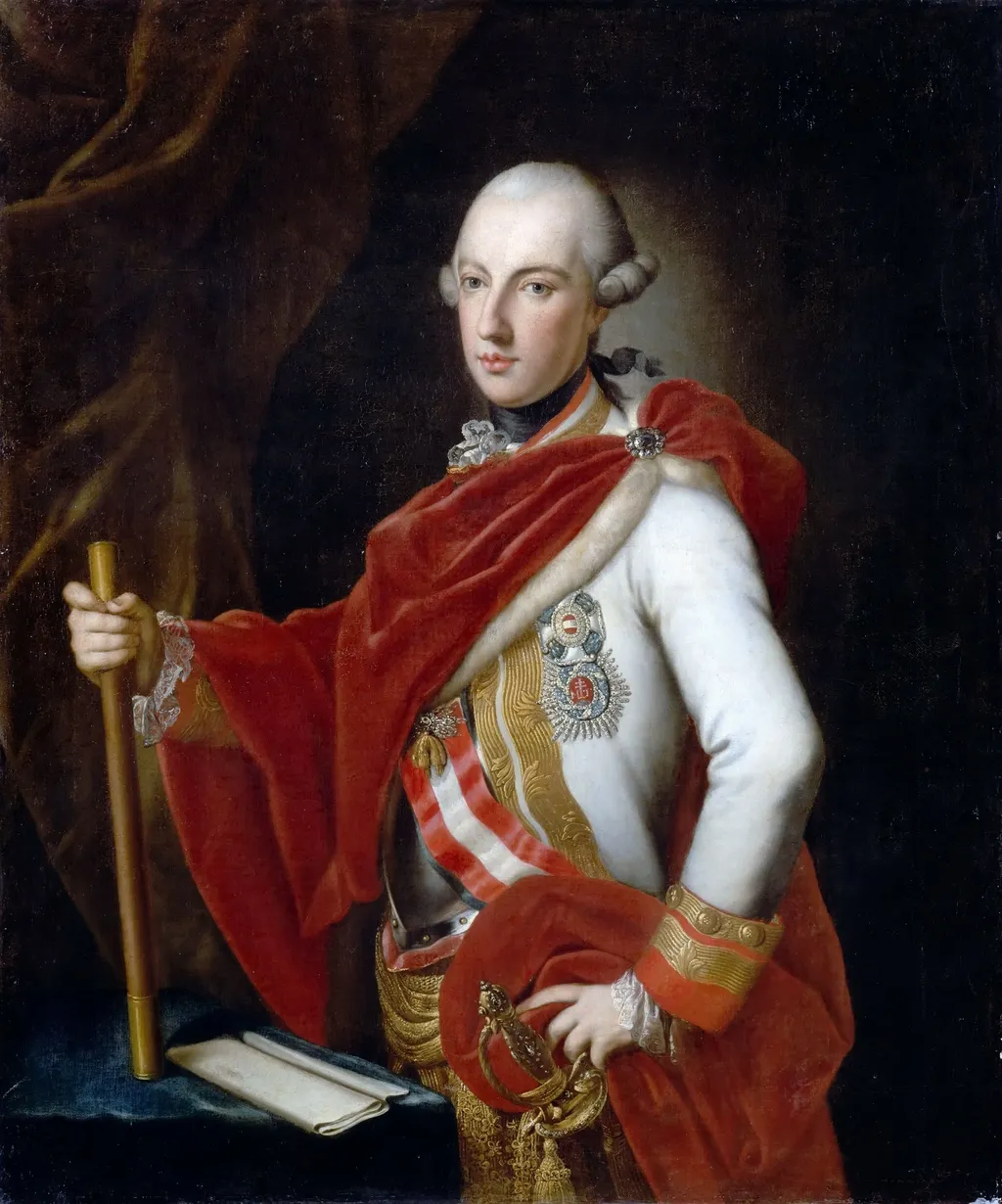
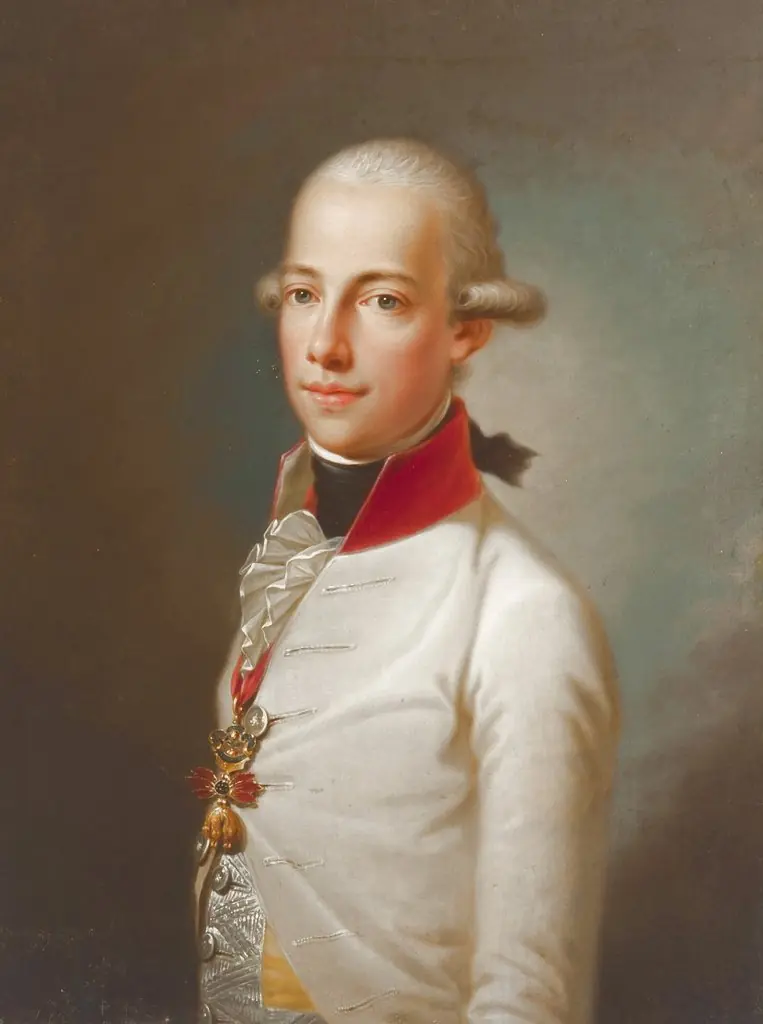
Porträt des Emperor Joseph II (1741-1790) is an oil painting by the Rococo painting artist Unknown. It dates from 1772 and is held in the collection of the Palace of Versailles. This oil painting depicts Emperor Joseph II of the Habsburg monarchy in full ceremonial attire.
About this work
Overview
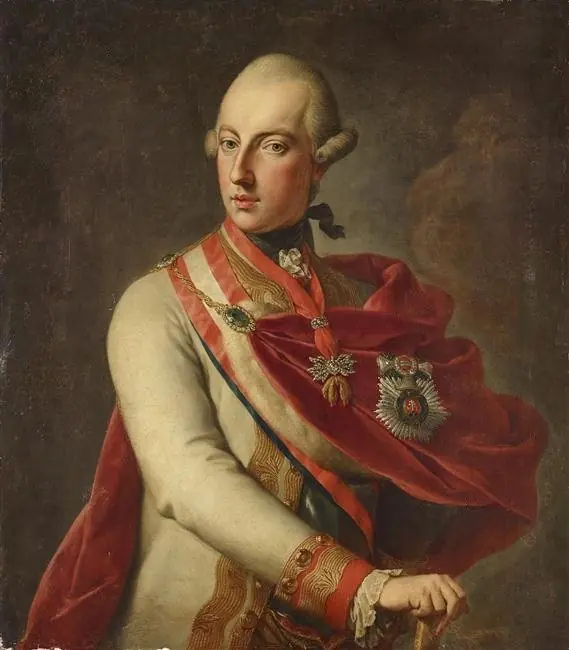
This oil painting depicts Emperor Joseph II of the Habsburg monarchy in full ceremonial attire. Rendered against a dark, unadorned background with a brown drape to the left, the composition emphasizes the figure’s presence through controlled lighting and minimal distraction. The formal pose and restrained palette reinforce the gravity of his imperial role.
Subject & Meaning
The gold-tipped cane and red hat signify imperial regalia, while the sash and gold-trimmed shirt denote his position within the Habsburg hierarchy.
Joseph II is portrayed not as a ruler in triumph, but as a sovereign engaged in solemn duty. His direct gaze and rigid posture convey authority tempered by resolve. The gold-tipped cane and red hat signify imperial regalia, while the sash and gold-trimmed shirt denote his position within the Habsburg hierarchy. The absence of symbols of conquest or divine right suggests an emphasis on administrative power rather than divine mandate.
Technique & Style
The artist employs smooth, precise brushwork to render the textures of silk, velvet, and metal with quiet realism. Light falls evenly across the figure, avoiding dramatic contrasts, which enhances the painting’s restrained elegance. The dark background isolates the emperor, focusing attention on the details of his costume and the stillness of his expression, characteristic of late 18th-century court portraiture.
History & Provenance
Commissioned during Joseph II’s reign, the portrait was likely intended for official display in imperial residences or administrative centers. It reflects the Habsburg court’s preference for dignified, unembellished representation during a period of reformist governance. The painting’s early provenance aligns with imperial collections, though its specific origin and early owners remain undocumented in public records.
Context
Created in the late 1700s, the portrait emerges amid Joseph II’s sweeping reforms—abolishing serfdom, promoting religious tolerance, and centralizing state control. Unlike earlier Baroque portraits that glorified monarchy through grandeur, this image reflects Enlightenment ideals: authority grounded in reason, duty, and visible composure rather than spectacle.
Legacy
The portrait stands as a visual record of a ruler who sought to modernize the empire through policy rather than pageantry. Its understated form influenced later imperial portraits in Central Europe, where dignity and restraint replaced ornamental excess. It remains a key example of how Enlightenment values reshaped the visual language of monarchy.
Artist & collection

 Domestic Scene
 Giacomo and Cardinal Marco, investing Andrea, Abbot of San Zeno, with his Benefice
 The Nymph of Fontainebleau
 Portrait of a Woman
 Madonna and Child with Saints in the Enclosed Garden
 Venus and Minerva
 Family Group of Four on Sofa
 Wall painting from Room H of the Villa of P. Fannius Synistor at Boscoreale
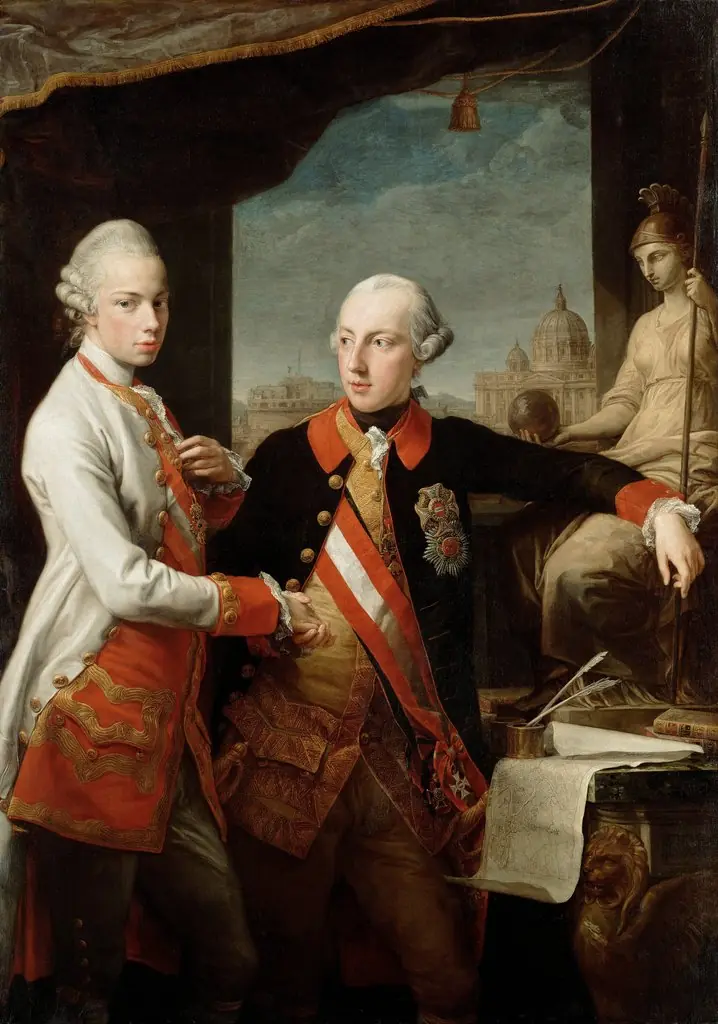 Emperor Joseph II with Grand Duke Pietro Leopoldo of Tuscany
 Portretul lui Iosif al II-lea
 Împăratul Leopold II, Mare Duce de Toscana (în Registrul inventar: )
 Portrait of Emperor Peter III
 Joseph II, empereur d'Allemagne (1741-1790)
 Împăratul Iosif al II lea
 Charles IV, King of Spain
 Ritratto di Giovanni arciduca d'Austria (1782-1859)