Artwork
The Parrot Addresses Khujasta at the Beginning of the Sixth Night, from a Tuti-nama (Tales of a Parrot)
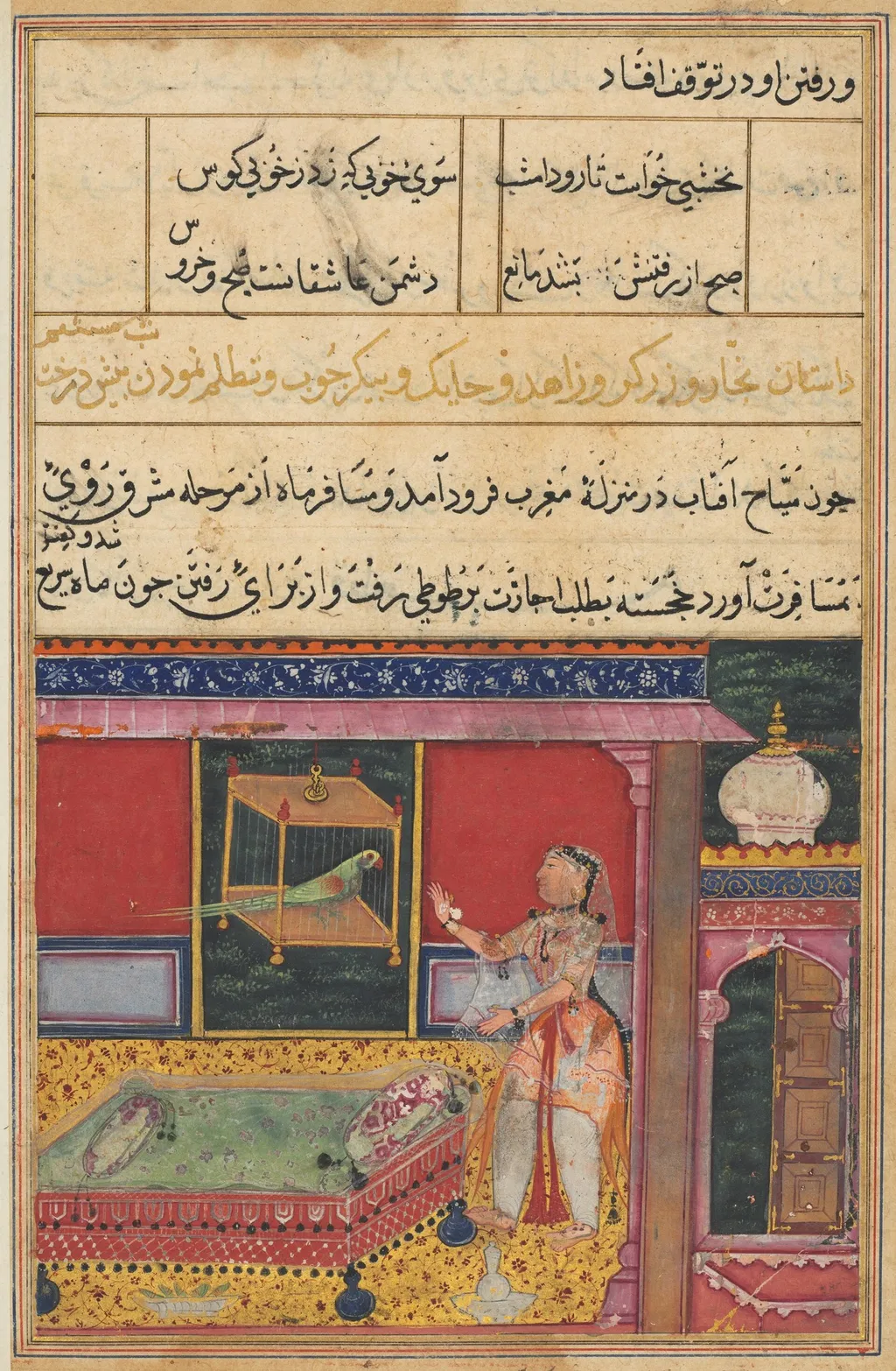
The Parrot Addresses Khujasta at the Beginning of the Sixth Night, from a Tuti-nama (Tales of a Parrot) is an unspecified painting by the Mughal Painting artist Daswanth. It dates from 1560 and is held in the collection of the Cleveland Museum of Art.
About this work
Overview
Created in 1560 by the Mughal painter Daswanth, this miniature illustrates a moment from the Tuti‑nama, a collection of parrot tales. The work is part of the Cleveland Museum of Art’s collection and depicts an interior scene in which a richly attired man engages with a caged green parrot at the start of the sixth night of the narrative.
Subject & Meaning
The composition centers on a dialogue between the human figure and the bird, suggesting the parrot’s role as a storyteller or moral commentator within the tale. The man’s attentive posture and raised hand imply he is listening to the parrot’s address, a common motif in Persian‑influenced literature where the bird conveys wisdom or warning.
Technique & Style
Executed in fine brushwork on paper, the painting displays the characteristic Mughal miniature palette of deep reds, golds, and blues. Daswanth renders textiles and furnishings with intricate patterning, while the parrot’s vivid green plumage stands out against the subdued interior, demonstrating the artist’s skill in rendering both naturalistic detail and decorative richness.
History & Provenance
The piece was produced in the mid‑sixteenth century during the height of Mughal court patronage of the arts. It entered the Cleveland Museum of Art’s holdings through acquisition in the twentieth century, where it has been catalogued as an example of narrative miniature painting from the period.
Context
The Tuti‑nama belongs to a broader tradition of Indian courtly literature that blends Persian storytelling with local motifs. Daswanth, a court painter under Emperor Akbar, frequently illustrated such texts, integrating courtly luxury with didactic scenes that reflected the cultural exchange of the Mughal empire.
Artist & collection

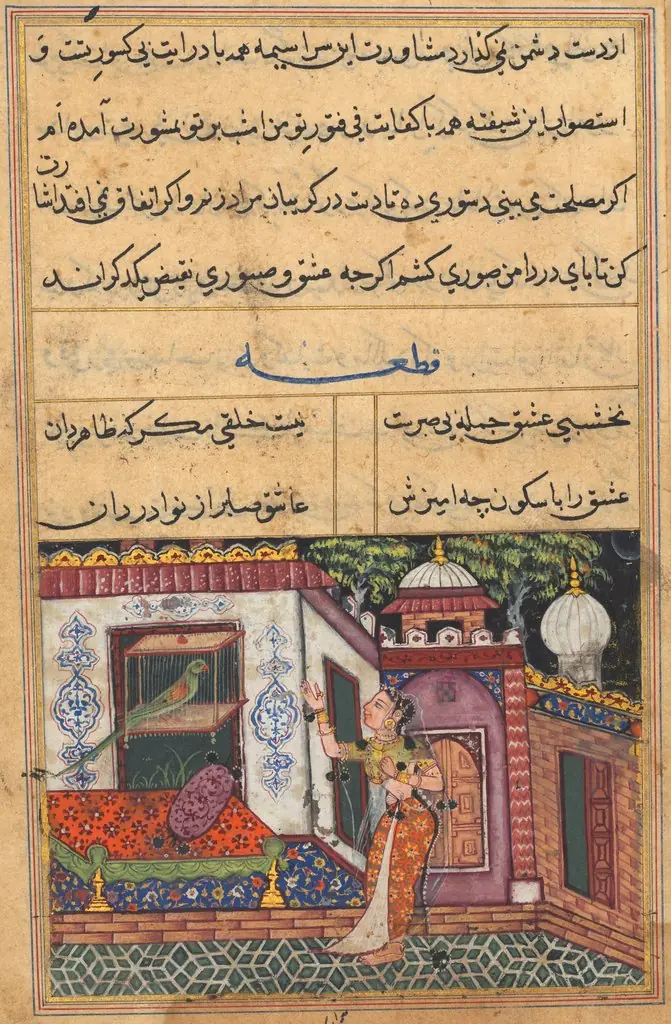 The Parrot Addresses Khujasta at the Beginning of the Eleventh Night, from a Tuti-nama (Tales of a Parrot)
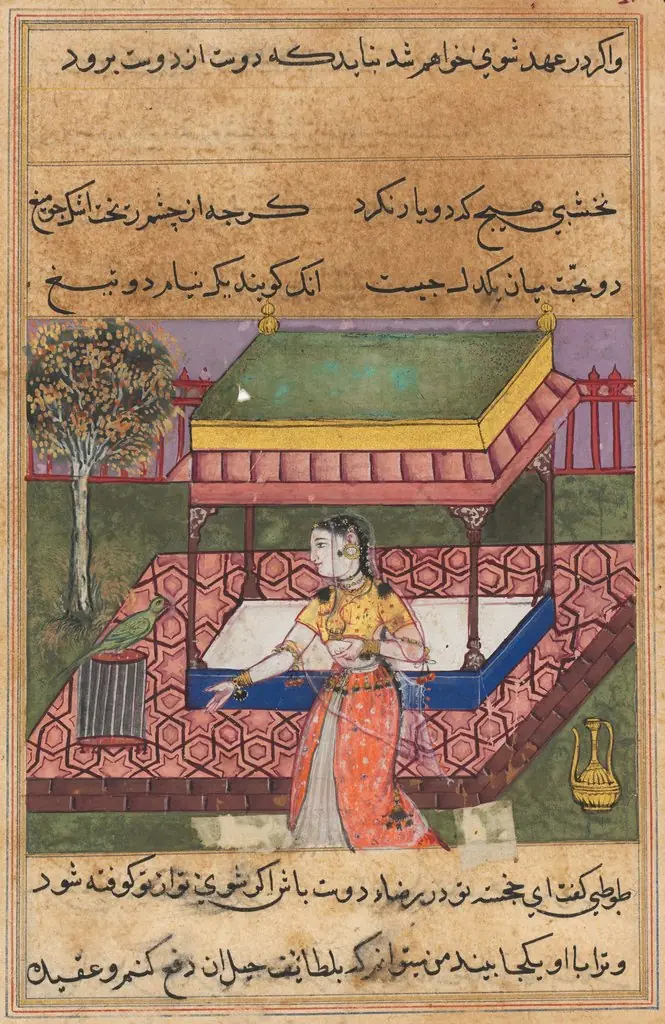 The parrot addresses Khujasta at the beginning of the fortieth night, from a Tuti-nama (Tales of a Parrot)
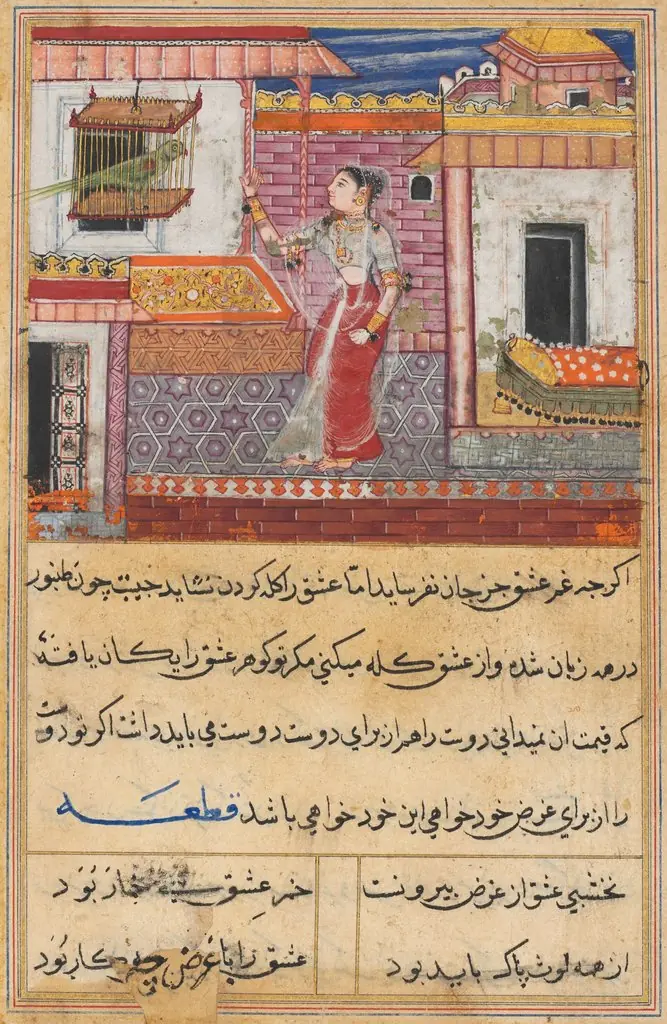 The Parrot Addresses Khujasta at the Beginning of the Thirteenth Night, from a Tuti-nama (Tales of a Parrot)
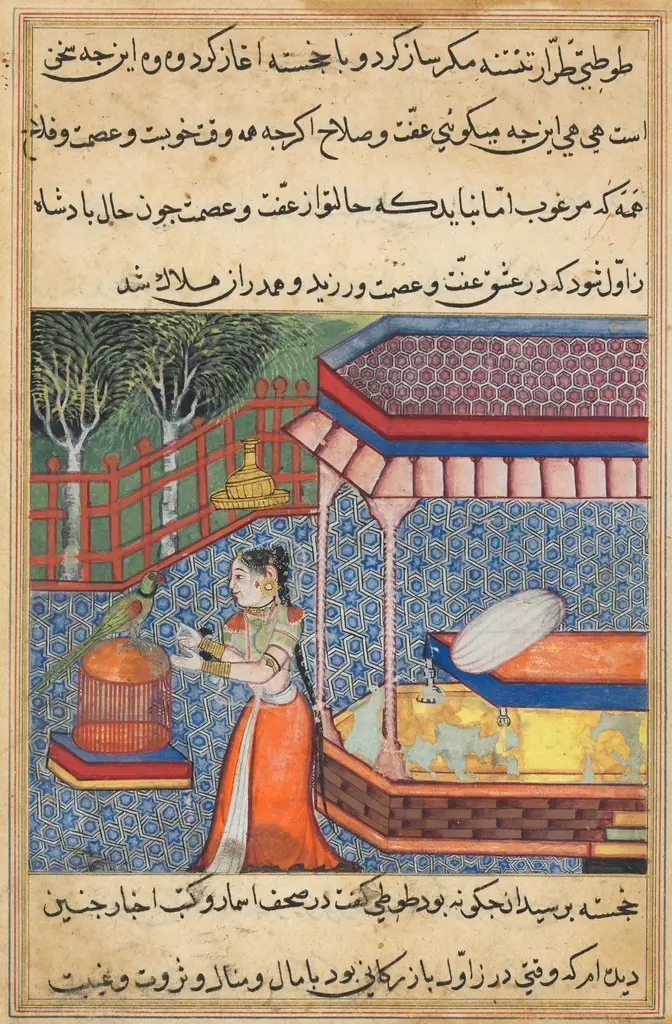 The parrot addresses Khujasta at the beginning of the thirty-sixth night, from a Tuti-nama (Tales of a Parrot)
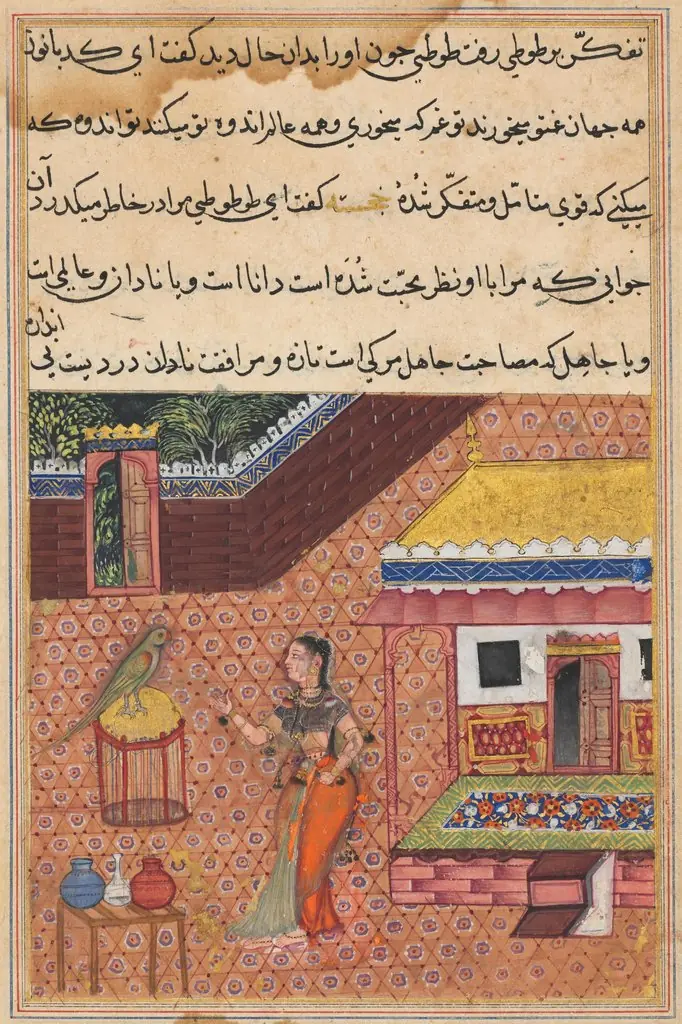 The parrot addresses Khujasta at the beginning of the thirty-fourth night, from a Tuti-nama (Tales of a Parrot)
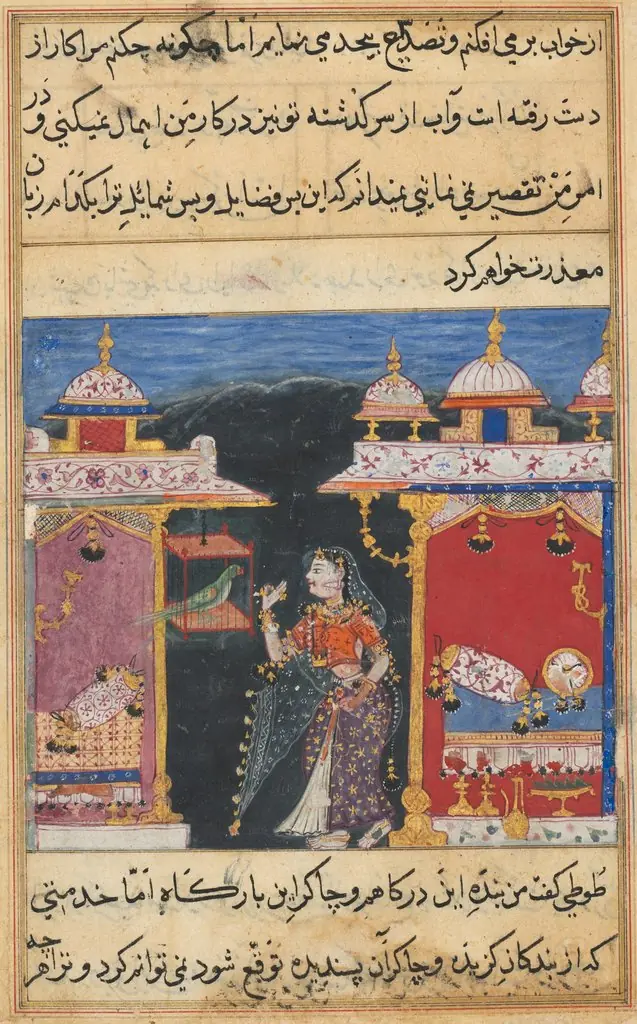 The Parrot Addresses Khujasta at the Beginning of the Seventh Night, from a Tuti-nama (Tales of a Parrot)
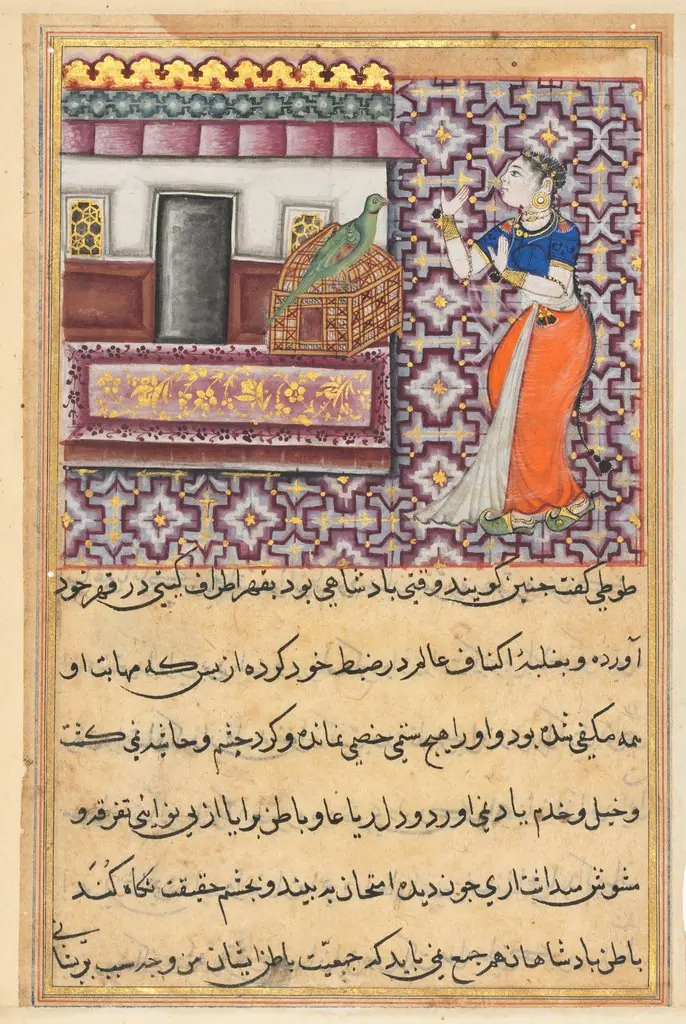 The parrot addresses Khujasta at the beginning of the fiftieth night, from a Tuti-nama (Tales of a Parrot): Fiftieth Night
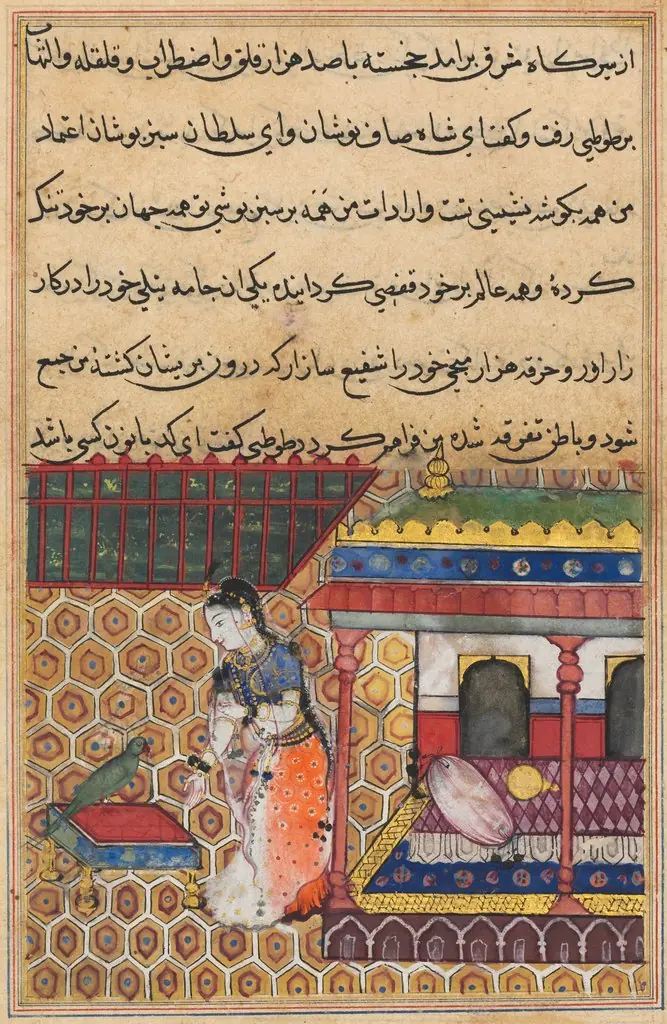 The parrot addresses Khujasta at the beginning of the thirty-eighth night, from a Tuti-nama (Tales of a Parrot)
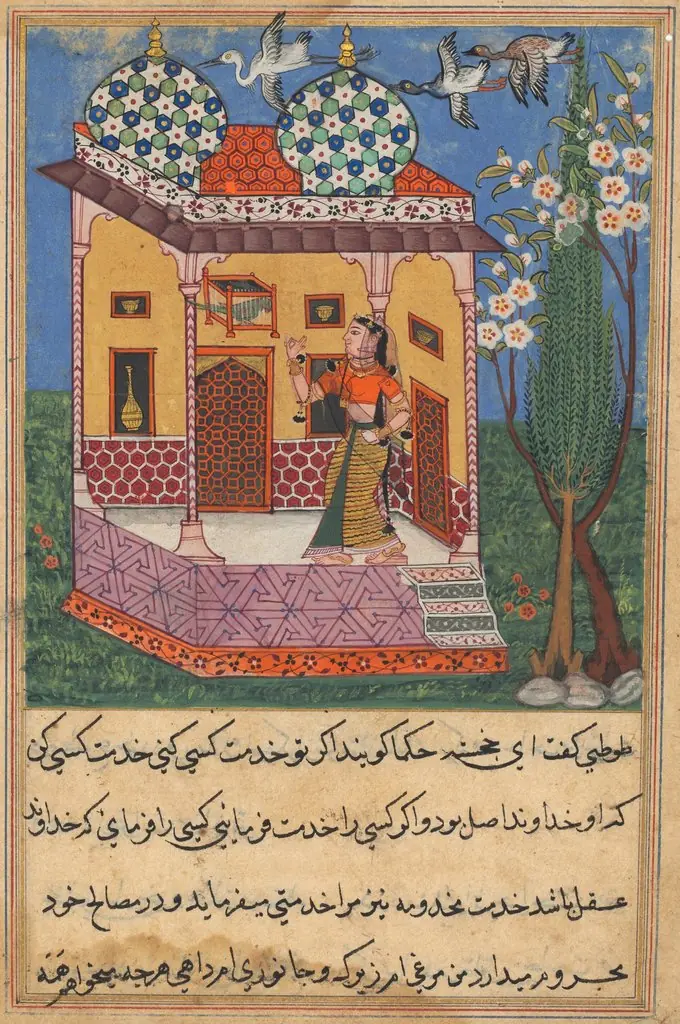 The Parrot Addresses Khujasta at the Beginning of the Twenty-sixth Night, from a Tuti-nama (Tales of a Parrot)
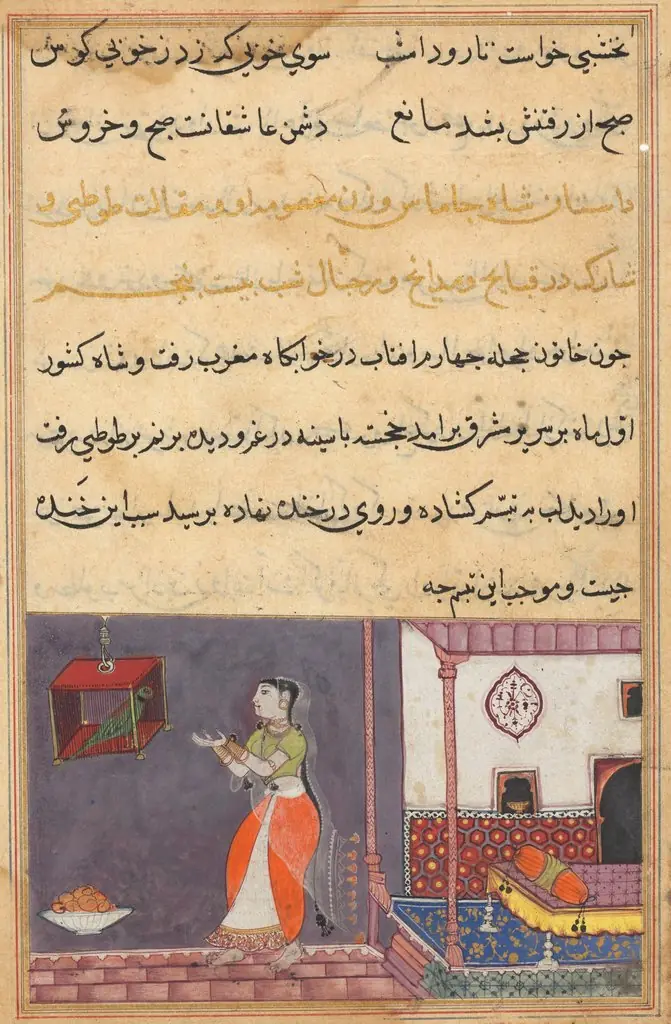 The Parrot Addresses Khujasta at the Beginning of the Twenty-fifth Night, from a Tuti-nama (Tales of a Parrot)
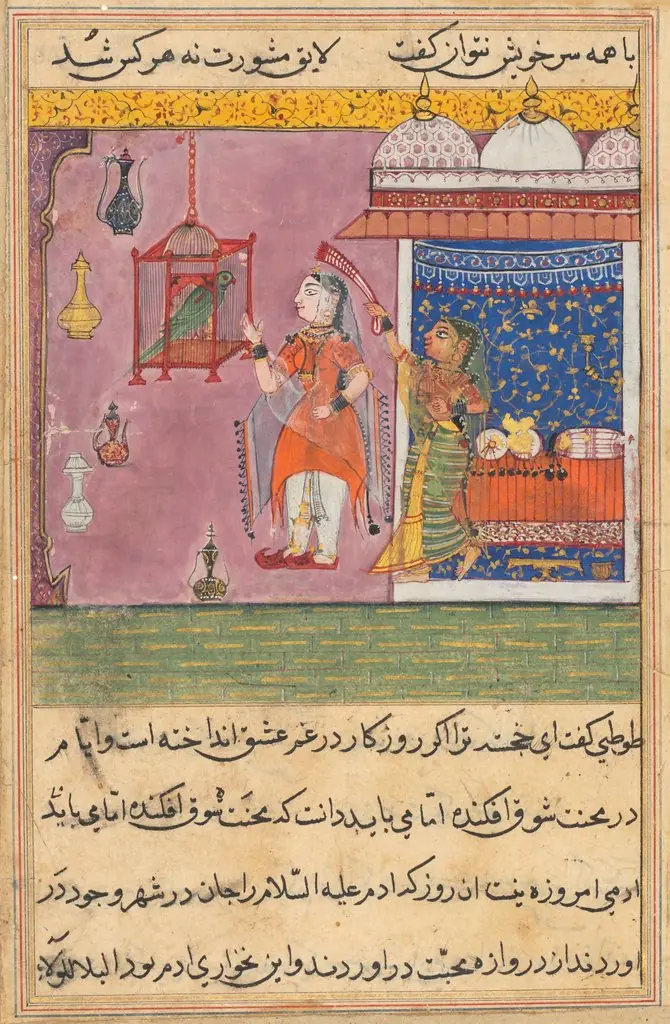 The Parrot Addresses Khujasta at the Beginning of the Nineteenth Night, from a Tuti-nama (Tales of a Parrot)
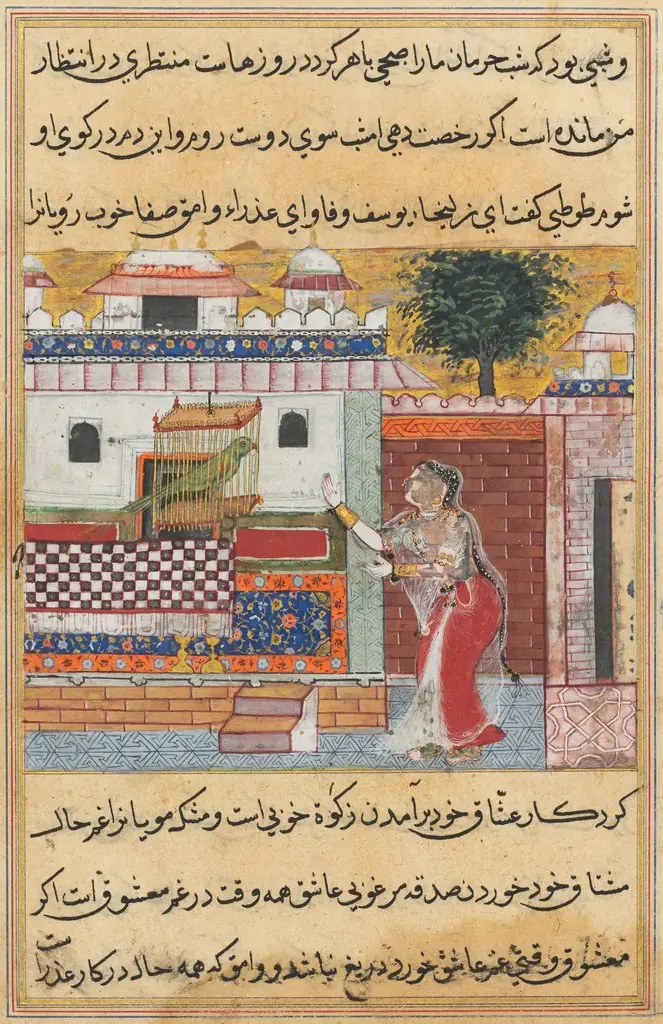 The Parrot Addresses Khujasta at the Beginning of the Twelfth Night, from a Tuti-nama (Tales of a Parrot)
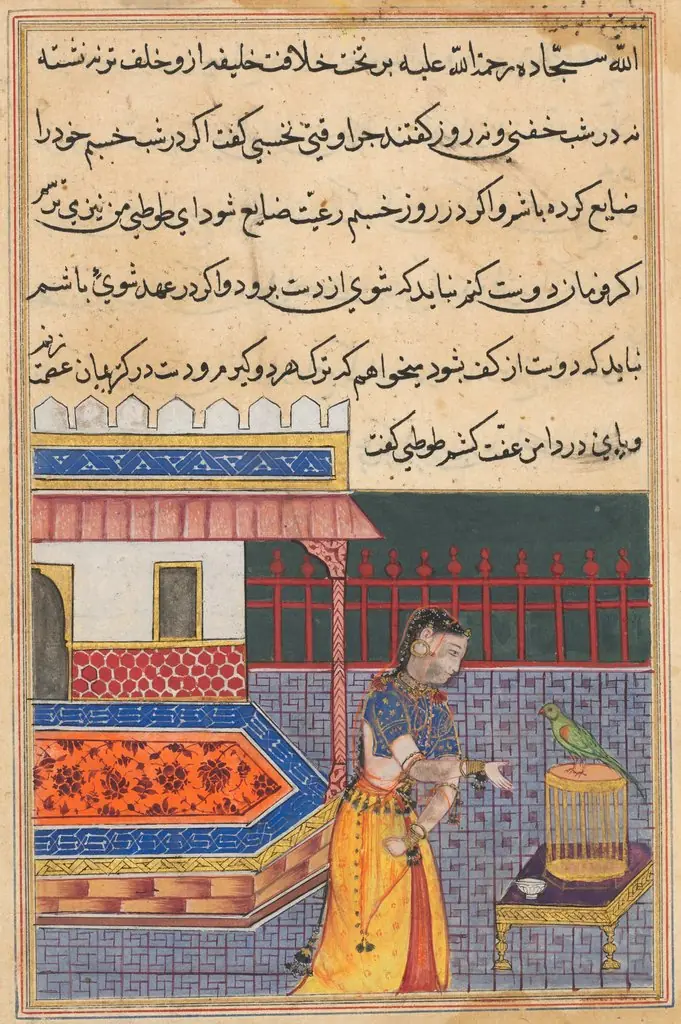 The parrot addresses Khujasta at the beginning of the forty-first night, from a Tuti-nama (Tales of a Parrot): Forty-first Night
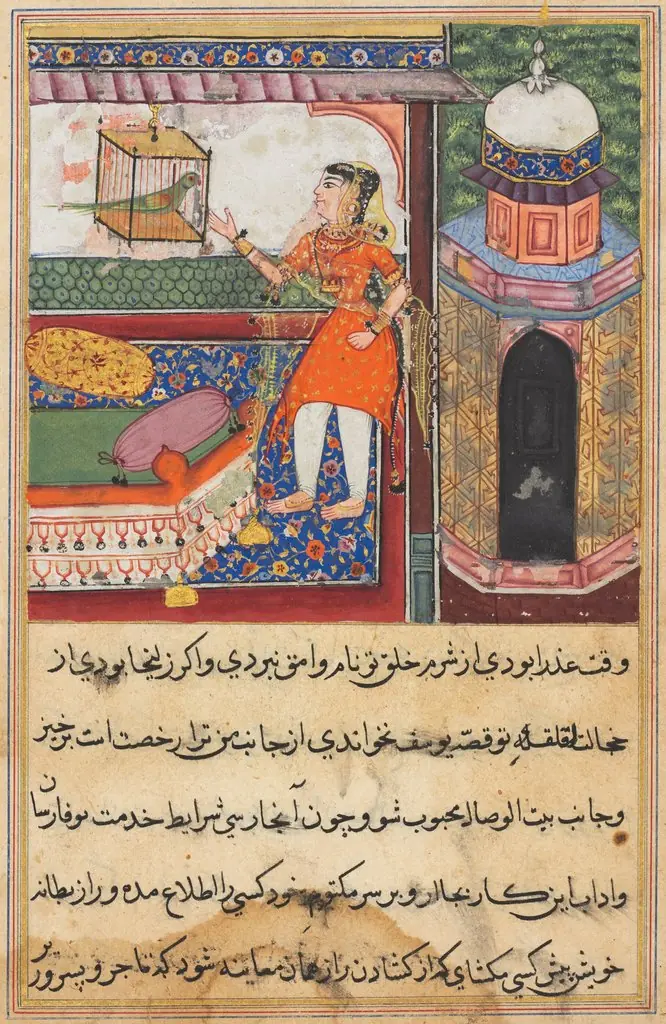 The Parrot Addresses Khujasta at the Beginning of the Tenth Night, from a Tuti-nama (Tales of a Parrot)
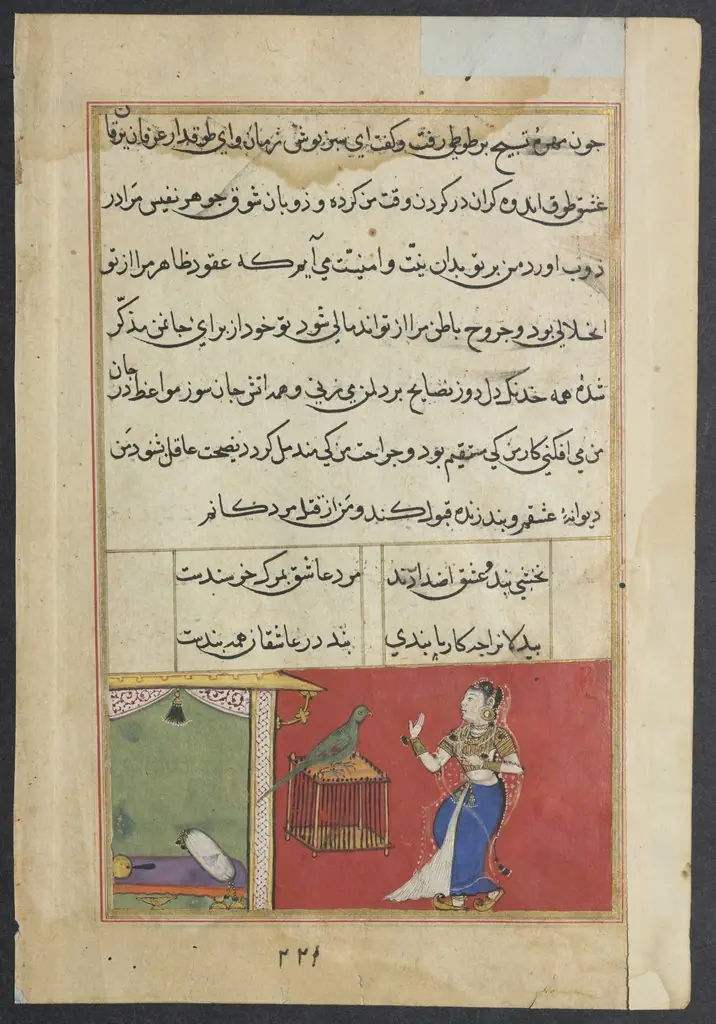 The parrot addresses Khujasta at the beginning of the forty-seventh night, from a Tuti-nama (Tales of a Parrot): Forty-seventh Night