Artwork
The young man of Baghdad reunited with his slave-girl, from a Tuti-nama (Tales of a Parrot): Forty-eighth Night
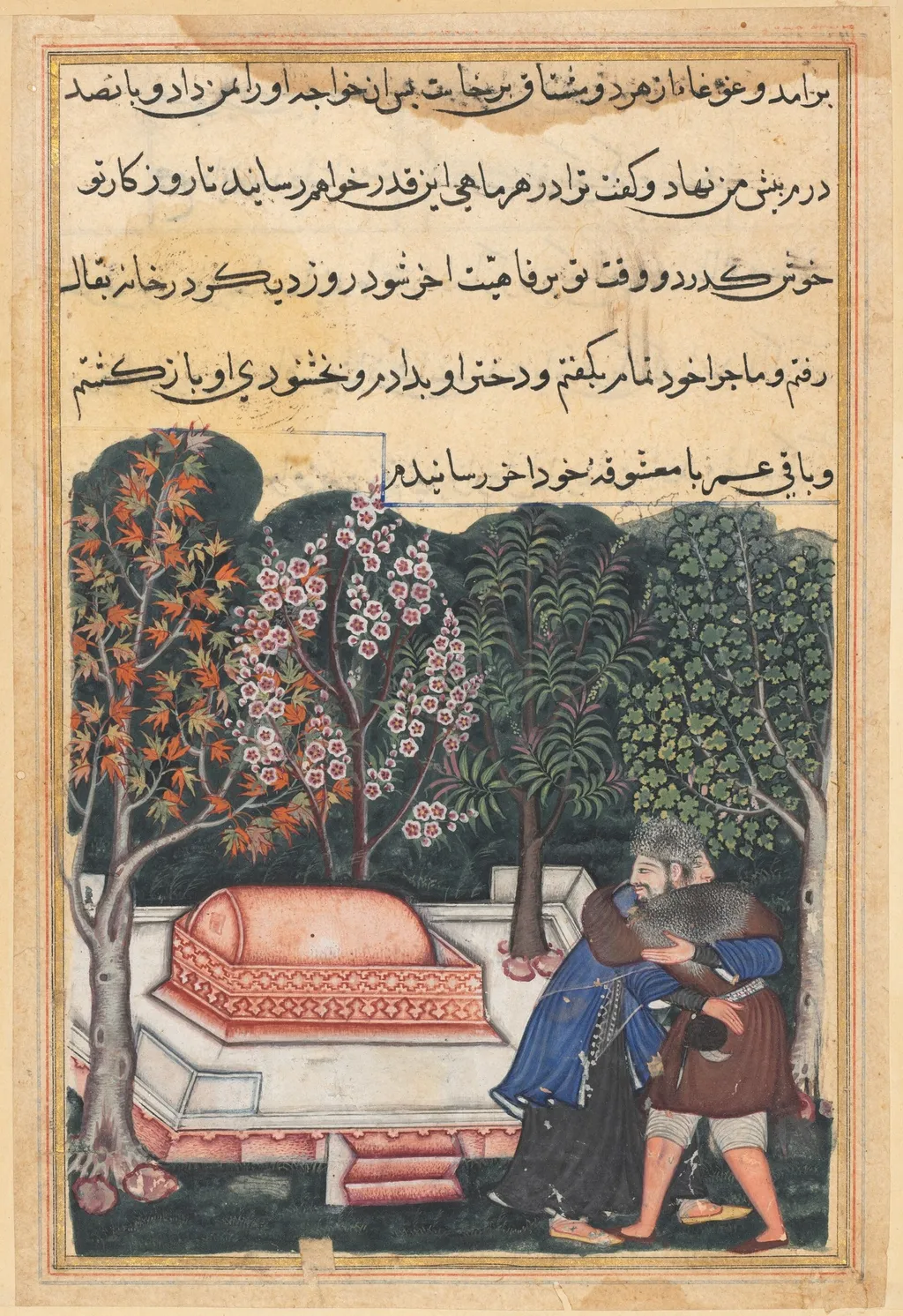
The young man of Baghdad reunited with his slave-girl, from a Tuti-nama (Tales of a Parrot): Forty-eighth Night is an unspecified painting by Unknown. It dates from 1560 and is held in the collection of the Cleveland Museum of Art.
About this work
Overview
The miniature illustrates a reunion scene from the forty‑eighth night of the Persian illustrated manuscript known as the Tuti‑nama, or Tales of a Parrot. Rendered on paper, the composition centers on two male figures in a lush garden, accompanied by an ornate chest and flowering trees, with Arabic inscription framing the image.
Subject & Meaning
The older figure, distinguished by a beard, a crown resembling thorns, and a blue robe, appears to be a ruler or noble. The younger man, dressed in brown, embraces him in a gesture suggesting relief and affection after a period of separation, reflecting the narrative’s theme of reunion between a master and his slave‑girl.
Technique & Style
Executed in the miniature tradition of Persian book art, the work employs fine brushwork and vibrant pigments, notably the deep blues of the robe and the rich reds and golds of the chest. The background foliage is rendered in delicate pink and orange blossoms, creating a stylized garden that frames the figures without realistic perspective.
History & Provenance
The painting originates from a 16th‑century illustrated manuscript of the Tuti‑nama, a collection of moral tales popular in the Islamic world. The manuscript later entered European collections, and the particular leaf now resides in the Cleveland Museum of Art, where it is displayed among other examples of Persian miniature painting.
Context
Miniatures such as this were produced for elite patrons and served both decorative and didactic purposes, illustrating stories that conveyed ethical lessons. The depiction of a crown of thorns rather than a regal diadem may allude to themes of suffering and redemption common in the narrative tradition.
Artist & collection

 Domestic Scene
 Giacomo and Cardinal Marco, investing Andrea, Abbot of San Zeno, with his Benefice
 The Nymph of Fontainebleau
 Portrait of a Woman
 Madonna and Child with Saints in the Enclosed Garden
 Venus and Minerva
 Family Group of Four on Sofa
 Wall painting from Room H of the Villa of P. Fannius Synistor at Boscoreale
 The young man of Baghdad reunited with his slave-girl, from a Tuti-nama (Tales of a Parrot): Forty-eighth Night
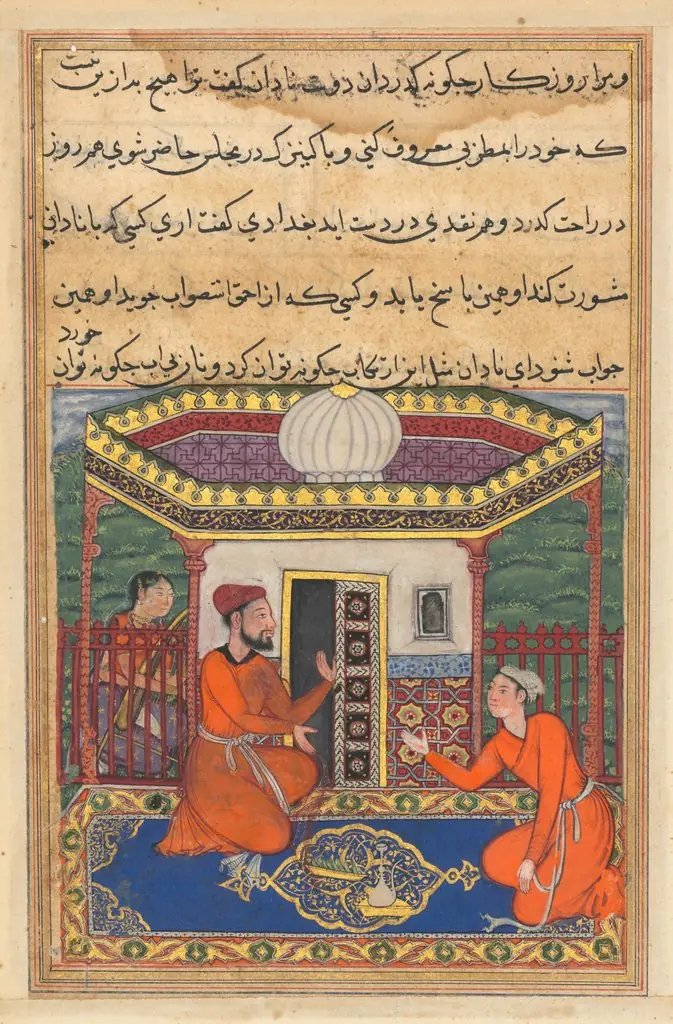 The young man of Baghdad solicits advice from a friend as his slave girl, who is adept at music, awaits, from a Tuti-nama (Tales of a Parrot): Forty-eighth Night
 The young man of Baghdad solicits advice from a friend as his slave girl, who is adept at music, awaits, from a Tuti-nama (Tales of a Parrot): Forty-eighth Night
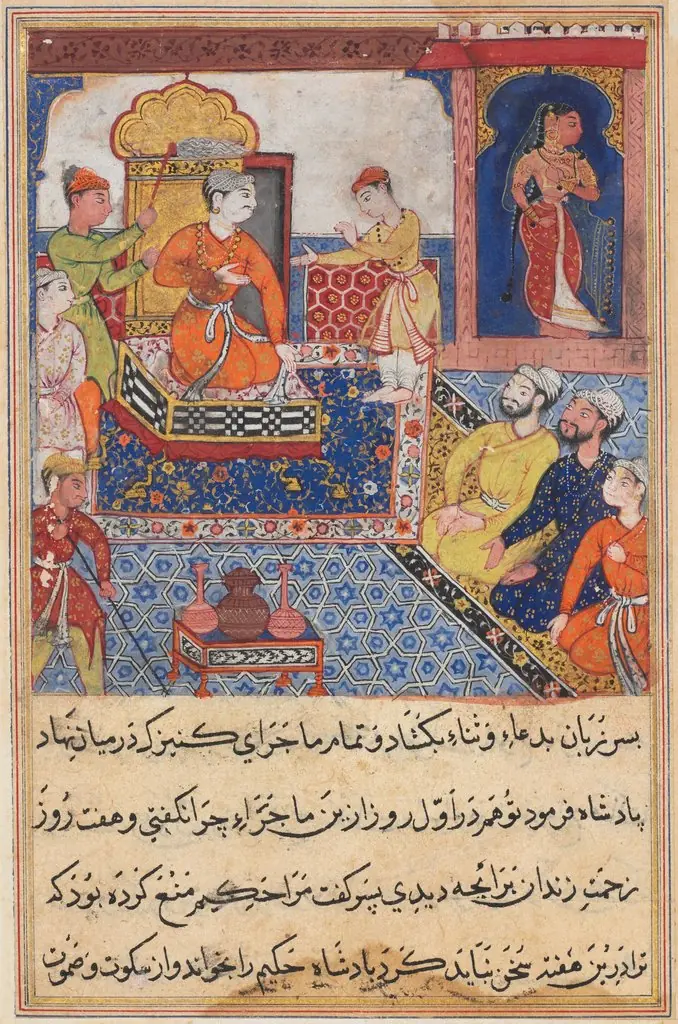 The young prince recounts his experiences to his father, the king, from a Tuti-nama (Tales of a Parrot): Eighth Night
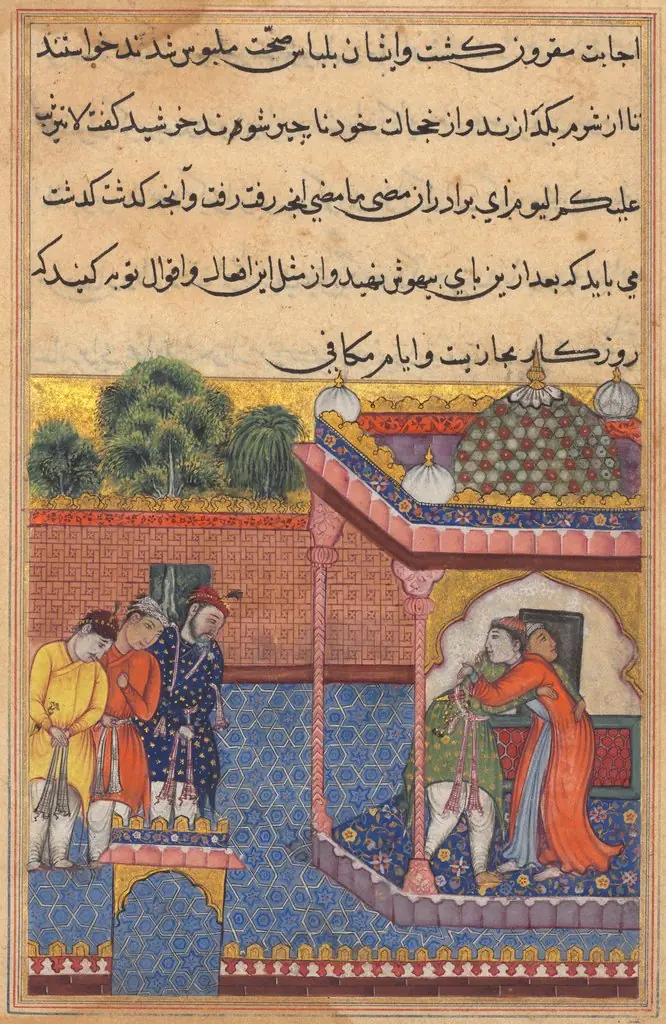 Khurshid reunited with her husband Utarid, from a Tuti-nama (Tales of a Parrot): Thirty-second Night
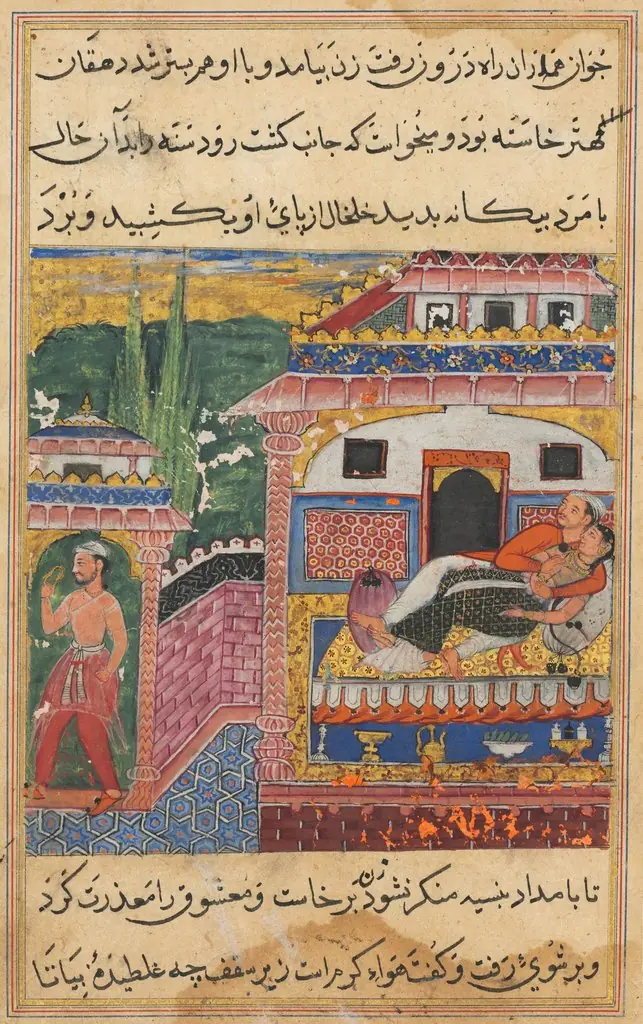 The farmer, father of the son with the deceitful wife, steals away with her anklet while she is in bed with her lover, from a Tuti-nama (Tales of a Parrot): Eighth Night
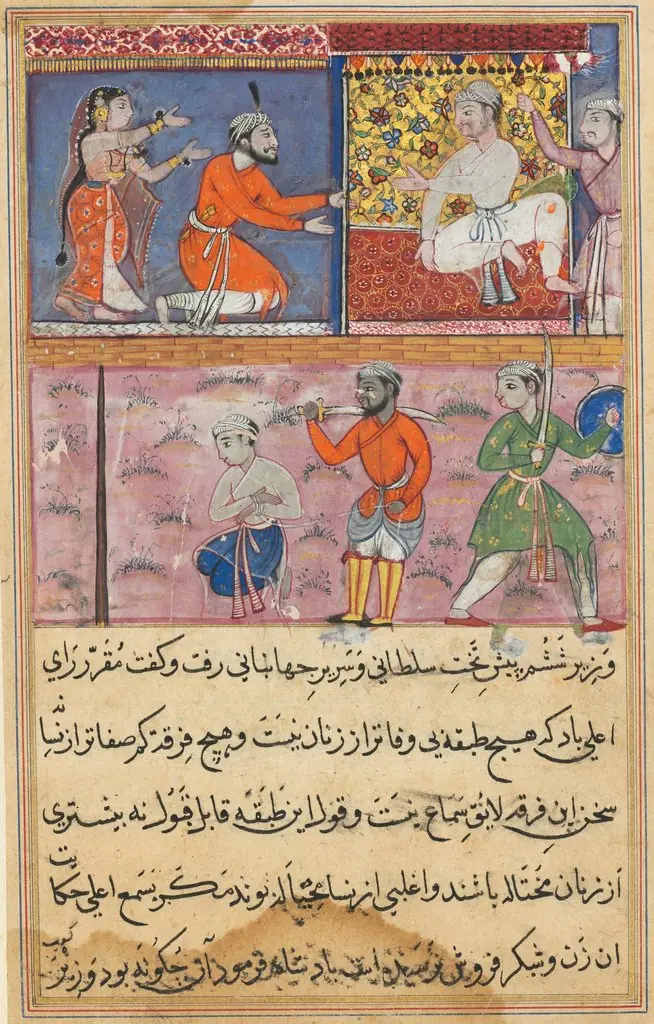 The prince sent back to the place of execution for the sixth time, from a Tuti-nama (Tales of a Parrot): Eighth Night
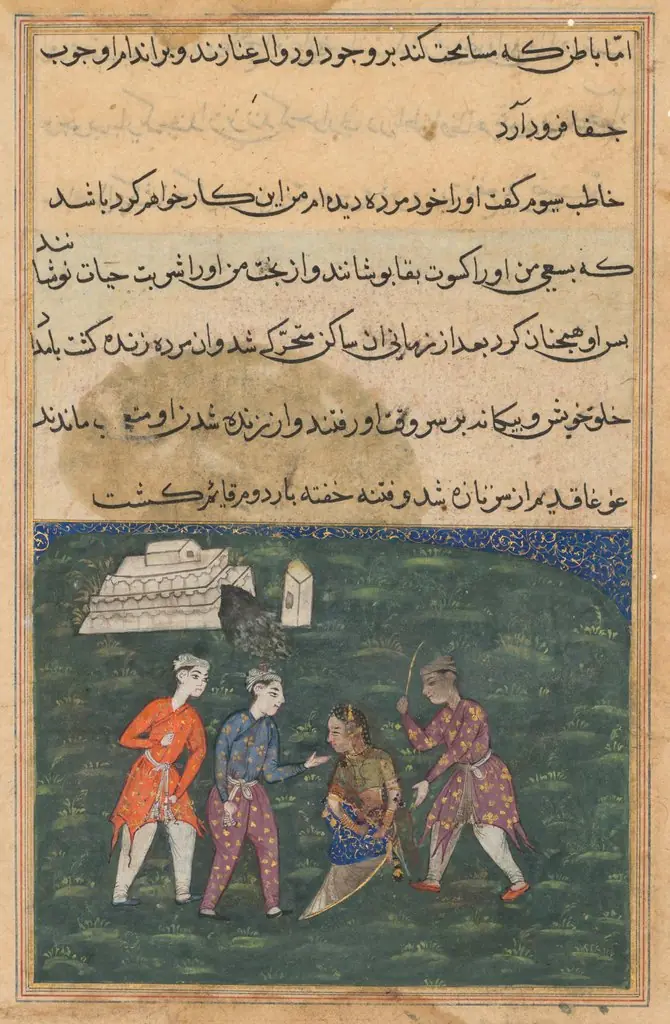 The third suitor strikes the devotee’s daughter and thus restores her to life, from a Tuti-nama (Tales of a Parrot): Twentieth Night
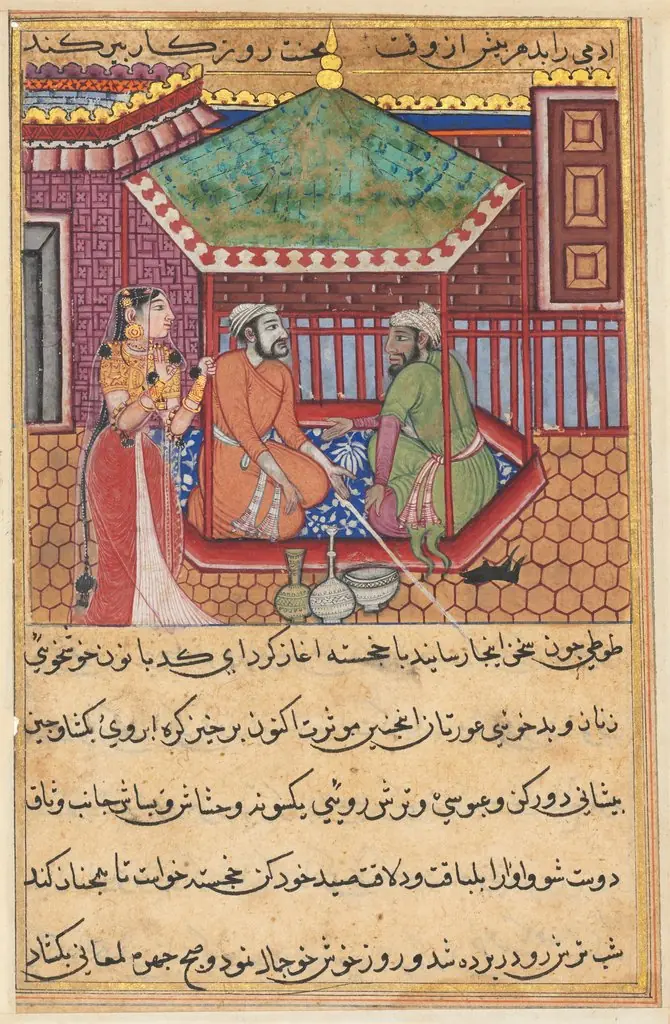 The eldest brother explains the reason for his youthful appearance, from a Tuti-nama (Tales of a Parrot): Forty-ninth Night
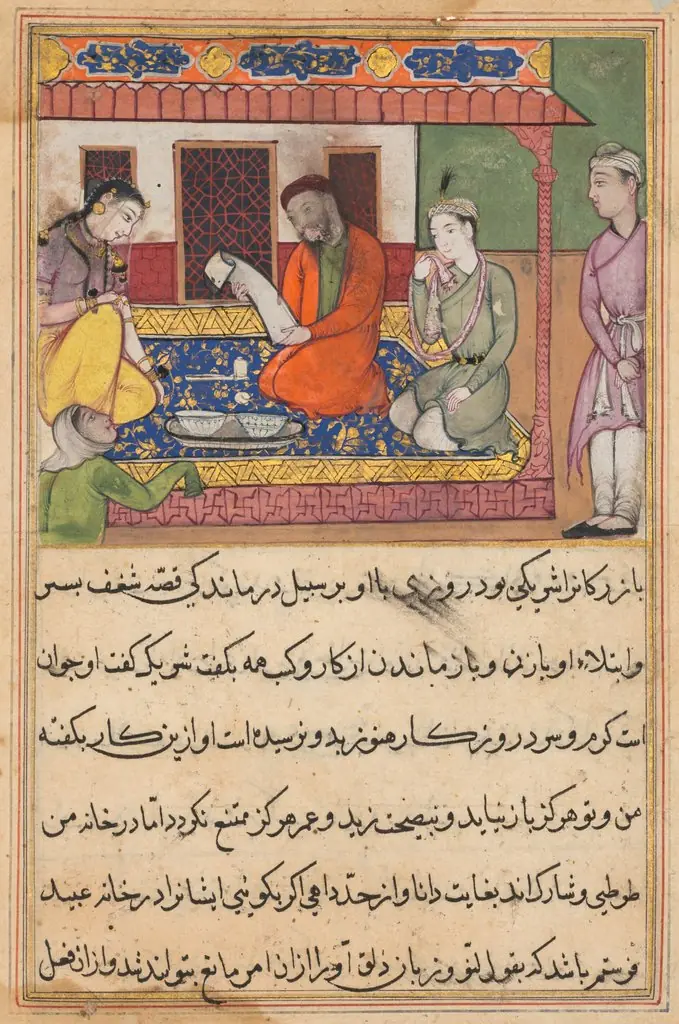 The marriage of ‘Ubaid, son of a merchant of Tirmiz, from a Tuti-nama (Tales of a Parrot): Forty-second Night