Artwork
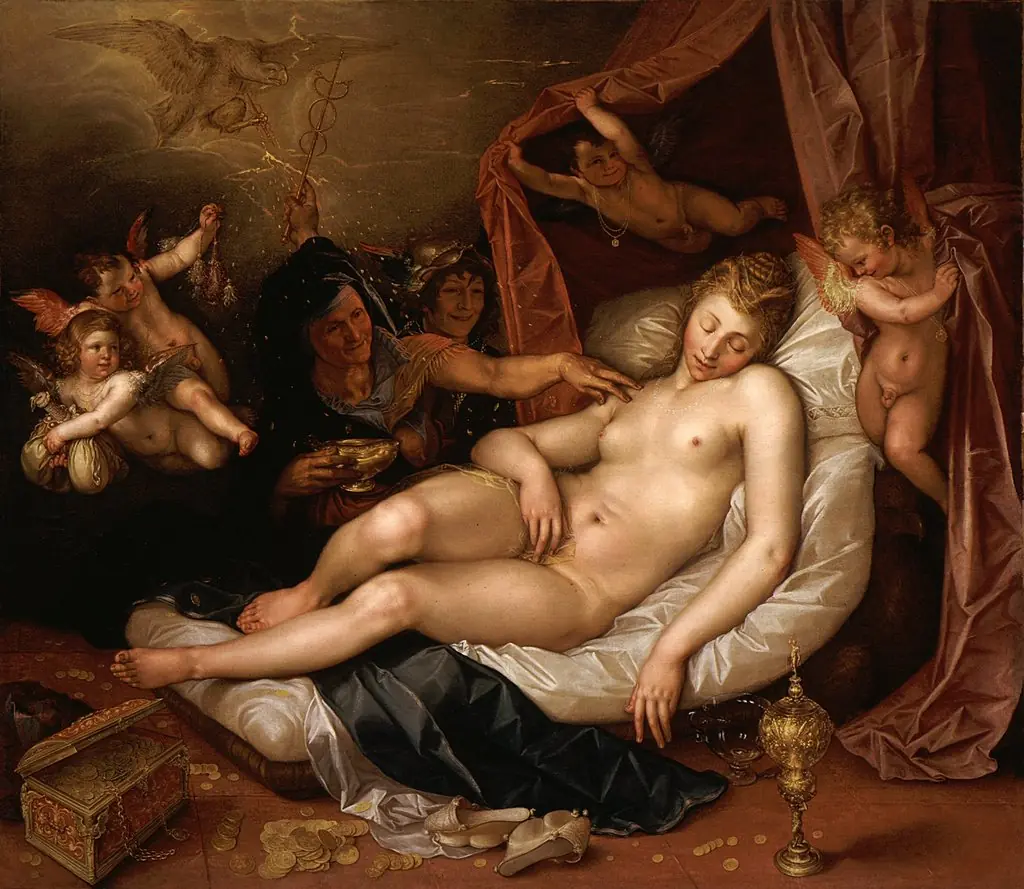
Danaë and the Shower of Gold
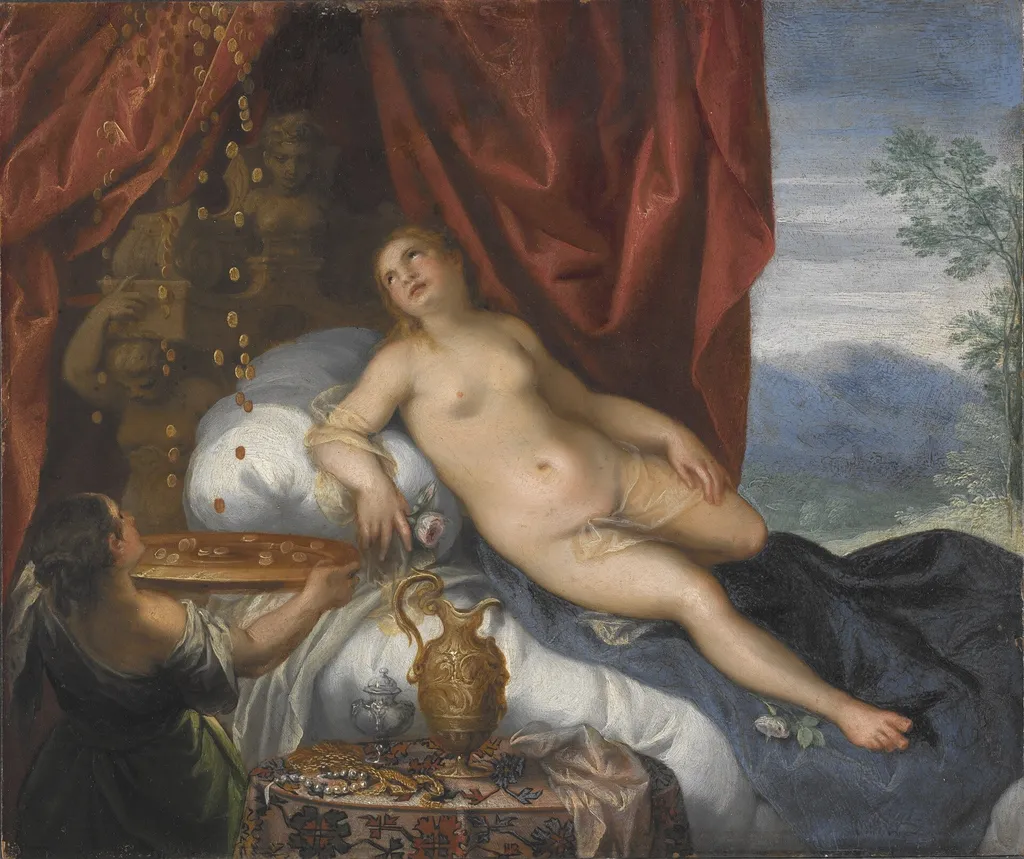
Danaë and the Shower of Gold is an unspecified painting by Unknown. It is held in the collection of the Nationalmuseum.
About this work
Overview
The scene is intimate and quiet, with no dramatic action, emphasizing stillness and reception rather than surprise or struggle.
This oil painting by Titian depicts the mythological figure Danaë reclining in a private chamber, illuminated by a golden rain that symbolizes Zeus’s divine visitation. The scene is intimate and quiet, with no dramatic action, emphasizing stillness and reception rather than surprise or struggle. Luxurious textiles and a servant attending to coins ground the myth in earthly luxury, while the dark background heightens the focus on the figure and the celestial light.
Subject & Meaning
Danaë, daughter of King Acrisius, was imprisoned to prevent a prophecy that her son would kill him. Zeus, in the form of a shower of gold, impregnated her, resulting in the birth of Perseus. Titian portrays the moment not as violation but as serene acceptance, aligning with Renaissance humanist ideals that reinterpreted myth as psychological and sensual experience rather than moral warning.
Technique & Style
Titian employs chiaroscuro to model Danaë’s form with soft transitions between light and shadow, enhancing tactile realism. The golden light is rendered with thin glazes, creating luminosity without harshness. Rich fabrics are painted with thick impasto, contrasting with the smooth skin and delicate features. The servant’s quiet presence and the muted background reinforce the painting’s contemplative mood.
History & Provenance
Commissioned by Cardinal Alessandro Farnese around 1544–1546, the painting was part of a series of mythological works for his private study. It remained in the Farnese collection until the 18th century, later entering the Spanish royal collection. It now resides in the Museo del Prado in Madrid, where it has been documented since at least the 17th century.
Context
Titian painted several versions of Danaë for European patrons during the 1540s–1560s, reflecting a growing interest in classical myth as a vehicle for exploring desire, power, and femininity. These works were intended for private, elite audiences and often served as expressions of intellectual sophistication and sensual refinement, distinct from public religious imagery.
Legacy
Titian’s Danaë influenced later depictions of the subject by artists such as Rembrandt and Rubens, who adapted its psychological intimacy and luminous technique. Its restrained approach to myth—prioritizing mood over narrative drama—helped redefine how ancient stories could be rendered in early modern art, emphasizing emotional resonance over moralizing.
Artist & collection

 Domestic Scene
 Giacomo and Cardinal Marco, investing Andrea, Abbot of San Zeno, with his Benefice
 The Nymph of Fontainebleau
 Portrait of a Woman
 Madonna and Child with Saints in the Enclosed Garden
 Venus and Minerva
 Family Group of Four on Sofa
 Wall painting from Room H of the Villa of P. Fannius Synistor at Boscoreale