Artwork
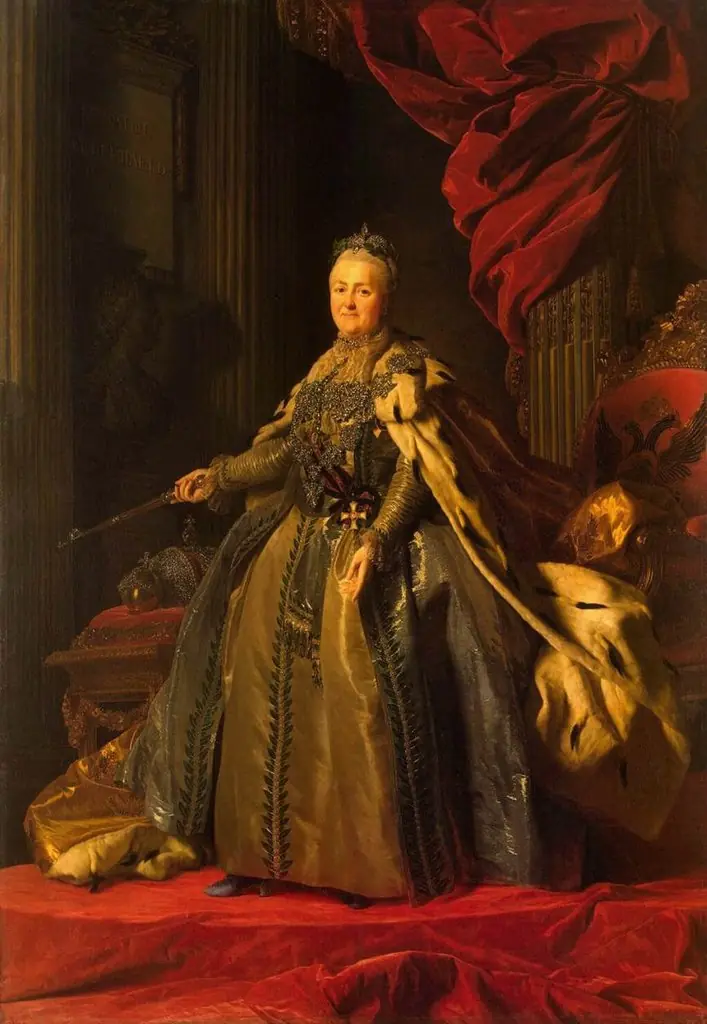
Portrait of Empress Catherine the Great
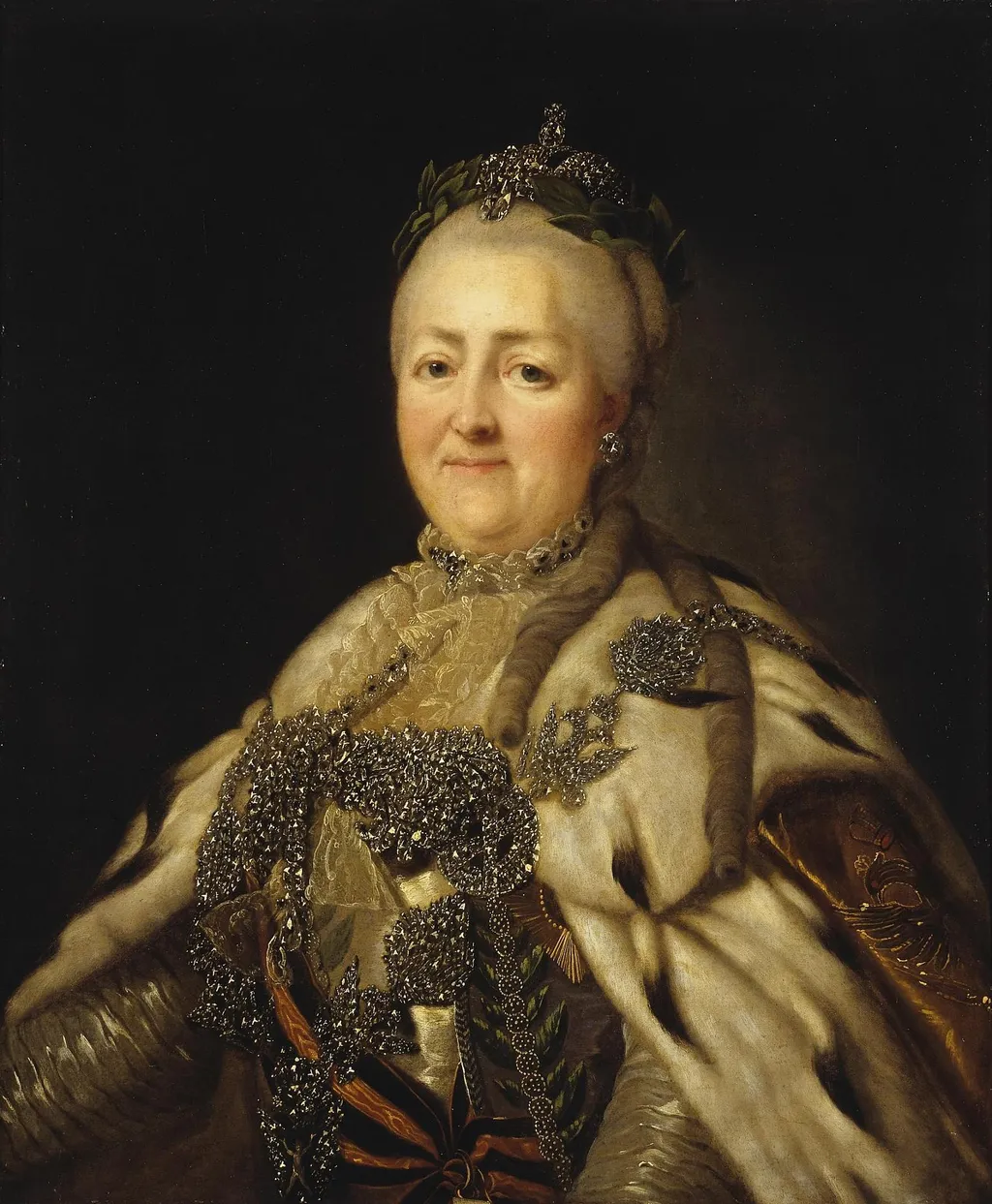
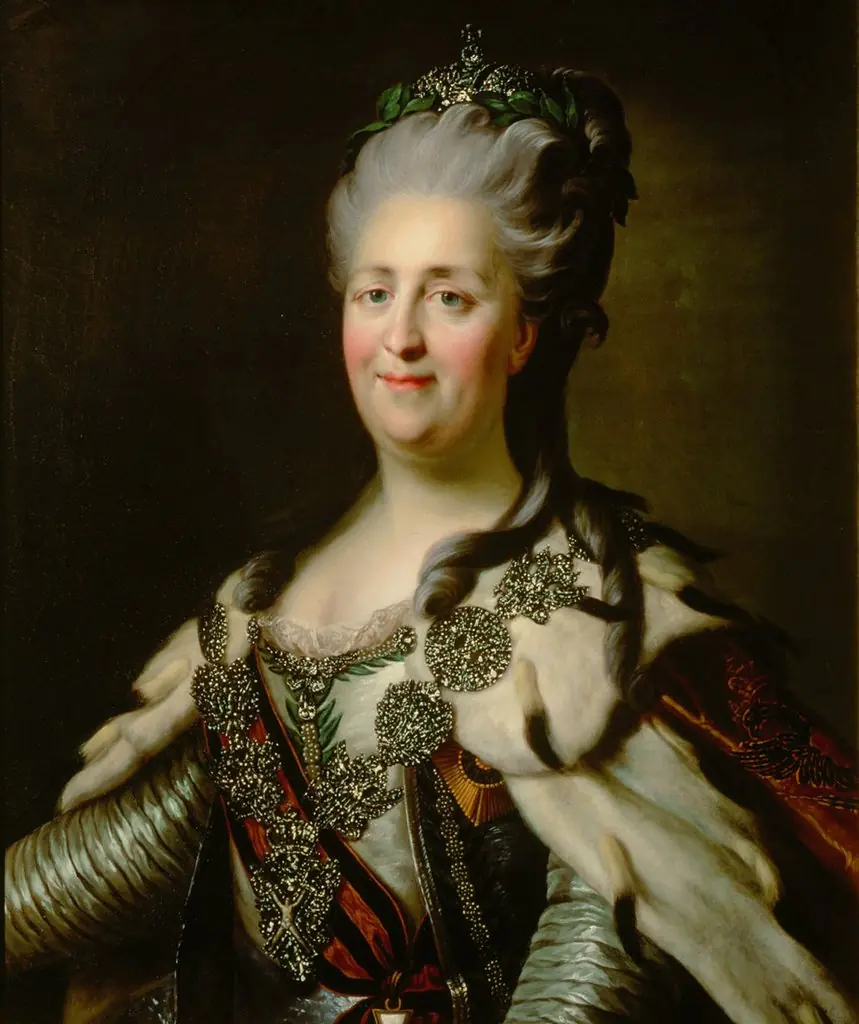
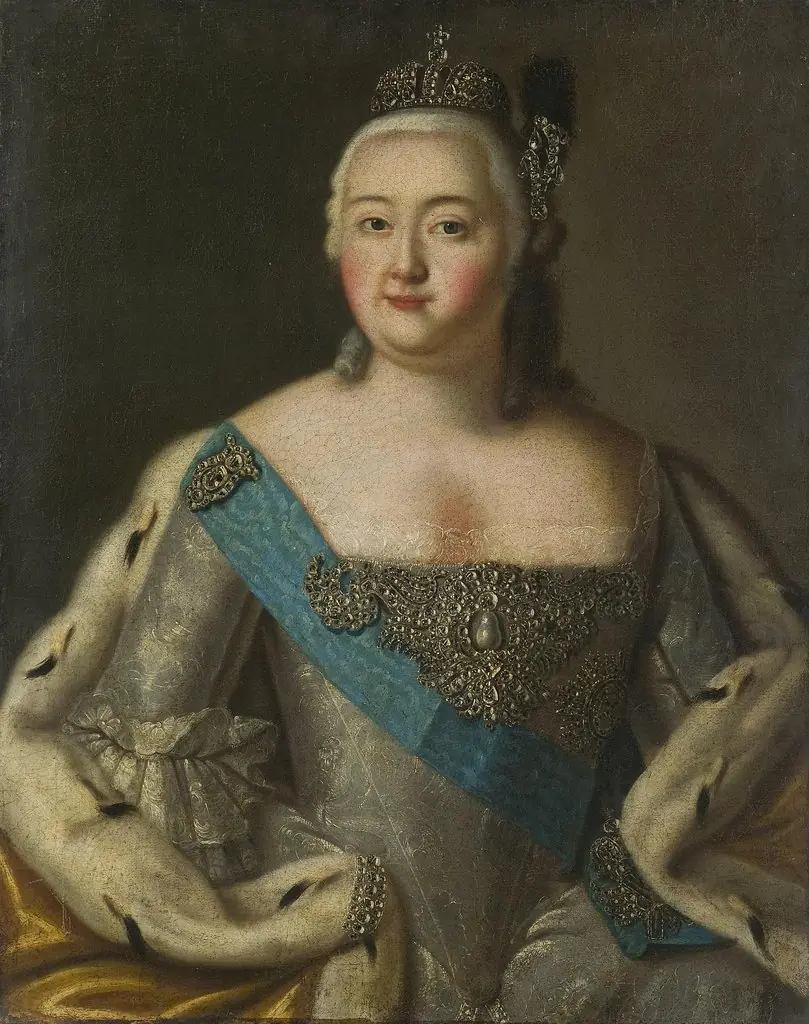
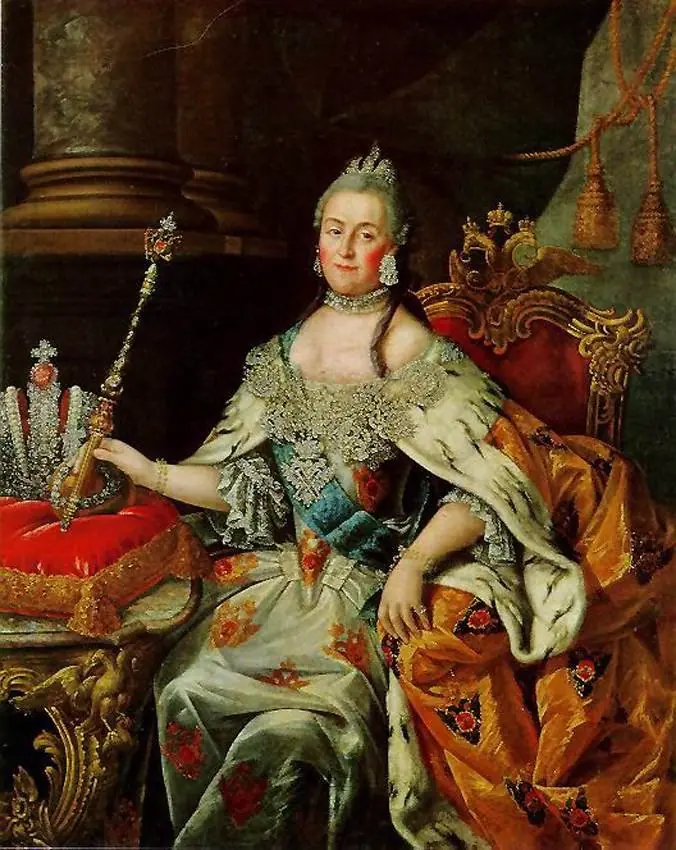
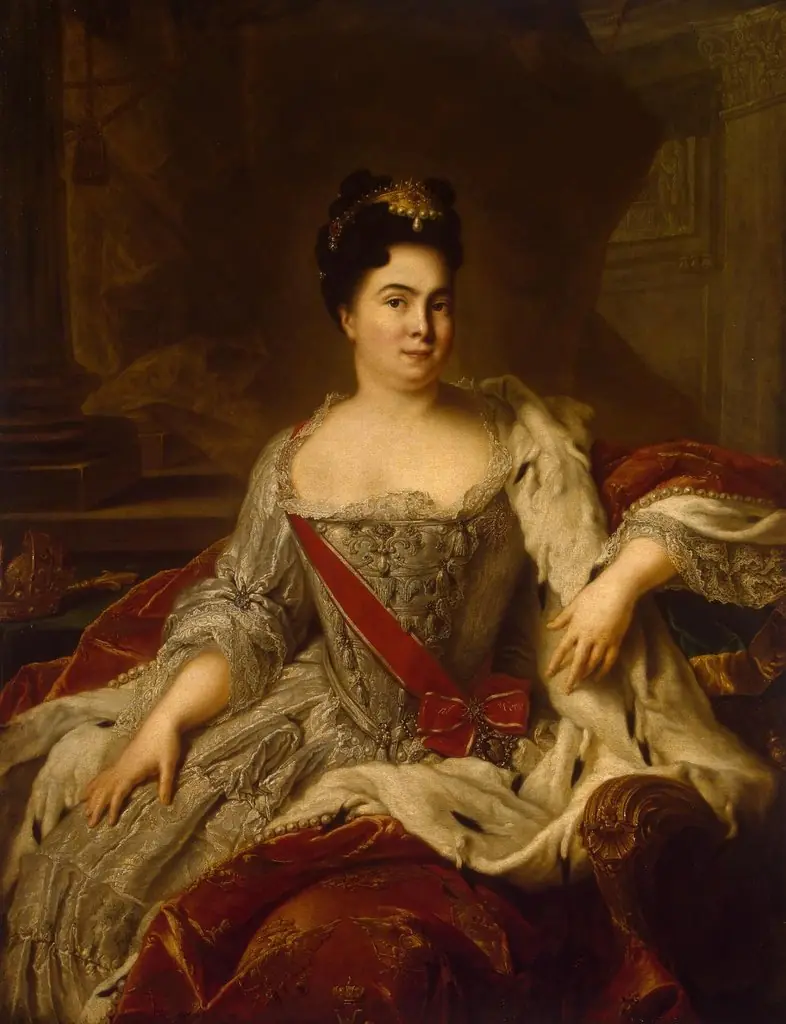
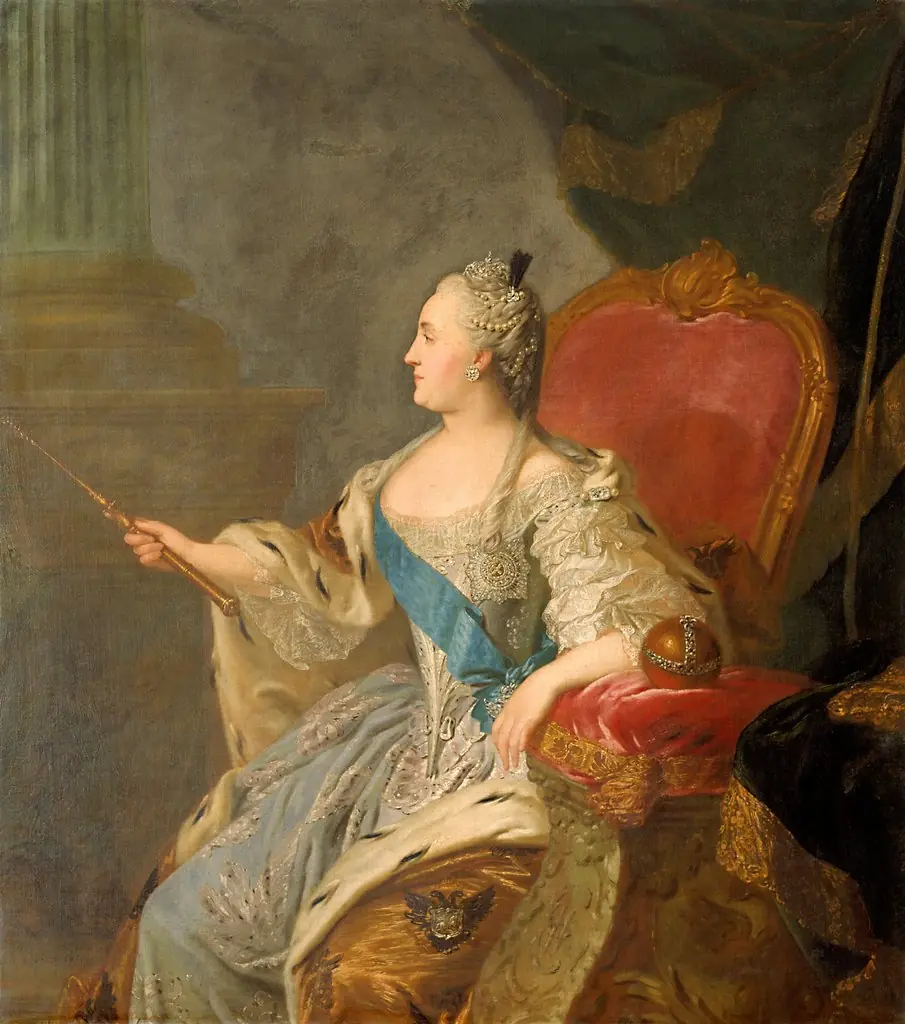
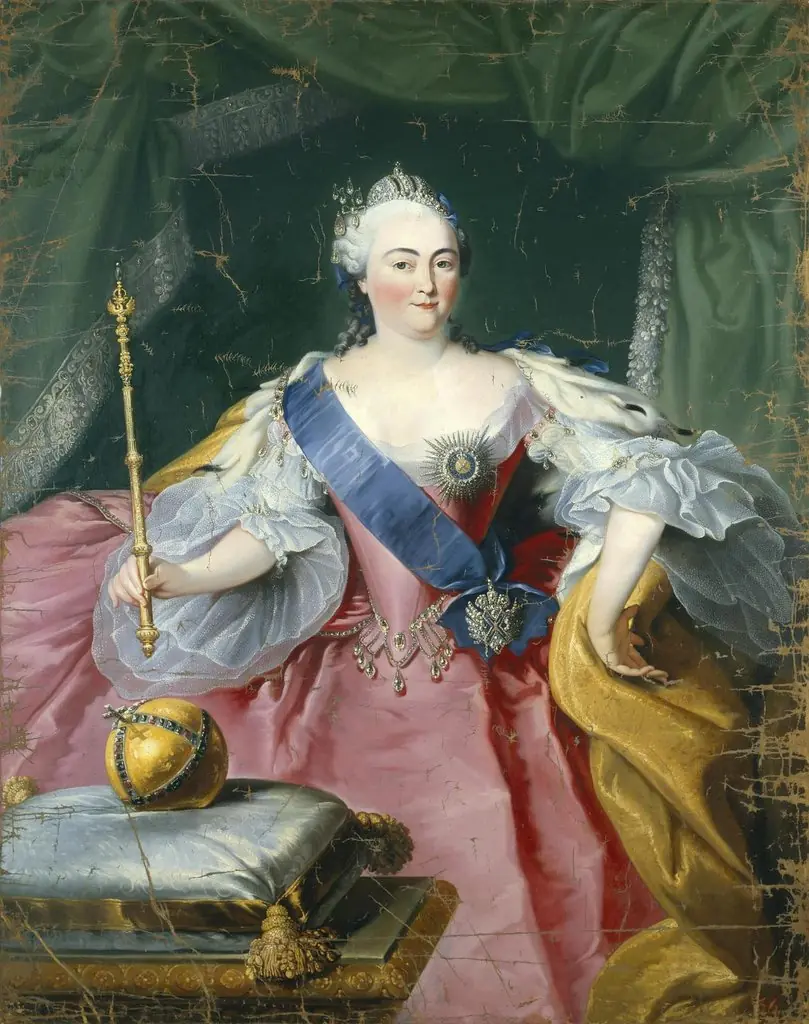
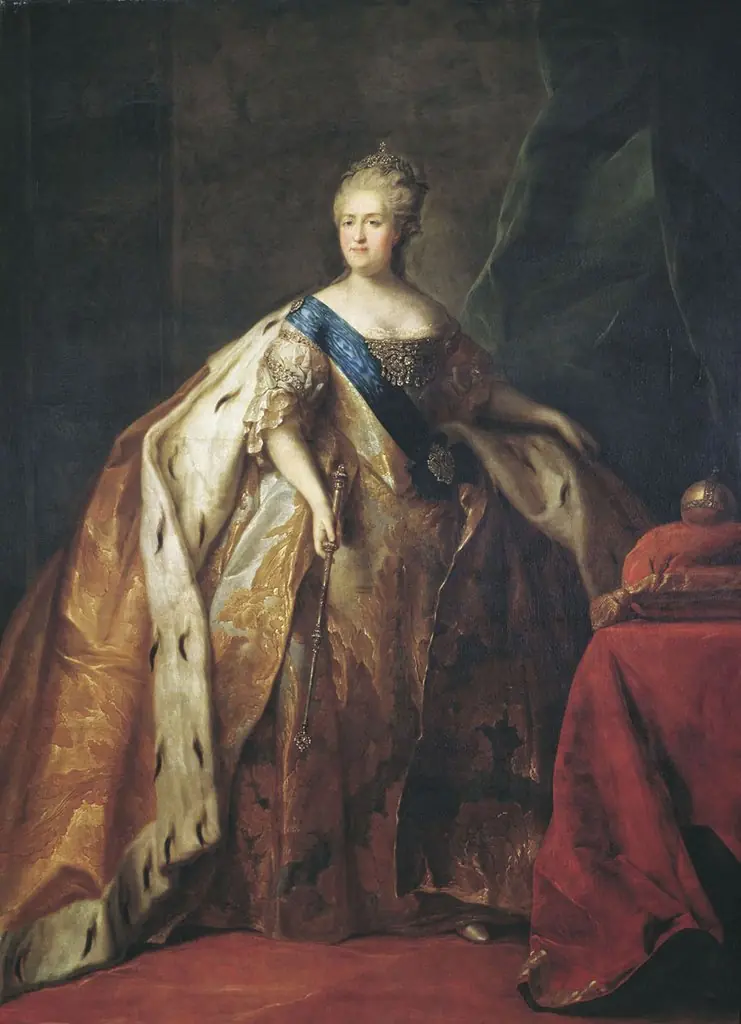
Portrait of Empress Catherine the Great is an oil painting by the Rococo painting artist Unknown. It dates from 1775 and is held in the collection of the Hermitage Museum. This oil painting depicts Empress Catherine the Great in formal regalia, rendered with precise detail and controlled lighting.
About this work
Overview
This oil painting depicts Empress Catherine the Great in formal regalia, rendered with precise detail and controlled lighting. The composition centers her figure against a deep, unbroken background, enhancing the focus on her presence. The use of chiaroscuro emphasizes her facial structure and the texture of her garments, creating a sense of quiet authority without overt grandeur.
Subject & Meaning
Catherine is portrayed not as a warrior or ruler in action, but as a sovereign in repose, blending imperial symbolism with personal dignity. The leaf crown alludes to classical ideals of wisdom and rule, while the fur-lined robe and modest jewelry suggest refined taste rather than excessive display. The calm expression conveys composure, reinforcing her image as an enlightened monarch.
Technique & Style
The artist employs chiaroscuro to sculpt the empress’s form, using sharp contrasts between light and shadow to define her features and the sheen of silver embroidery. Brushwork is controlled, with smooth transitions in skin tones and meticulous rendering of fabric textures. The dark background eliminates distraction, directing attention to the subject’s poise and the subtle details of her attire.
History & Provenance
The portrait was commissioned during Catherine’s reign and remained within imperial collections, eventually entering the State Hermitage Museum in Saint Petersburg. Its preservation reflects its significance as an official representation of the empress, used to project her authority and cultural alignment with Enlightenment ideals across Europe.
Context
Unlike earlier baroque displays of power, this work favors restraint, mirroring the era’s shift toward rationality and decorum in public representation.
Created in the late 18th century, the portrait aligns with European trends favoring classical allusions in royal imagery. Catherine, who cultivated an image as a philosopher-queen, used portraiture to reinforce her legitimacy and intellectual stature. Unlike earlier baroque displays of power, this work favors restraint, mirroring the era’s shift toward rationality and decorum in public representation.
Legacy
The portrait endures as a key example of imperial imagery in late Enlightenment Russia. It influenced subsequent depictions of female rulers by emphasizing dignity over spectacle. Today, it remains a reference point in studies of political representation, gender, and the visual language of power in 18th-century Europe.
Artist & collection

 Domestic Scene
 Giacomo and Cardinal Marco, investing Andrea, Abbot of San Zeno, with his Benefice
 The Nymph of Fontainebleau
 Portrait of a Woman
 Madonna and Child with Saints in the Enclosed Garden
 Venus and Minerva
 Family Group of Four on Sofa
 Wall painting from Room H of the Villa of P. Fannius Synistor at Boscoreale