Artwork
Untitled
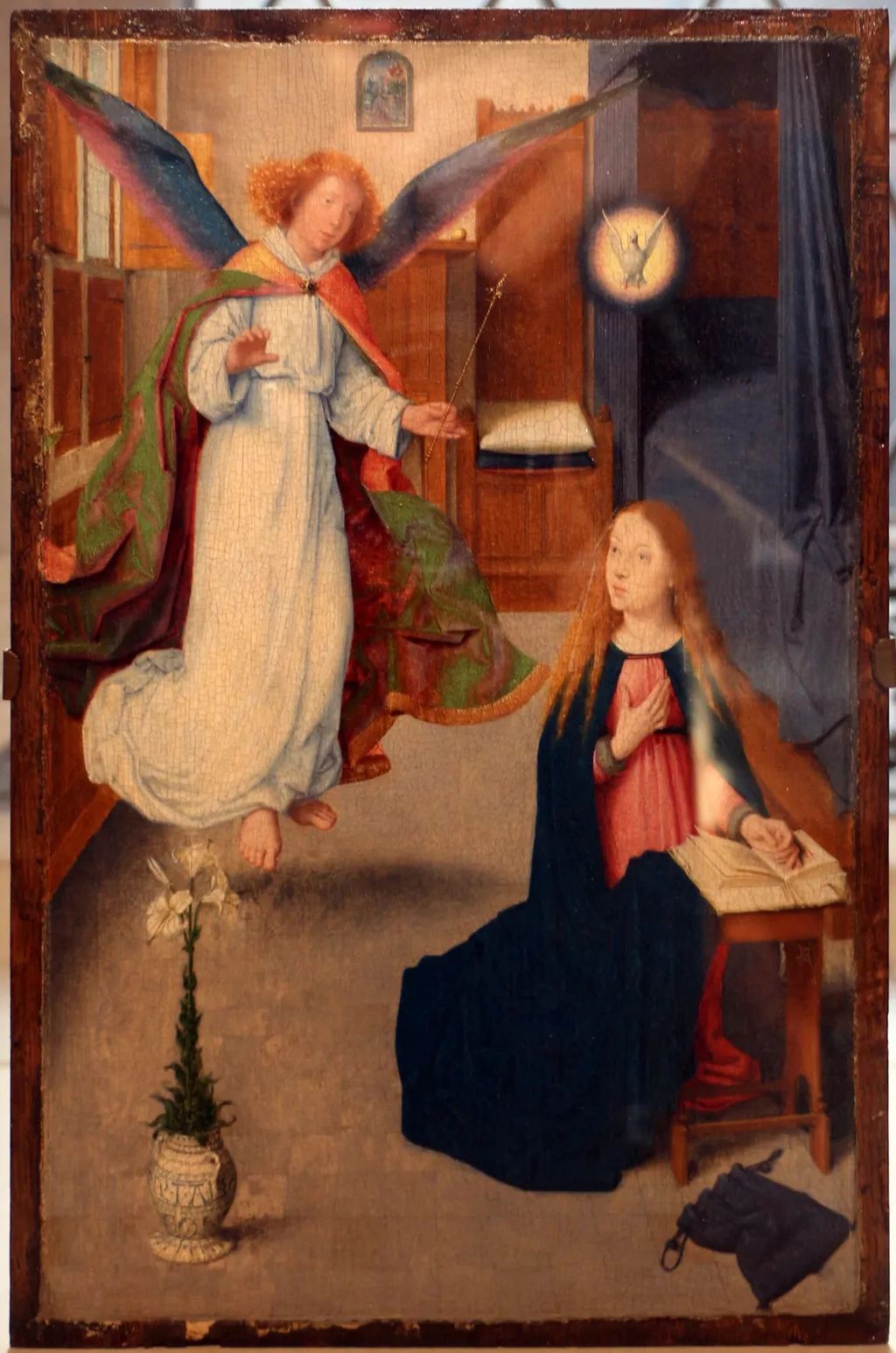
Untitled is an unspecified painting by Unknown. It is held in the collection of the Detroit Institute of Arts.
About this work
Overview
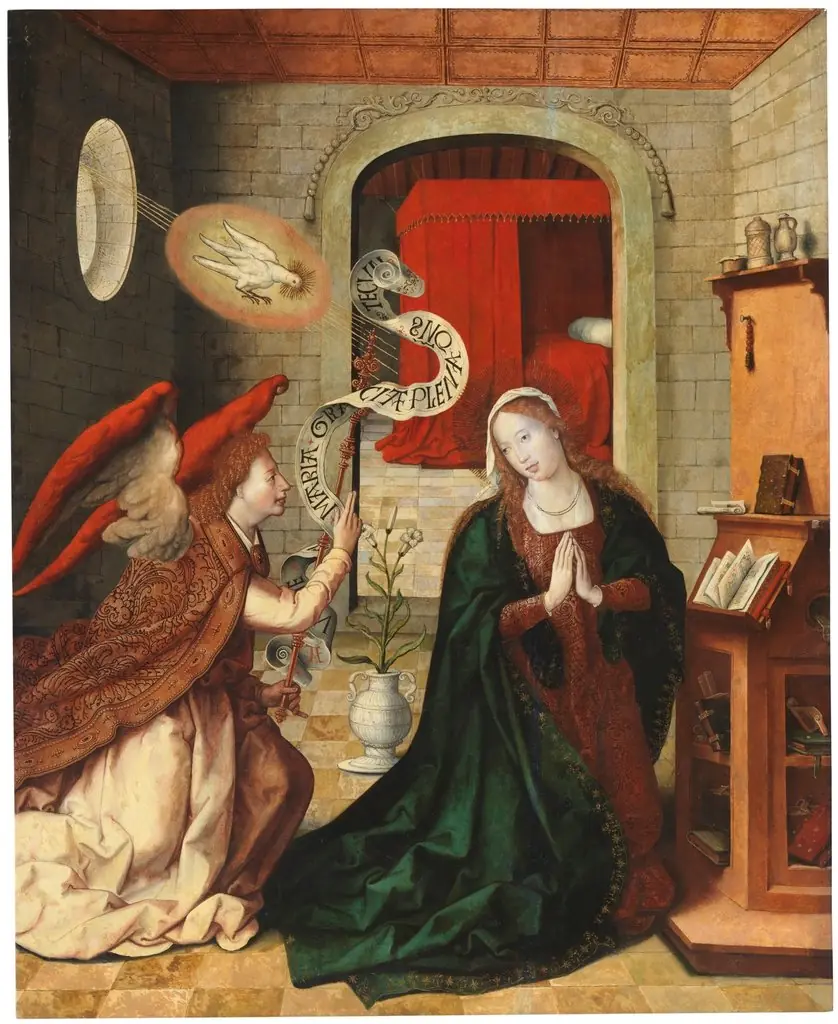
The calm demeanor of both figures and the stillness of the setting convey a sense of sacred stillness, emphasizing spiritual receptivity over dramatic action.
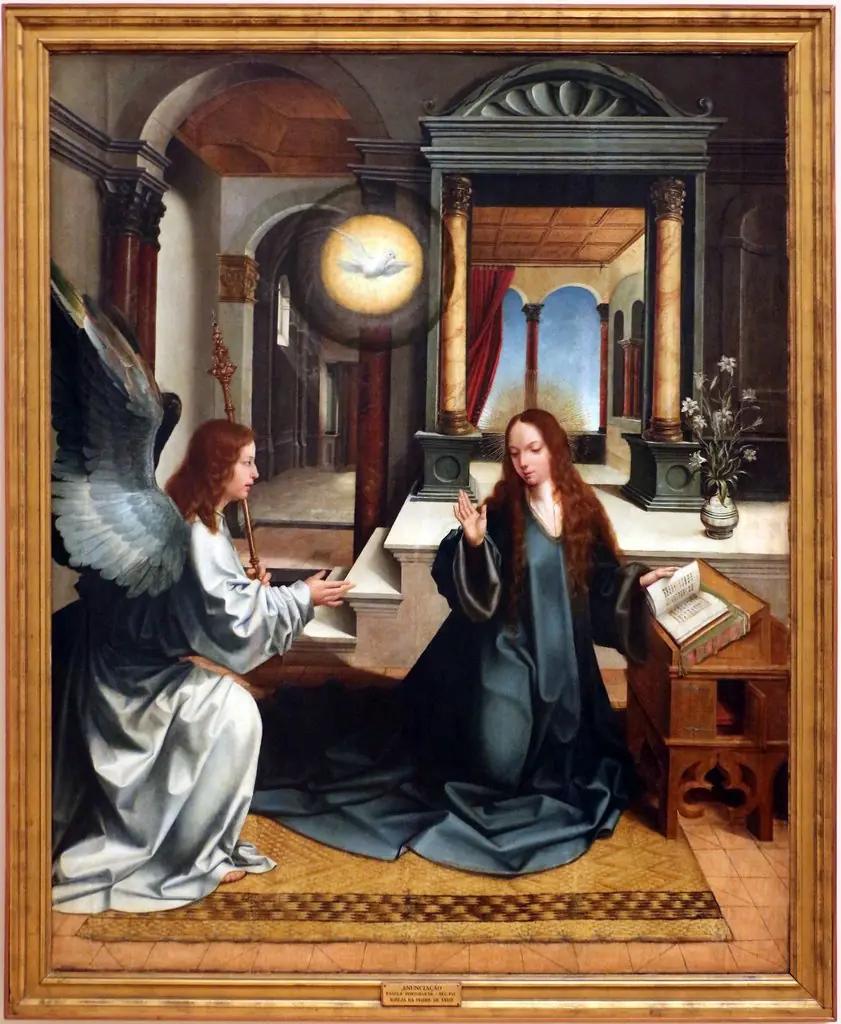
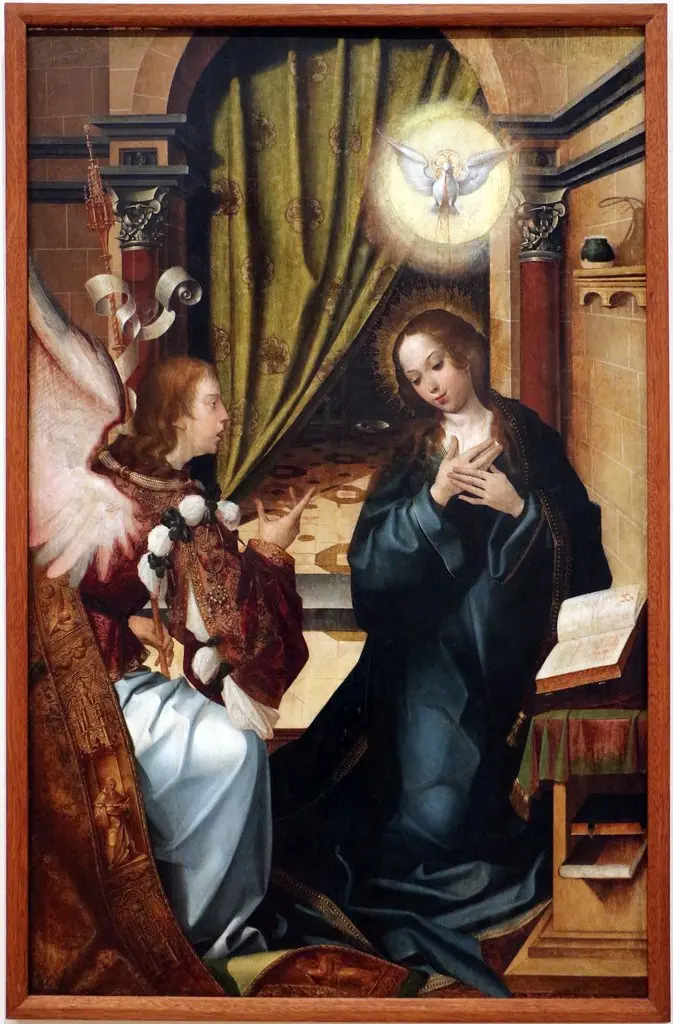
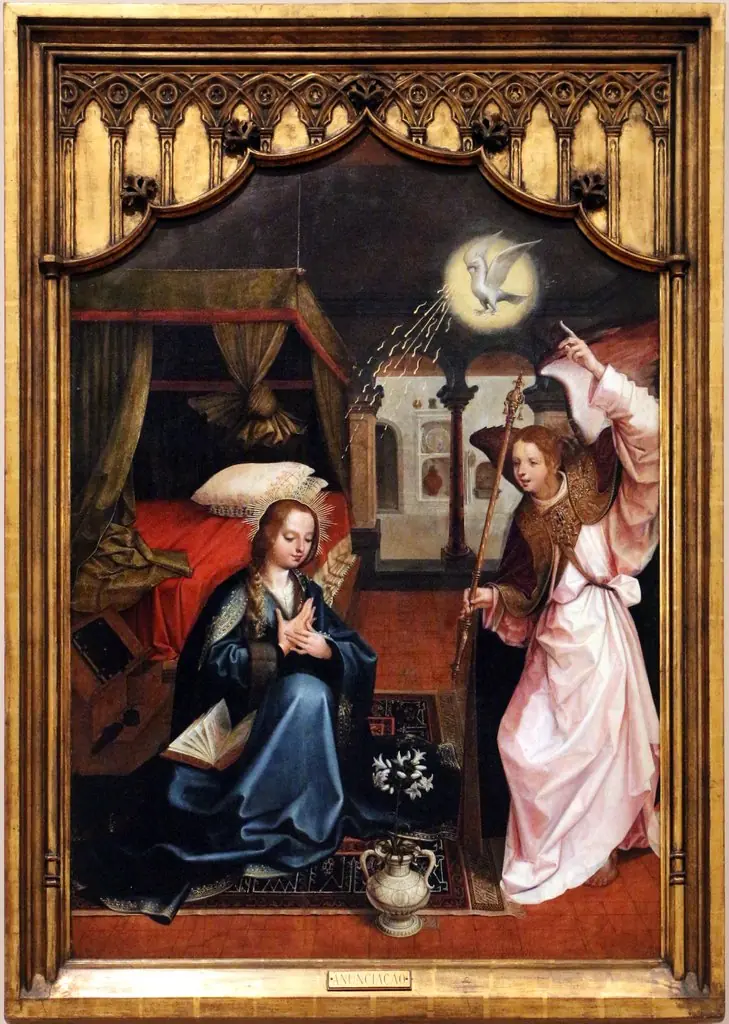
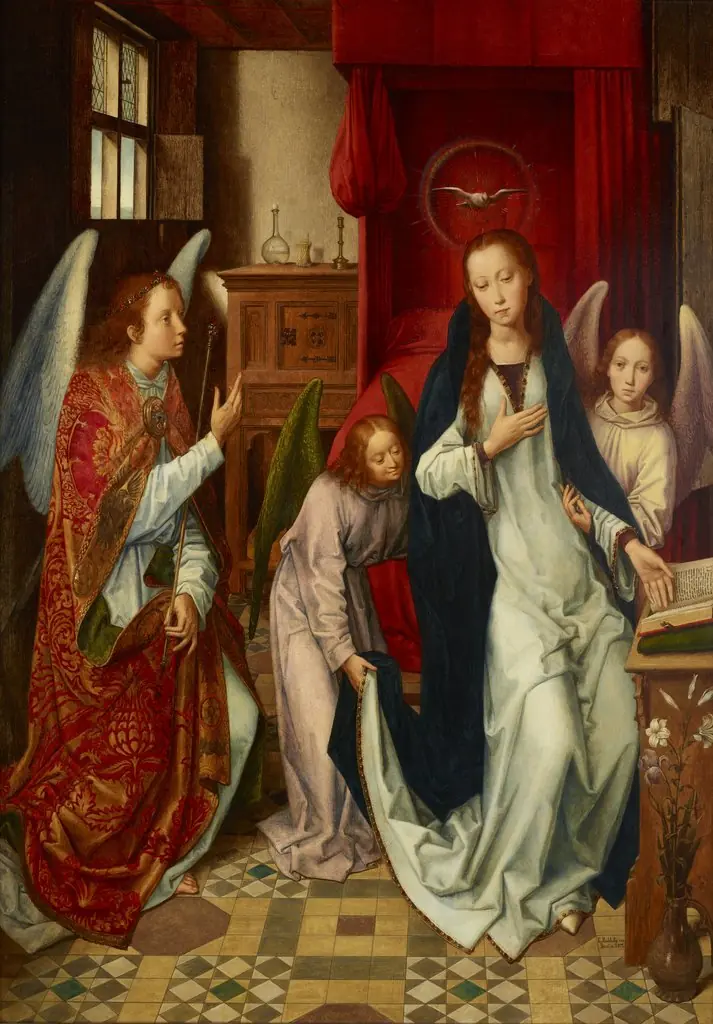
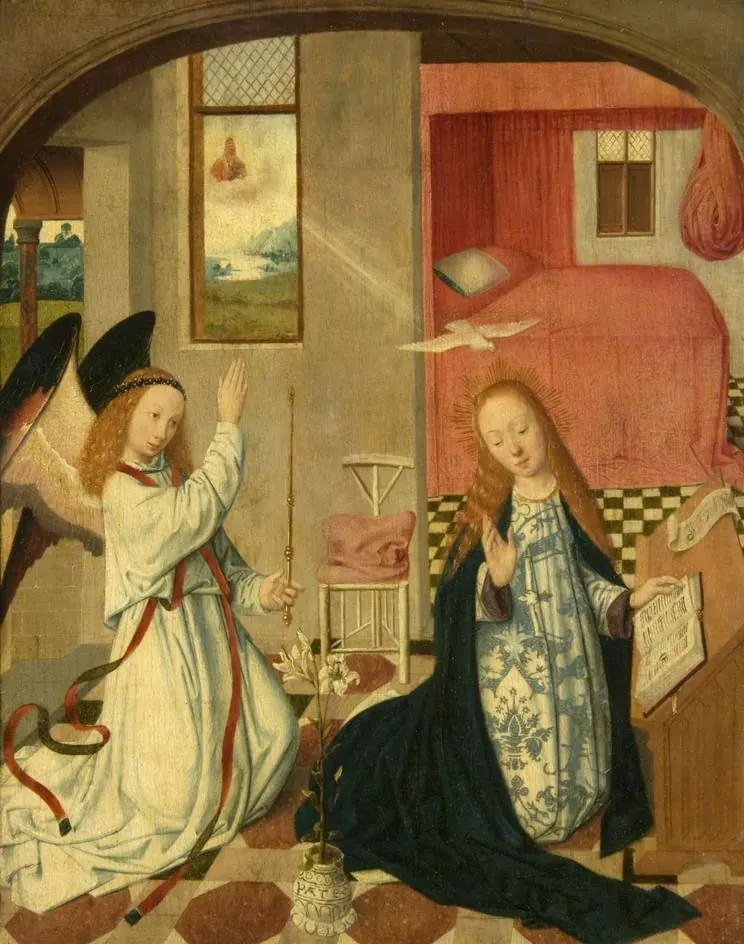
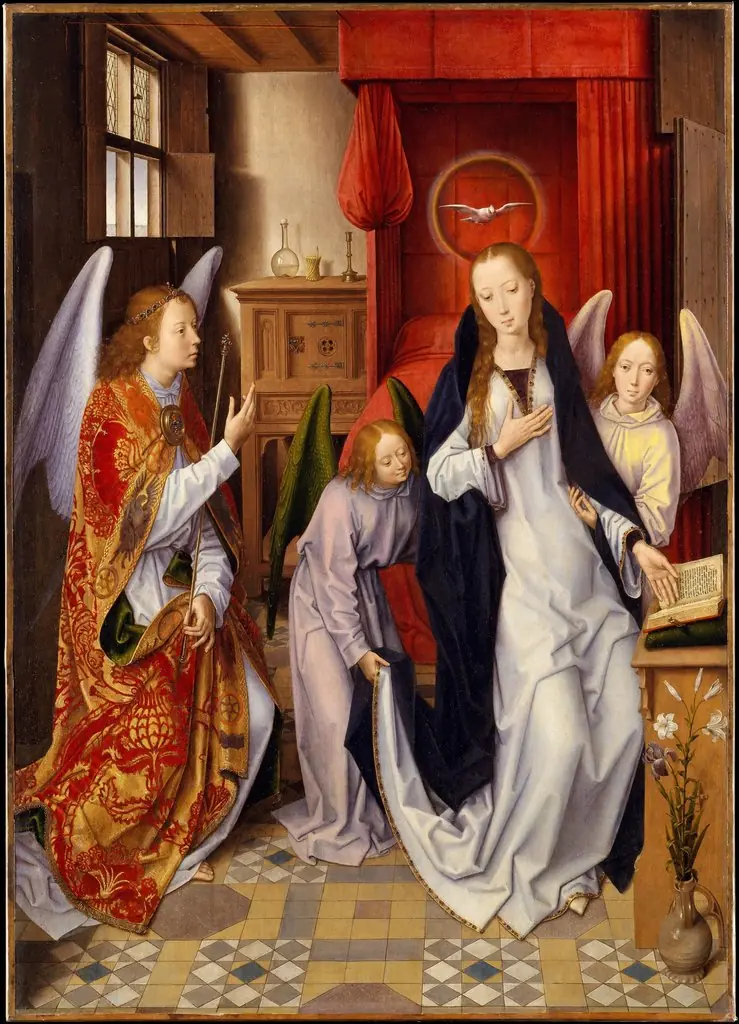
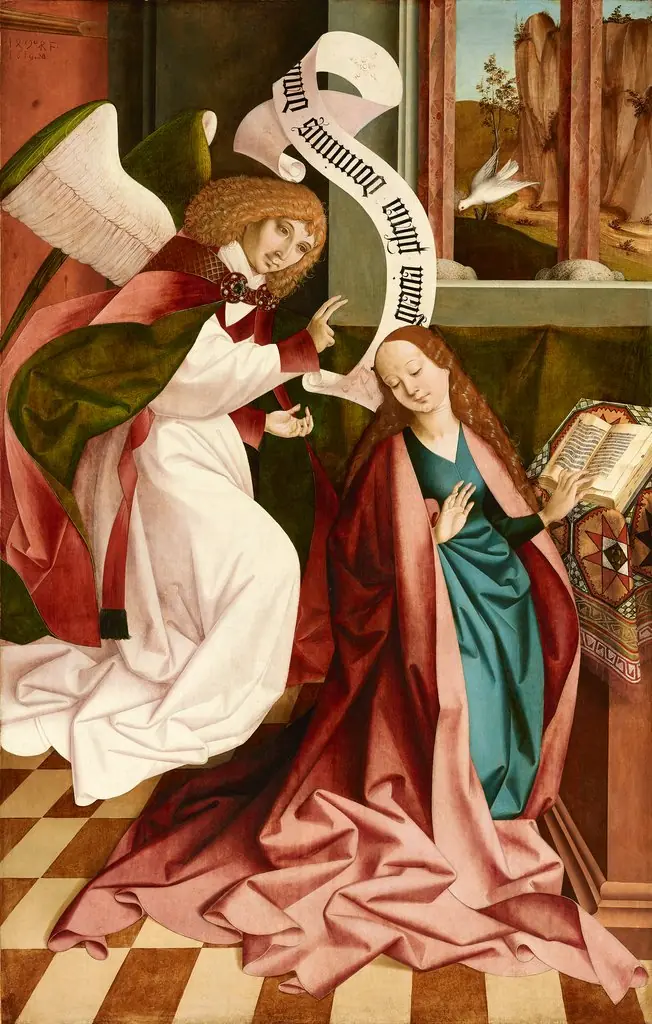
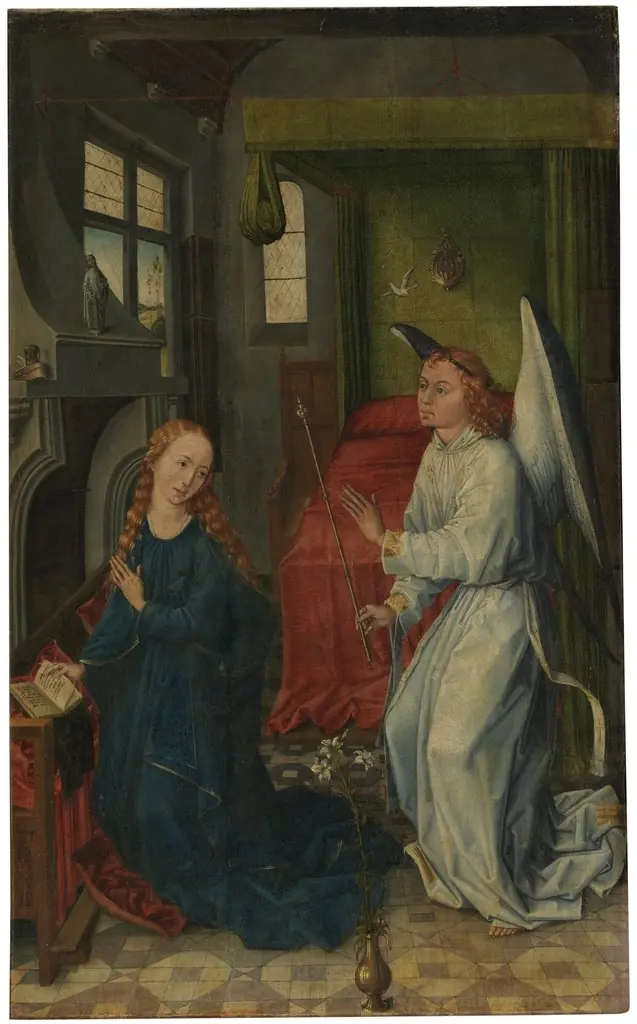
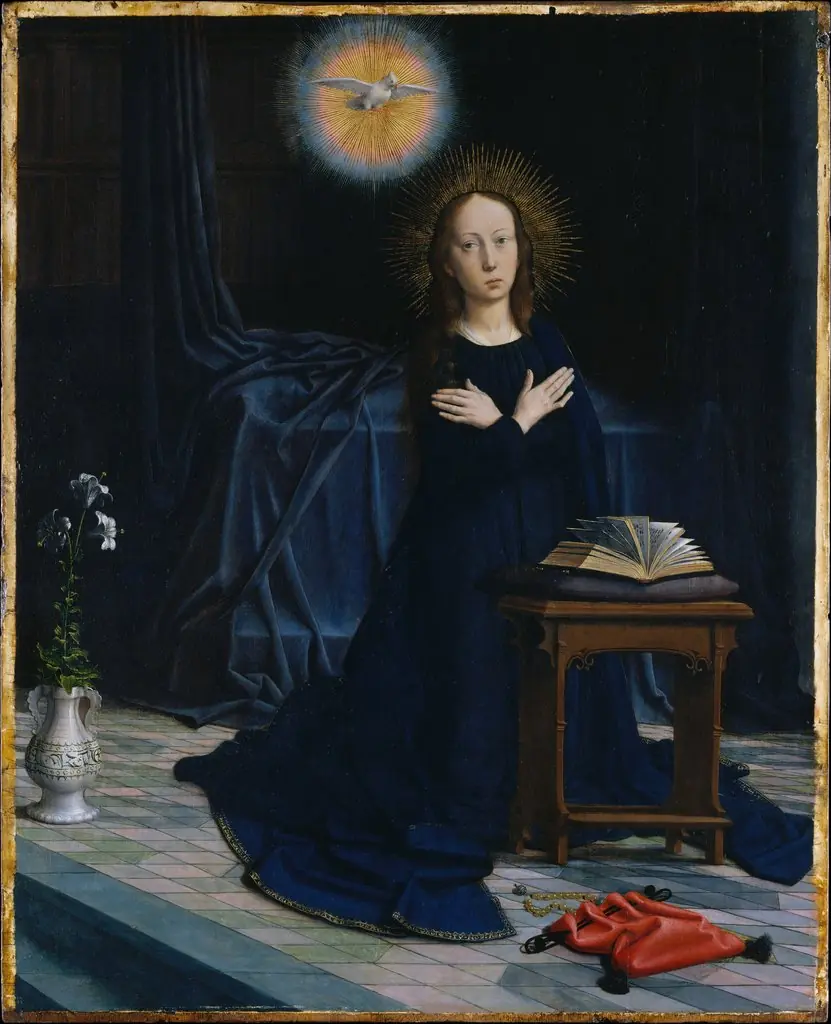
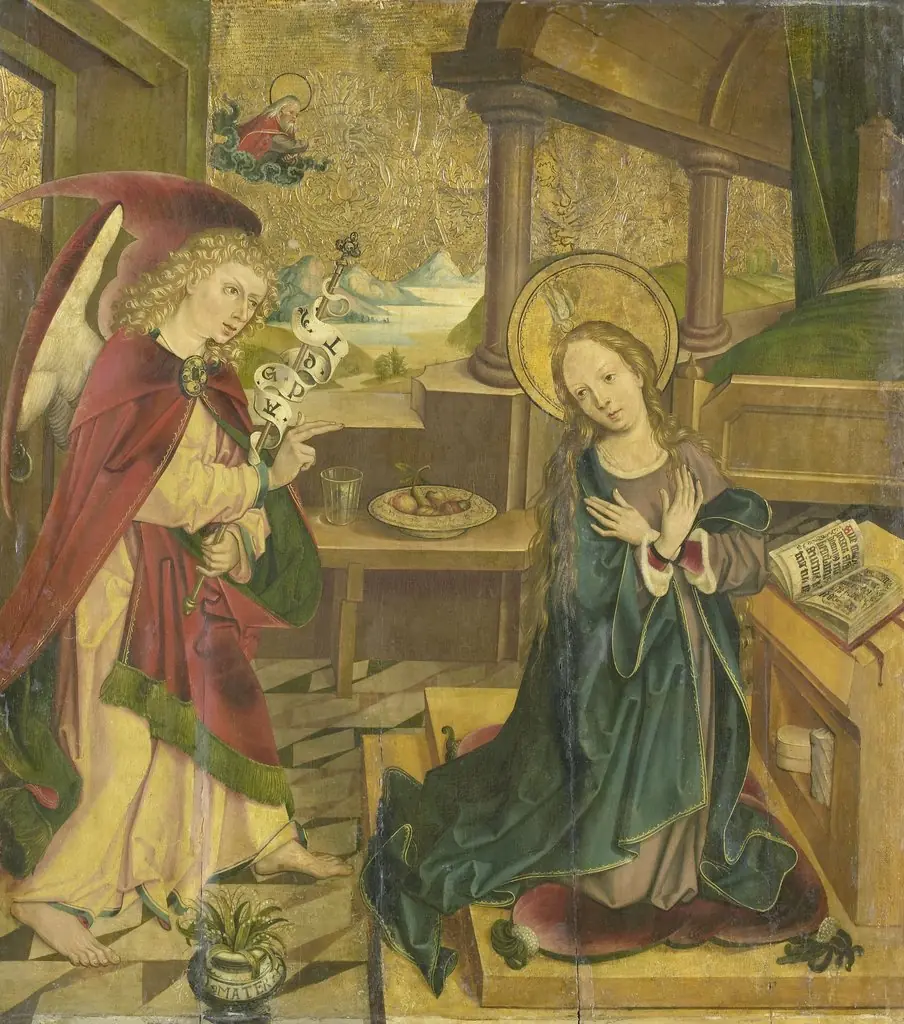
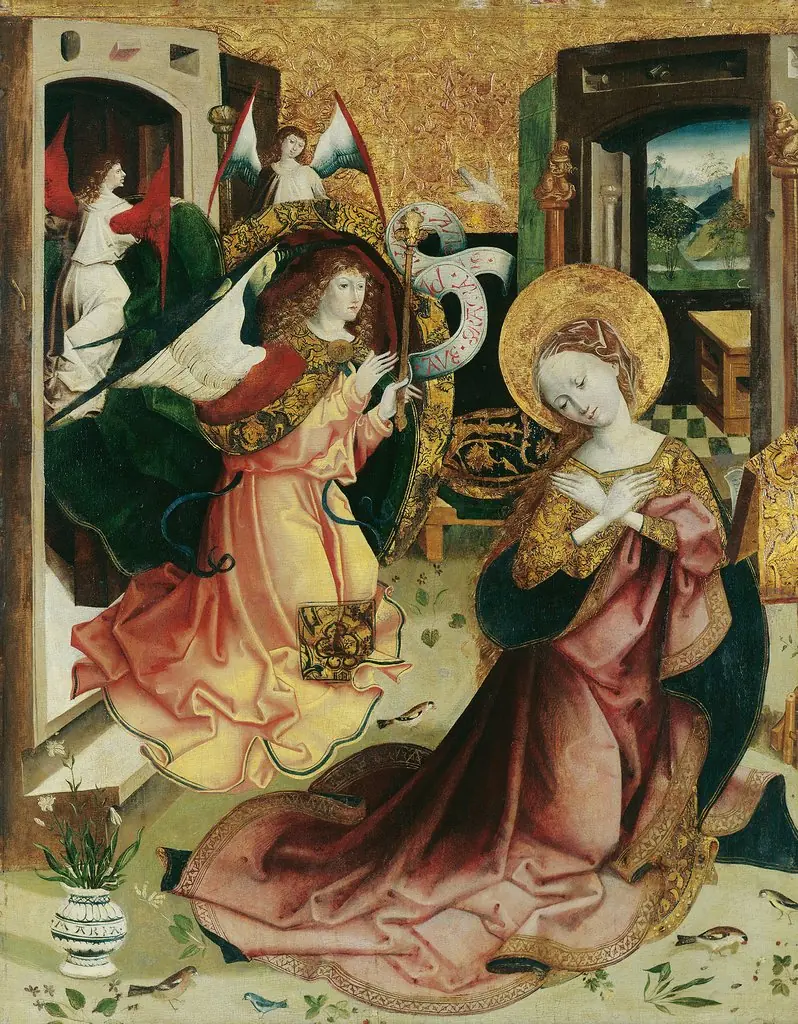
This painting presents a quiet moment from the Annunciation, a biblical event in which the angel Gabriel announces to the Virgin Mary that she will bear the Son of God. The composition is restrained, focusing on two figures in a modest interior. The calm demeanor of both figures and the stillness of the setting convey a sense of sacred stillness, emphasizing spiritual receptivity over dramatic action.
Subject & Meaning
The scene captures the instant of divine revelation, with Gabriel as messenger and Mary as humble recipient. His raised scepter signifies authority, while her clasped hands reflect submission and prayer. The domestic setting—bed, window, vase—grounds the supernatural in everyday life, suggesting holiness resides in quiet moments. The flowers may symbolize purity or the fleeting nature of earthly life.
Technique & Style
The figures are rendered with soft contours and muted tones, avoiding theatricality. The angel’s white robe and layered cloak contrast with Mary’s blue and red garments, subtly distinguishing their roles. The background is simplified, with minimal detail in the architecture and furnishings, directing focus to the interaction between the two figures. Light falls evenly, enhancing the tranquil atmosphere without casting strong shadows.
History & Provenance
The painting’s origin is undocumented, with no known artist or date attached. It lacks inscriptions or marks that would link it to a specific workshop or region. Its style suggests a late medieval or early Renaissance influence, possibly from Northern Europe, where intimate religious scenes were common in private devotional contexts. Ownership history remains unknown.
Context
During the late Middle Ages, private devotional paintings often depicted the Annunciation to aid personal prayer. The emphasis on domestic space and restrained emotion aligns with trends in northern European art, where spiritual experiences were portrayed as intimate rather than grand. Such works were used in homes or small chapels to foster contemplation and connection with sacred narratives.
Legacy
Though not attributed to a major artist, the painting reflects enduring conventions of Annunciation imagery: the angel’s gesture, Mary’s humility, and the symbolic interior. Its quiet tone distinguishes it from more ornate or dramatic versions, offering a model of reverence rooted in stillness. It contributes to the broader tradition of devotional art that prioritized inner spiritual experience over spectacle.
Artist & collection

 Domestic Scene
 Giacomo and Cardinal Marco, investing Andrea, Abbot of San Zeno, with his Benefice
 The Nymph of Fontainebleau
 Portrait of a Woman
 Madonna and Child with Saints in the Enclosed Garden
 Venus and Minerva
 Family Group of Four on Sofa
 Wall painting from Room H of the Villa of P. Fannius Synistor at Boscoreale