Artwork
The Annunciation
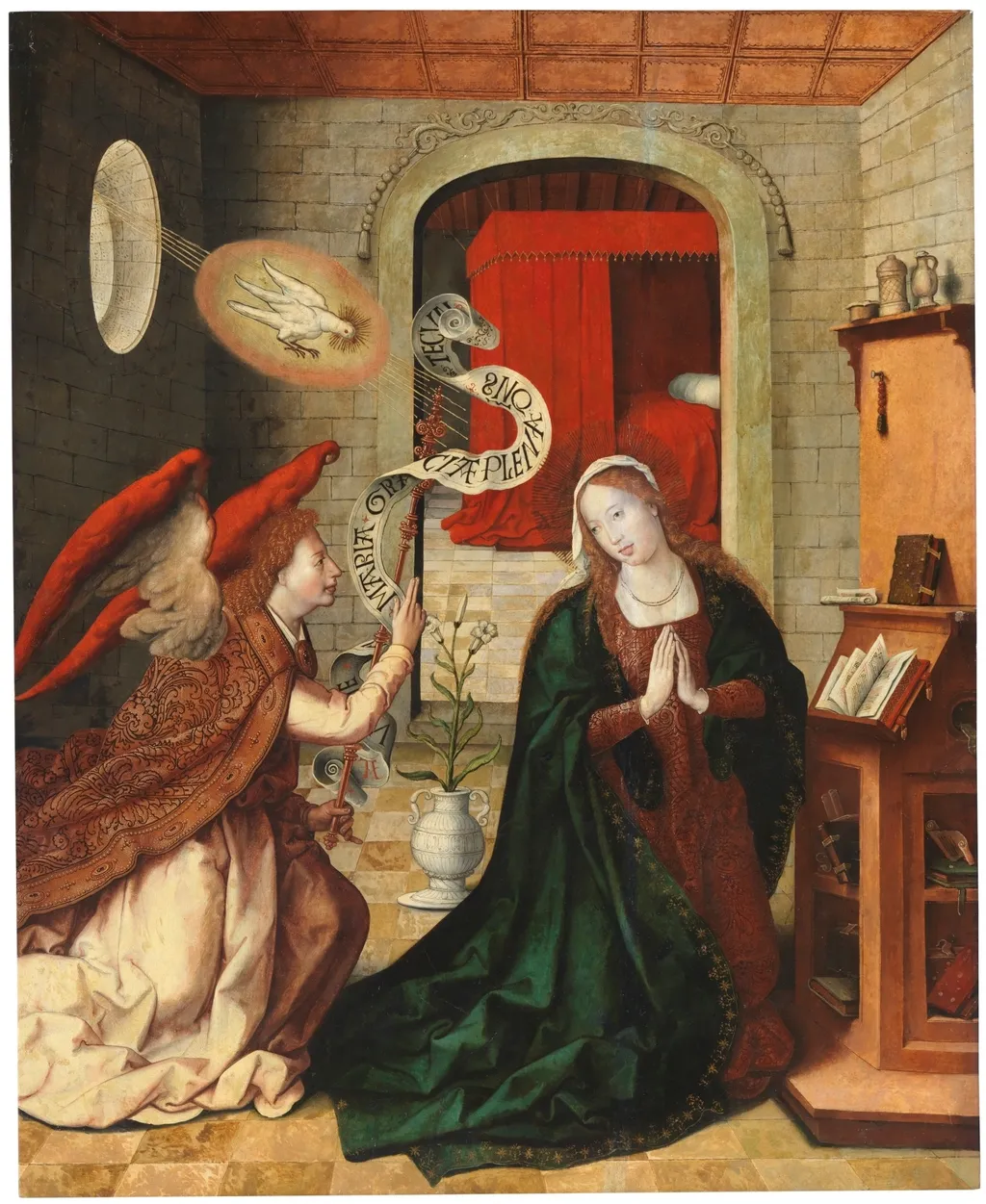
The Annunciation is an oil painting by the Early Renaissance artist León Picardo. It dates from 1501 and is held in the collection of the Museo del Prado.
About this work
The painting is called The Annunciation, and it was made by León Picardo in 1501.
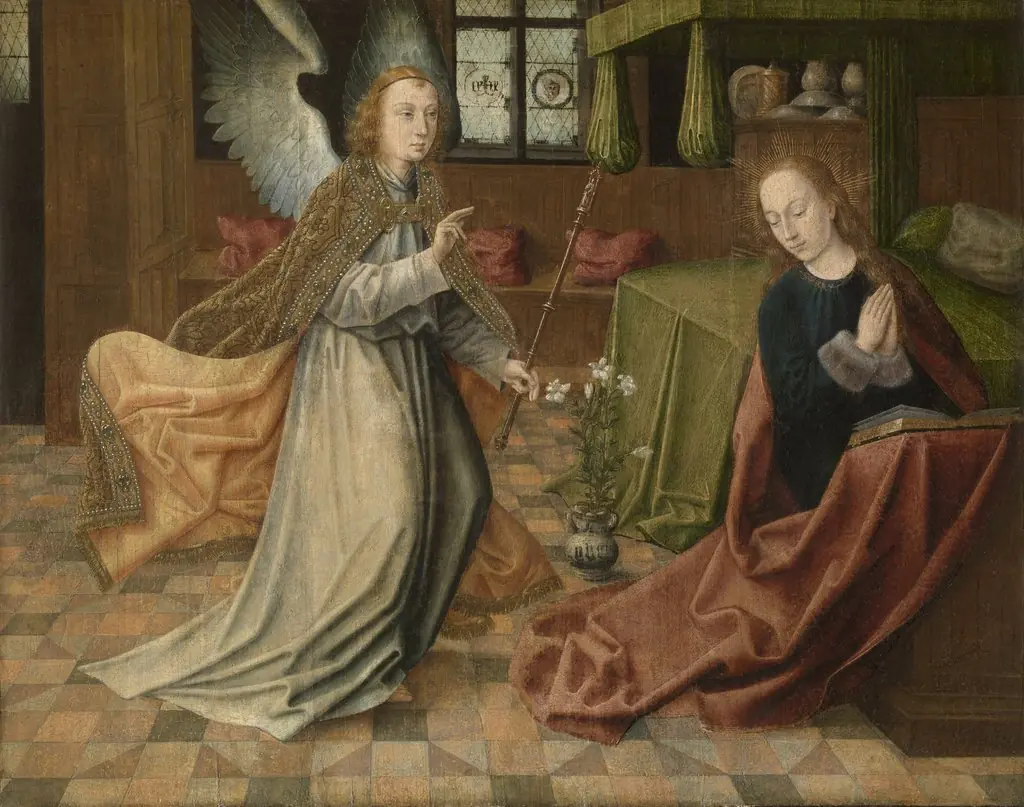
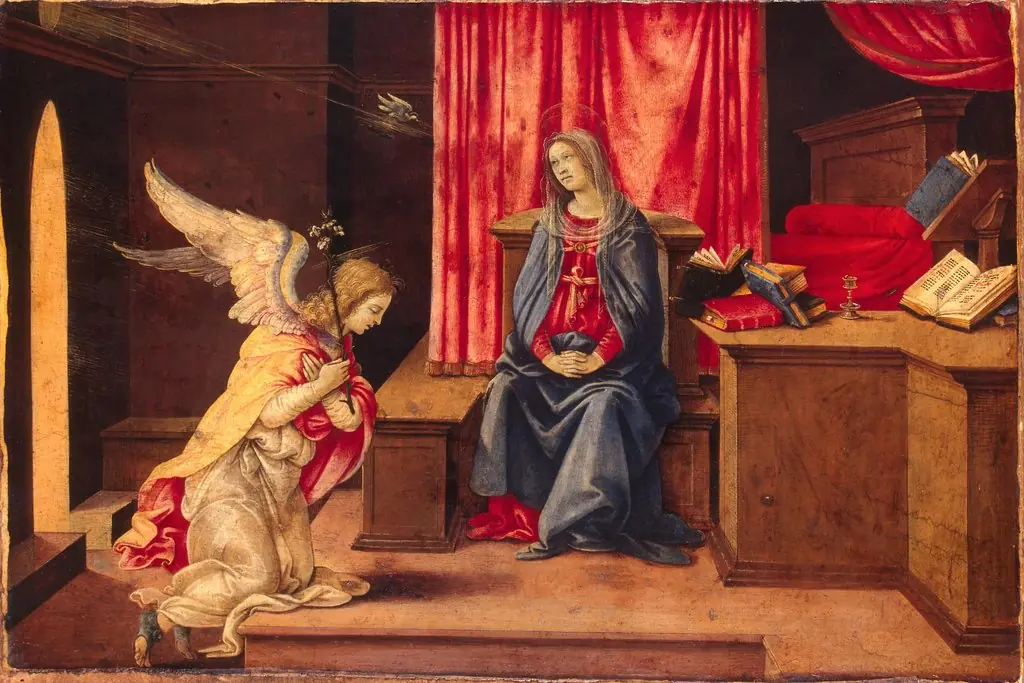
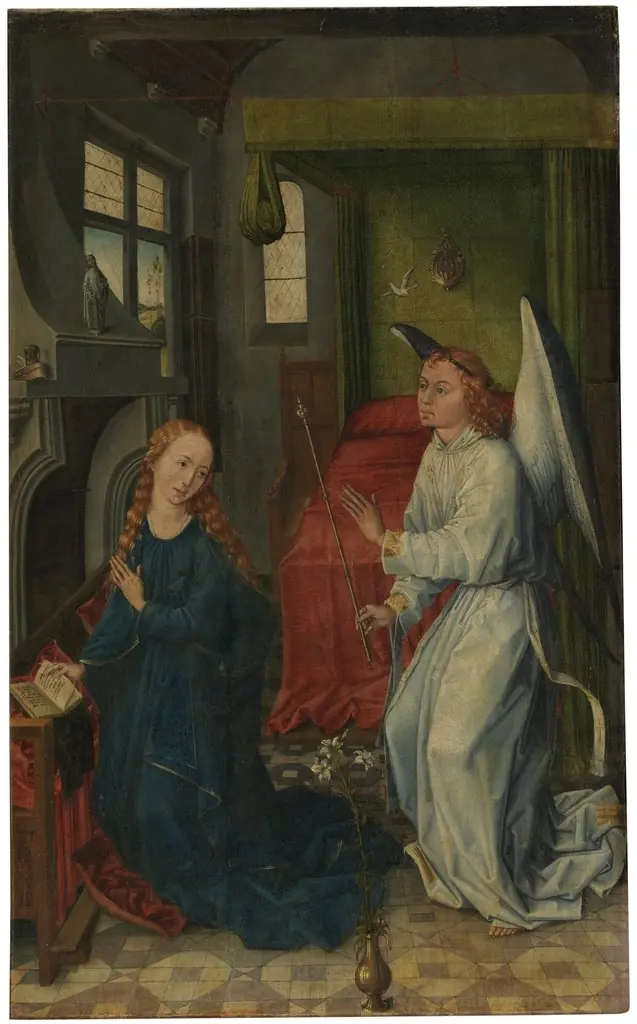
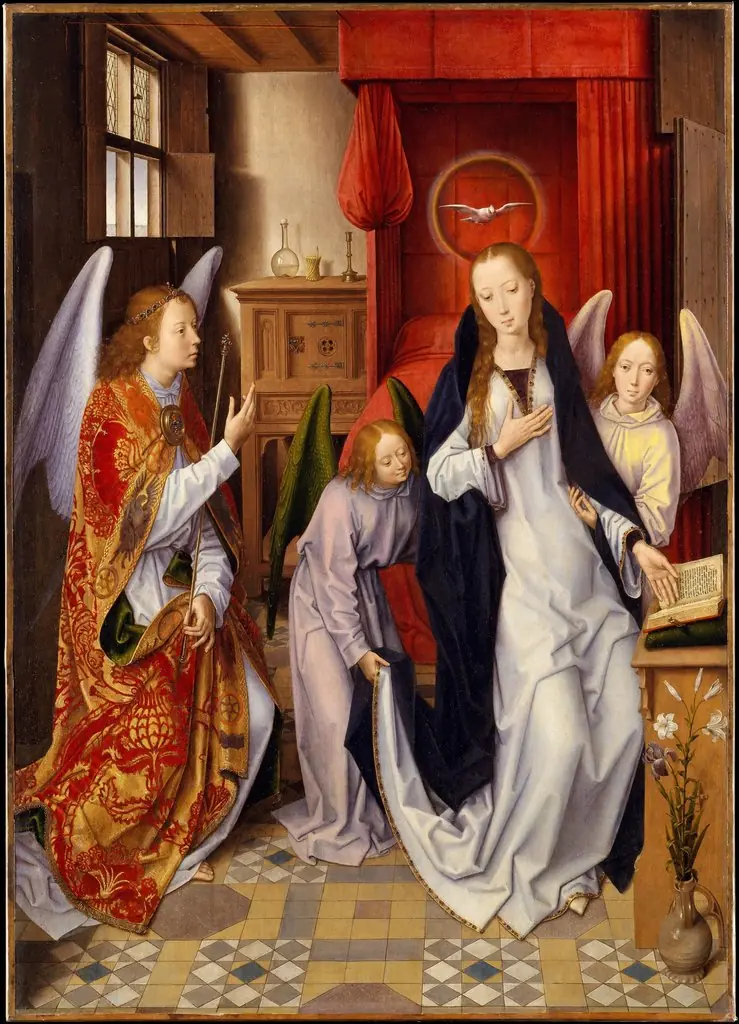
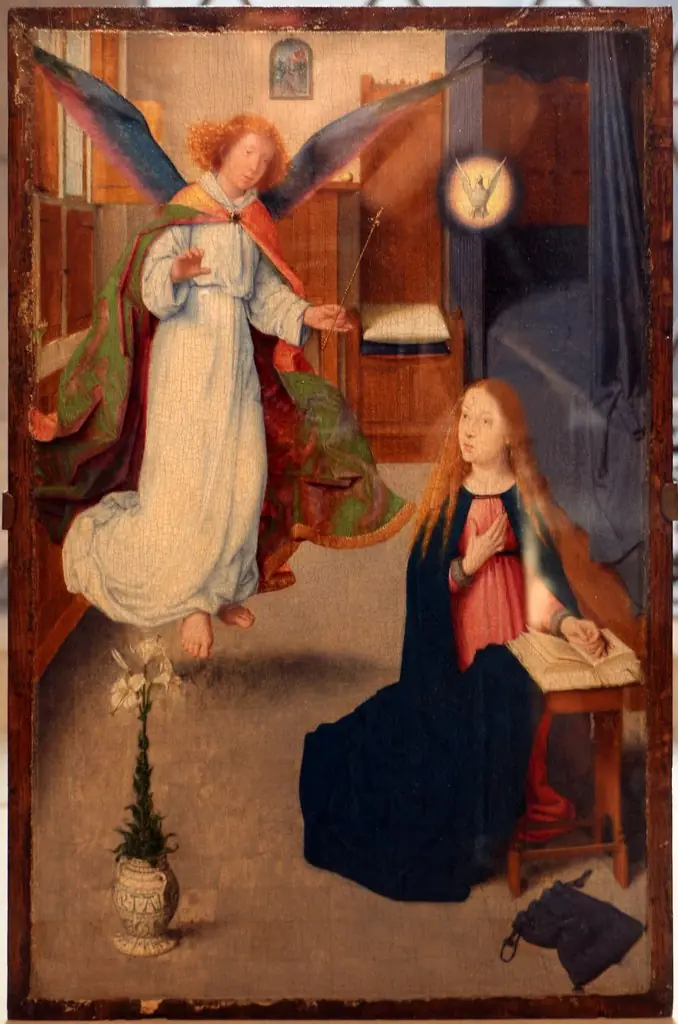
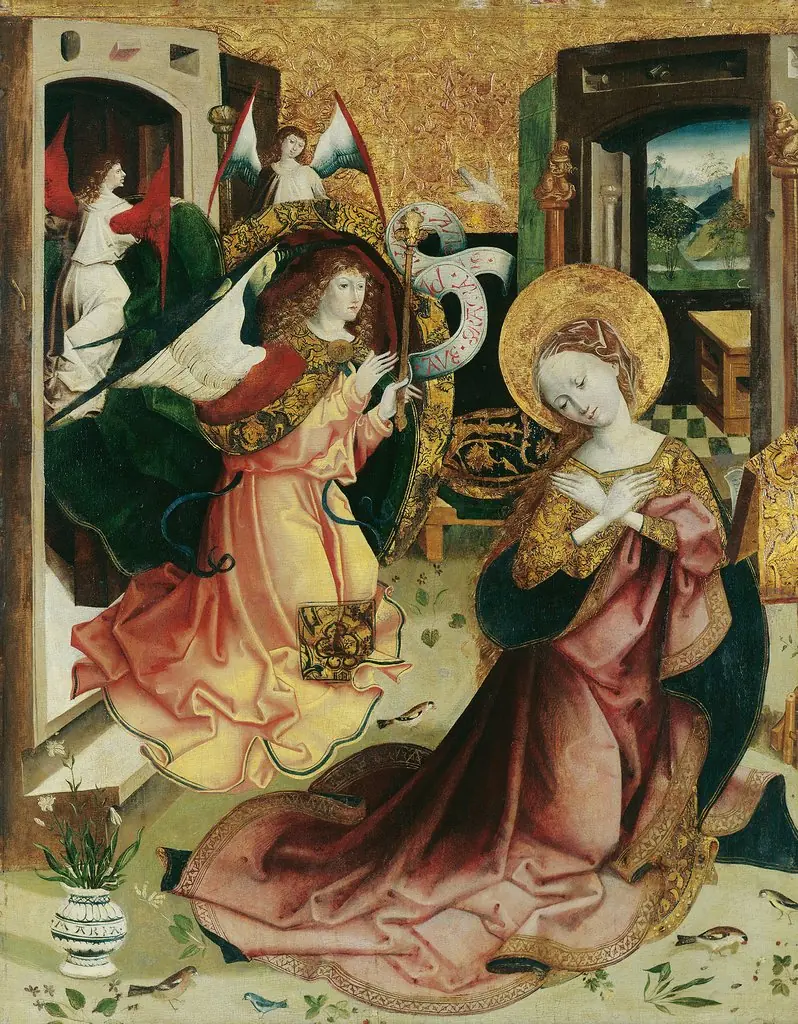
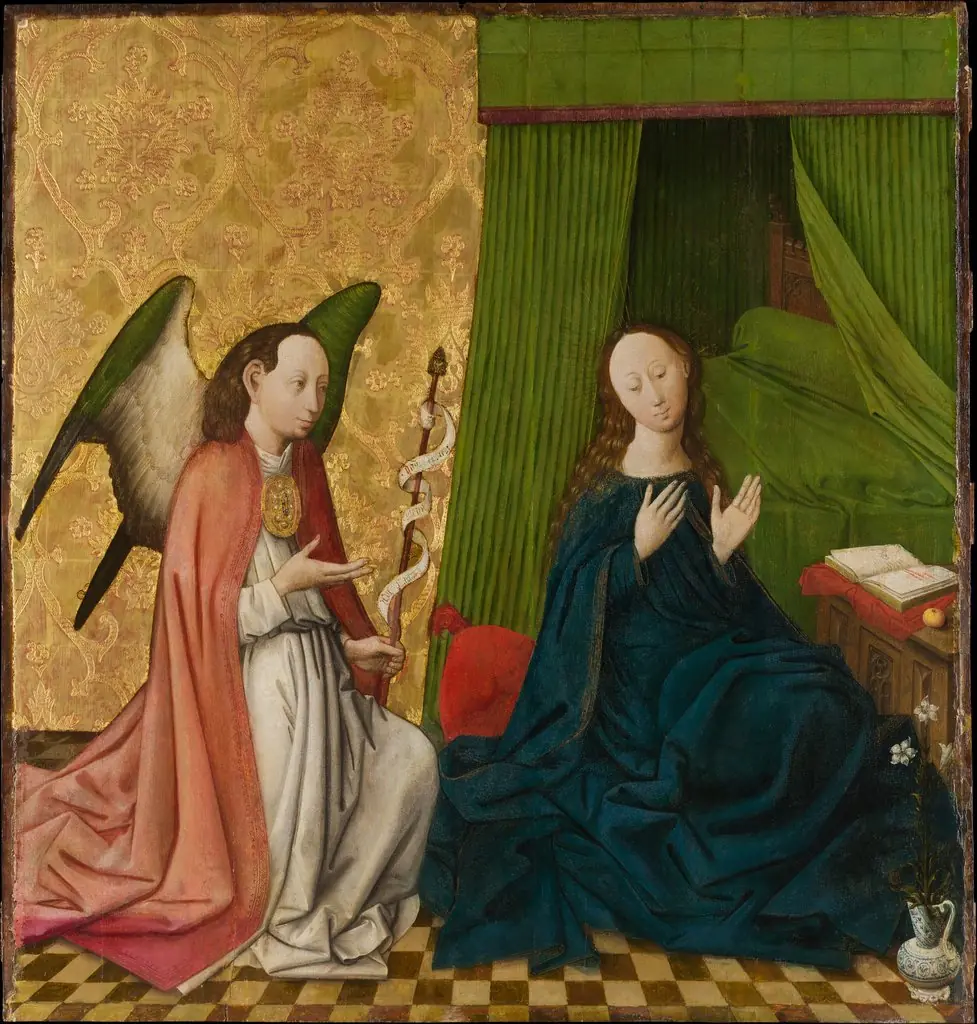
This painting shows an angel and a woman in a room. The angel is on the left, wearing a red robe with wings. The woman is on the right, wearing a green robe with her hands together. There's a plant in a white pot between them. The room has a stone wall and a red curtain in the background.
The angel is holding a scroll with writing on it. The woman looks surprised. The room is decorated with books and other objects.
The painting is called The Annunciation, and it was made by León Picardo in 1501. It's held at the Museo del Prado. If you want to learn more about this style, look up chiaroscuro.
Overview
Painted in 1501 by León Picardo, The Annunciation is an oil-on-panel work depicting a moment from Christian tradition. It resides in the Museo del Prado in Madrid. The composition centers on the angel Gabriel’s announcement to the Virgin Mary, rendered with quiet intensity and attention to spatial detail. The scene unfolds in a modest interior, framed by architectural elements and domestic objects that ground the sacred event in everyday reality.
Subject & Meaning
The painting illustrates the moment the angel Gabriel informs Mary that she will bear the Son of God. Gabriel, on the left, holds a scroll inscribed with divine words, while Mary, on the right, responds with a gesture of surprise and humility. The presence of books and vessels suggests her piety and learning. The plant in the white pot may symbolize purity, reinforcing theological themes of virginity and divine grace within a domestic setting.
Technique & Style
Picardo employs a restrained palette of earth tones and vivid accents, particularly in the angel’s red robe and Mary’s green garment. Light falls naturally across the figures and interior, modeling forms with subtle gradations rather than dramatic contrast. The rendering of textures—stone walls, fabric folds, and ceramic pottery—demonstrates careful observation. The space is shallow but carefully structured, guiding the viewer’s eye between the two central figures.
History & Provenance
Created in 1501, the painting entered the collection of the Museo del Prado in the 19th century, likely through royal or ecclesiastical acquisitions. Its attribution to León Picardo, a lesser-known Spanish painter of the early Renaissance, reflects regional artistic production outside major centers like Toledo or Seville. The work has remained largely unchanged in its display and conservation since its inclusion in the museum’s holdings.
Context
This work belongs to a period when Spanish religious art was increasingly influenced by Flemish realism and Italian compositional clarity. Though not part of the major courts or academies, artists like Picardo produced devotional images for local churches and private patrons. The Annunciation reflects a trend toward intimate, narrative-driven scenes that invited personal contemplation, blending spiritual symbolism with tangible domestic details.
Legacy
The Annunciation remains a representative example of early 16th-century Spanish devotional painting, valued for its quiet dignity and attention to material detail. While Picardo’s broader oeuvre is limited, this work contributes to understanding regional artistic practices beyond the most celebrated names of the era. It continues to serve as a reference for the evolution of religious imagery in Spain during the transition from late Gothic to Renaissance sensibilities.
Own this work as a print
Artist & collection
Artist
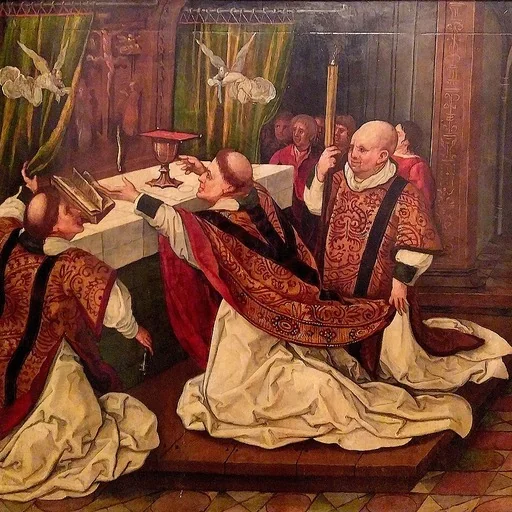
Spanish painter León Picardo left behind three quiet oil paintings from 1501, all centered on religious scenes.