Artwork
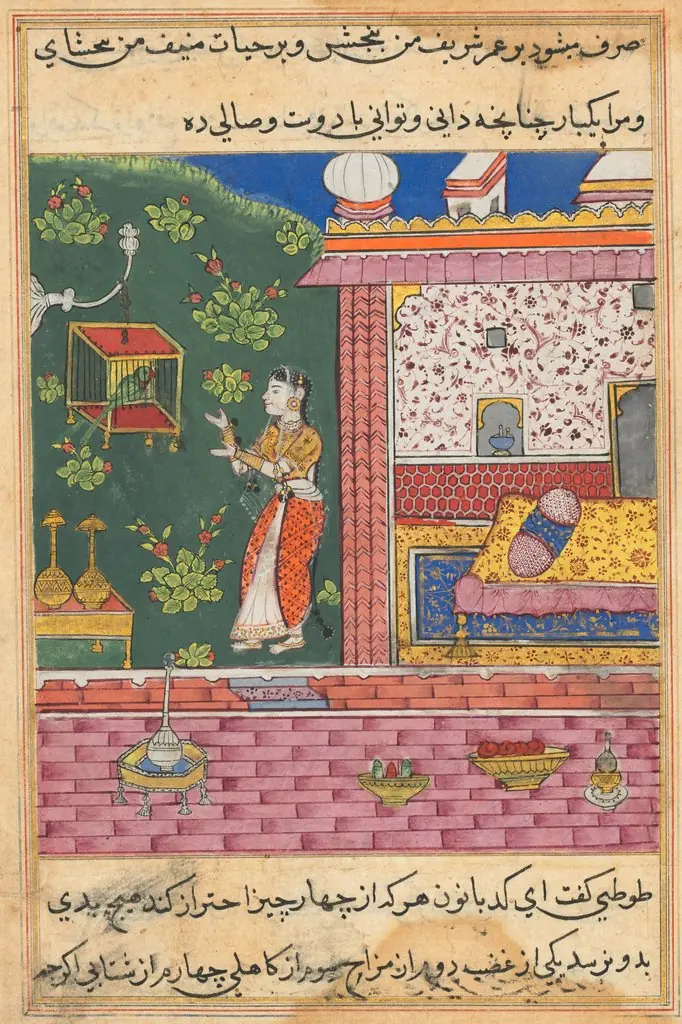
The Parrot Addresses Khujasta at the Beginning of the Eighth Night, from a Tuti-nama (Tales of a Parrot)
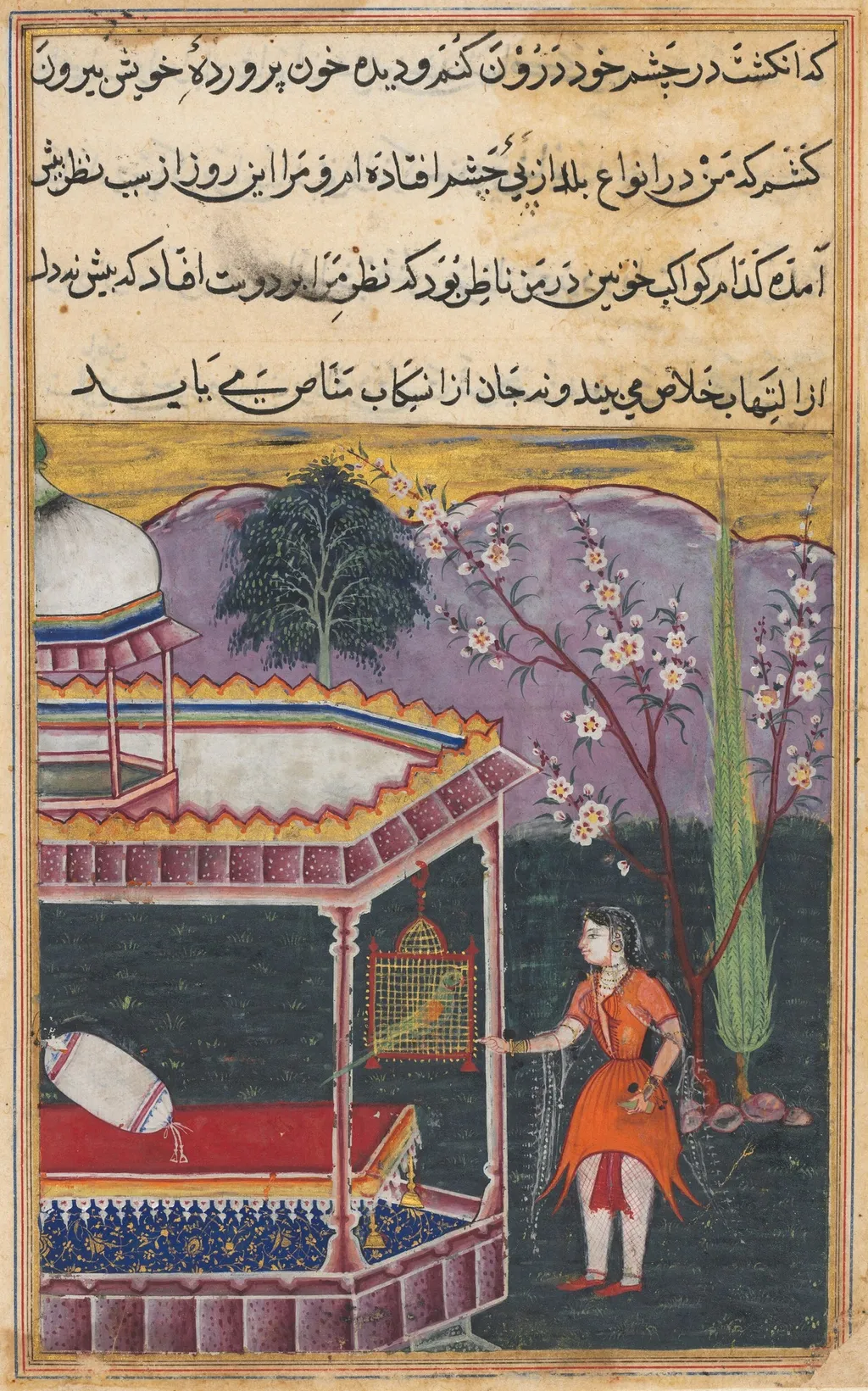
The Parrot Addresses Khujasta at the Beginning of the Eighth Night, from a Tuti-nama (Tales of a Parrot) is an unspecified painting. It dates from 1560 and is held in the collection of the Cleveland Museum of Art.
About this work
Overview
The work depicts a narrative scene from a Persian illustrated manuscript, showing a woman in vivid red standing before a pavilion with a red roof edged in blue.
The work depicts a narrative scene from a Persian illustrated manuscript, showing a woman in vivid red standing before a pavilion with a red roof edged in blue. Inside the pavilion a man reclines on a bed draped with a white sheet, while a parrot perches on a nearby branch surrounded by white blossoms. The composition combines interior and exterior spaces, suggesting a moment from a literary episode.
Subject & Meaning
The image illustrates a passage from the Tuti‑nama, a collection of moral tales featuring a talking parrot. In this episode the parrot addresses a character named Khujasta at the start of the eighth night, a moment that traditionally conveys counsel or admonition within the story’s moral framework.
Technique & Style
Executed in miniature painting technique, the piece employs fine brushwork and a bright palette typical of Persian courtly art. Delicate patterns on the fabrics and architectural details are rendered with precise line work, while the use of gold and vivid reds emphasizes the luxurious setting.
History & Provenance
The painting originates from a manuscript of the Tuti‑nama, likely produced in the Safavid period for an elite patron. It entered the collection of the Cleveland Museum of Art through acquisition in the 20th century, where it is displayed among other Persian miniatures.
Context
Miniature illustrations such as this were integral to Persian literary culture, providing visual accompaniment to poetic and prose narratives. The scene reflects the courtly aesthetic and storytelling conventions of its time, where animals often serve as moral agents.
Artist & collection

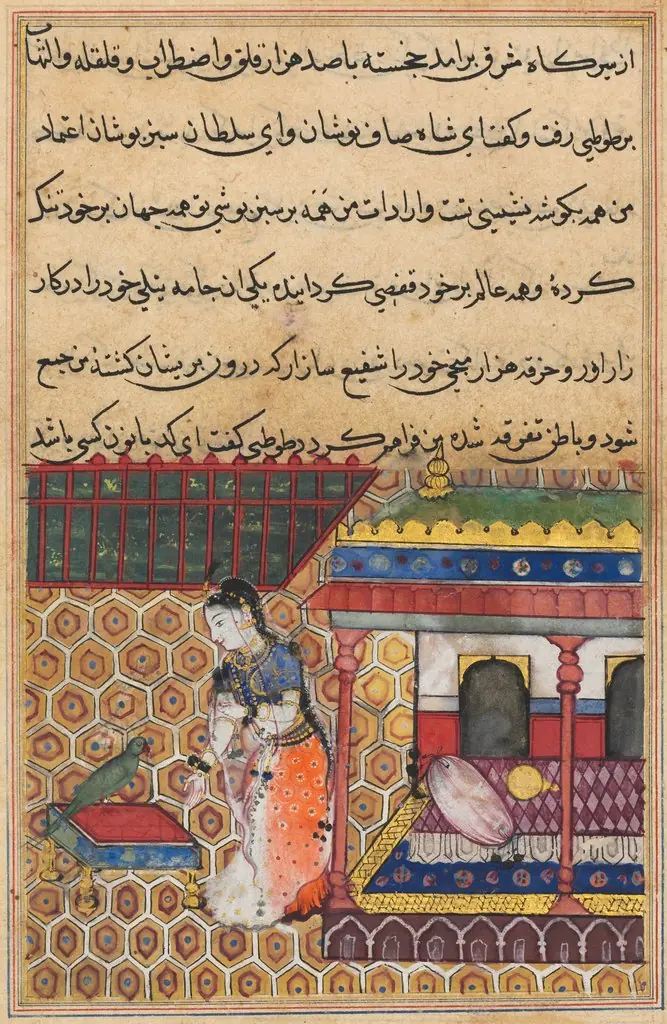 The parrot addresses Khujasta at the beginning of the thirty-eighth night, from a Tuti-nama (Tales of a Parrot)
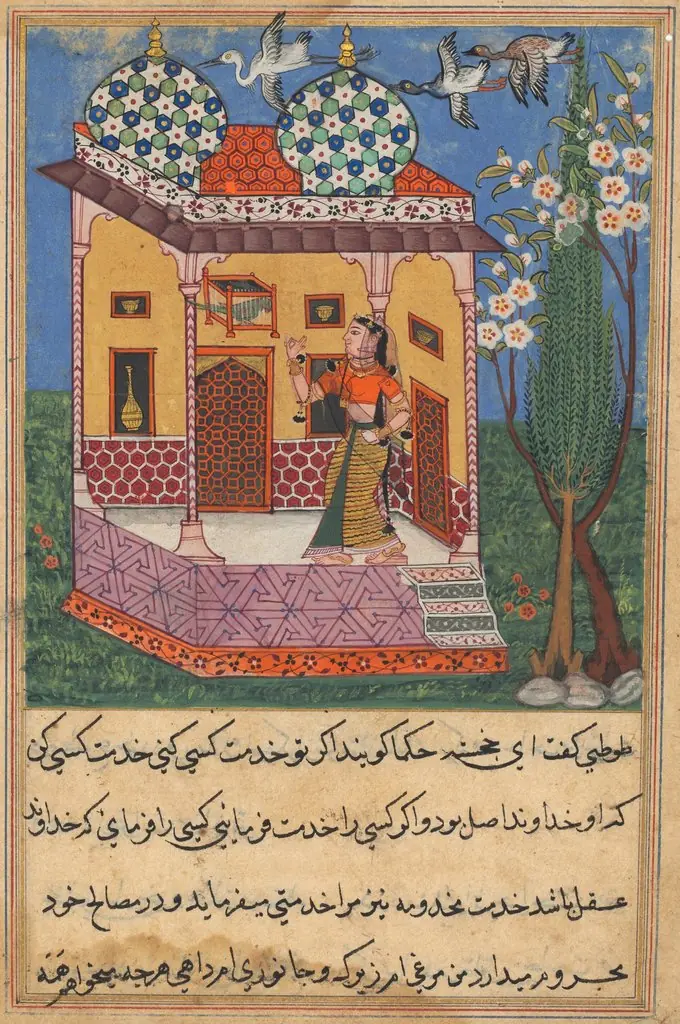 The Parrot Addresses Khujasta at the Beginning of the Twenty-sixth Night, from a Tuti-nama (Tales of a Parrot)
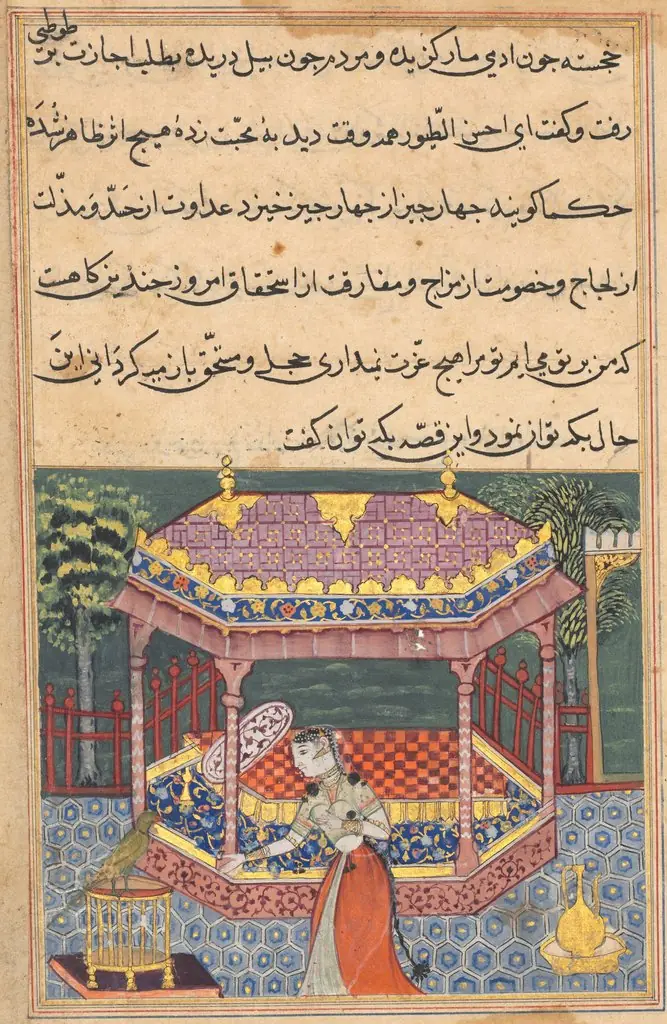 The parrot addresses Khujasta at the beginning of the thirty-seventh night, from a Tuti-nama (Tales of a Parrot)
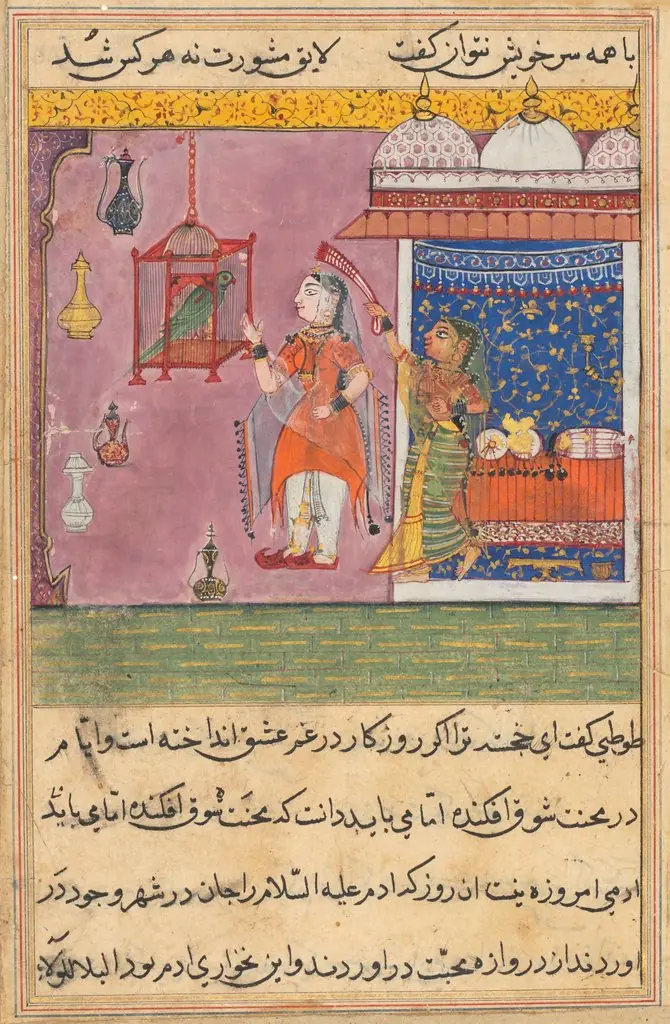 The Parrot Addresses Khujasta at the Beginning of the Nineteenth Night, from a Tuti-nama (Tales of a Parrot)
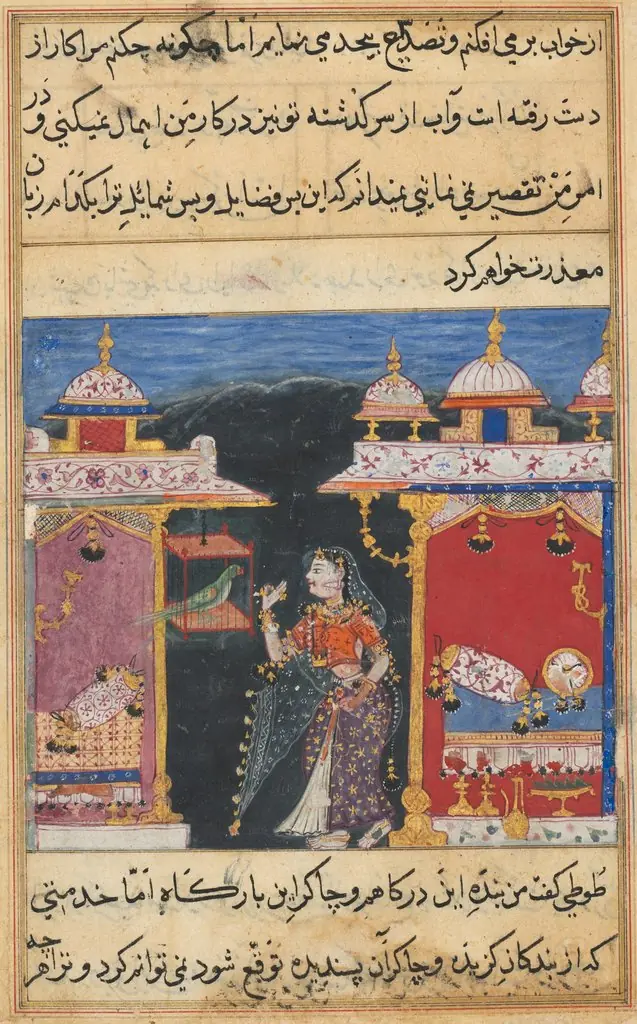 The Parrot Addresses Khujasta at the Beginning of the Seventh Night, from a Tuti-nama (Tales of a Parrot)
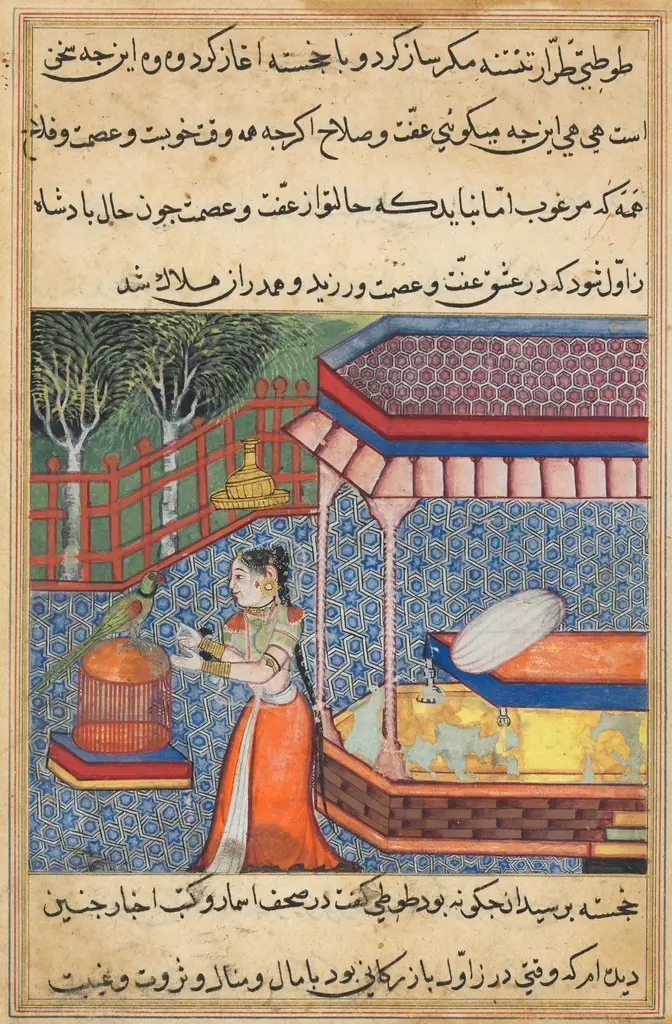 The parrot addresses Khujasta at the beginning of the thirty-sixth night, from a Tuti-nama (Tales of a Parrot)
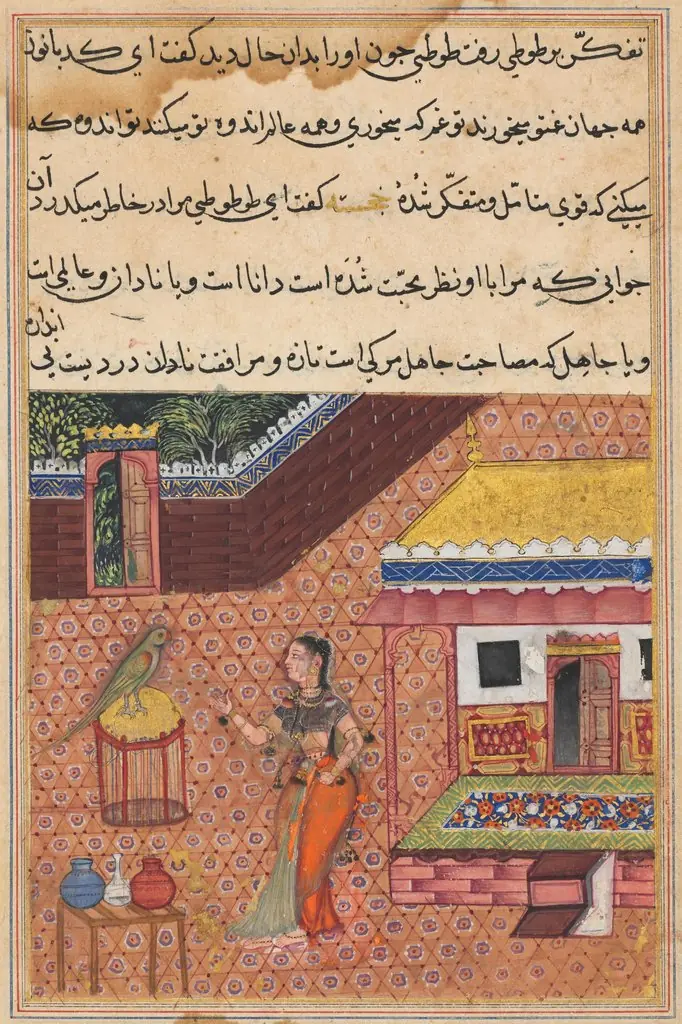 The parrot addresses Khujasta at the beginning of the thirty-fourth night, from a Tuti-nama (Tales of a Parrot)
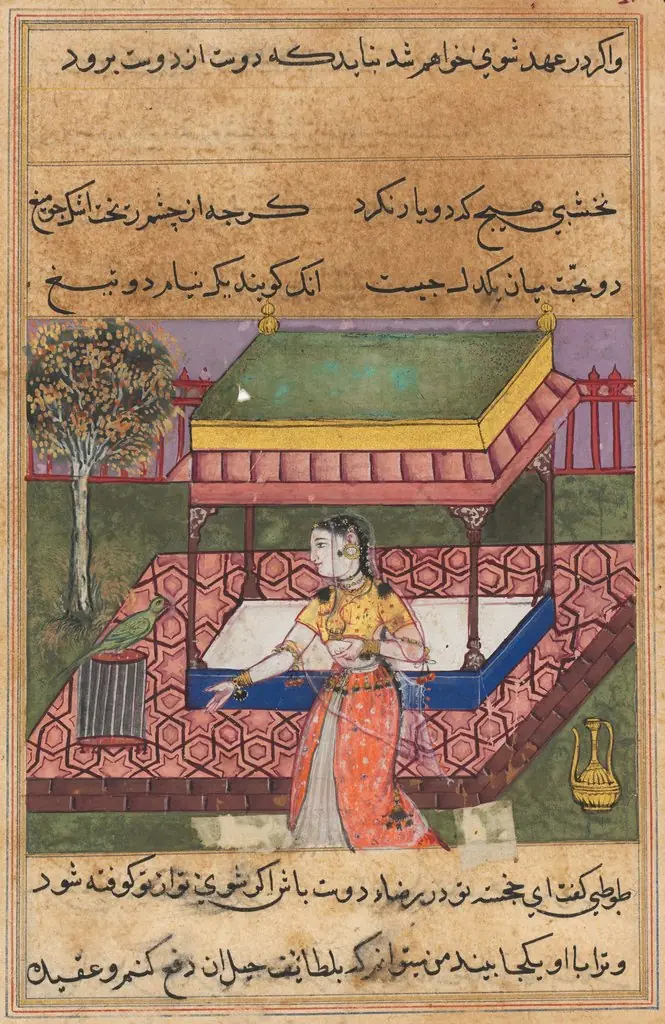 The parrot addresses Khujasta at the beginning of the fortieth night, from a Tuti-nama (Tales of a Parrot)
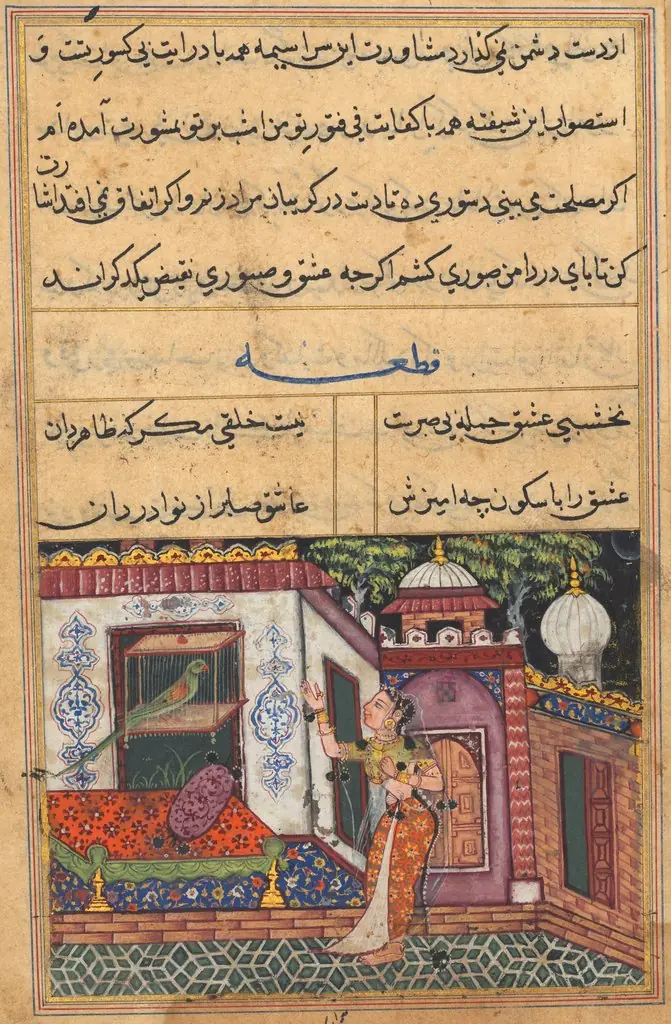 The Parrot Addresses Khujasta at the Beginning of the Eleventh Night, from a Tuti-nama (Tales of a Parrot)
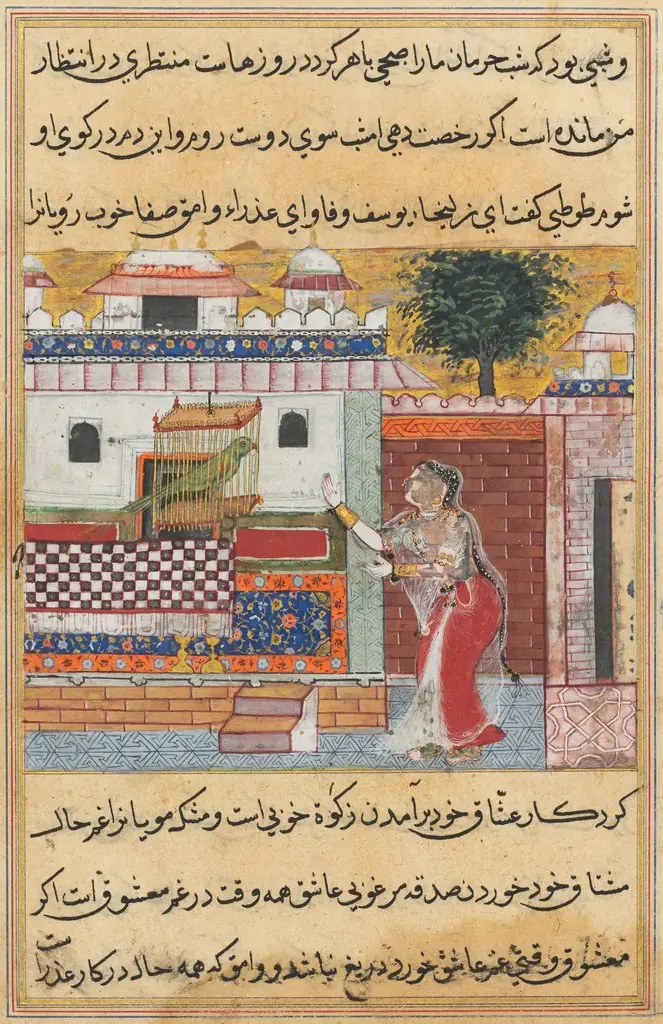 The Parrot Addresses Khujasta at the Beginning of the Twelfth Night, from a Tuti-nama (Tales of a Parrot)
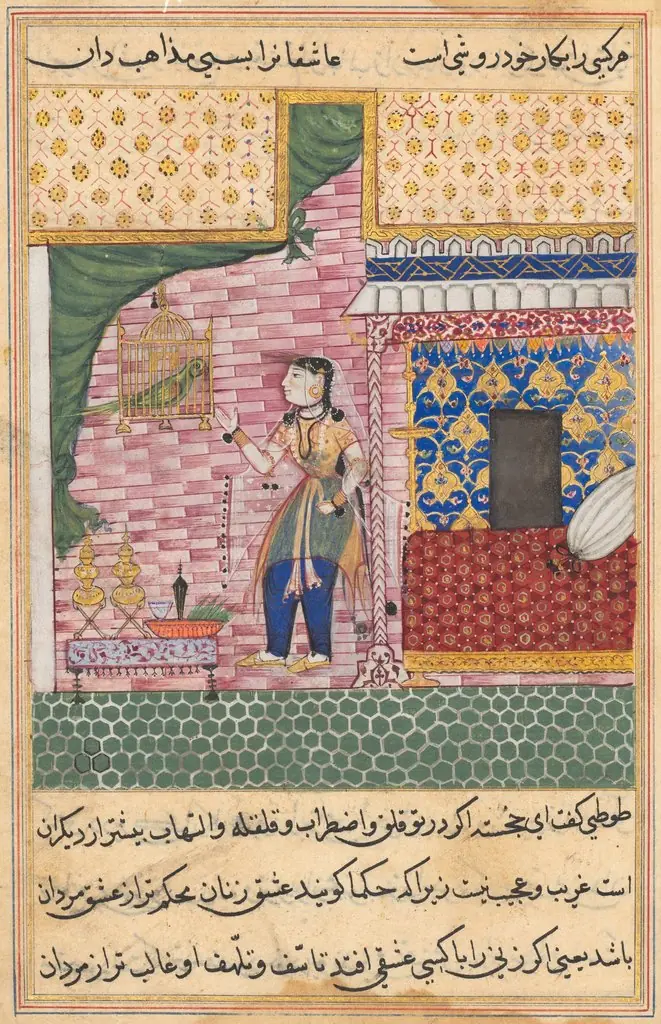 The Parrot Addresses Khujasta at the Beginning of the Seventeenth Night, from a Tuti-nama (Tales of a Parrot)
 The Parrot Addresses Khujasta at the Beginning of the Thirtieth Night, from a Tuti-nama (Tales of a Parrot)