Artwork
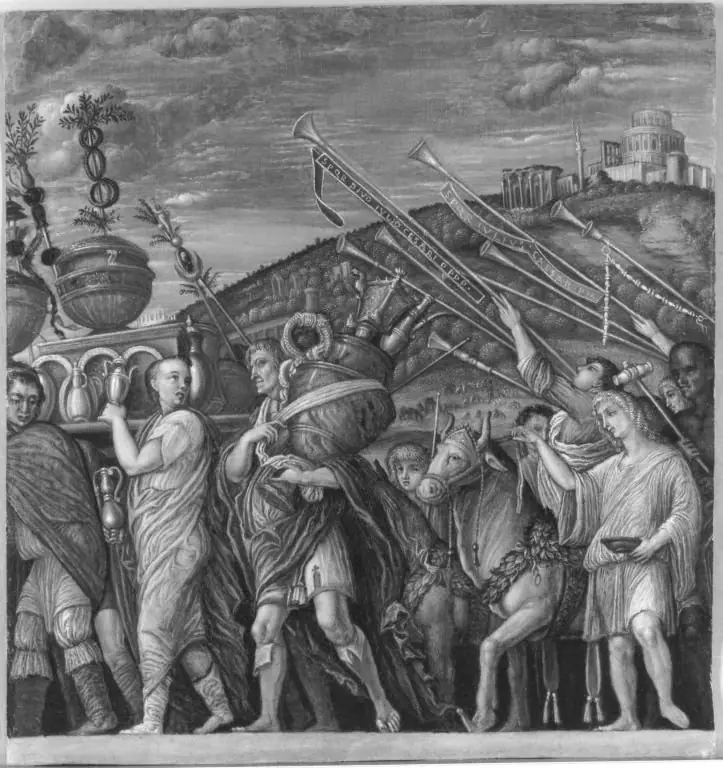
Triumphs of Caesar: Sacrificial Animals
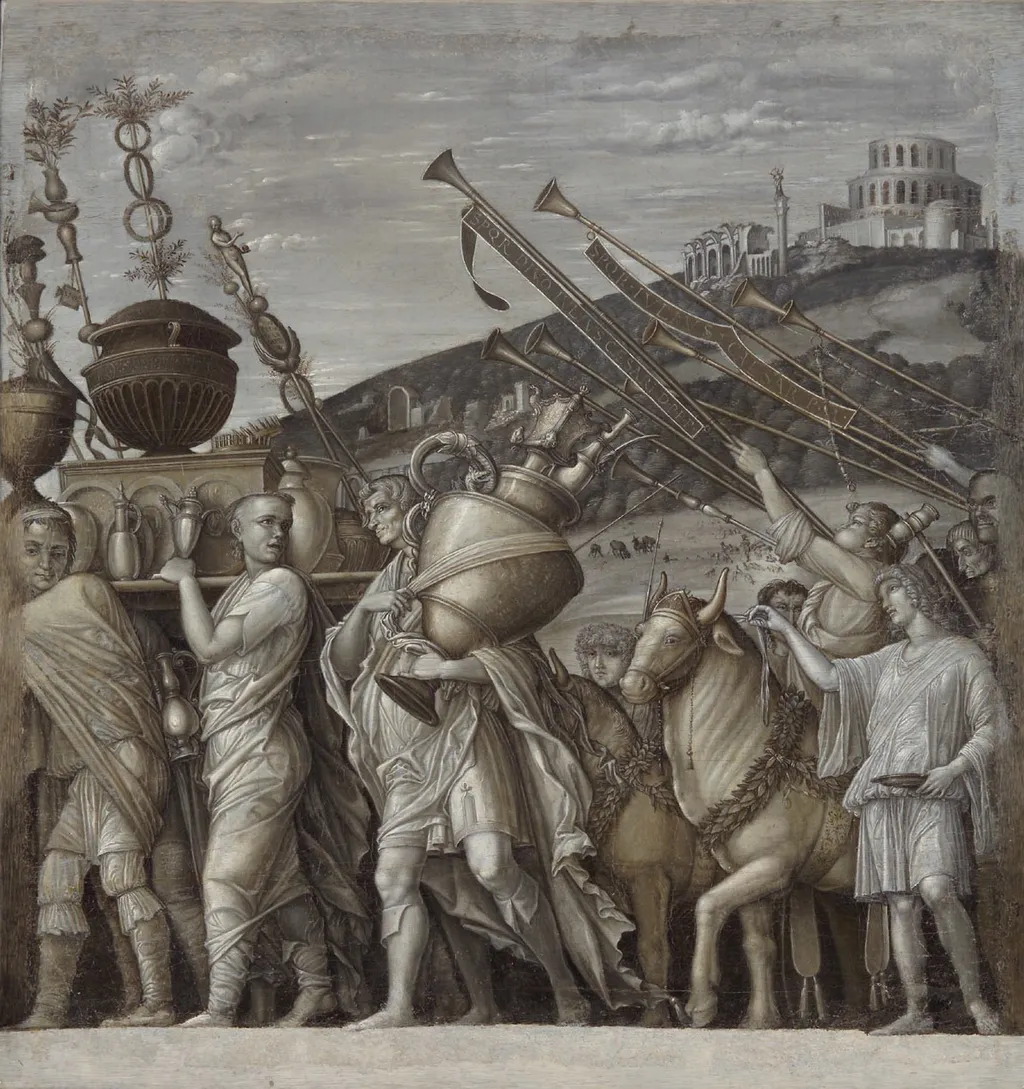
Triumphs of Caesar: Sacrificial Animals is an unspecified painting by the Early Baroque Italian artist Unknown. It dates from 1605 and is held in the collection of the Kunsthistorisches Museum.
About this work
Overview
Figures in classical attire move in orderly formation, bearing vases, animal horns, and a small statue, suggesting a religious component to the celebration.
This painting is part of a series depicting the triumphal procession of Julius Caesar, showcasing the ceremonial transport of sacrificial animals and ritual objects. Figures in classical attire move in orderly formation, bearing vases, animal horns, and a small statue, suggesting a religious component to the celebration. The architectural backdrop includes a domed structure and distant hills, grounding the scene in an idealized Roman landscape.
Subject & Meaning
The procession illustrates the ritual preparation for Caesar’s triumph, where sacrificial animals were led to temples as offerings. The inclusion of sacred objects and laurel-wreathed participants underscores the fusion of military victory and religious devotion in Roman state ceremony. The orderly movement toward the temple implies a structured, solemn ritual rather than mere festivity.
Technique & Style
The composition employs chiaroscuro to model forms with subtle light and shadow, enhancing the volume of robes and objects. Figures are arranged in a shallow, horizontal band, creating rhythmic movement across the canvas. Details in fabric and texture are rendered with precision, reflecting Renaissance interest in classical antiquity and naturalistic observation.
History & Provenance
Painted by Andrea Mantegna in the late 15th century, the work was commissioned by the Gonzaga family of Mantua for their palace. It formed part of a larger cycle celebrating Caesar’s victories, likely intended to align the Gonzagas with Roman imperial authority. The series remained in Mantua until the 17th century, after which it entered the Royal Collection in England.
Context
Created during the height of Renaissance humanism, the painting reflects renewed fascination with Roman history and archaeology. Mantegna, known for his antiquarian interests, studied ancient coins and ruins to reconstruct plausible ceremonial details. The work responds to contemporary scholarly efforts to revive classical ideals in art and politics.
Legacy
Mantegna’s Triumphs of Caesar influenced later depictions of historical processions in European art. Its blend of archaeological detail and compositional discipline became a model for academic painters. The series remains a key reference for understanding how Renaissance artists interpreted and reimagined antiquity through visual narrative.
Artist & collection

 Domestic Scene
 Giacomo and Cardinal Marco, investing Andrea, Abbot of San Zeno, with his Benefice
 The Nymph of Fontainebleau
 Portrait of a Woman
 Madonna and Child with Saints in the Enclosed Garden
 Venus and Minerva
 Family Group of Four on Sofa
 Wall painting from Room H of the Villa of P. Fannius Synistor at Boscoreale
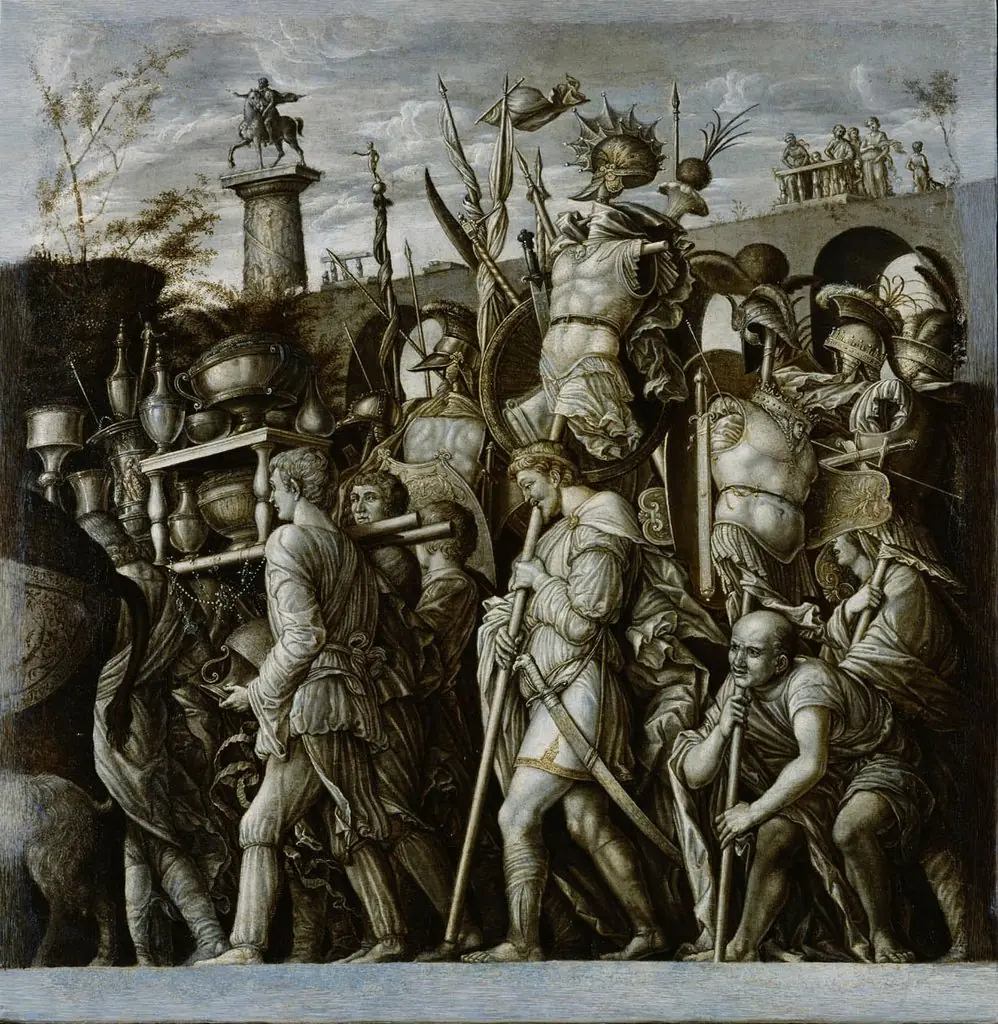 Triumphs of Caesar: Corselet Bearers
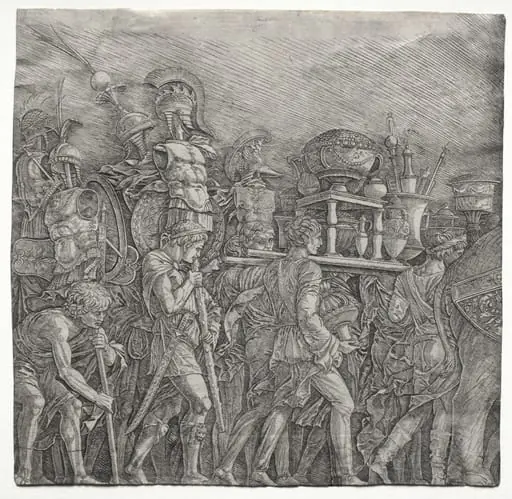 The Triumphs of Caesar: The Corselet Bearers
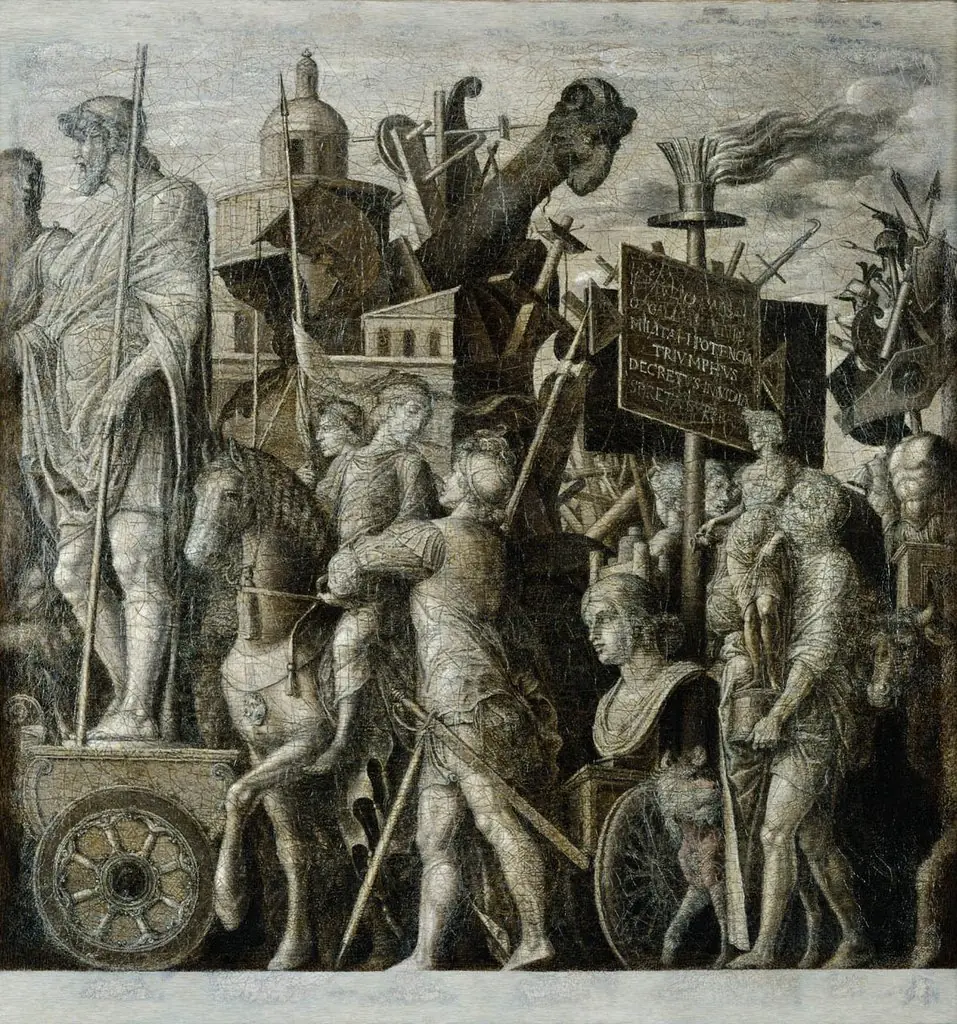 Triumphs of Caesar: Statues of Gods and Siege Equipment
 Triumphs of Caesar II
 Triumphs of Caesar: Musicians and Standard Bearers
 The Triumphs of Caesar: Elephants
 Triumphs of Caesar: The Trophy Bearers
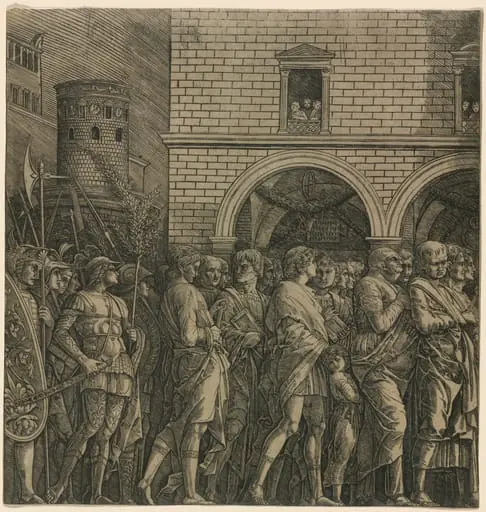 The Triumph of Caesar: The Senators
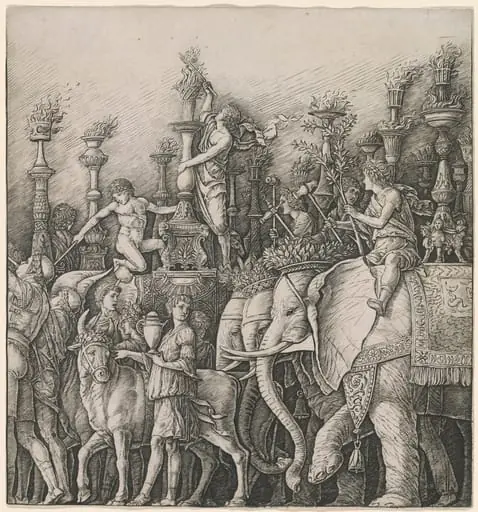 The Triumph of Caesar: The Elephants
![The Triumph of Julius Caesar [no.3 and 4 plus 2 columns], by Andrea Andreani](https://artifactworldgallery.com/img/andrea-andreani--the-triumph-of-julius-caesar-no-3-and-4-plus-2-columns--58c944449efc96df-w320.webp) The Triumph of Julius Caesar [no.3 and 4 plus 2 columns]
The Triumph of Julius Caesar [no.3 and 4 plus 2 columns]![The Triumph of Julius Caesar [no.9 plus 2 columns], by Andrea Andreani](https://artifactworldgallery.com/img/andrea-andreani--the-triumph-of-julius-caesar-no-9-plus-2-columns--26f4d2249baf2916-w320.webp) The Triumph of Julius Caesar [no.9 plus 2 columns]
The Triumph of Julius Caesar [no.9 plus 2 columns]