Artwork
The Triumph of Julius Caesar [no.3 and 4 plus 2 columns]
![The Triumph of Julius Caesar [no.3 and 4 plus 2 columns], by Andrea Andreani, ink, 1599](https://artifactworldgallery.com/img/andrea-andreani--the-triumph-of-julius-caesar-no-3-and-4-plus-2-columns--58c944449efc96df-w1024.webp)
The Triumph of Julius Caesar [no.3 and 4 plus 2 columns] is an ink print by the Renaissance artist Andrea Andreani. It dates from 1599 and is held in the collection of the National Gallery of Art.
About this work
Overview
Andrea Andreani’s chiaroscuro woodcut, dated 1599, presents a densely populated scene titled The Triumph of Julius Caesar. Executed as a single panel, the print combines multiple figures and architectural elements, employing strong contrasts of light and dark to model the composition.
Subject & Meaning
The central focus is a mounted figure grasping a globe, evoking the authority of a victorious leader, likely representing Caesar himself. Accompanying him is a richly dressed woman on horseback, perhaps a personification of Victory or a noble patron, while rows of soldiers bearing shields, spears and standards suggest a ceremonial procession.
Technique & Style
Andreani utilizes the chiaroscuro woodcut method, layering multiple blocks to achieve tonal depth. The interplay of illuminated and shadowed areas gives the crowded figures a three‑dimensional presence, a hallmark of late‑Renaissance printmaking that emphasizes dramatic contrast.
History & Provenance
Created at the close of the sixteenth century, the work reflects the period’s fascination with classical triumphs. It survives as part of a series (numbers 3, 4 and two columns) that documented historic and mythological subjects, though specific ownership records prior to modern collections are limited.
Context
The print aligns with contemporary humanist interests in Roman history and the visual language of triumphal processions. Its crowded composition and use of chiaroscuro echo the influence of Italian engravers such as Albrecht Dürer and the emerging Baroque emphasis on movement and spectacle.
Artist & collection


![The Triumph of Julius Caesar [no.9 plus 2 columns], by Andrea Andreani](https://artifactworldgallery.com/img/andrea-andreani--the-triumph-of-julius-caesar-no-9-plus-2-columns--26f4d2249baf2916-w320.webp)
![The Triumph of Julius Caesar [no.1 and 2 plus 2 columns], by Andrea Andreani](https://artifactworldgallery.com/img/andrea-andreani--the-triumph-of-julius-caesar-no-1-and-2-plus-2-columns--72fc49376c9f9633-w320.webp)
![The Triumph of Julius Caesar [no.7 and 8 plus 2 columns], by Andrea Andreani](https://artifactworldgallery.com/img/andrea-andreani--the-triumph-of-julius-caesar-no-7-and-8-plus-2-columns--75ccf1616a5609e2-w320.webp)
![The Triumph of Julius Caesar [no.5 and 6 plus 2 columns], by Andrea Andreani](https://artifactworldgallery.com/img/andrea-andreani--the-triumph-of-julius-caesar-no-5-and-6-plus-2-columns--89574bdb08c8732e-w320.webp)
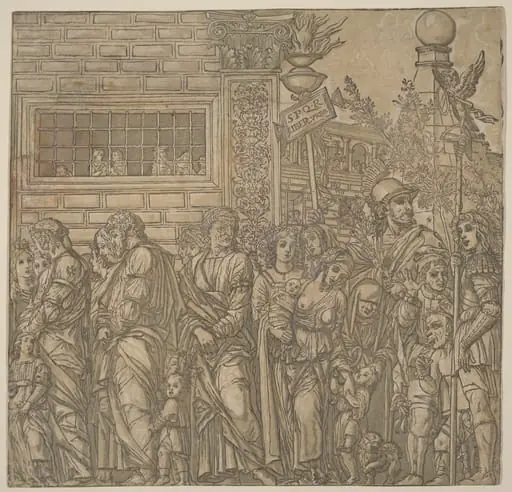 The Triumph of Julius Caesar
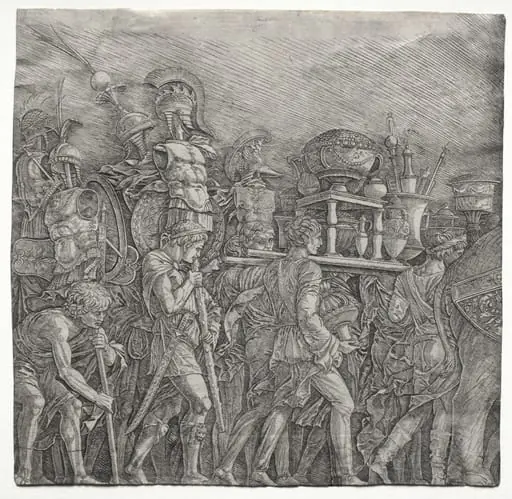 The Triumphs of Caesar: The Corselet Bearers
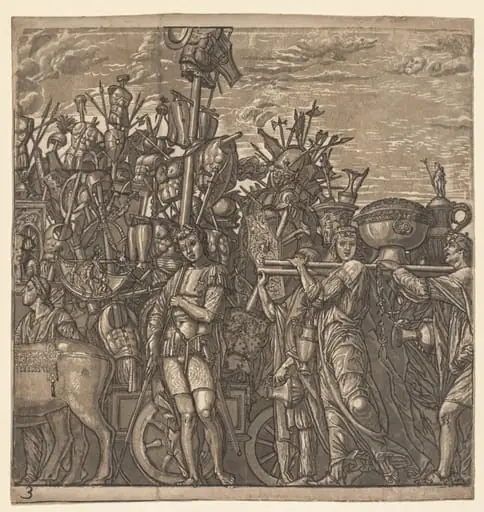 The Triumph of Julius Caesar: Soldiers Marching with Trophies of War
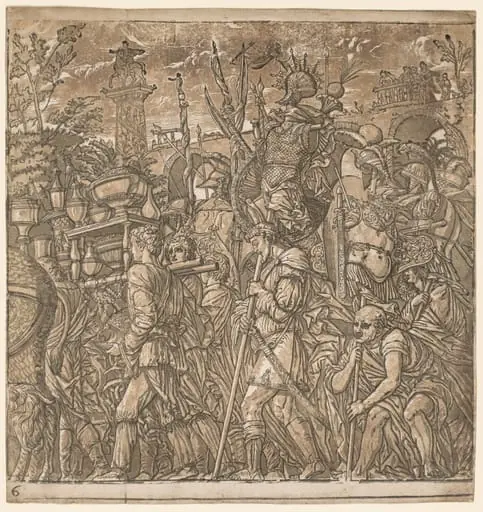 The Triumph of Julius Caesar: Soldiers Carrying Vases and Trophies of War
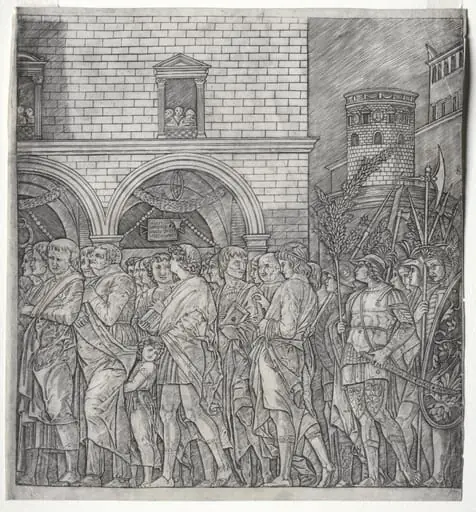 Triumph of Caesar: The Senators
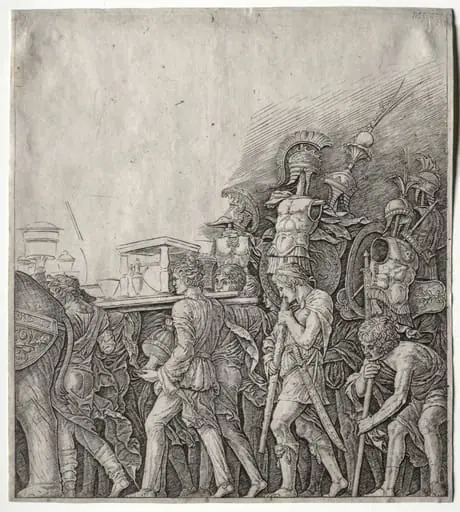 The Triumphs of Caesar: The Corselet Bearers
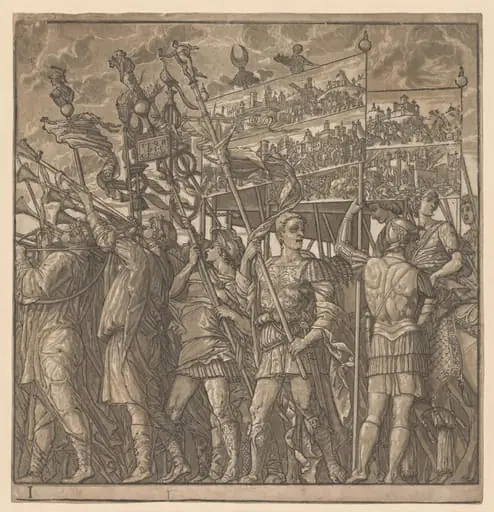 The Triumph of Julius Caesar: Soldiers Carrying the Pictures of War
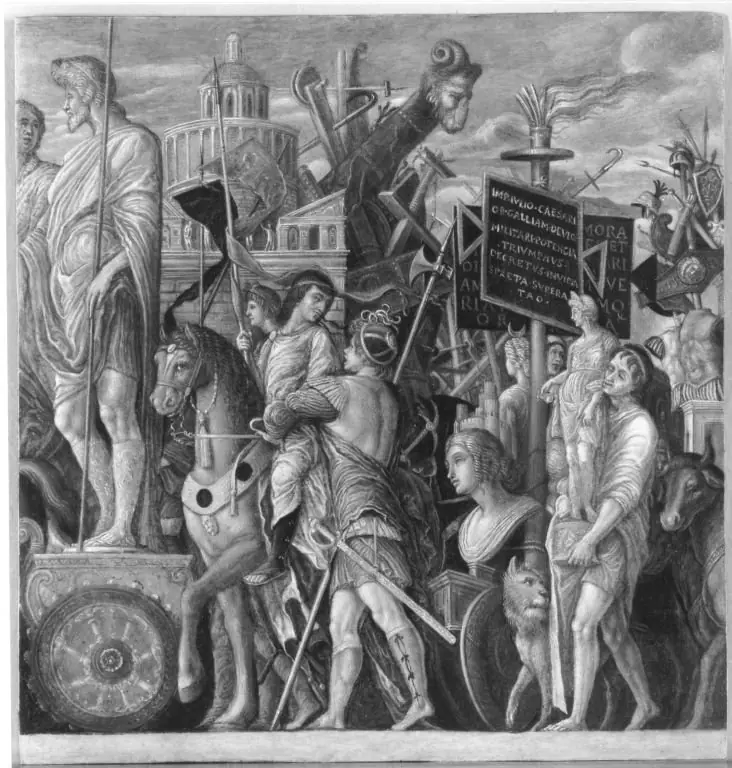 Triumphs of Caesar I