Artwork
The Adoration of the Magi (lower part of a rood screen)
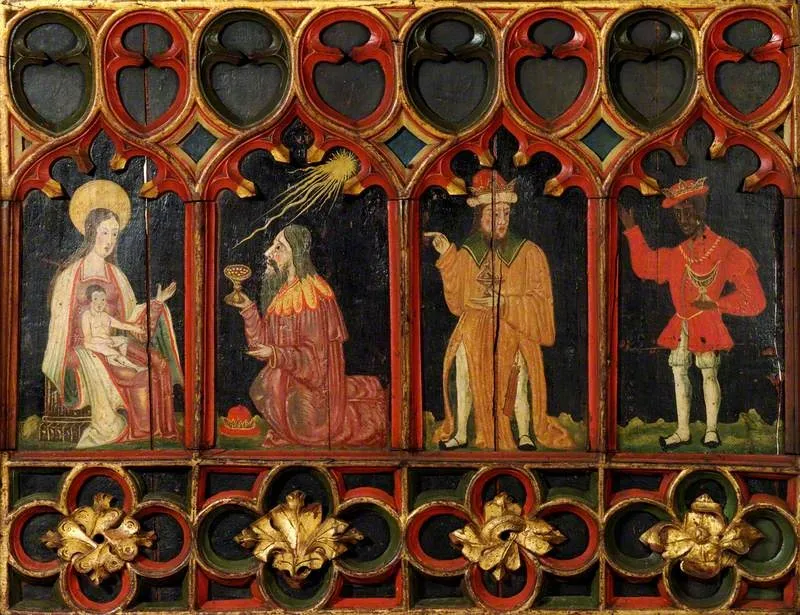
The Adoration of the Magi (lower part of a rood screen) is an unspecified painting by the Northern Renaissance artist Unknown. It dates from 1520 and is held in the collection of the Victoria and Albert Museum.
About this work
Overview
This painting forms the lower section of a medieval rood screen, originally part of a church’s architectural division between nave and chancel.
This painting forms the lower section of a medieval rood screen, originally part of a church’s architectural division between nave and chancel. Composed of three distinct panels, it served a liturgical function, visible to congregants during services. Its muted palette of reds and golds, combined with restrained lighting, fosters a contemplative atmosphere suited to its sacred context. The composition is structured to guide devotion through symbolic imagery rather than narrative action.
Subject & Meaning
The left panel portrays the Virgin Mary with the Christ Child, identified by her halo and maternal posture. The central figure, kneeling before a chalice and wafer, represents the priest at the moment of consecration, with the starburst symbolizing divine presence. The crowned man on the right, holding a staff, likely signifies a king or saintly ruler. Together, the panels fuse Marian devotion, Eucharistic theology, and royal homage into a unified spiritual statement.
Technique & Style
The artist employs subtle chiaroscuro to model forms with quiet realism, enhancing spatial depth without dramatic contrast. Pigments are applied thinly, preserving a matte surface that softens the gold and crimson tones. Figures are rendered with elongated proportions and minimal gesture, emphasizing stillness over movement. The lack of landscape or architectural detail focuses attention entirely on the sacred figures, reinforcing the painting’s devotional purpose.
History & Provenance
As a fragment of a rood screen, this work likely originated in a parish church in northern Europe during the late medieval period. Such screens were often dismantled or destroyed during the Reformation, making surviving fragments rare. The painting’s preservation suggests it was removed before widespread iconoclasm, possibly stored or repurposed. Its current condition indicates careful handling over centuries, though its original full context remains partially lost.
Context
Rood screens in late medieval churches functioned as both physical and symbolic boundaries, separating the clergy from the laity while reinforcing theological hierarchy. The lower panels often depicted scenes of worship or saints to instruct the faithful. This triptych’s focus on the Virgin, Eucharist, and royal figure aligns with common devotional themes of the period, reflecting a liturgical culture that emphasized sacramental presence and intercessory figures.
Legacy
Though no longer part of its original architectural setting, this fragment endures as a testament to the integration of art and ritual in medieval worship. Its survival offers insight into how religious communities visualized sacred mysteries through portable, panel-based imagery. Scholars value it not for artistic innovation but for its faithful expression of devotional norms, preserving a quiet, unadorned piety that defined parish life before the Reformation.
Artist & collection

 Domestic Scene
 Giacomo and Cardinal Marco, investing Andrea, Abbot of San Zeno, with his Benefice
 The Nymph of Fontainebleau
 Portrait of a Woman
 Madonna and Child with Saints in the Enclosed Garden
 Venus and Minerva
 Family Group of Four on Sofa
 Wall painting from Room H of the Villa of P. Fannius Synistor at Boscoreale
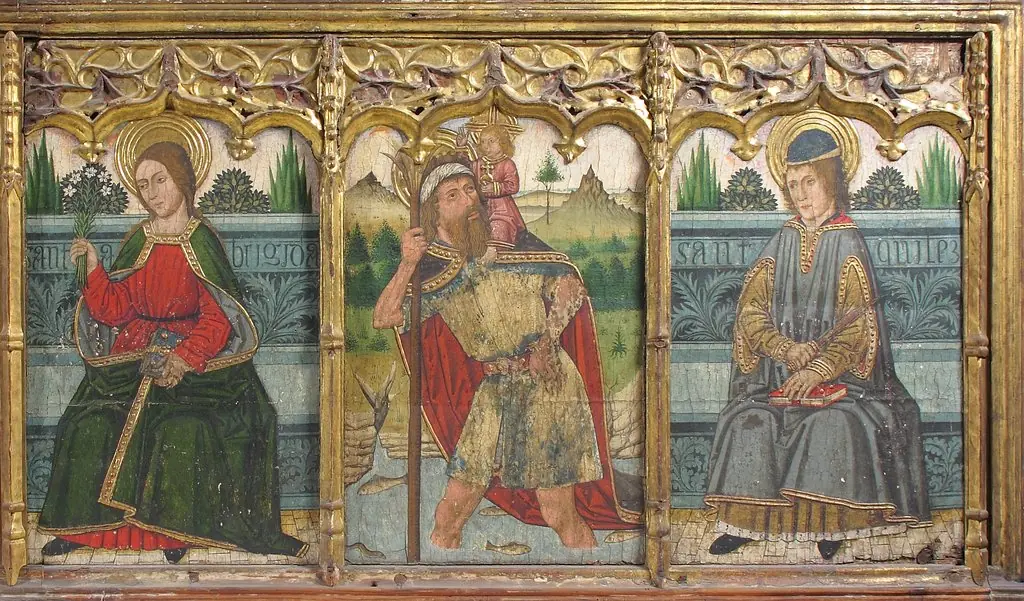 Predella pane with Saint Bridget, Saint Christopher, and Saint Kilian from Retable
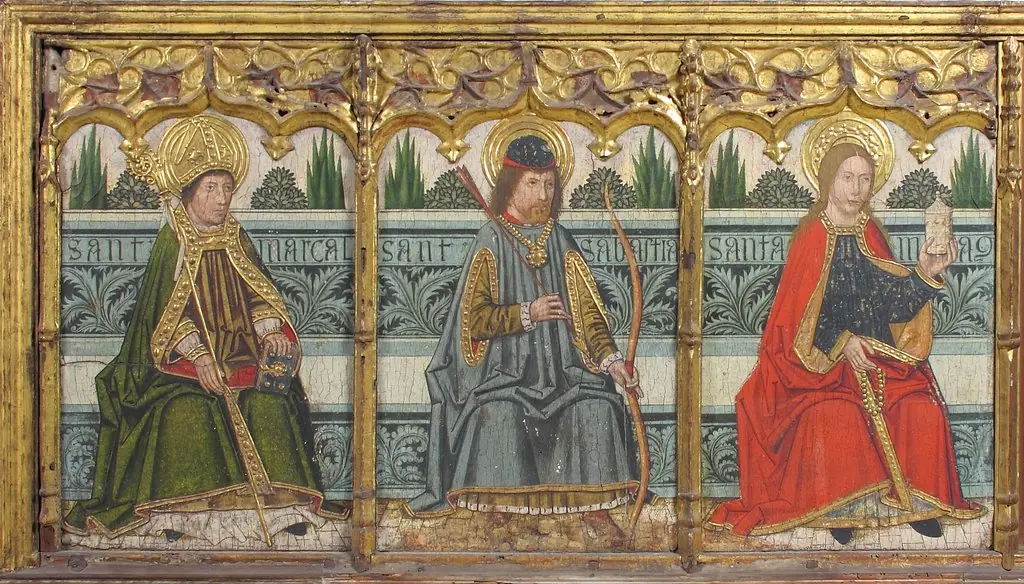 Predella panel with Saint Martial, Saint Sebastian, and Saint Mary Magdalen from Retable
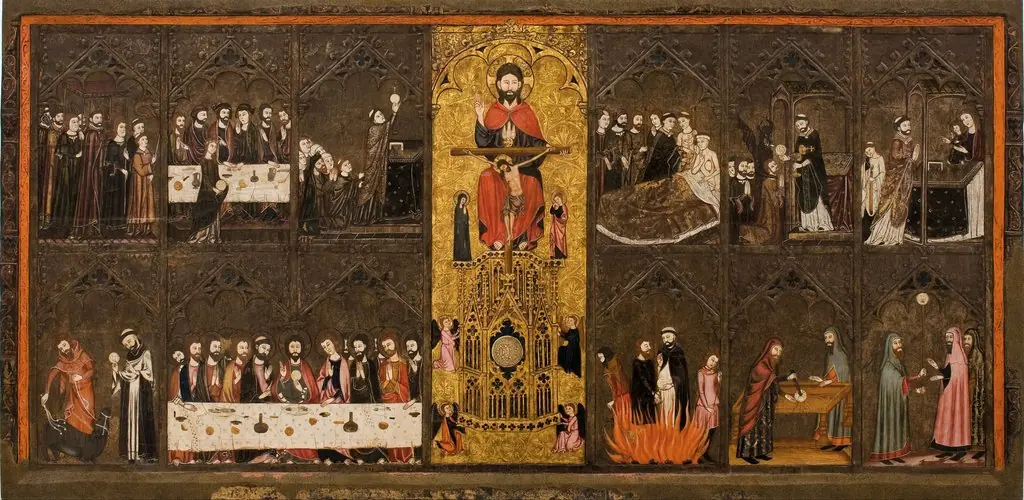 Altarpiece of the Corpus Christi
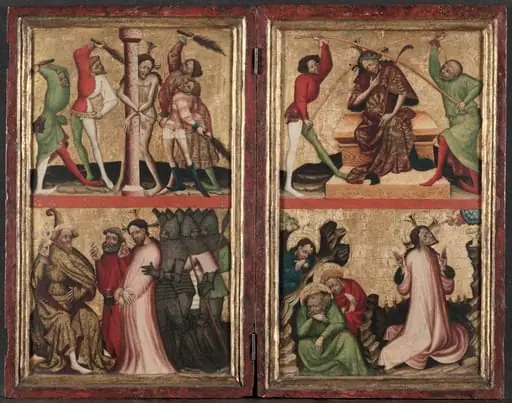 Diptych with the Passion of Christ
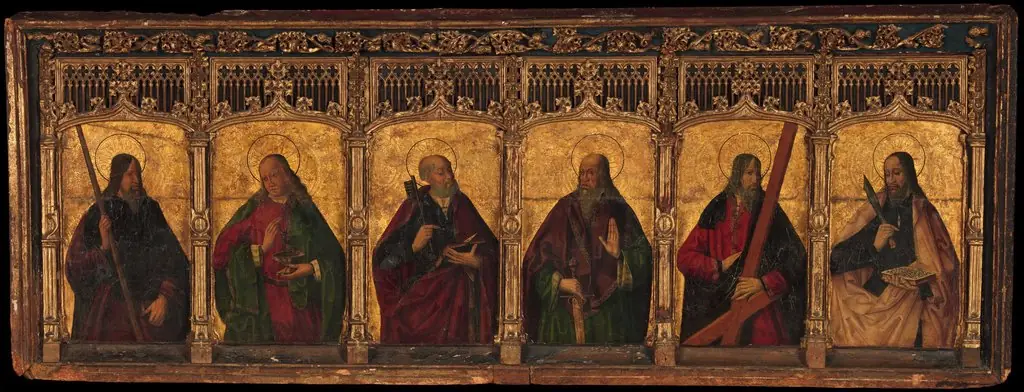 Six Apostles
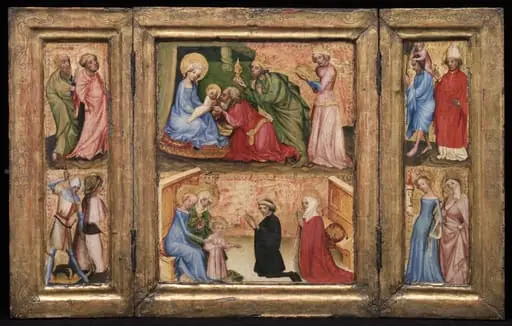 Triptych with the Adoration of the Magi
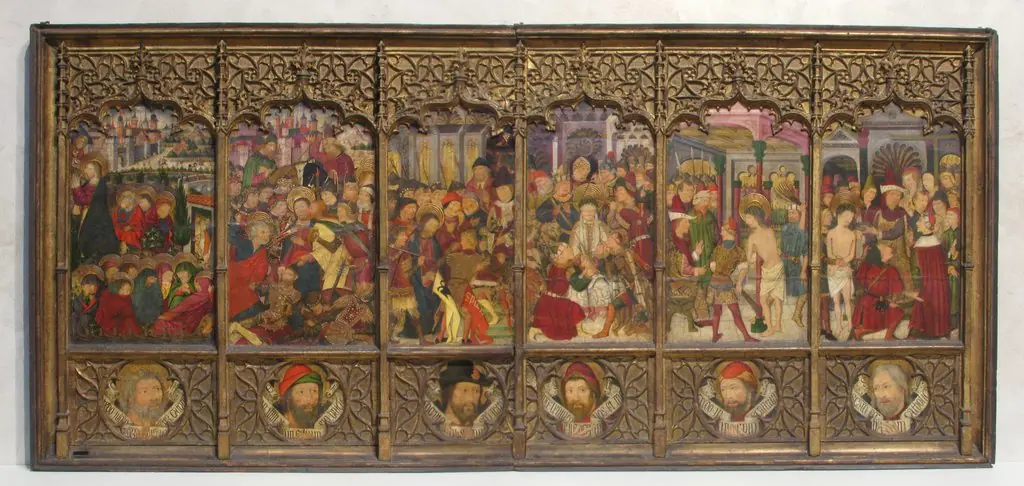 Altarpiece (retablo) with Scenes from the Passion
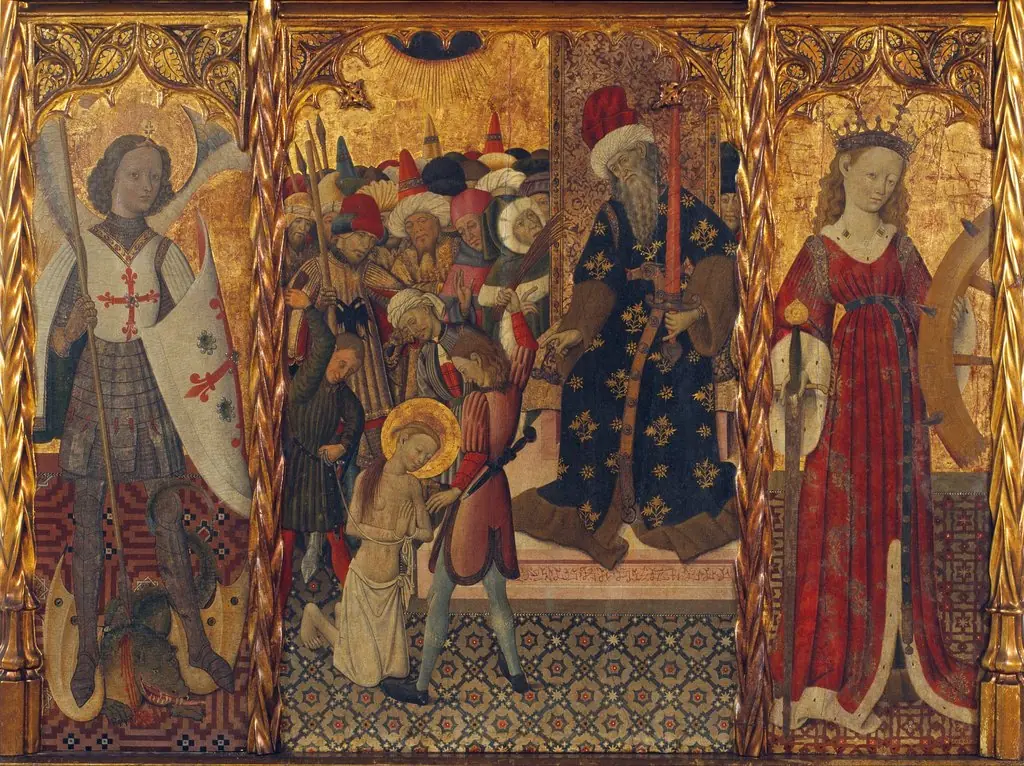 Saint Michael, Martyrdom of Saint Eulalia and Saint Catherine
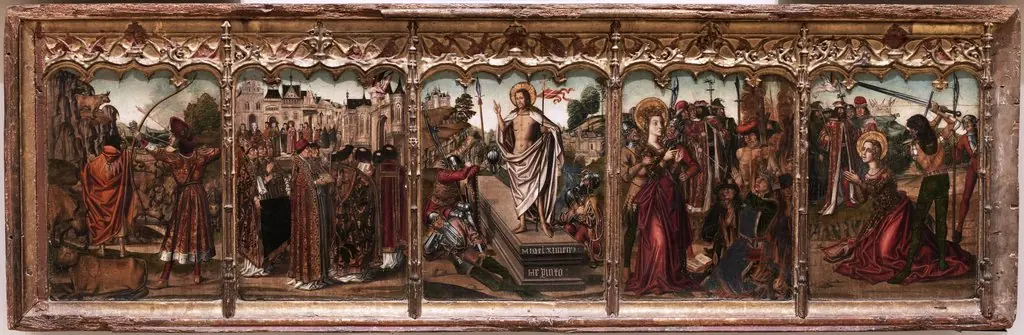 Predella with the Resurrection of Christ
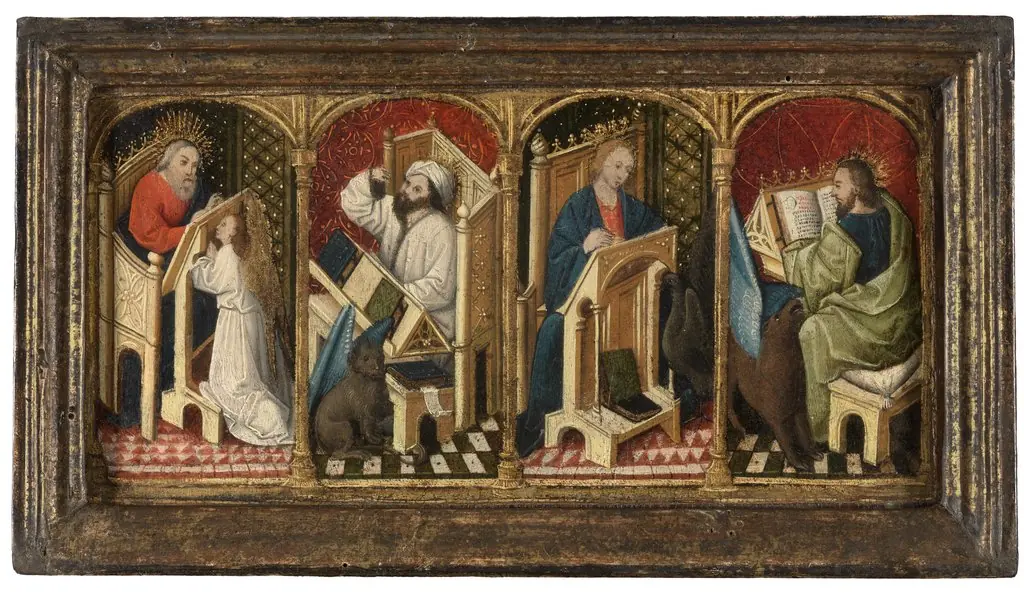 Four Evangelists
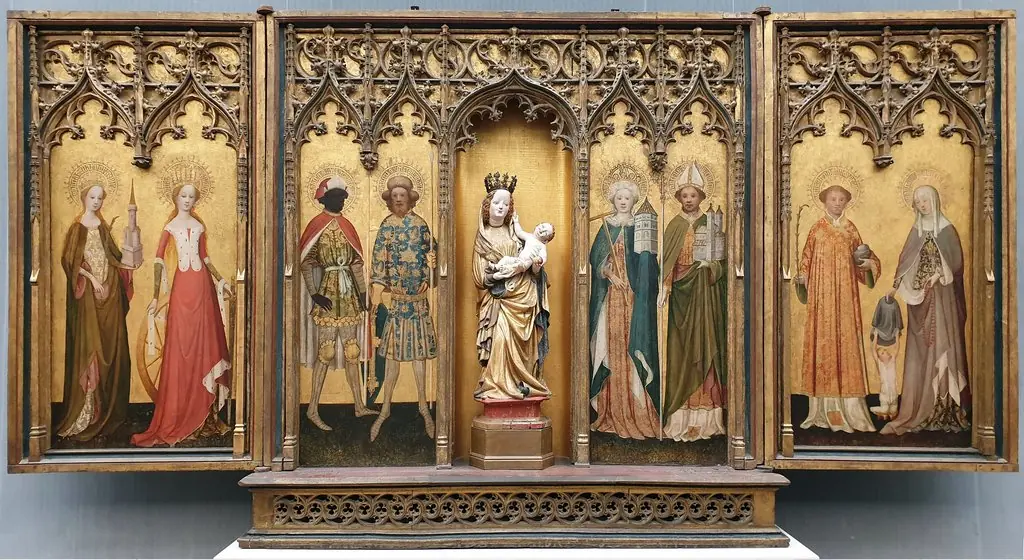 Marien Altar from St. Gereon
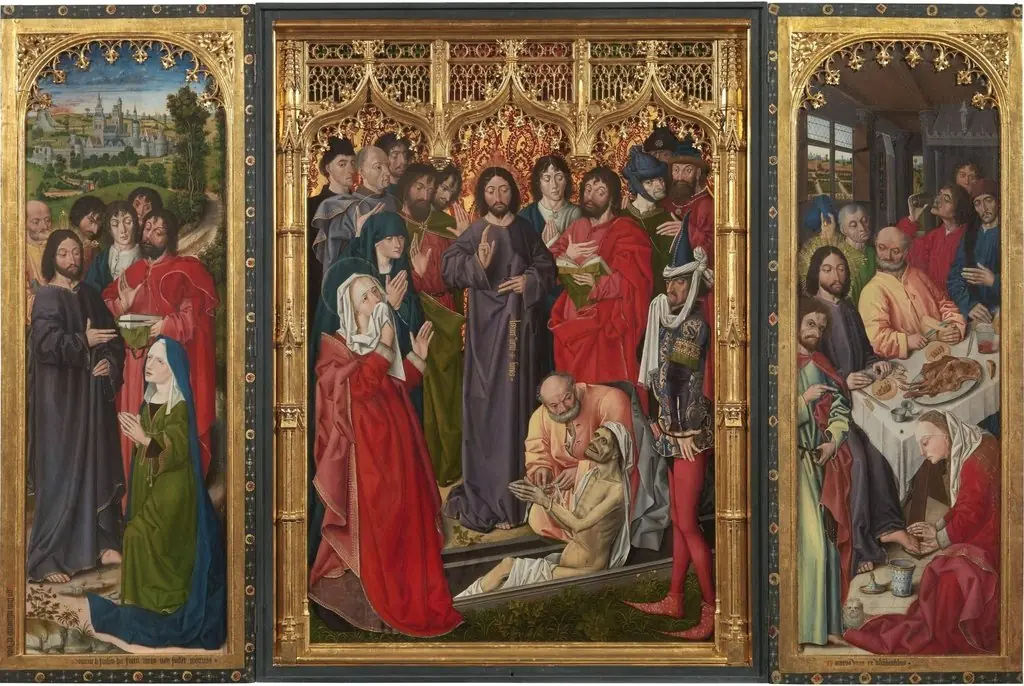 Resurrection of Lazarus