Artwork
The Circumcision
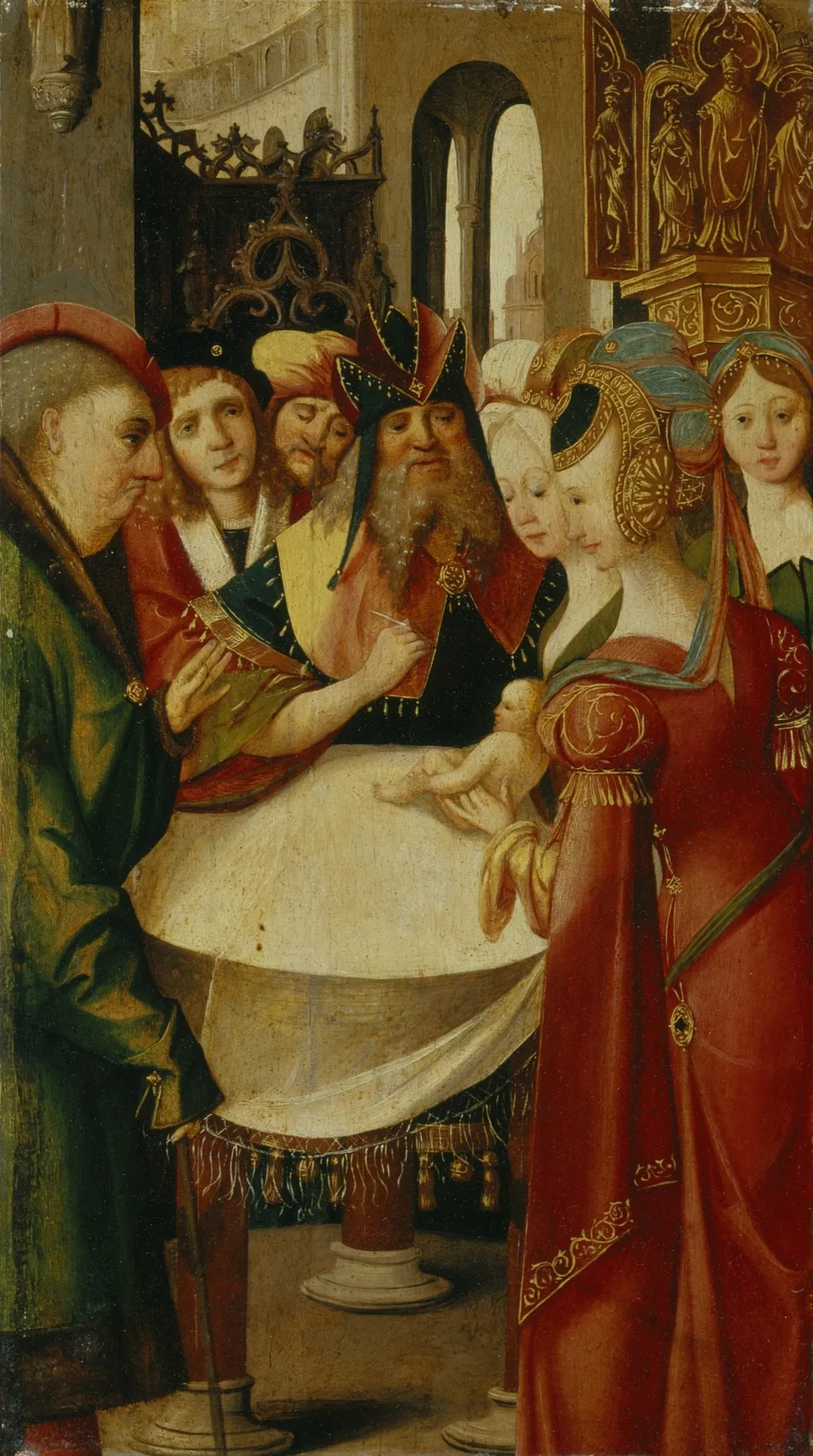
The Circumcision is an oil painting by the Early Baroque Italian artist Unknown. It dates from 1525 and is held in the collection of the Los Angeles County Museum of Art.
About this work
Overview
This oil painting captures a ritual circumcision within a lavish interior, rendered with careful attention to spatial depth and emotional gravity.
This oil painting captures a ritual circumcision within a lavish interior, rendered with careful attention to spatial depth and emotional gravity. The scene unfolds under high ceilings and arched windows, where richly detailed architecture frames the central act. Figures in Renaissance dress gather in quiet focus, their postures and expressions conveying solemnity rather than celebration. The composition directs attention toward the infant, isolated yet surrounded by witnesses.
Subject & Meaning
The painting illustrates the biblical circumcision of Christ, a moment of religious significance marking his entry into the covenant. The figures, dressed in period attire, reflect a Renaissance reinterpretation of sacred history. The woman holding the child and the observing man in green likely represent Mary and Joseph, though their identities are conveyed through context rather than explicit symbolism. The ceremony is treated with reverence, emphasizing spiritual duty over theatrical display.
Technique & Style
The artist employs chiaroscuro to model forms with subtle gradations of light and shadow, lending volume to the figures and architecture. The interplay of light across the baby’s skin, the folds of fabric, and carved surfaces enhances tactile realism. Brushwork is precise yet unobtrusive, avoiding overt flourish in favor of quiet intensity. The palette is restrained, with red and green accents drawing the eye without disrupting the scene’s solemn tone.
History & Provenance
The painting’s early ownership is undocumented, but its style aligns with early 16th-century Northern Italian workshops influenced by Leonardo and Raphael. It likely originated as a devotional piece for a private chapel or noble household. No major public records trace its movement until the 19th century, when it entered a private collection in Lombardy. Its survival through centuries suggests it was valued for its devotional rather than decorative qualities.
Context
In Renaissance Italy, religious scenes were commonly commissioned for domestic or ecclesiastical settings, blending biblical narratives with contemporary social norms. The inclusion of opulent interiors reflects the wealth of patrons who sought to align piety with status. Circumcision scenes, though less common than Nativity or Crucifixion themes, were used to affirm Christ’s humanity and adherence to Jewish law, reinforcing theological orthodoxy.
Legacy
The work remains a quiet example of how Renaissance artists translated sacred moments into intimate, human-scale dramas. It influenced later devotional painters who favored restrained emotion over spectacle. Though not widely exhibited, it is cited in scholarly studies on the representation of ritual in early modern religious art. Its endurance lies in its understated dignity and technical precision.
Artist & collection

 Domestic Scene
 Giacomo and Cardinal Marco, investing Andrea, Abbot of San Zeno, with his Benefice
 The Nymph of Fontainebleau
 Portrait of a Woman
 Madonna and Child with Saints in the Enclosed Garden
 Venus and Minerva
 Family Group of Four on Sofa
 Wall painting from Room H of the Villa of P. Fannius Synistor at Boscoreale
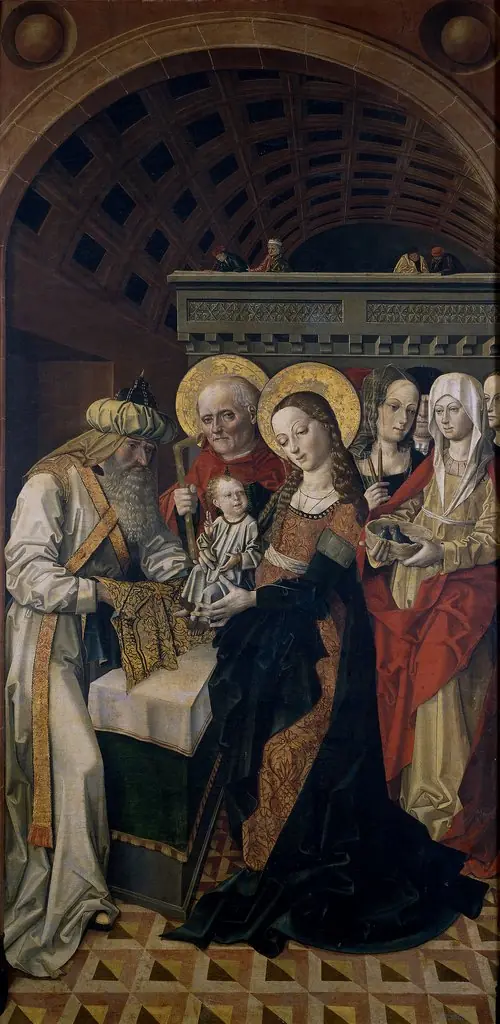 The Presentation of Jesus in the Temple
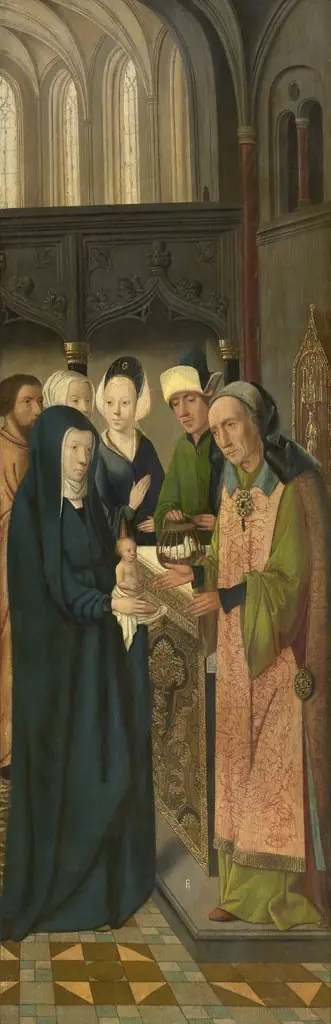 Presentation in the Temple
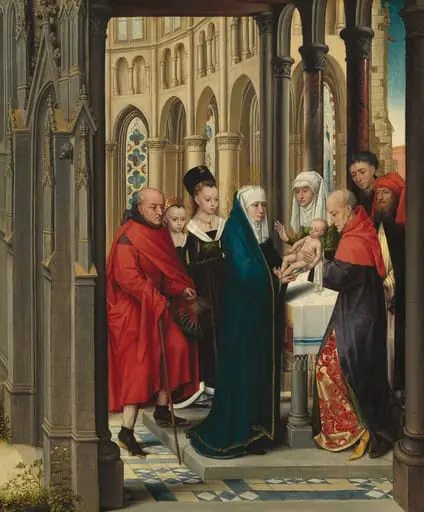 The Presentation in the Temple
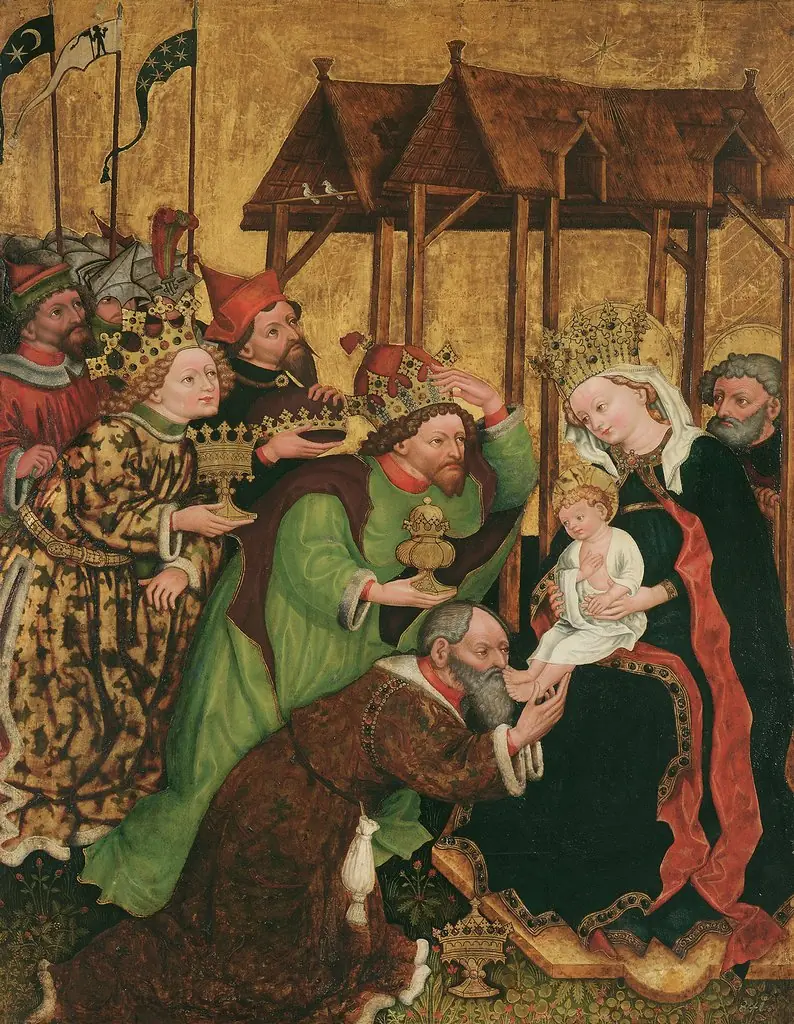 Anbetung der Heiligen Drei Könige (Innenseite); Erwählung Josephs und Vermählung Mariens (Außenseite)
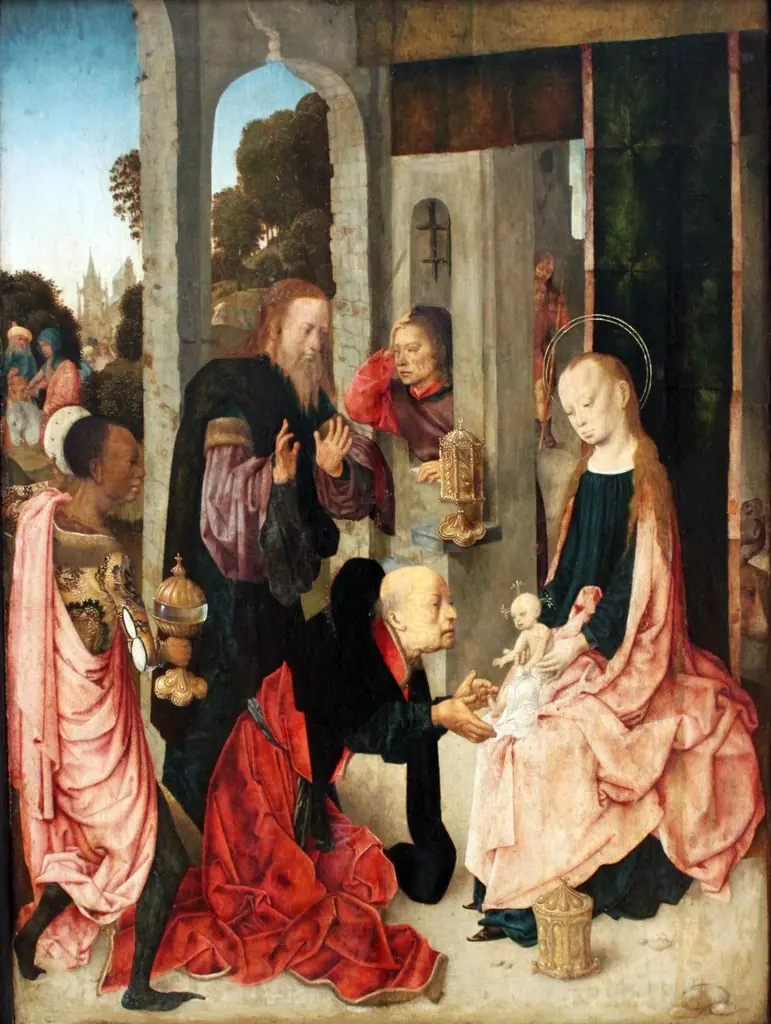 Adoration of the Kings
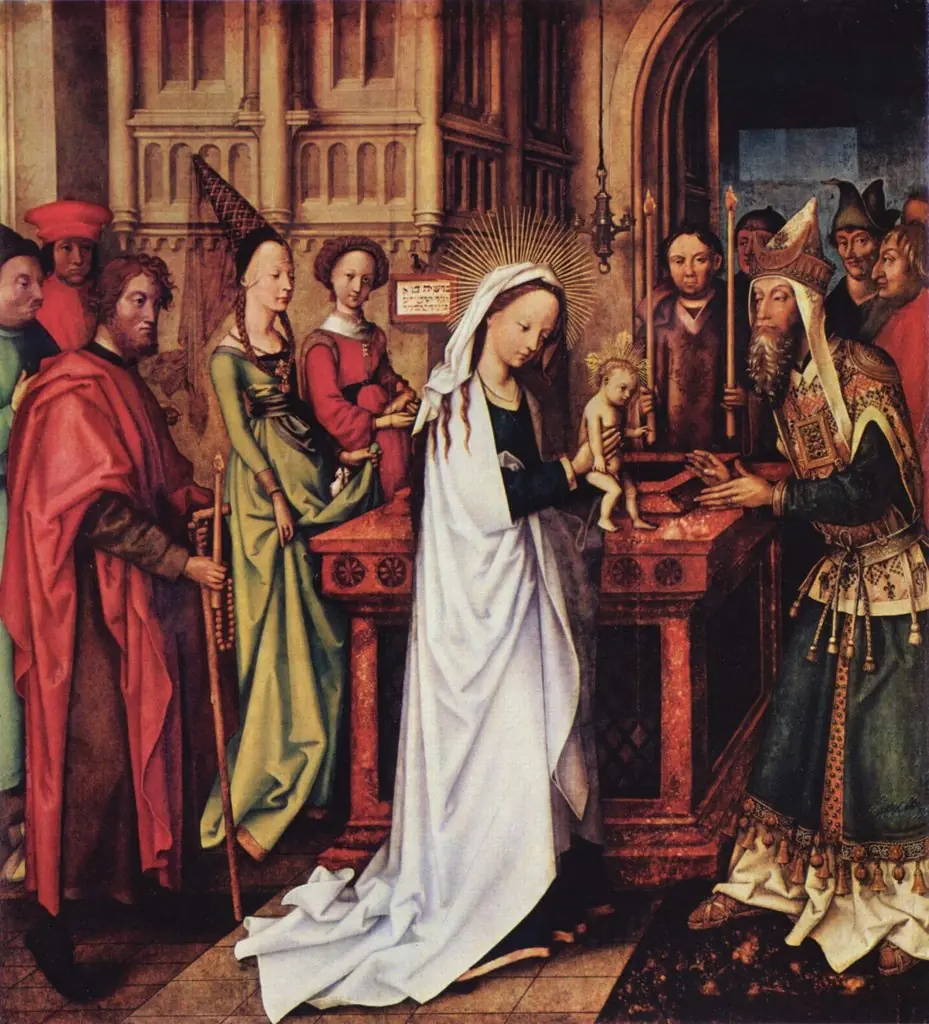 Presentation of Christ Child in the temple
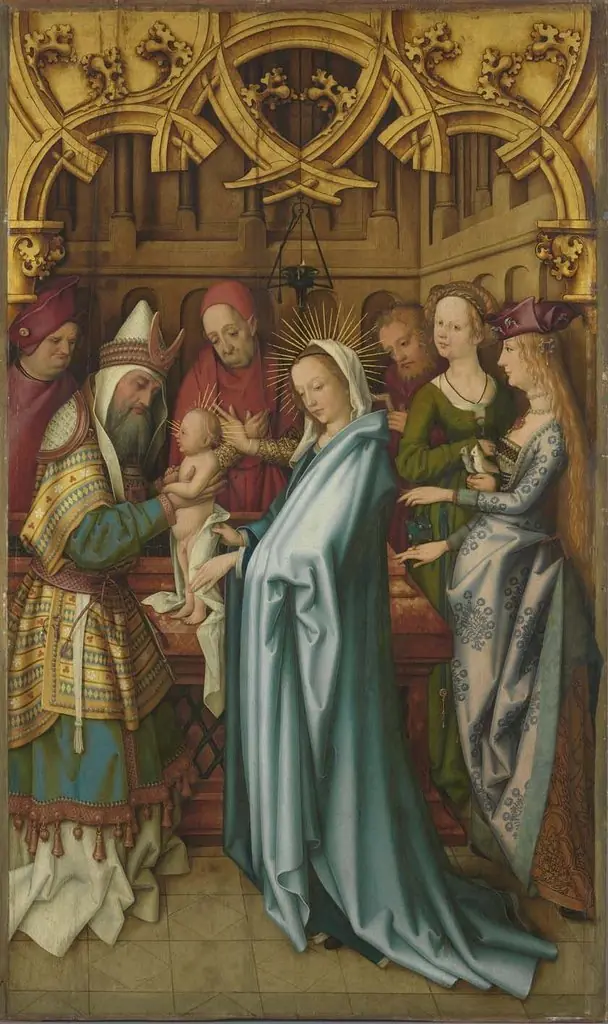 Kaisheimer Altar: Darbringung im Tempel
 Adoration of the Magi
 Darmstadt Altarpiece: The Epiphany