Artwork
Dante Chair back
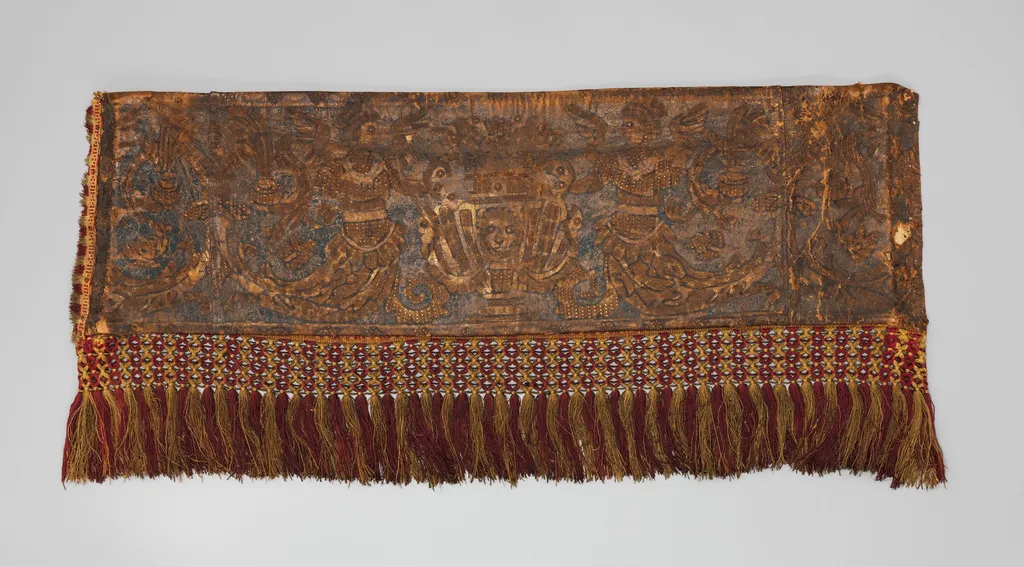
Dante Chair back is an unspecified painting by Unknown. It dates from 1650 and is held in the collection of the Metropolitan Museum of Art. A rectangular woven textile, now faded, features a detailed upper scene surrounded by a vividly colored border.
About this work
Overview
Its material and construction suggest a functional or ceremonial object, likely intended for display or use in a domestic or ecclesiastical setting.
A rectangular woven textile, now faded, features a detailed upper scene surrounded by a vividly colored border. The central imagery, worn by time, depicts figures in a dim interior, some holding objects suggestive of scholarly or artisanal activity. A striking lower border in red, yellow, and white threads contrasts with the muted tones above. Long, uneven fringe edges the piece, adding tactile texture. Its material and construction suggest a functional or ceremonial object, likely intended for display or use in a domestic or ecclesiastical setting.
Subject & Meaning
The upper scene, though indistinct, appears to illustrate a narrative involving multiple figures in a confined space. The presence of books and tools hints at intellectual or religious activity, possibly referencing a literary, theological, or historical moment. The ambiguity of the imagery, compounded by fading, prevents definitive identification. The border’s geometric patterns may symbolize protection, transition, or sacred space, framing the scene as something significant yet obscured by time.
Technique & Style
The textile was woven using a dense, labor-intensive technique, likely on a vertical loom, with wool or silk threads. The upper field employs subtle tonal variations in browns and grays, while the border uses bold, contrasting hues in repeating motifs. The fringe is hand-knotted, not sewn, indicating skilled craftsmanship. The stylistic contrast between the worn central field and the preserved border suggests intentional design, possibly to highlight the importance of the frame over the central image.
History & Provenance
The object entered the collection of The Metropolitan Museum of Art with no documented origin prior to its acquisition. Its construction and palette align with late medieval or early Renaissance European textiles, though its exact place of manufacture remains uncertain. No inscriptions or maker’s marks survive. Its preservation, despite significant fading, suggests it was stored or used in a protected environment before entering institutional care.
Context
This textile likely belonged to a broader tradition of devotional or narrative hangings used in homes, chapels, or monastic spaces during the late Middle Ages. Comparable examples from Italy or southern France depict biblical or literary scenes framed by ornamental borders. Its survival is rare; most such textiles were lost to wear, decay, or reuse. The persistence of the border’s color implies it was less exposed to light or handled less frequently than the central panel.
Legacy
As a fragment of a once-complete work, the textile offers insight into the material culture of pre-modern Europe. Its deterioration underscores the fragility of textile art and the challenges of interpreting lost narratives. It remains a quiet testament to the value placed on woven imagery in domestic and spiritual life, where visual storytelling was as vital as written texts, even when the stories themselves have faded.
Artist & collection

 Domestic Scene
 Giacomo and Cardinal Marco, investing Andrea, Abbot of San Zeno, with his Benefice
 The Nymph of Fontainebleau
 Portrait of a Woman
 Madonna and Child with Saints in the Enclosed Garden
 Venus and Minerva
 Family Group of Four on Sofa
 Wall painting from Room H of the Villa of P. Fannius Synistor at Boscoreale
 Panel
Panel Title Page
 Untitled
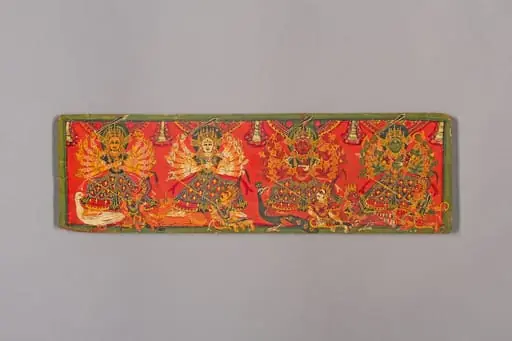 Untitled
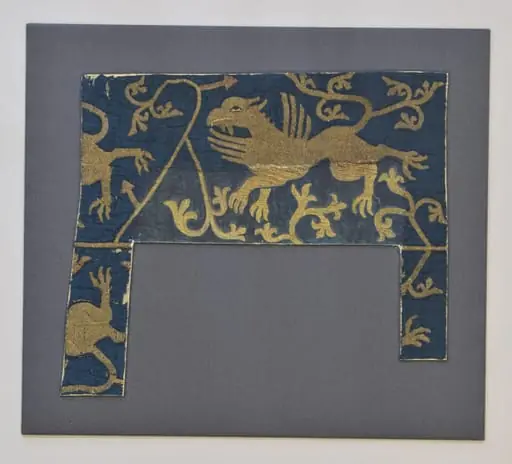 Untitled
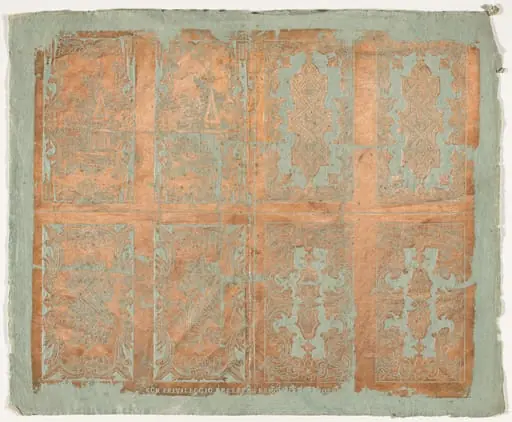 Endpaper
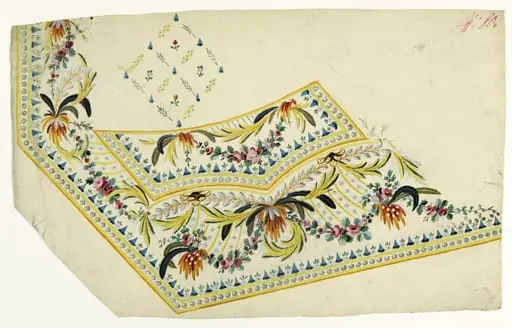 Gilet décor de perles, plumes et paillettes, projets de broderies de gilet, XVIIIème siècle
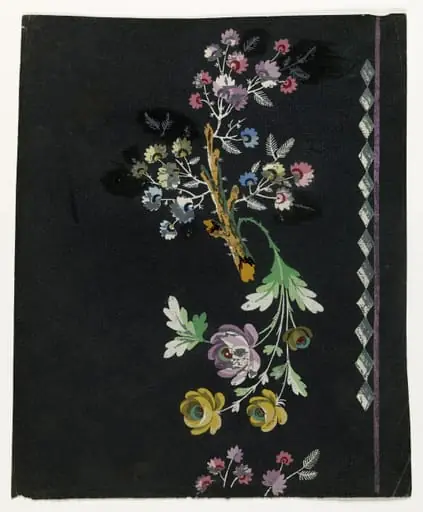 Ramage et fleurs, projets de broderies de gilet, XVIIIème siècle
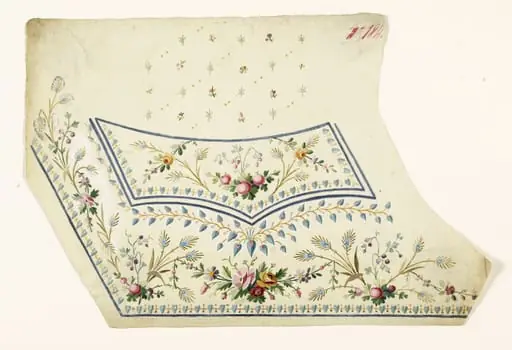 Composition de bouquets de fleurs et de baies et semis de fleurs, projets de broderies de gilet, XVIIIème siècle
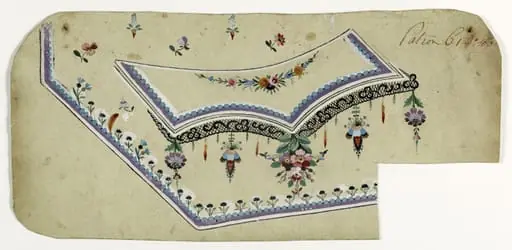 Gilet à la dentelle noire, projets de broderies de gilet, XVIIIème siècle
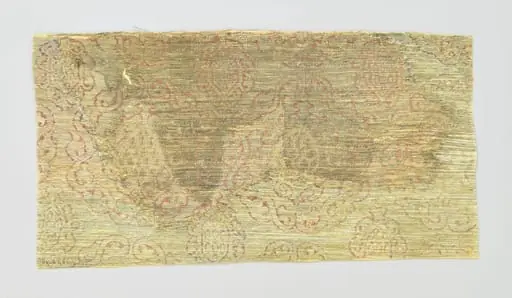 Untitled
 Untitled