Artwork
Ramage et fleurs, projets de broderies de gilet, XVIIIème siècle
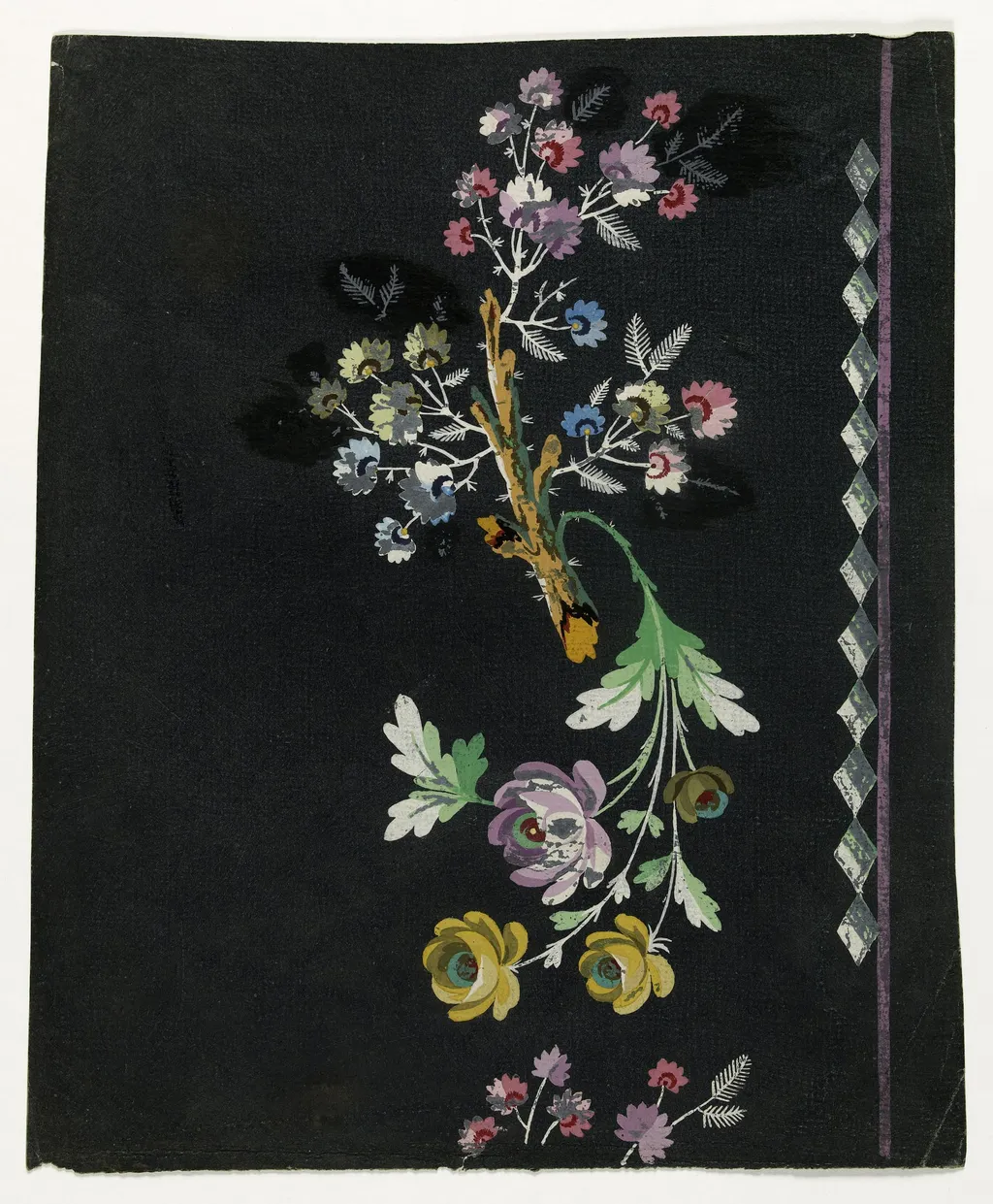
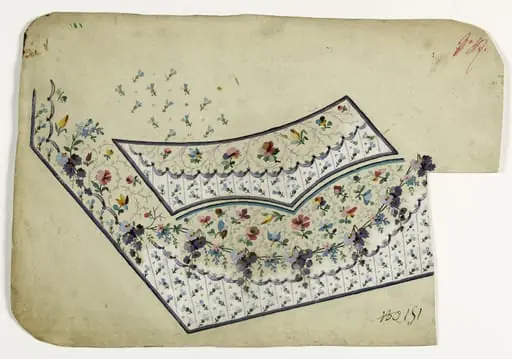
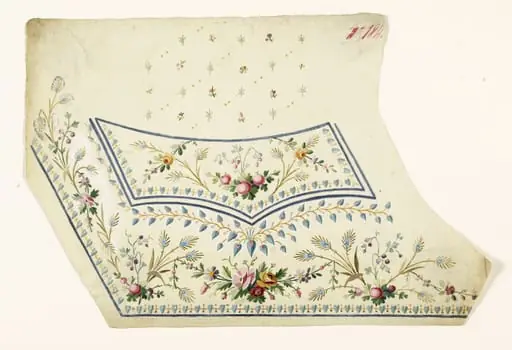
Ramage et fleurs, projets de broderies de gilet, XVIIIème siècle is a drawing by the Romanticist artist Anonyme. It dates from 1795 and is held in the collection of the Palais Galliera - Musée de la Mode de la Ville de Paris. This 18th-century design sheet, dated to 1795, presents ornamental patterns intended for embroidery on waistcoats.
About this work
Overview
This 18th-century design sheet, dated to 1795, presents ornamental patterns intended for embroidery on waistcoats.
This 18th-century design sheet, dated to 1795, presents ornamental patterns intended for embroidery on waistcoats. Created by an unknown artist, it features a dense arrangement of flowers and foliage against a dark ground. The composition was not meant as a standalone image but as a practical guide for textile artisans, reflecting the precision and aesthetic priorities of decorative needlework in late Enlightenment France.
Subject & Meaning
The motif centers on a naturalistic bouquet of blossoms—roses, tulips, and other seasonal blooms—interwoven with slender stems and lobed leaves. The arrangement suggests cultivated gardens and the era’s fascination with botany, while the absence of figures or narrative implies a focus on ornament as a symbol of refinement. Such designs conveyed taste and social standing through the labor-intensive decoration of garments.
Technique & Style
Rendered in fine ink and watercolor, the lines are delicate and controlled, mimicking the precision required in embroidery. Soft, muted hues—pinks, lavenders, and greens—are applied with subtle gradations to suggest depth and texture. The flat black background enhances the luminosity of the floral elements, a convention used to clarify patterns for needleworkers and ensure clarity when transferred to fabric.
History & Provenance
The design originates from a French workshop producing embroidery templates for elite fashion. It entered the collection of the Museum of Ethnography through 19th-century acquisitions of domestic textile arts, likely as part of a broader effort to document craft traditions. Its survival is rare, as such working drawings were often discarded after use, making this an uncommon artifact of applied art practice.
Context
In the decades before the French Revolution, embroidered waistcoats were markers of aristocratic leisure and craftsmanship. Design sheets like this circulated among seamstresses and ateliers, bridging fine art and domestic labor. While Romanticism emphasized emotion and nature in painting, this piece reflects a quieter, utilitarian engagement with botanical beauty—one rooted in the material culture of dress rather than grand artistic expression.
Legacy
This design survives as a testament to the skilled labor behind fashionable textiles, often overlooked in art history. It informs contemporary studies of gendered craft, the economics of textile production, and the transmission of visual motifs across social classes. Today, it serves as a primary source for reconstructing 18th-century embroidery techniques and the aesthetic values embedded in everyday adornment.
Artist & collection
Artist
A French designer from the 1700s made delicate flower drawings meant to decorate vests.
Museum
Palais Galliera - Musée de la Mode de la Ville de Paris
Continue through works from the same source collection.
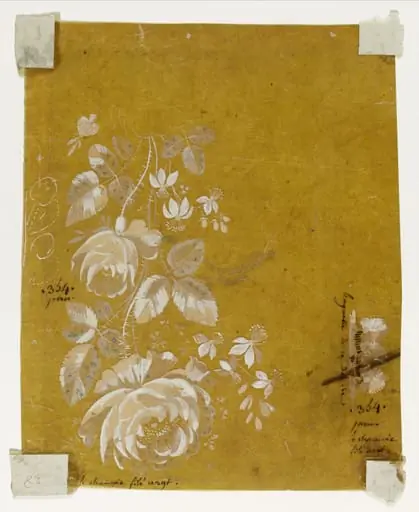 Bouquet de roses blanches pour étoffe, projets de broderies de gilet, XVIIIème siècle
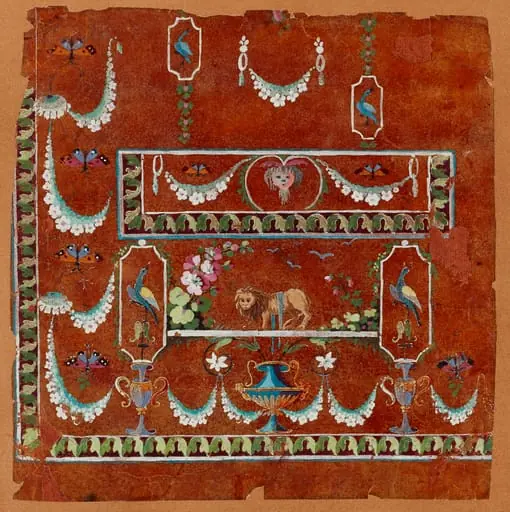 Gilet décor à grotesques, projets de broderies de gilet, XVIIIeme siècle
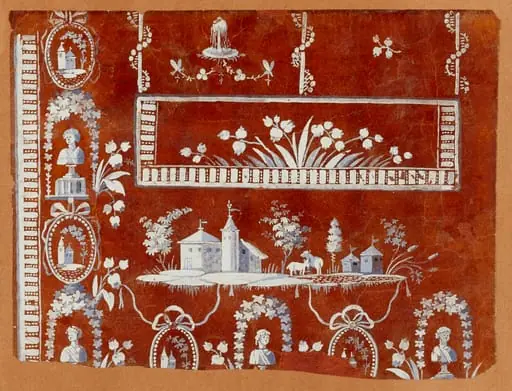 Gilet décor architectures rurales, projets de broderies de gilet, XVIIIème siècle
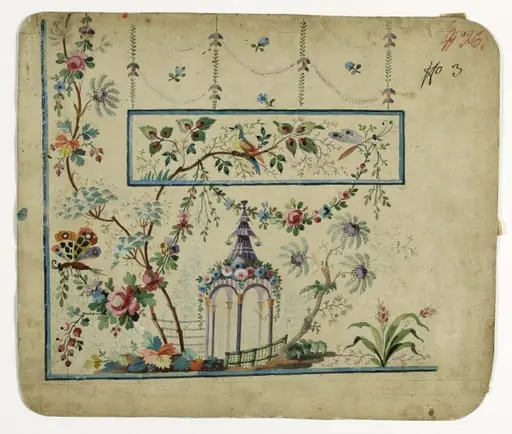 Gilet décor pagode, projets de broderies de gilet, XVIIIème siècle
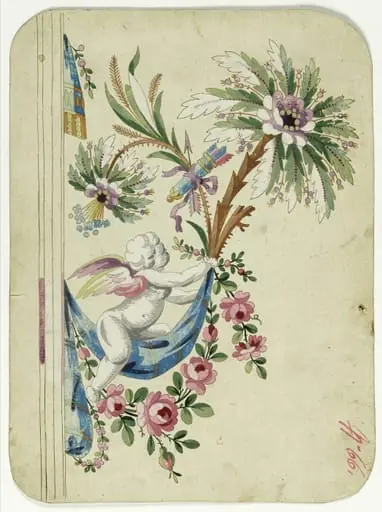 Décor de putti sur palmier, projets de broderies de gilet, XVIIIème siècle
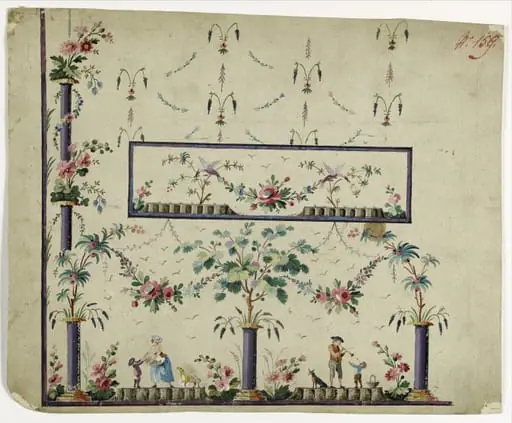 Gilet décor couple avec enfants, projets de broderies de gilet, XVIIIème siècle
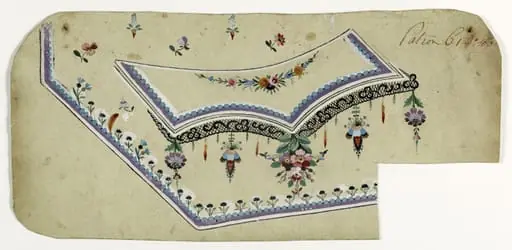 Gilet à la dentelle noire, projets de broderies de gilet, XVIIIème siècle
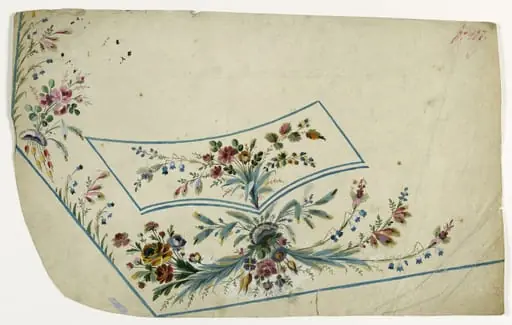 Gilet aux feuilles bleu-gris, projets de broderies de gilet, XVIIIème siècle
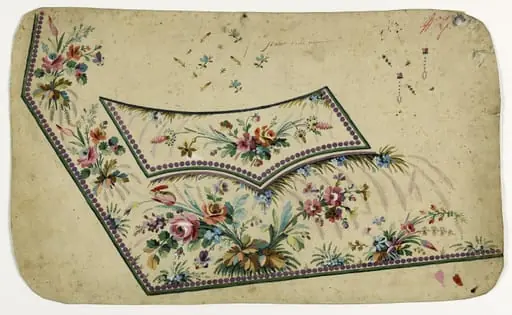 Gilet fleurs et perles mauves, projets de broderies de gilet, XVIIIème siècle
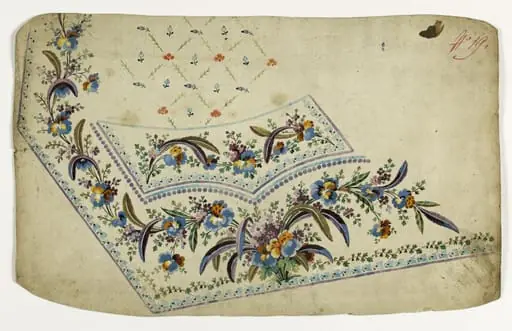 Gilet fleurs bleues et orange, projets de broderies de gilet, XVIIIème siècle
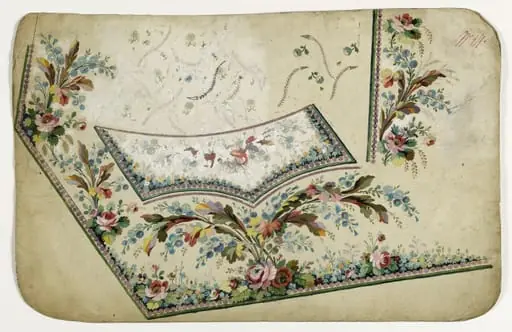 Gilet fleurs et feuilles multicolores, projets de broderies de gilet, XVIIIème siècle
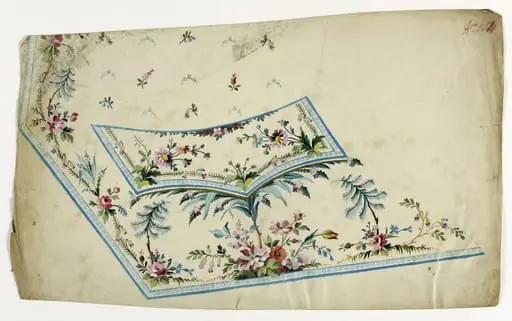 Gilet aux perles bleues, projets de broderies de gilet, XVIIIème siècle
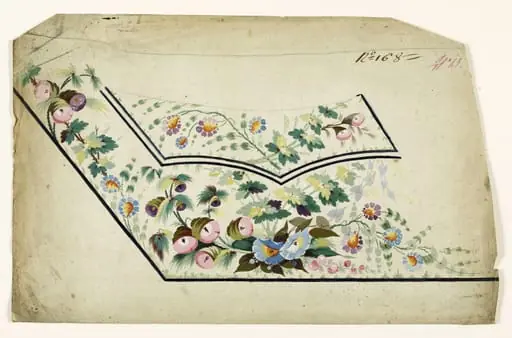 Composition de fleurs sauvages, projets de broderies de gilet, XVIIIème siècle
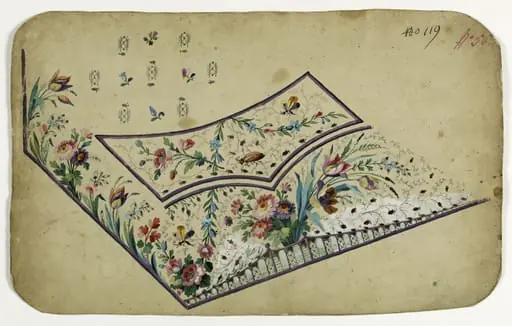 Gilet fleurs, papillons et scarabée, projets de broderies de gilet, XVIIIème siècle
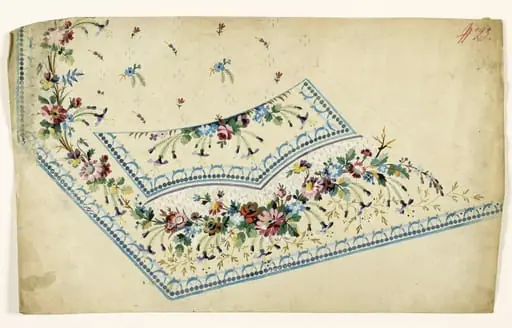 Composition de fleurs en guirlandes et en semis et frises de perles bleues, projets de broderies de gilet, XVIIIème siècle
 Gilet au décor tapissant, projets de broderies de gilet, XVIIIème siècle
 Composition de bouquets de fleurs et de baies et semis de fleurs, projets de broderies de gilet, XVIIIème siècle