Artwork
Portrait of an unknown Woman
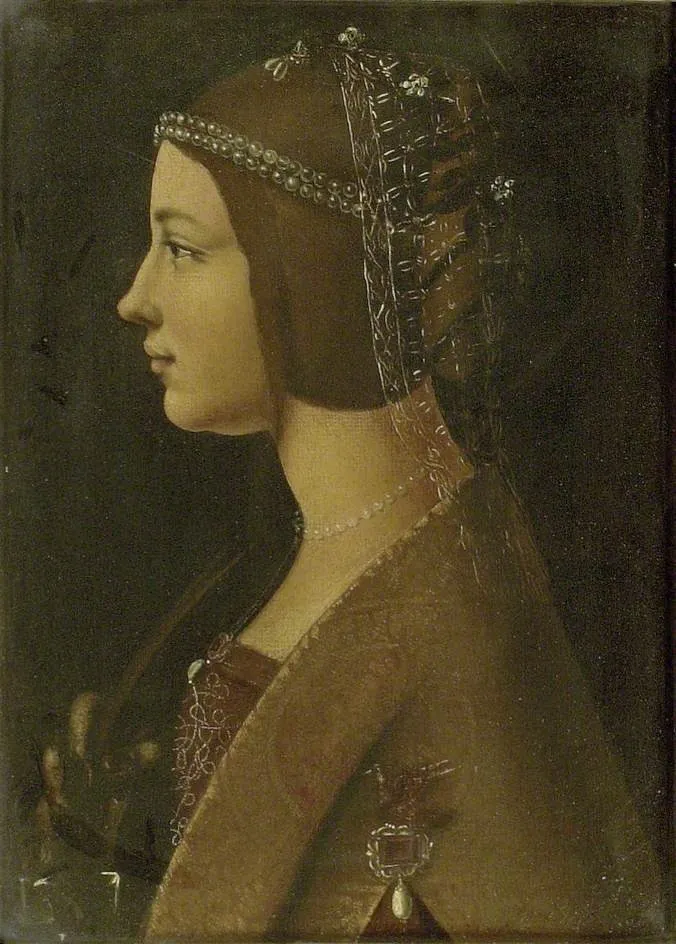
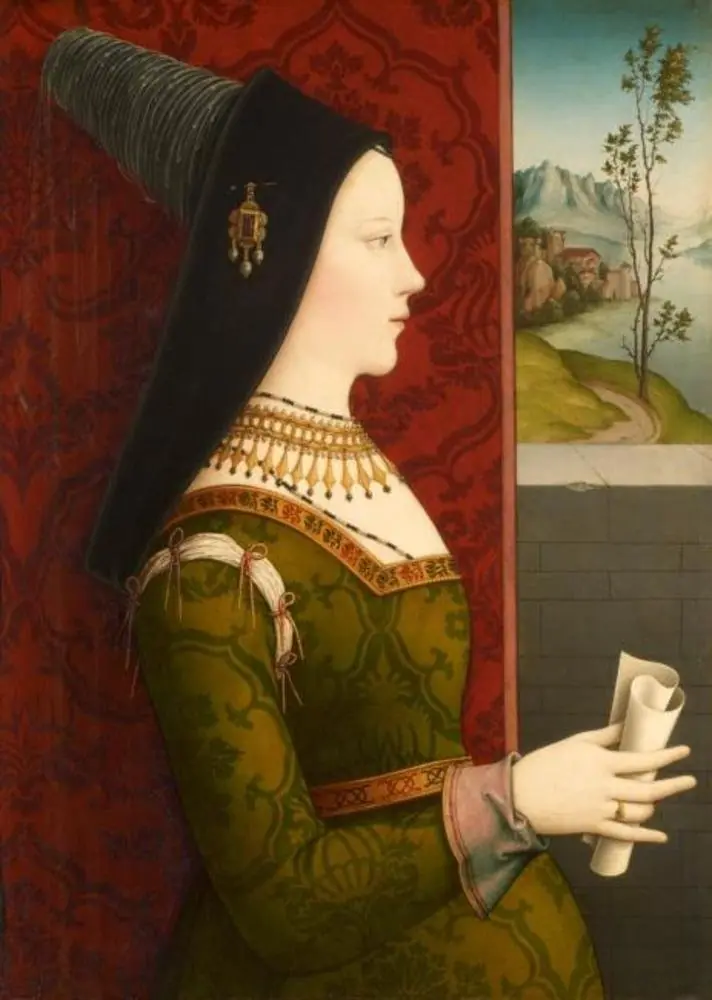
Portrait of an unknown Woman is an oil painting by the Rococo painting artist Unknown. It dates from 1690 and is held in the collection of the Ashmolean Museum. This oil painting presents a formal portrait of an unidentified woman, rendered with restrained elegance.
About this work
Overview
This oil painting presents a formal portrait of an unidentified woman, rendered with restrained elegance. Her dark attire and minimal jewelry contrast with the deep, unmodulated background, focusing attention on her face and upper body. The composition is tightly framed, eliminating extraneous detail to emphasize presence over narrative.
Subject & Meaning
The woman’s serious gaze and still posture suggest introspection rather than social performance. Her elaborate headpiece and pearl necklace imply status, yet the absence of identifiable symbols or settings leaves her identity ambiguous. The somber tone invites contemplation of inner life rather than external role or achievement.
Technique & Style
The artist employs subtle gradations of dark tones to model the face and fabric, using soft transitions rather than sharp contours. Light falls gently on the forehead, neck, and pearls, creating quiet highlights against the shadowed surroundings. Brushwork is controlled and precise, favoring texture over flourish.
History & Provenance
The painting’s origin remains undocumented, with no known record of its commission or early ownership. It entered public collections in the 20th century, likely acquired as a representative example of 17th-century portraiture. Its anonymity has prompted scholarly speculation but no definitive attribution.
Context
Created during a period when portraiture emphasized dignity and restraint, the work aligns with Northern European traditions that valued psychological depth over ornamentation. Similar compositions appear in Dutch and Flemish circles, where quiet realism often replaced theatricality in depictions of elite women.
Legacy
Though unsigned and unattributed, the portrait continues to be studied for its emotional nuance and technical discipline. It exemplifies how anonymity in portraiture can amplify universality, allowing viewers to project meaning onto a figure whose identity remains deliberately withheld.
Artist & collection

 Domestic Scene
 Giacomo and Cardinal Marco, investing Andrea, Abbot of San Zeno, with his Benefice
 The Nymph of Fontainebleau
 Portrait of a Woman
 Madonna and Child with Saints in the Enclosed Garden
 Venus and Minerva
 Family Group of Four on Sofa
 Wall painting from Room H of the Villa of P. Fannius Synistor at Boscoreale
 Portrait of a Lady
 Portrait of a young Woman
 A Young Woman
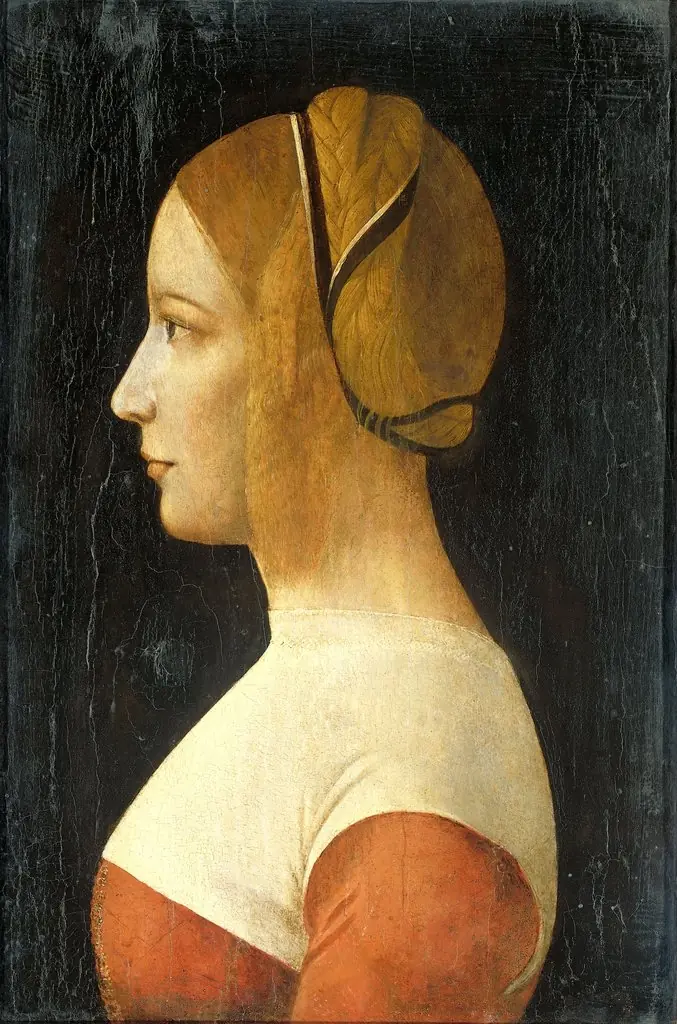 Portrait of a young woman facing left
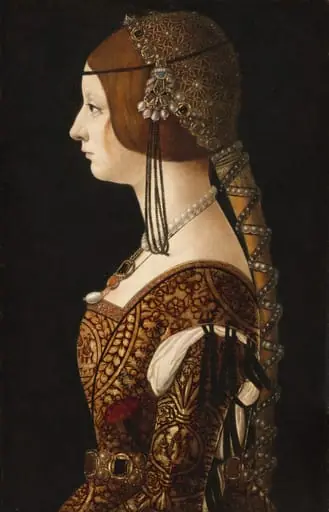 Bianca Maria Sforza
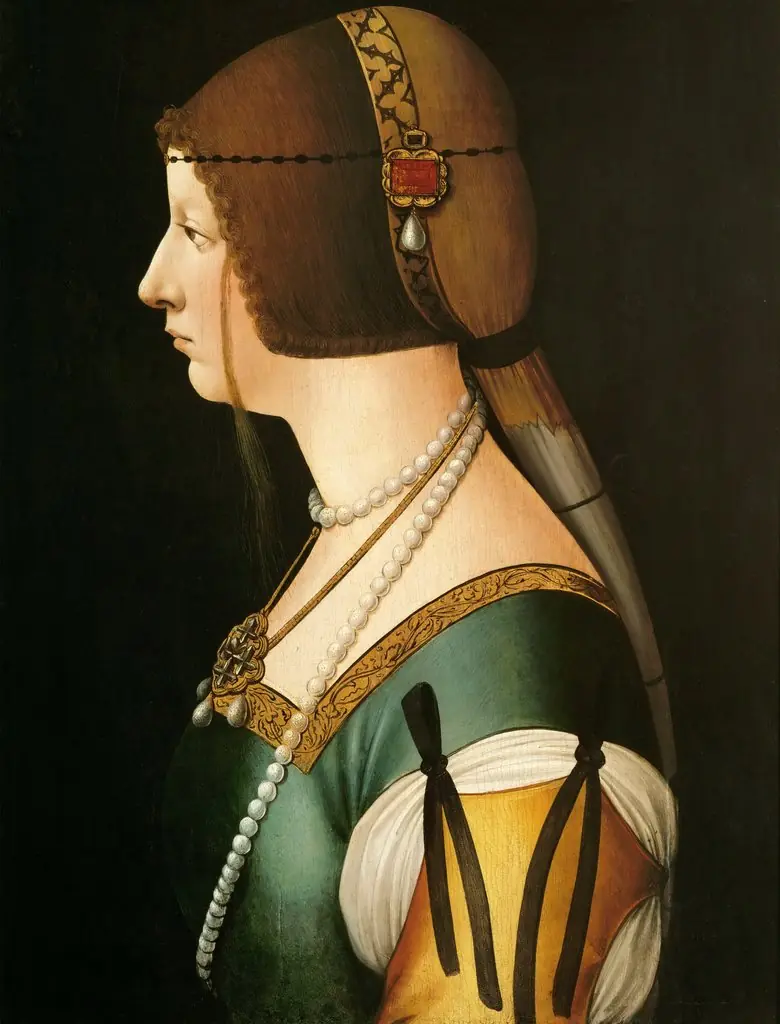 Bianca Maria Sforza
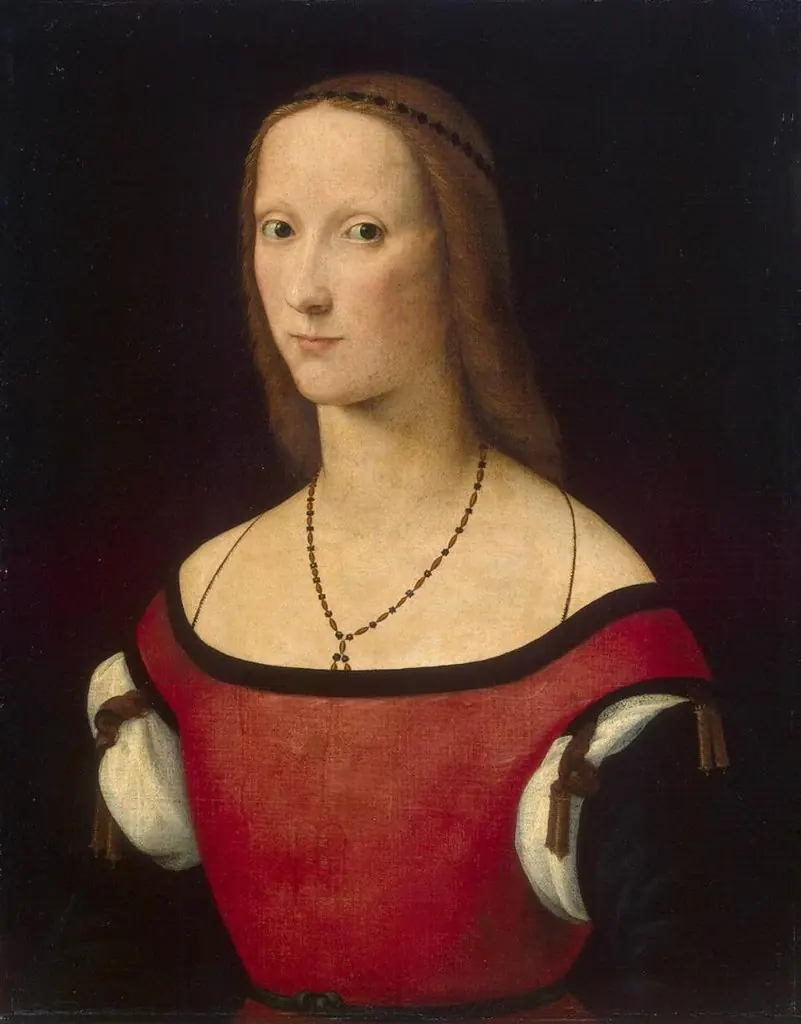 Portrait of a Lady
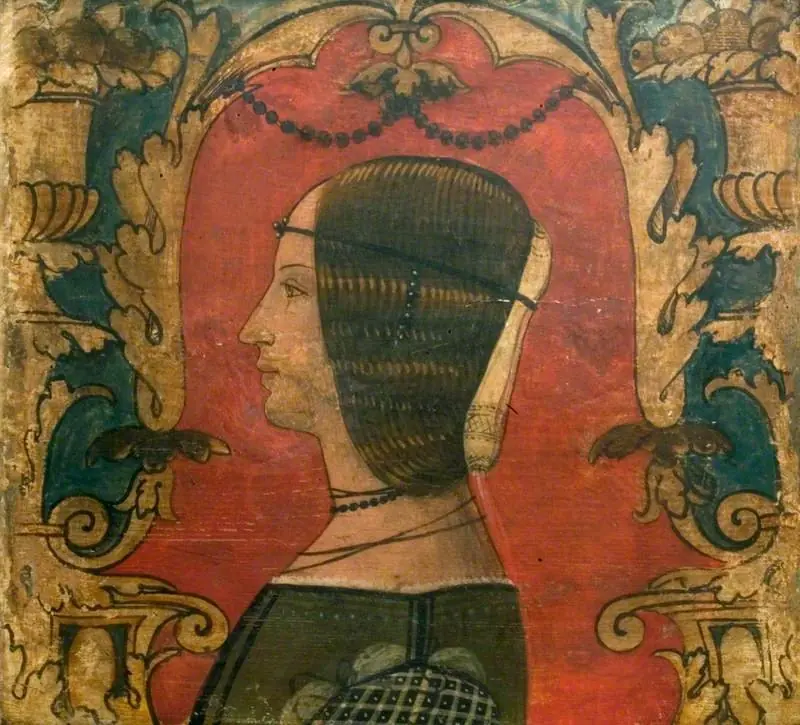 Profile Bust of a Lady Facing Left (one of 29 painted panels from a frieze)
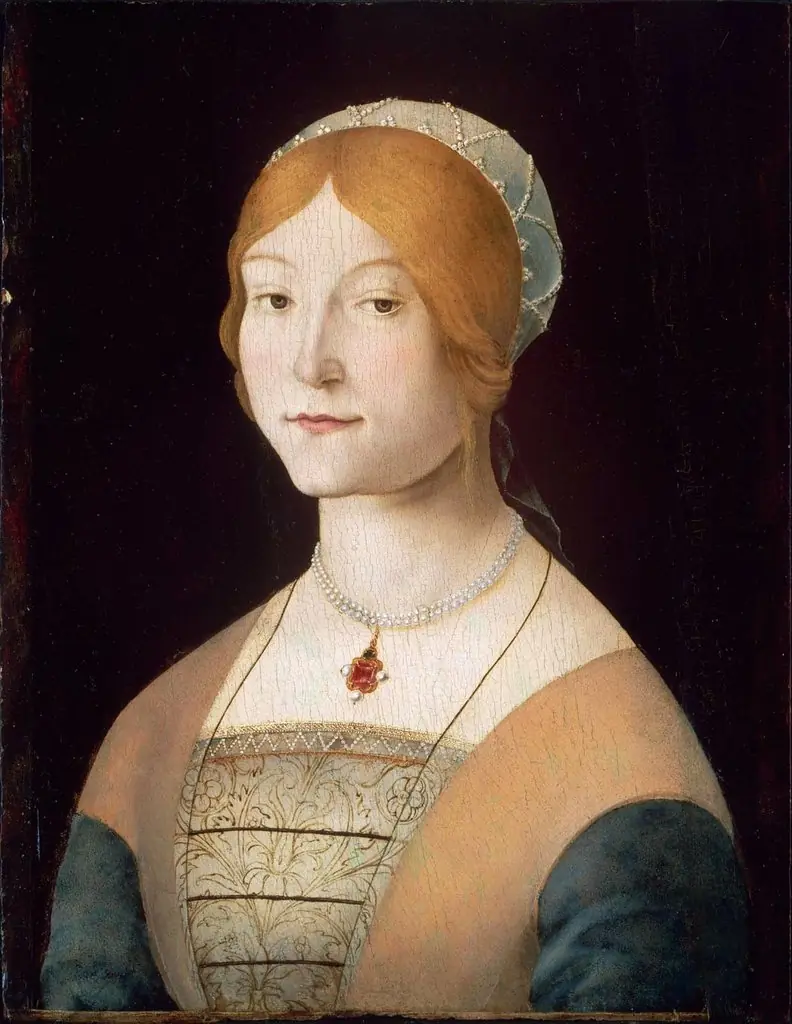 Portrait of a Woman with a Pearl Necklace
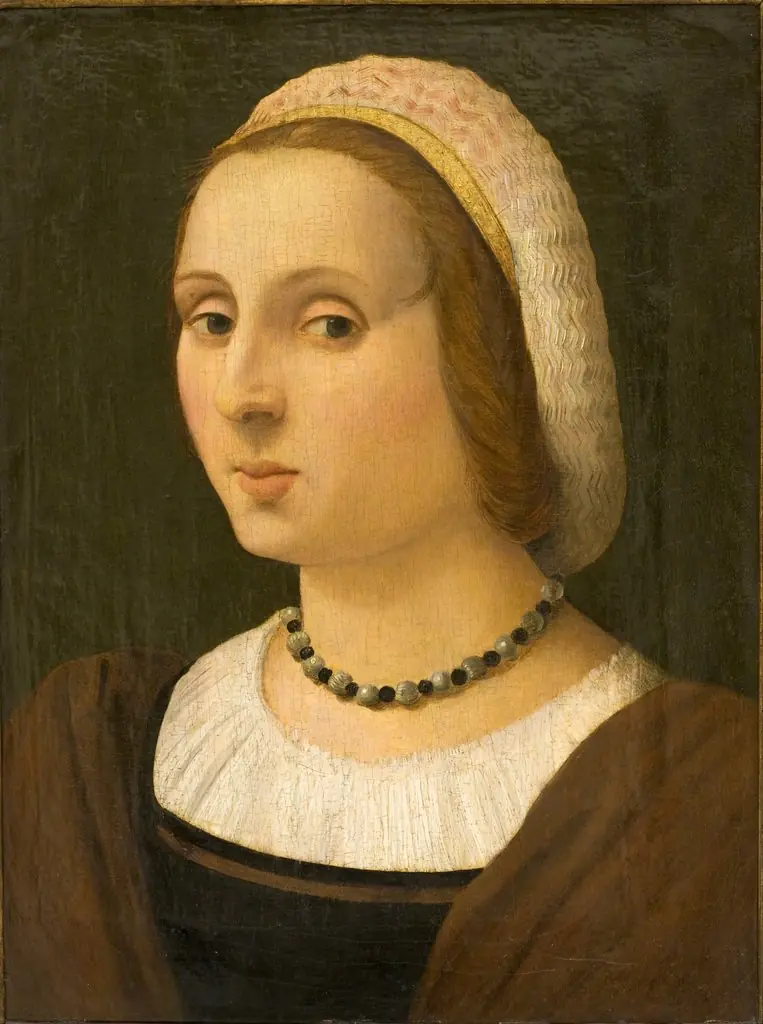 Portrait of a Lady
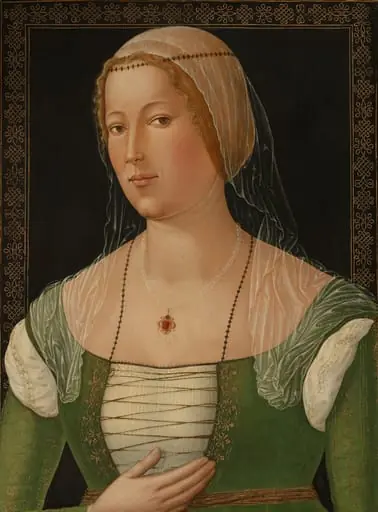 Portrait of a Young Woman
 Portrait of Mary of Burgundy