Artwork
Madonna by a Grassy Bank
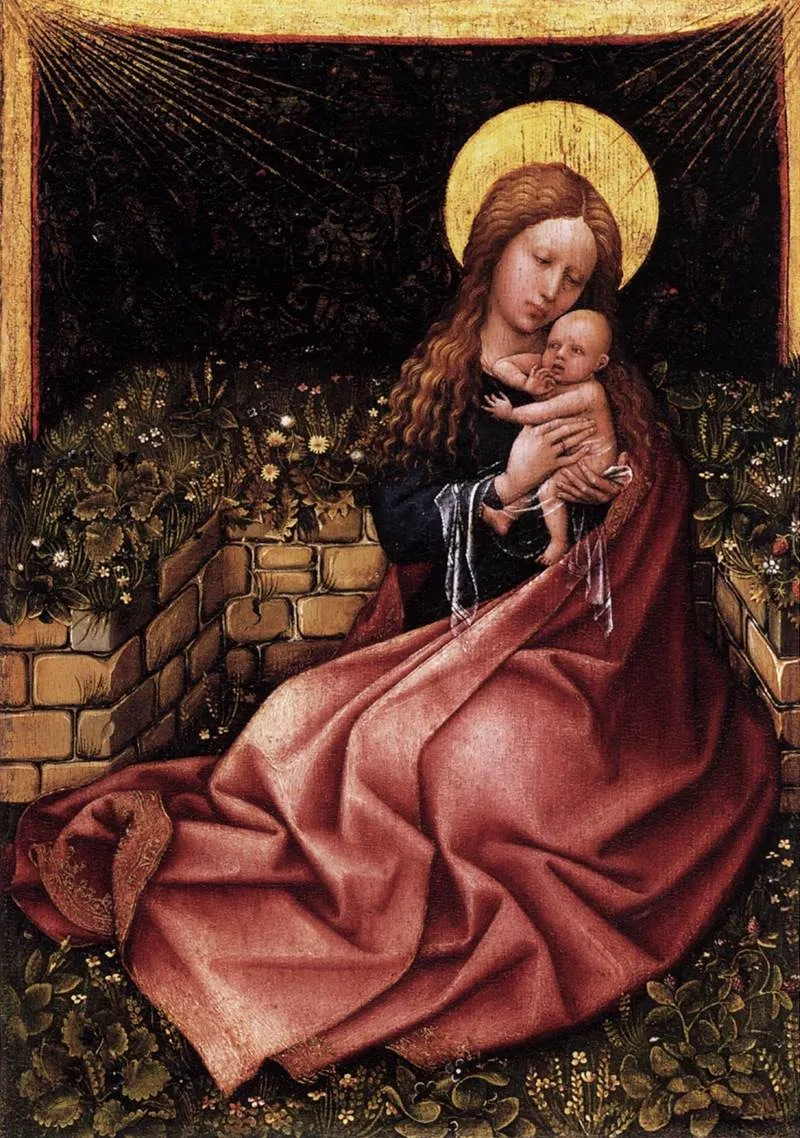
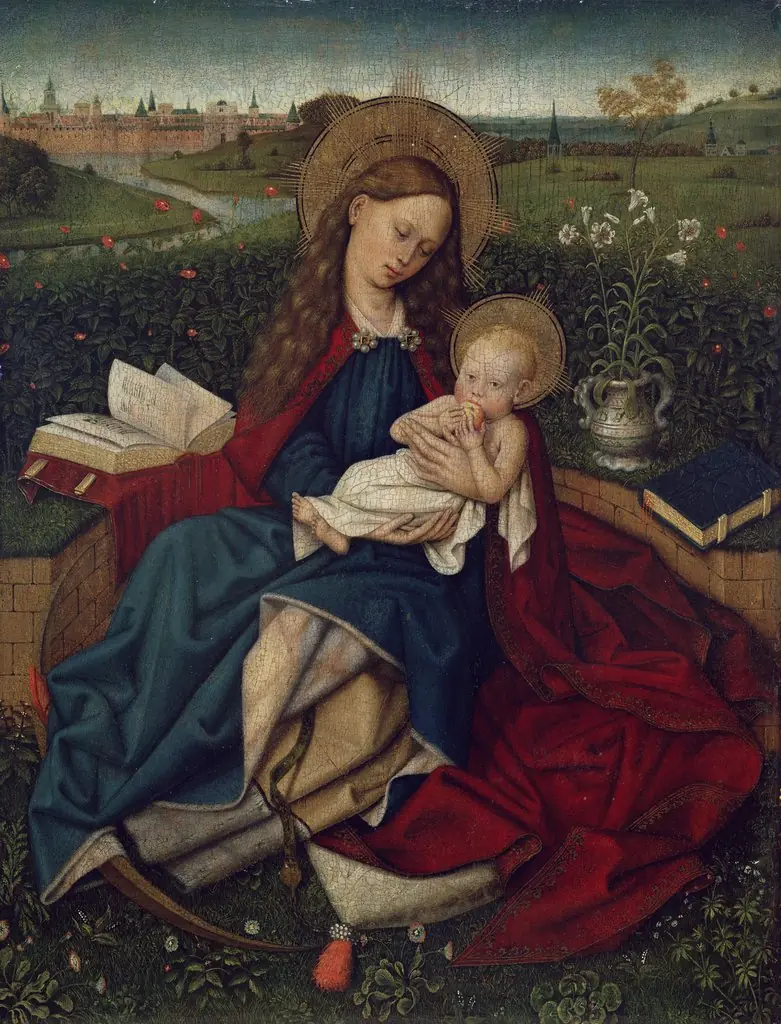
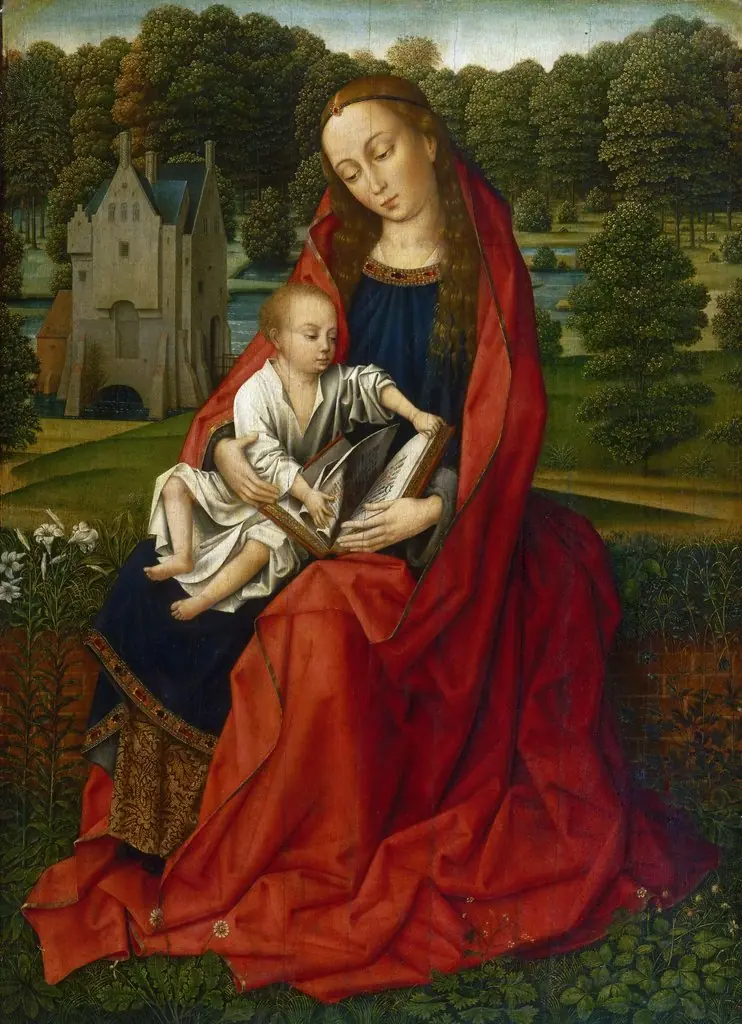
Madonna by a Grassy Bank is an oil painting by the Northern Renaissance artist Robert Campin. It dates from 1422 and is held in the collection of the Gemäldegalerie Berlin.
About this work
Overview
Created in 1422, *Madonna by a Grassy Bank* is an oil painting by the early Netherlandish artist Robert Campen, a central figure in the Northern Renaissance. The work is part of the devotional image tradition that flourished in the early fifteenth century and is presently displayed in the Gemäldegalerie, Berlin.
Subject & Meaning
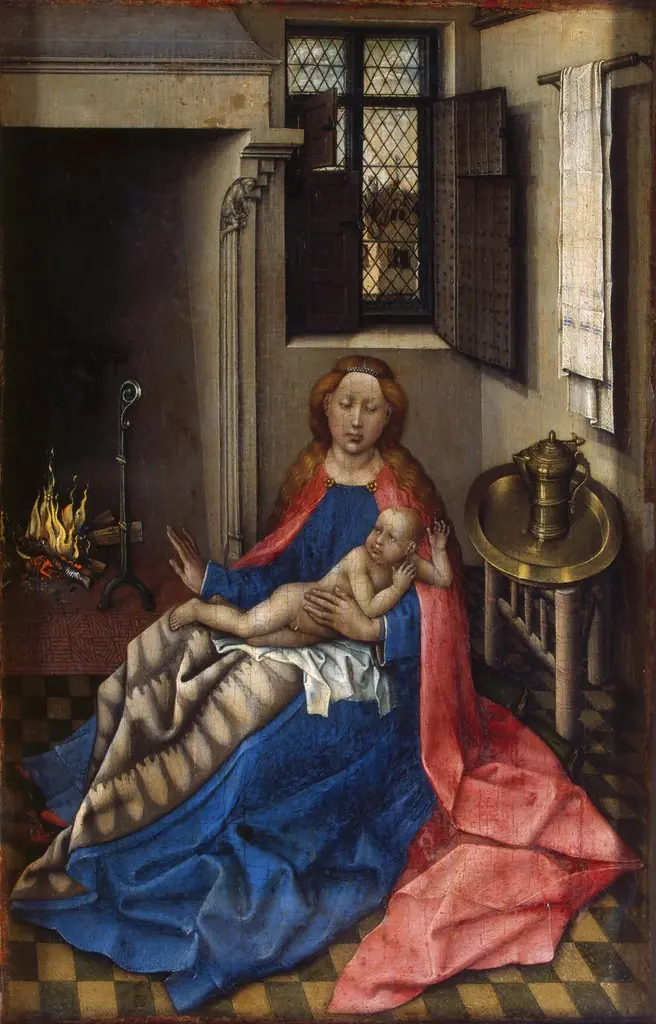
The composition presents the Virgin Mary seated on a verdant bank, cradling the infant Christ. A modest stone wall, fringed with blossoms, frames the scene, while Mary's serene expression and the child's calm demeanor convey a quiet, intimate moment of maternal devotion.
Technique & Style
Campen employs a rich yet restrained palette, highlighting a deep red drapery against lush green grass. A subtle golden halo encircles Mary's head, emphasizing her sanctity. The rendering of light and texture reflects the artist’s meticulous attention to detail, characteristic of early Netherlandish painting.
History & Provenance
Long linked to the anonymous Master of Flémalle, the painting is now attributed to Campen, who worked primarily in Tournai and was a contemporary of Jan van Eyck. After passing through several private collections, the work entered the Gemäldegalerie Berlin’s holdings, where it remains on view.
Artist & collection
Artist
Robert Campin (Valenciennes (France) c. 1375 - Tournai (Belgium) 26 April 1444) now usually identified with the Master of Flémalle (earlier the Master of the Merode Triptych, before the discovery of three other similar…