Artwork
Rama Receiving Obeisance from Hanuman
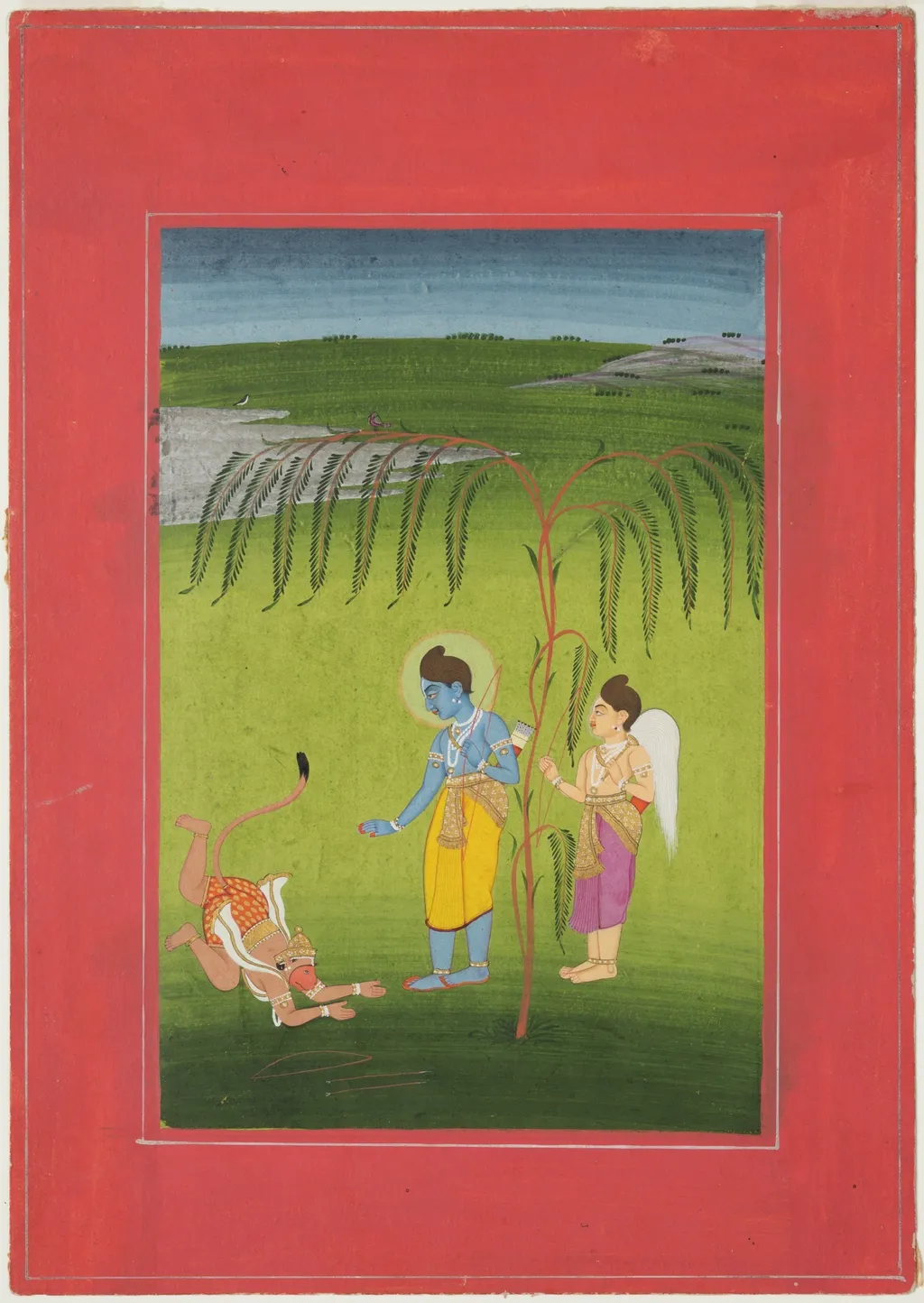
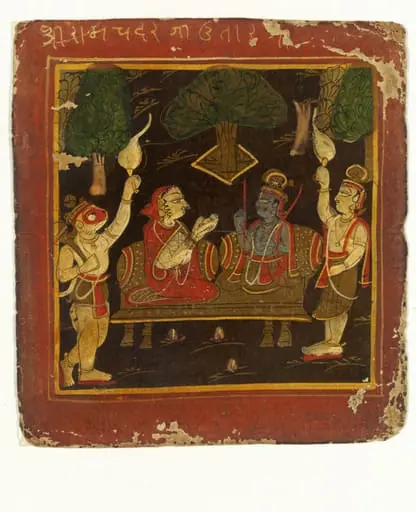
Rama Receiving Obeisance from Hanuman is an unspecified painting by Unknown. It is held in the collection of the Detroit Institute of Arts. This painting captures a moment from the Ramayana, showing Rama receiving homage from Hanuman.
About this work
Overview
The scene is rendered with vivid hues and careful spatial arrangement, emphasizing ritual stillness amid natural abundance.
This painting captures a moment from the Ramayana, showing Rama receiving homage from Hanuman. Set against a verdant landscape, the composition centers on Rama, flanked by a watching figure and the kneeling Hanuman. The scene is rendered with vivid hues and careful spatial arrangement, emphasizing ritual stillness amid natural abundance. The figures are arranged to guide the viewer’s gaze toward the central act of reverence.
Subject & Meaning
The scene illustrates Hanuman’s devotion to Rama, a key theme in the Ramayana. Hanuman, depicted mid-bow, embodies loyal service, while Rama’s outstretched hand signifies grace and acceptance. The third figure, possibly Lakshmana, observes quietly, reinforcing the sacred hierarchy. The moment is not one of action but of spiritual acknowledgment, underscoring dharma and surrender.
Technique & Style
The artist employs a rich, saturated palette—yellow, orange, and purple—to distinguish figures and create visual rhythm. Brushwork is precise, with delicate outlines and flat planes of color typical of Pahari miniature traditions. Background foliage is rendered with rhythmic patterns, enhancing depth without perspective. Contrast in hue and posture balances the composition, focusing attention on the central interaction.
History & Provenance
This work originates from the Pahari school, likely produced in the early 18th century in the hills of northern India. It reflects the influence of Mughal naturalism fused with local devotional aesthetics. Likely commissioned for a royal or temple setting, it was part of a larger illustrated manuscript or album. Its survival suggests continued reverence for Ramayana imagery among regional patrons.
Context
Created during a period when Rajput and Pahari courts actively sponsored illustrated epics, this painting aligns with broader trends of devotional art. The Ramayana was a favored narrative, used to reinforce moral and royal ideals. Artists adapted courtly styles to sacred themes, blending realism with symbolic form. Such works served both spiritual contemplation and political legitimacy.
Legacy
The painting exemplifies how regional Indian traditions sustained narrative painting through centuries. Its emphasis on emotional restraint and symbolic color influenced later miniature schools. Though not widely known outside specialized collections, it remains a quiet testament to the enduring visual language of Hindu devotion in pre-colonial India.
Artist & collection

 Domestic Scene
 Giacomo and Cardinal Marco, investing Andrea, Abbot of San Zeno, with his Benefice
 The Nymph of Fontainebleau
 Portrait of a Woman
 Madonna and Child with Saints in the Enclosed Garden
 Venus and Minerva
 Family Group of Four on Sofa
 Wall painting from Room H of the Villa of P. Fannius Synistor at Boscoreale
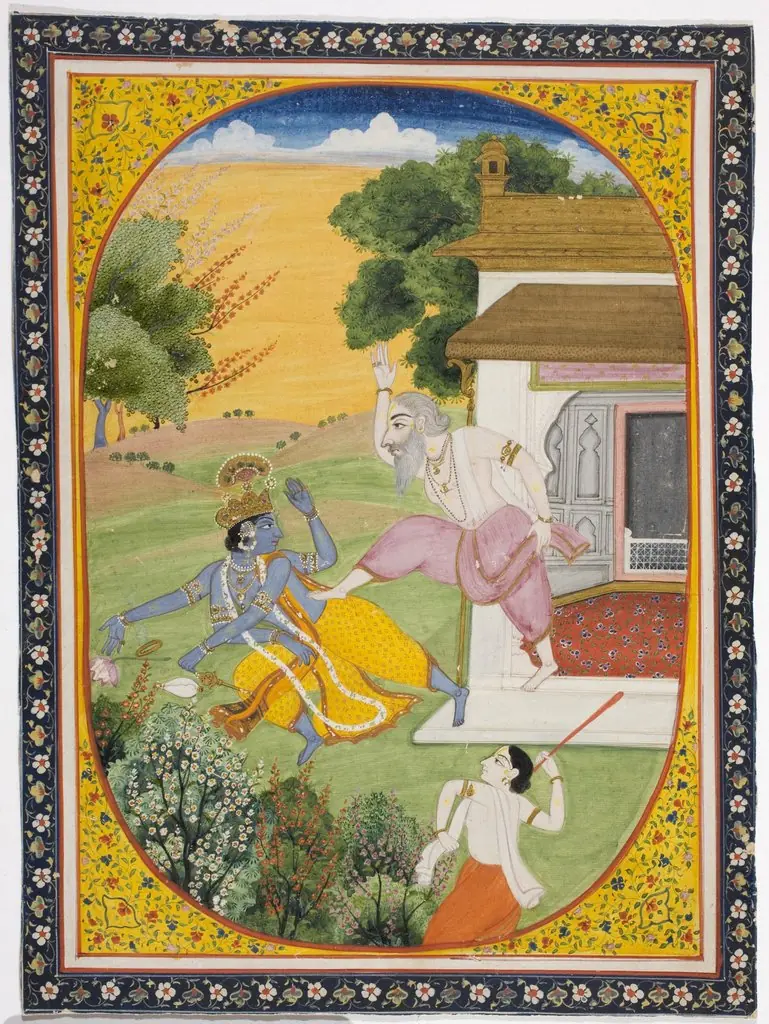 Krishna Rebuked by a Priest
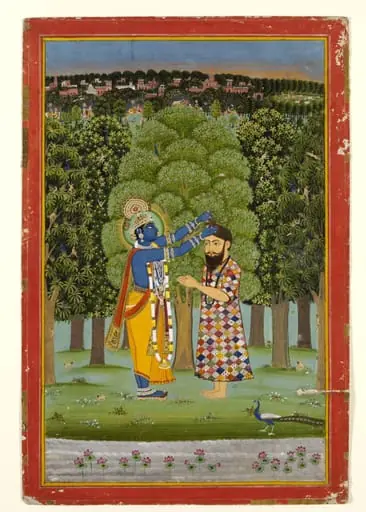 Krishna adorning the hair of a holy man
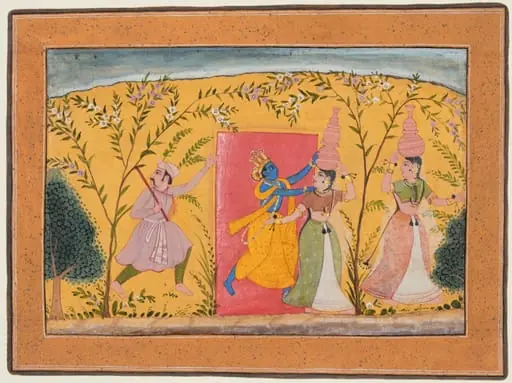 Krishna Exacts a Toll from the Milkmaids: Dana-Lila, from a Bhagavata Purana
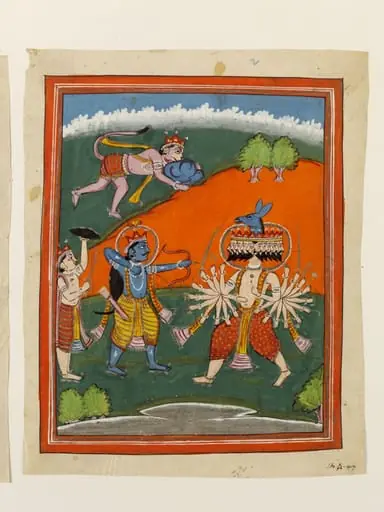 Rama and Ravana
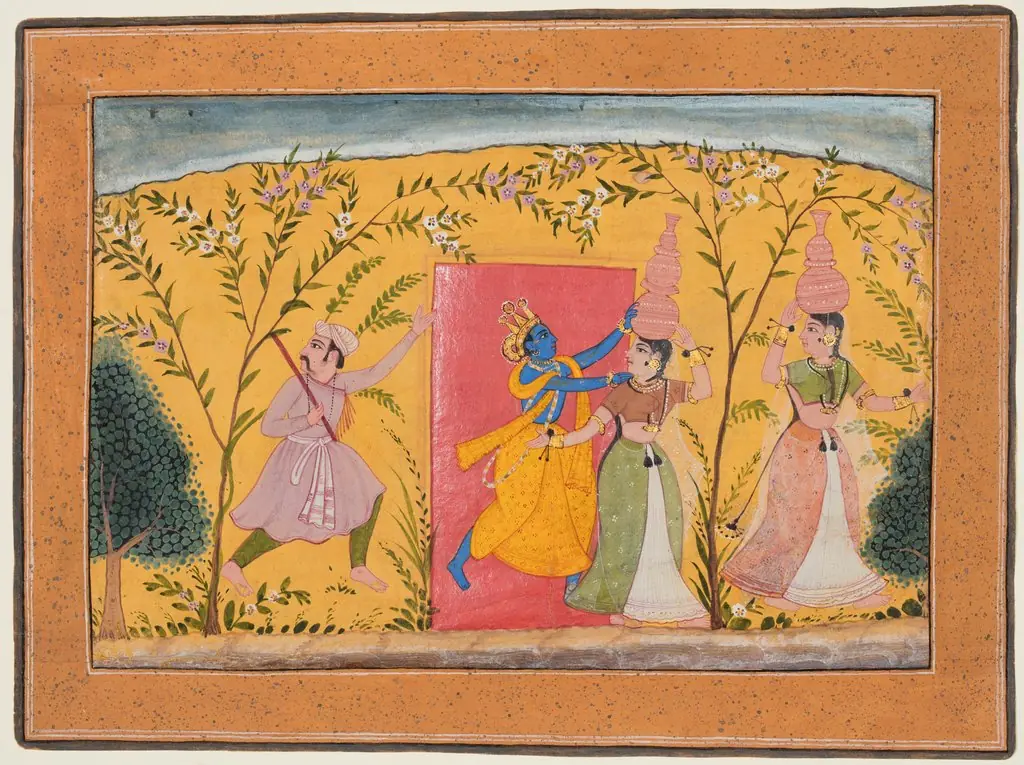 Krishna Exacts a Toll from the Milkmaids: Dana-Lila, from a Bhagavata Purana
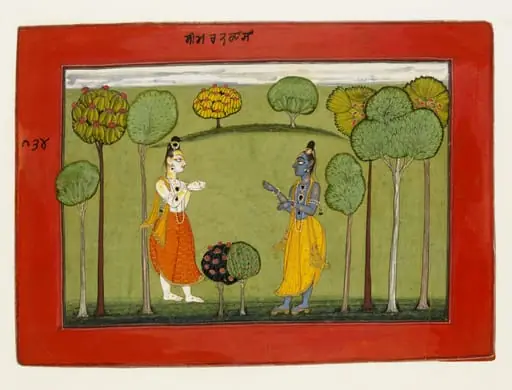 Rama and Lakshman
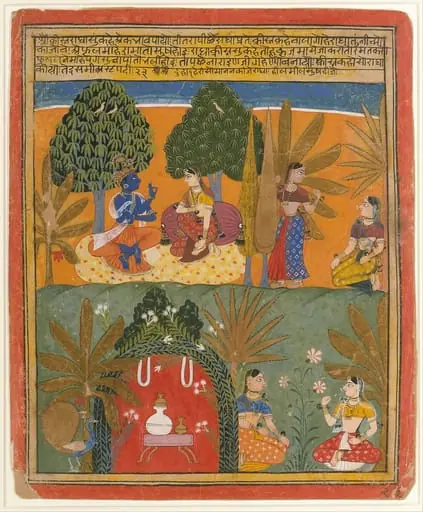 Untitled
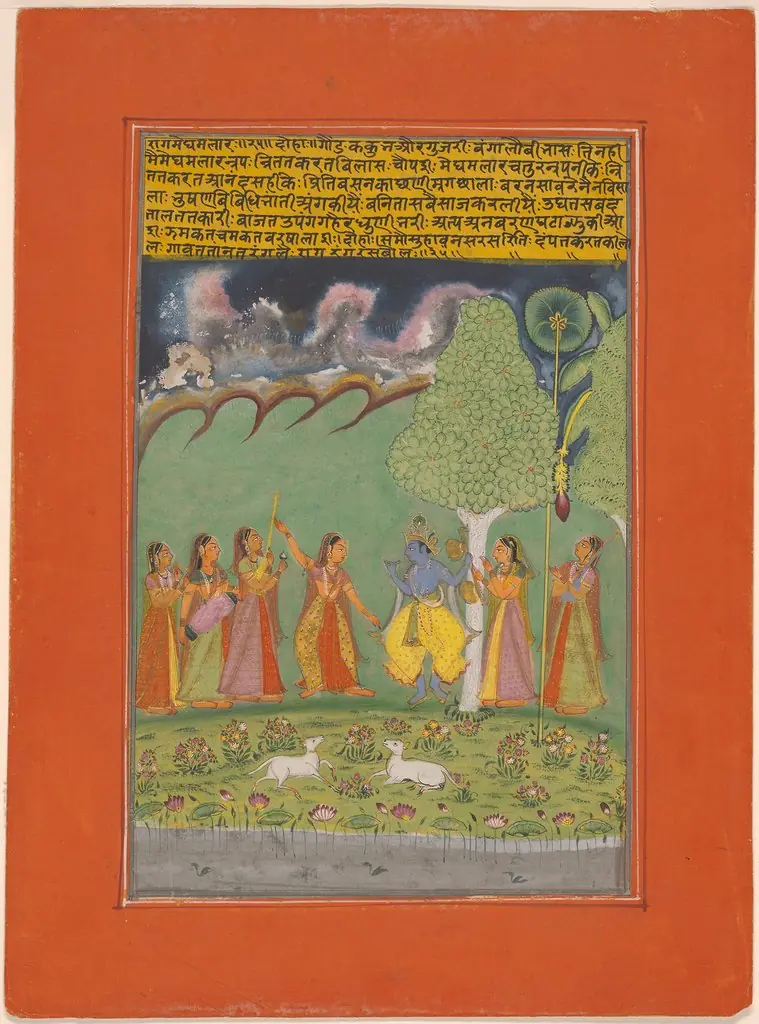 Rag Megh Malar, Page from a Jaipur Ragamala Set
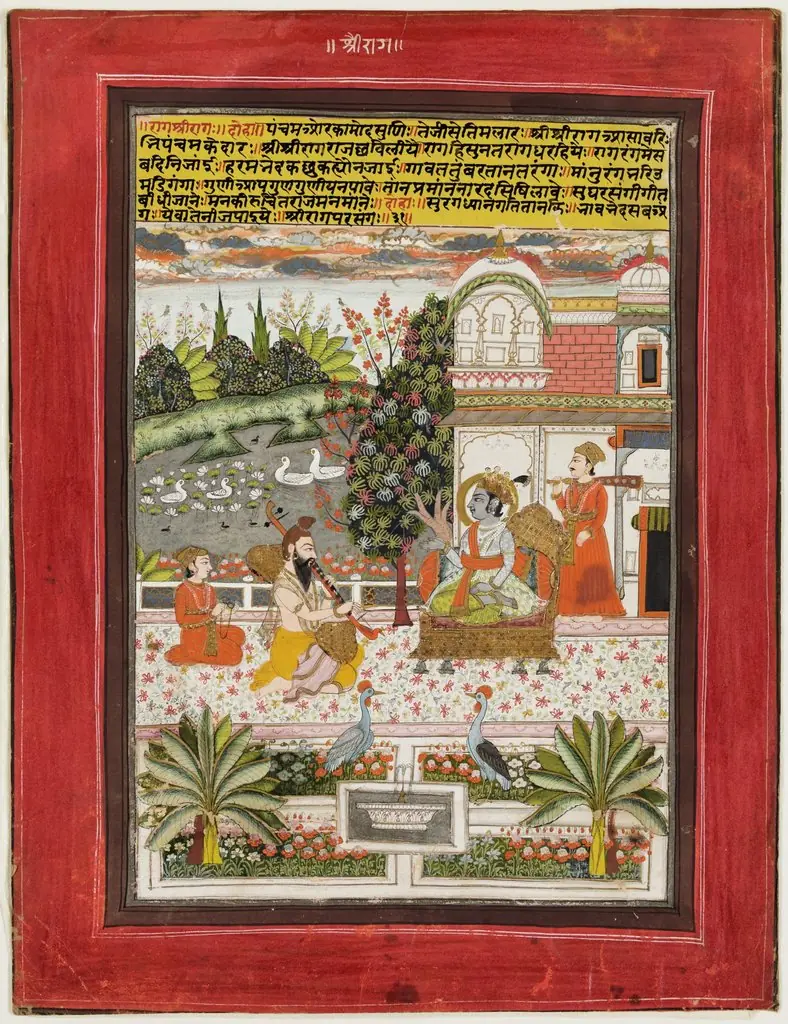 Krishna with Guru in Palace Scene
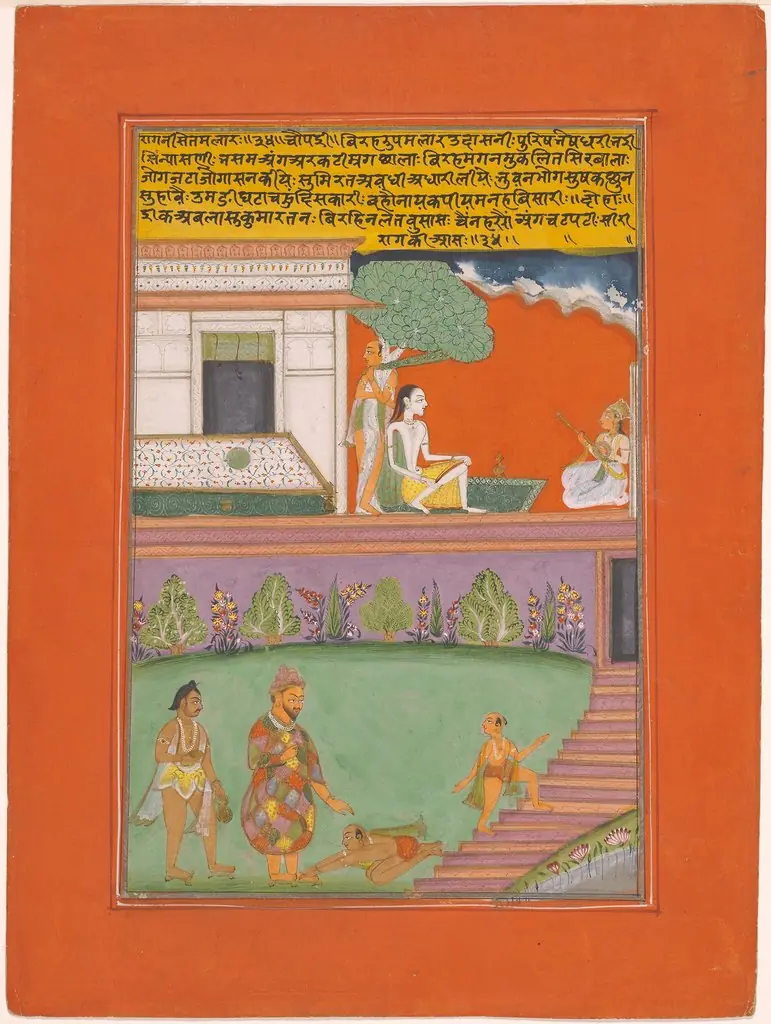 Ragini Setmalar, Page from a Jaipur Ragamala Set
 Krishna and Radha
 Rama and Sita, Lakshman and Hanuman