Artwork
Isfandiyar slays Arjasp, the king of Turan, from a Shah-nama (Book of Kings) of Firdausi (Persian, about 934–1020)
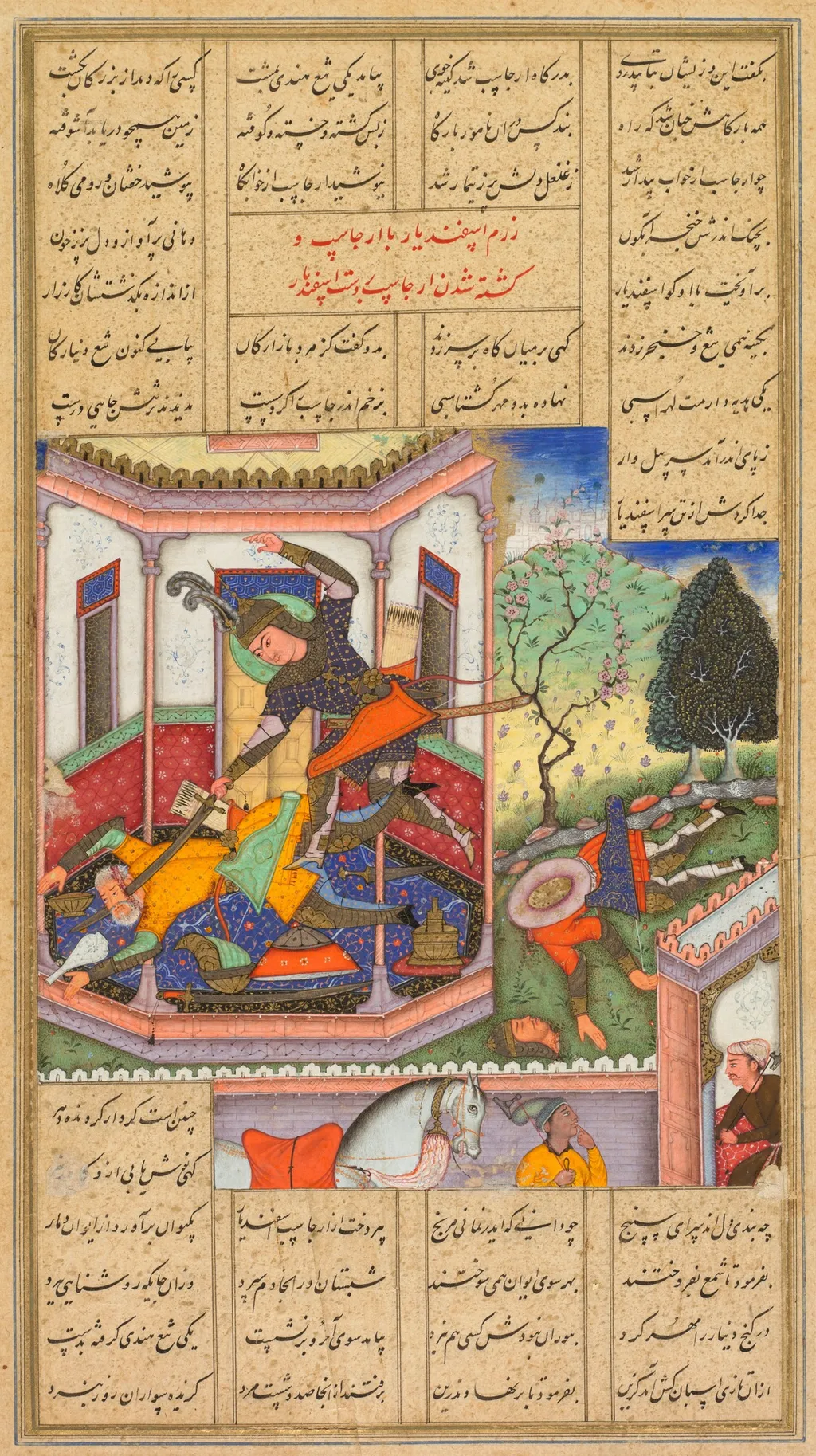
Isfandiyar slays Arjasp, the king of Turan, from a Shah-nama (Book of Kings) of Firdausi (Persian, about 934–1020) is an unspecified painting. It dates from 1602 and is held in the collection of the Cleveland Museum of Art.
About this work
Overview
The work depicts a climactic moment from the Persian epic Shah‑nama, in which the hero Isfandiyar, mounted on a rearing horse, raises his sword to strike the fallen king Arjasp of Turan. The scene is set against an architectural backdrop with columns and a garden, rendered in vivid hues that emphasize the drama of the encounter.
Subject & Meaning
The narrative illustrates the triumph of Isfandiyar, a legendary prince, over Arjasp, symbolizing the victory of rightful rule over tyranny. The fallen figure, dressed in a yellow robe and clutching a staff, represents the defeated monarch, while the dynamic pose of the rider conveys heroic valor and the moral order upheld in the Shah‑nama.
Technique & Style
Executed in a richly colored palette, the painting employs intricate detailing in the costumes and architectural elements. The rider’s blue‑orange attire and green headscarf contrast sharply with the golden tones of the fallen king, while the rearing horse adds kinetic energy. Fine brushwork captures the texture of fabrics and foliage, creating a lively, narrative tableau.
History & Provenance
The piece originates from a manuscript illustration of the Shah‑nama, the 10th‑century Persian epic compiled by Firdausi. It now forms part of the collection at the Cleveland Museum of Art, where it contributes to the museum’s representation of Persian miniature painting and its transmission into the modern era.
Artist & collection

 Bijan killing the wild boars of Irman, from a Shah-nama (Book of Kings) of Firdausi (Persian, about 934–1020), (recto)
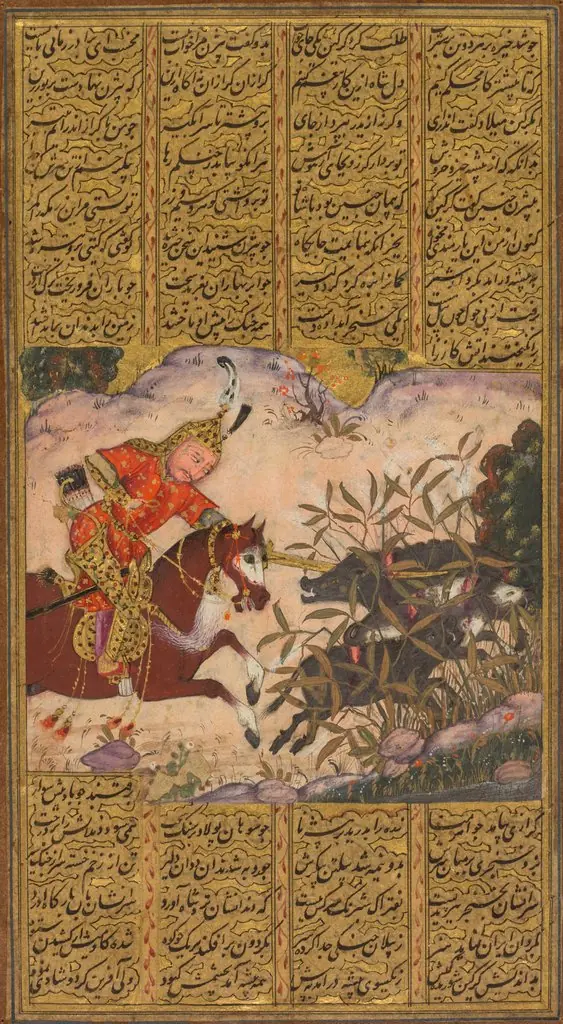 Bijan killing the wild boars of Irman, from a Shah-nama (Book of Kings) of Firdausi (Persian, about 934–1020)
 Text of Rustam and Suhrab, from the Shah-nama of Firdausi (Persian, c. 934–1020) (recto)
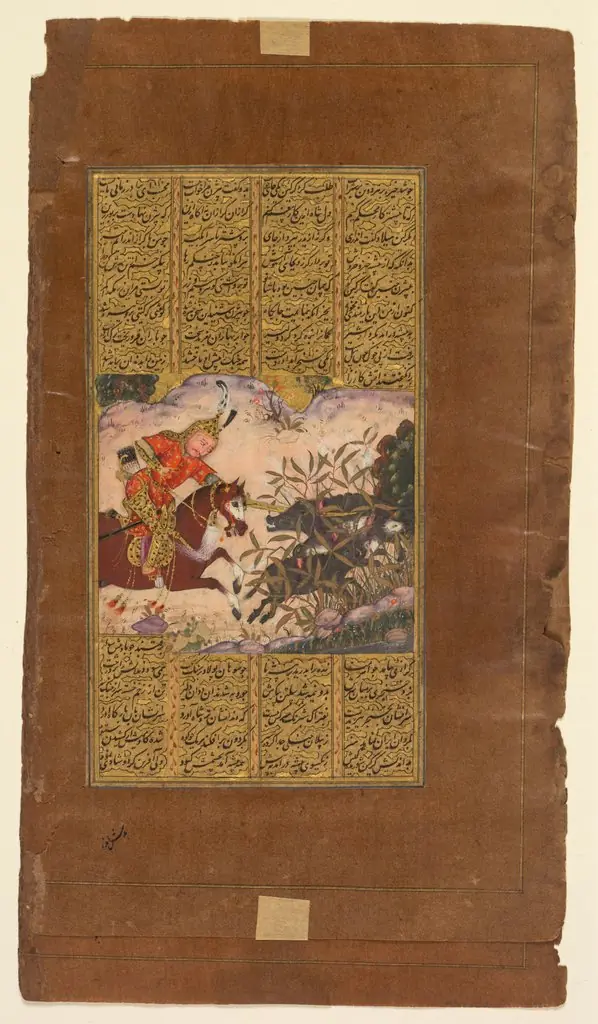 Bijan killing the wild boars of Irman, from a Shah-nama (Book of Kings) of Firdausi (Persian, about 934–1020) (verso)
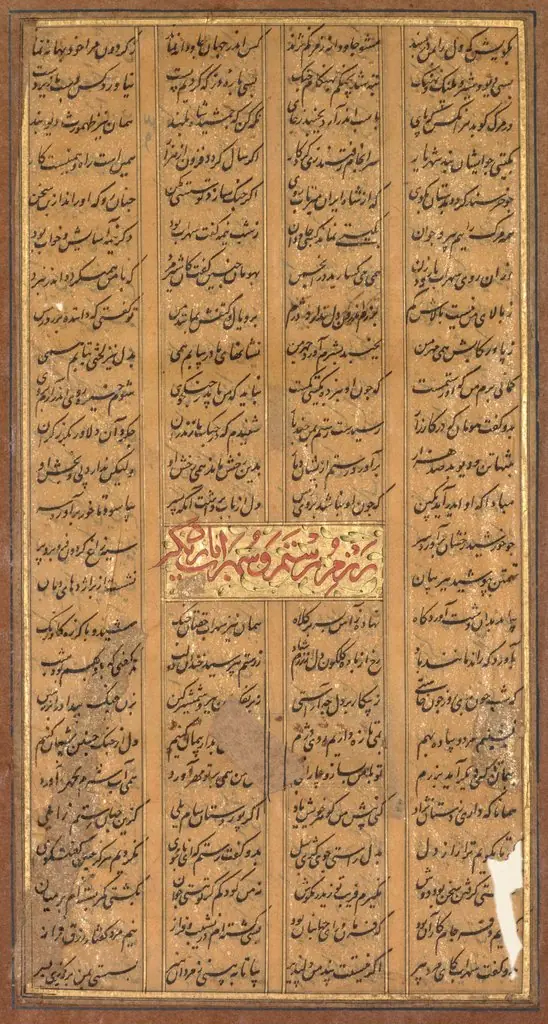 Text of Rustam and Suhrab, from the Shah-nama of Firdausi (Persian, c. 934–1020) (verso)
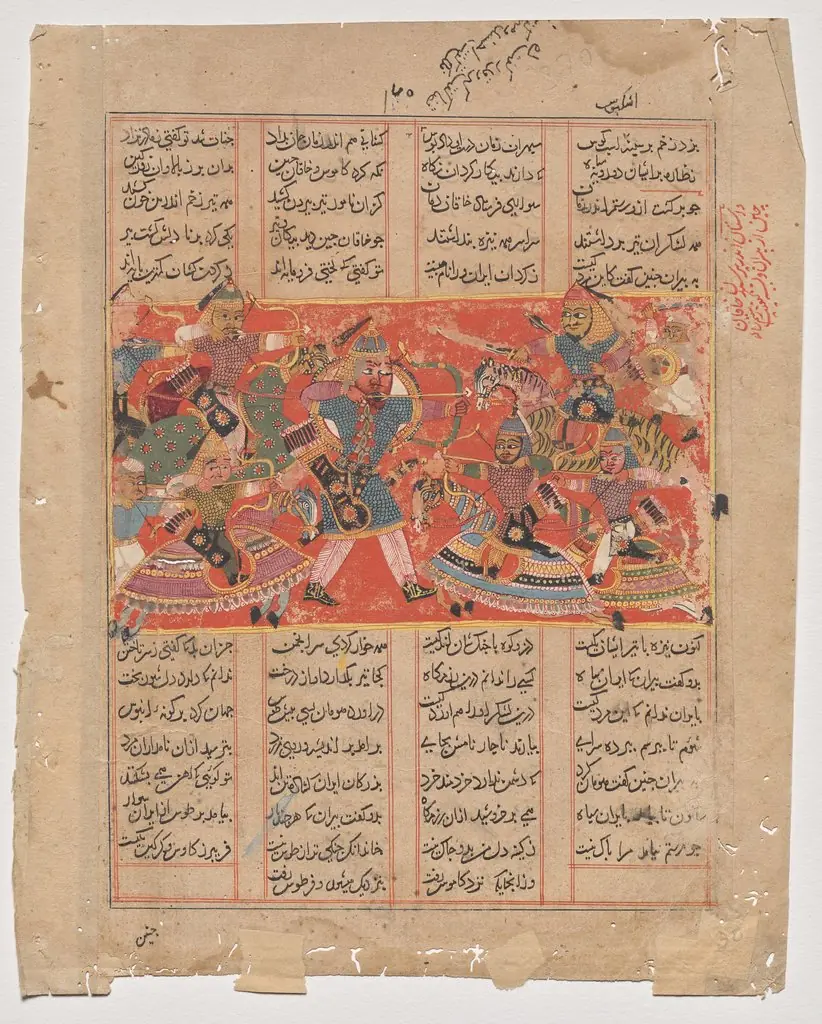 Rustam Takes Aim at Ashkabus, from a Shah-nama (Book of Kings)