Artwork
Bijan killing the wild boars of Irman, from a Shah-nama (Book of Kings) of Firdausi (Persian, about 934–1020), (recto)
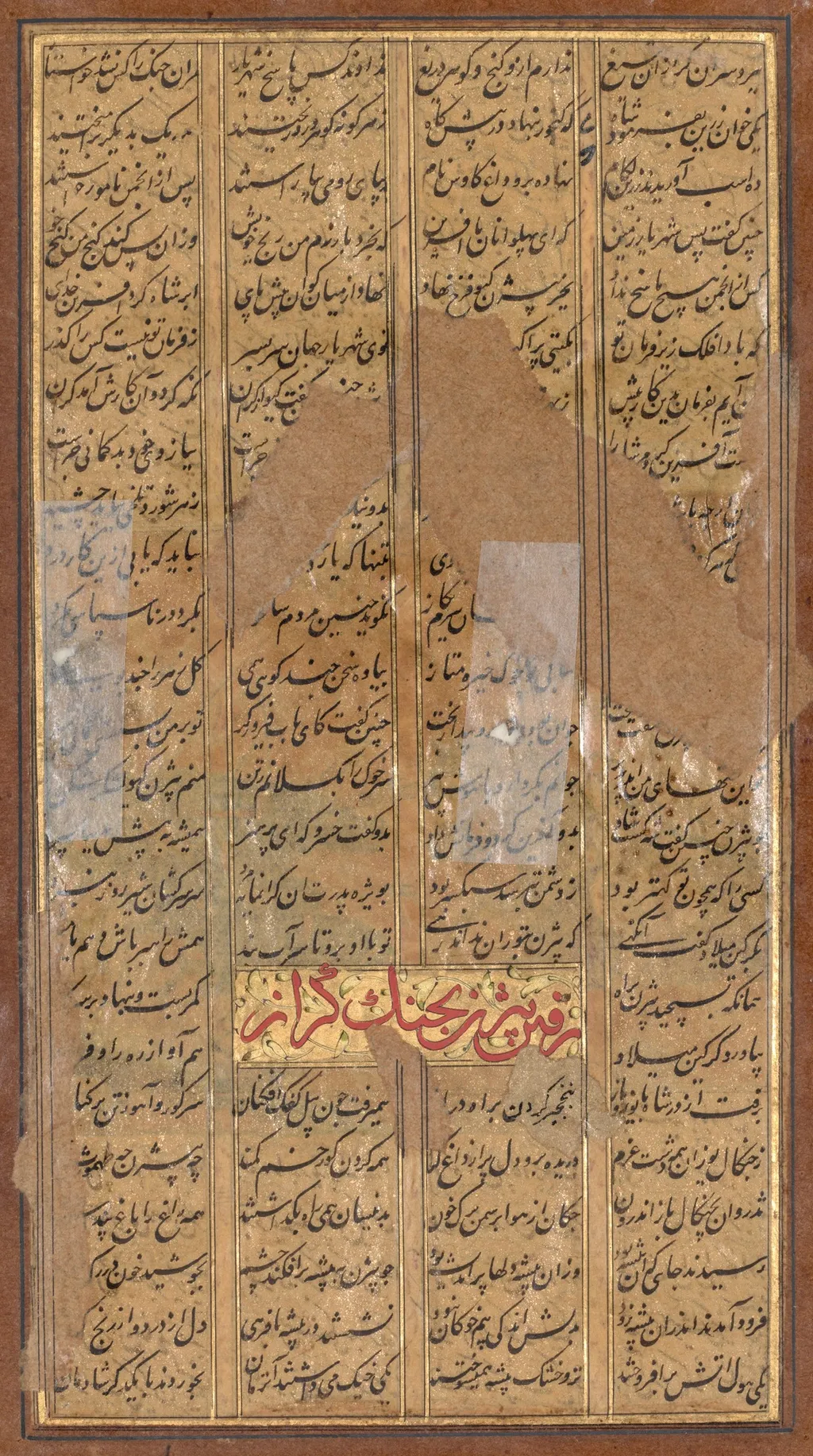
Bijan killing the wild boars of Irman, from a Shah-nama (Book of Kings) of Firdausi (Persian, about 934–1020), (recto) is an unspecified painting. It dates from 1610 and is held in the collection of the Cleveland Museum of Art. This illuminated page comes from a manuscript of the *Shah-nāma*, the 10th‑century Persian epic compiled by Firdausī.
About this work
Overview
This illuminated page comes from a manuscript of the *Shah-nāma*, the 10th‑century Persian epic compiled by Firdausī. The scene depicts the hero Bijān confronting the wild boars of Irmān, a moment highlighted by larger red and gold lettering that draws the viewer’s eye to the narrative climax.
Subject & Meaning
The illustration visualizes a legendary episode in which Bijān, a celebrated warrior, slays a herd of ferocious boars threatening the region of Irmān. The episode underscores themes of bravery and the triumph of order over chaos, central motifs throughout the *Shah-nāma*.
Technique & Style
Executed in black ink on paper, the page features tightly arranged, flowing script in multiple columns, framed by a dark border. The decorative red and gold lines of text are rendered in pigment, providing contrast and emphasis. The overall aesthetic reflects the Persian manuscript tradition of the 10th–11th centuries, where calligraphy and illustration are integrated.
History & Provenance
The manuscript dates to the early Islamic period, roughly between 934 and 1020 CE, when the *Shah-nāma* was widely copied for royal and elite patrons. The page now resides in the collection of the Cleveland Museum of Art, where it is displayed as part of the museum’s holdings of Persian illustrated books.
Artist & collection

 Text of Rustam and Suhrab, from the Shah-nama of Firdausi (Persian, c. 934–1020) (recto)
 Text of Rustam and Suhrab, from the Shah-nama of Firdausi (Persian, c. 934–1020) (verso)
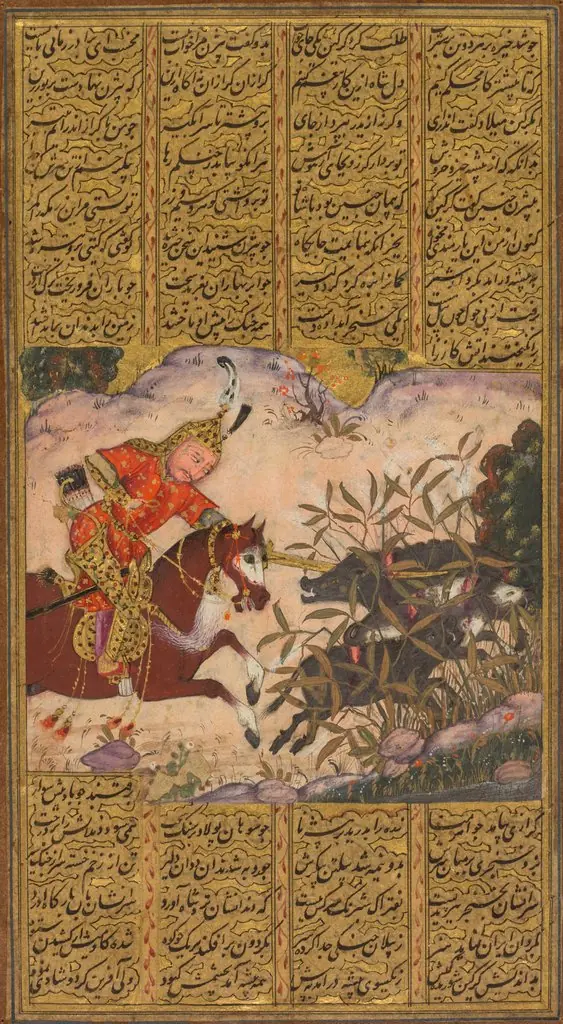 Bijan killing the wild boars of Irman, from a Shah-nama (Book of Kings) of Firdausi (Persian, about 934–1020)
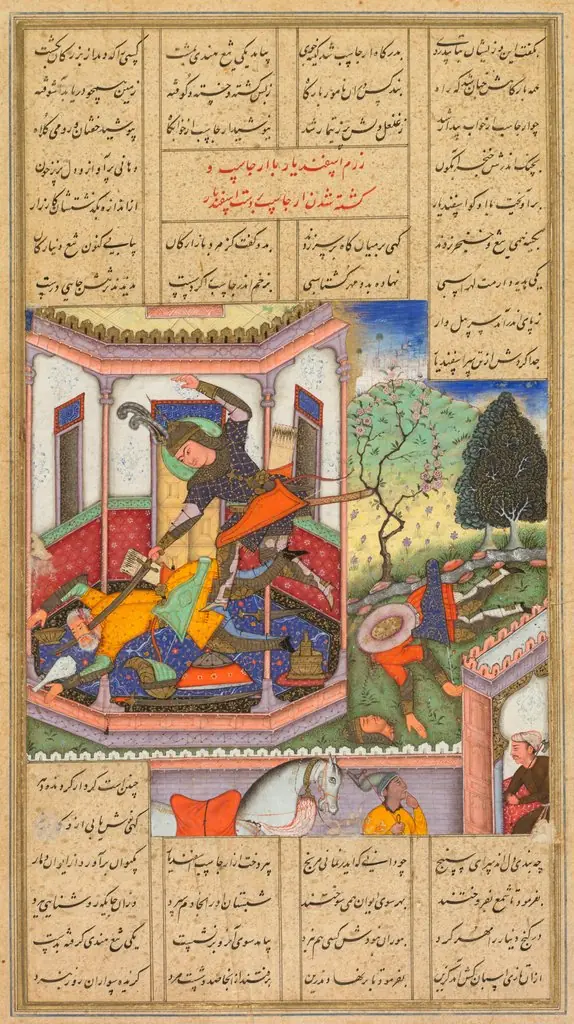 Isfandiyar slays Arjasp, the king of Turan, from a Shah-nama (Book of Kings) of Firdausi (Persian, about 934–1020)
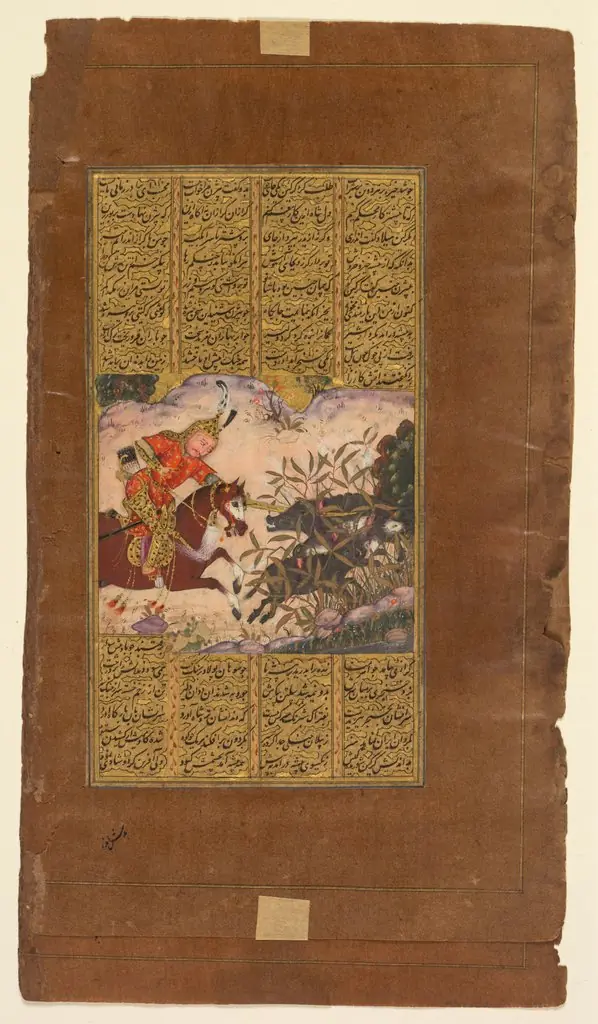 Bijan killing the wild boars of Irman, from a Shah-nama (Book of Kings) of Firdausi (Persian, about 934–1020) (verso)
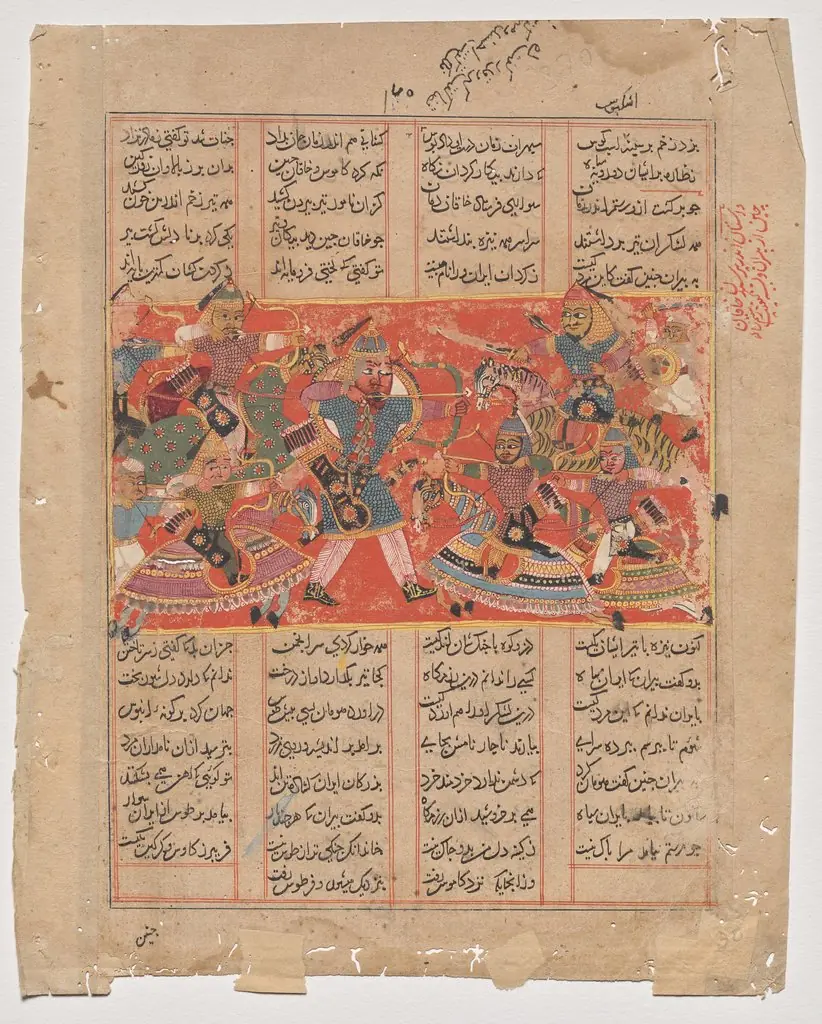 Rustam Takes Aim at Ashkabus, from a Shah-nama (Book of Kings)
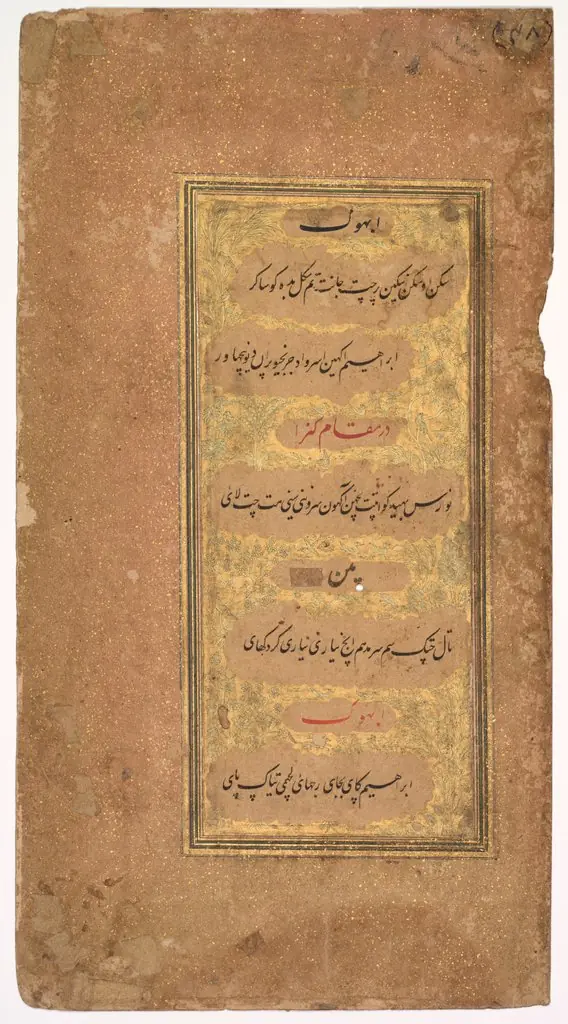 From Dohras (Songs) 40 and 42 from the Kitab-i Nauras (Book of Nine Essences) of Sultan Ibrahim Adil Shah II of Bijapur (r. 1580–1627); verso: From Dohras (Songs) 40 and 36 from the Kitab-i Nauras of Sultan Ibrahim Adil Shah II
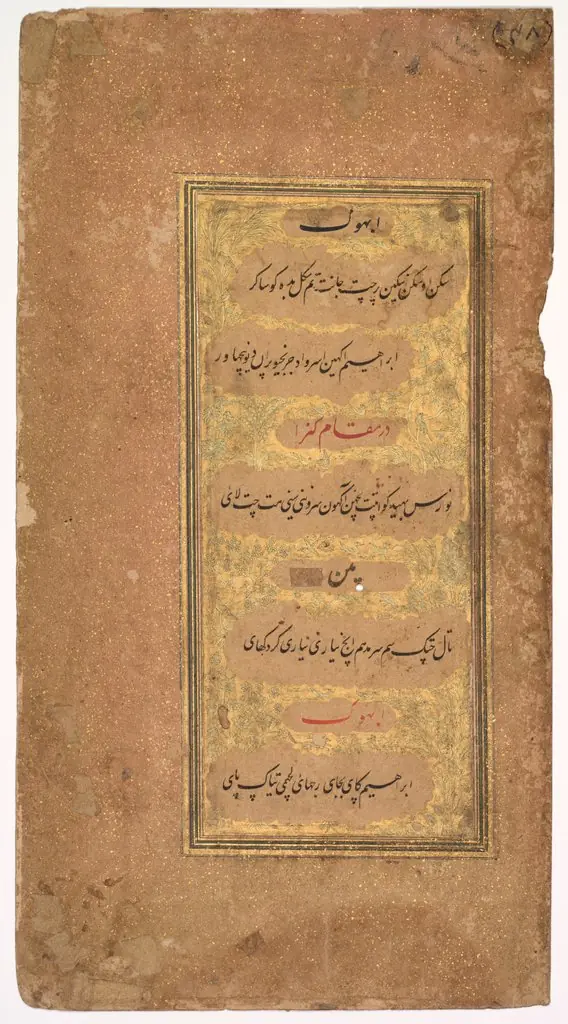 From Dohras (Songs) 40 and 42 from the Kitab-i Nauras (Book of Nine Essences) of Sultan Ibrahim Adil Shah II of Bijapur (r. 1580–1627) (recto)
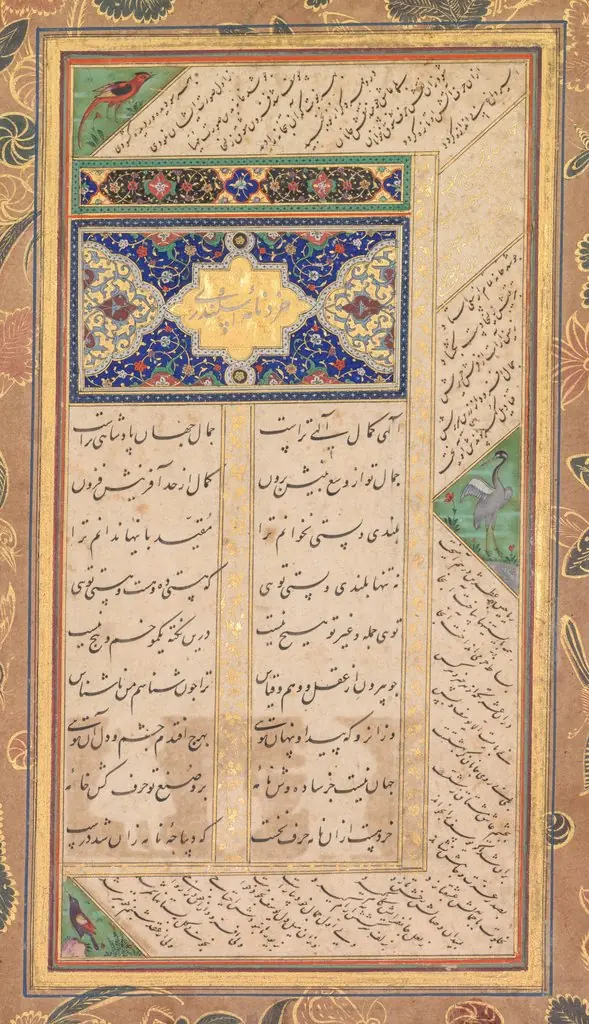 Illuminated page (verso), from a Panj Ganj (Five Treasures) of Abd al- Rahman Jami (Persian, 1414–1492) with two Persian masnavis: Yusuf va Zulaykha (Joseph and Zulaykha) and Khirad-nama-i Iskandari (Alexander’s Book of Wisdom)