Artwork
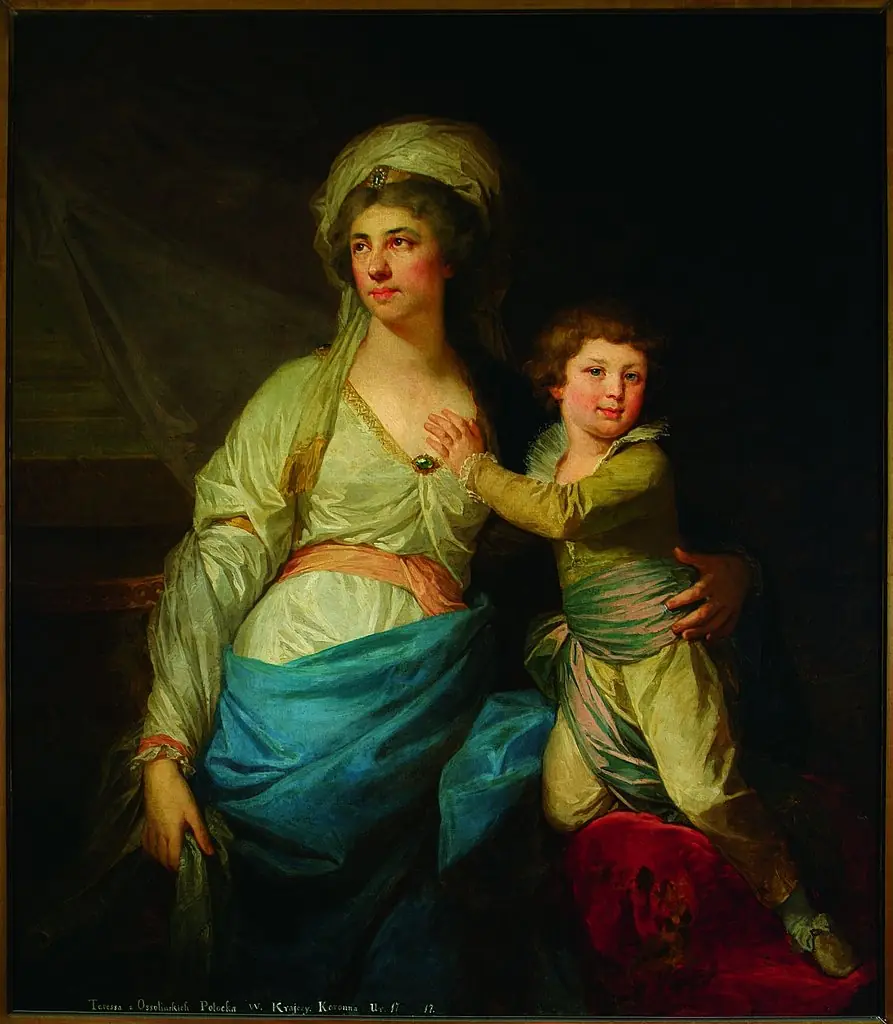
Portrait of Eleonora Morawska née Szteyn with her grandson /?/
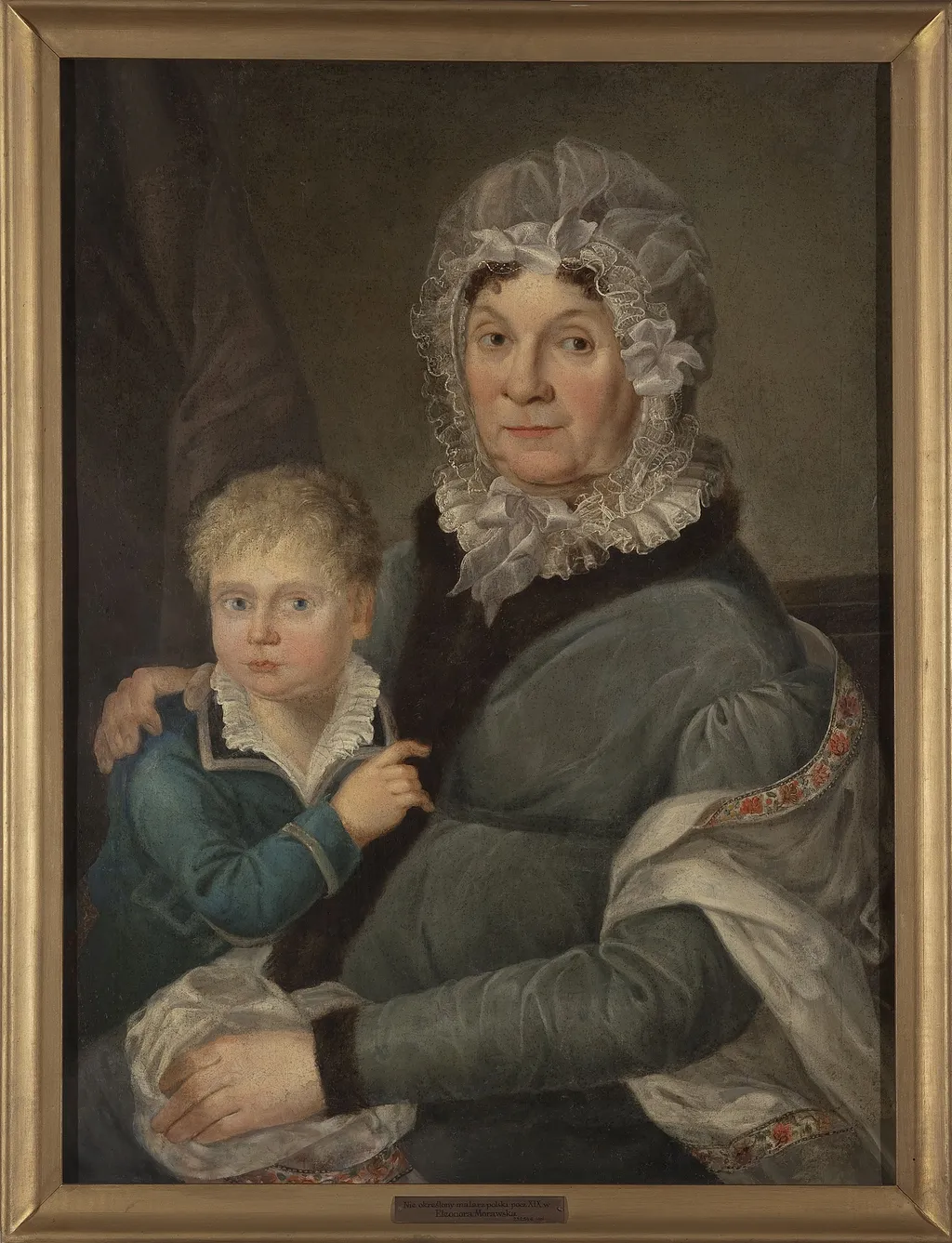
Portrait of Eleonora Morawska née Szteyn with her grandson /?/ is an oil painting by the Biedermeier artist Unknown. It dates from 1825 and is held in the collection of the National Museum in Warsaw. This oil painting depicts an elderly woman and a young boy seated in quiet proximity.
About this work
Overview
The lighting is carefully modulated to emphasize texture and form, particularly in the woman’s lace headdress and fabric folds.
This oil painting depicts an elderly woman and a young boy seated in quiet proximity. The composition centers on their physical closeness, with the boy’s hand resting lightly on her arm. The background is uniformly dark, eliminating distractions and drawing attention to the figures. The lighting is carefully modulated to emphasize texture and form, particularly in the woman’s lace headdress and fabric folds.
Subject & Meaning
The figures are identified as Eleonora Morawska née Szteyn and her grandson, suggesting a familial bond. Their stillness and direct gaze convey a sense of quiet dignity rather than overt emotion. The absence of narrative elements or symbolic objects implies the painting’s purpose was to honor kinship and generational connection, capturing a moment of intimate stillness rather than grandeur.
Technique & Style
The artist employs subtle chiaroscuro to model the forms, especially in the woman’s lace cap and dark dress, where light catches the intricate weave and softens the transition between shadow and surface. The boy’s simple blue garment contrasts with the detailed lace, reinforcing his youth. Brushwork is restrained yet precise, favoring smooth transitions over visible strokes, contributing to the portrait’s serene tone.
History & Provenance
The painting’s origins trace to late 19th-century Poland, likely commissioned by the Morawska family. It remained in private hands for much of its history, with documented ownership by descendants until its inclusion in a public collection. No records indicate public exhibition prior to the 20th century, suggesting its initial function was domestic commemoration rather than public display.
Context
Created during a period when portraiture in Poland emphasized familial continuity and social standing, this work reflects a shift toward intimate, psychologically grounded depictions. Unlike formal aristocratic portraits, it avoids ornate settings or symbols of status, instead focusing on personal connection—a trend emerging among middle-class patrons seeking authentic representation.
Legacy
The painting contributes to a modest but significant body of Polish domestic portraiture from the late 1800s. Its quiet realism and emphasis on intergenerational ties have made it a reference point in studies of non-elite portraiture. Though not widely reproduced, it is cited in regional art histories for its understated emotional resonance and technical restraint.
Artist & collection

 Domestic Scene
 Giacomo and Cardinal Marco, investing Andrea, Abbot of San Zeno, with his Benefice
 The Nymph of Fontainebleau
 Portrait of a Woman
 Madonna and Child with Saints in the Enclosed Garden
 Venus and Minerva
 Family Group of Four on Sofa
 Wall painting from Room H of the Villa of P. Fannius Synistor at Boscoreale
 Țărancă sârboaică din 1851
 Портрет А.Е. Лабзиной с воспитанницей С.А. Мудровой
 Portrait of Elisabeth Troost (1730-1790)
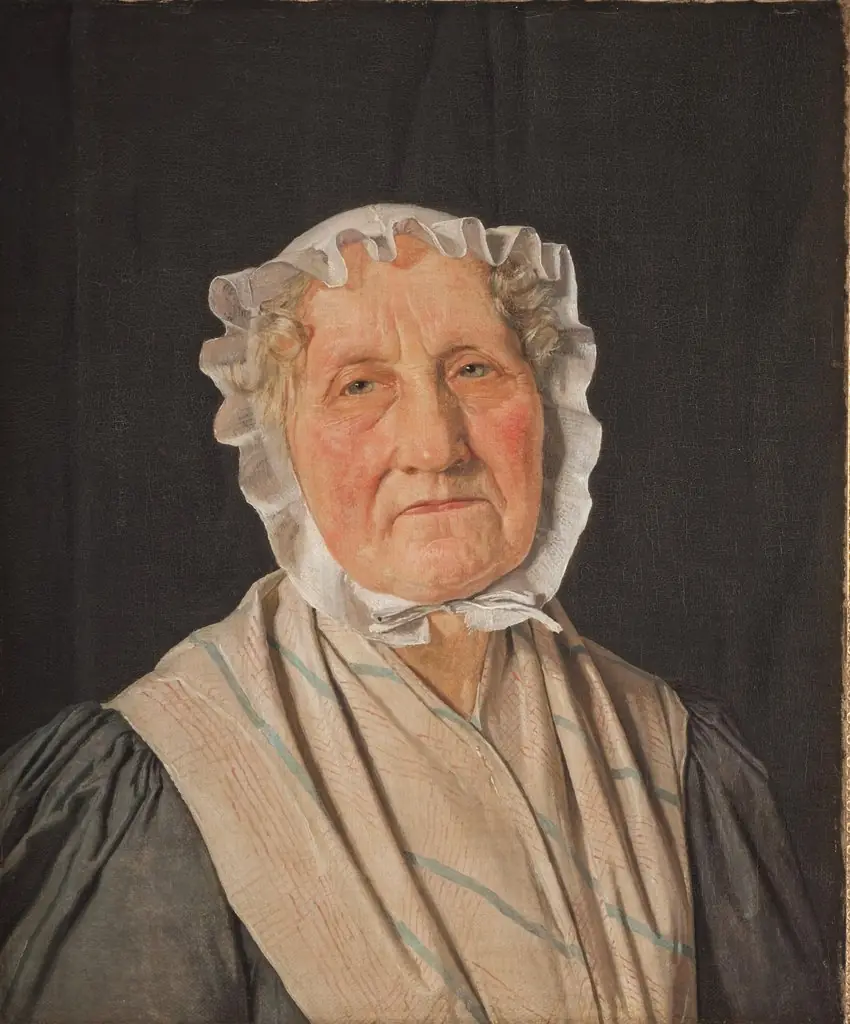 Portrait of Inger Margrethe Høyen, née Schrøder, the Mother of the Art Historian N.L. Høyen
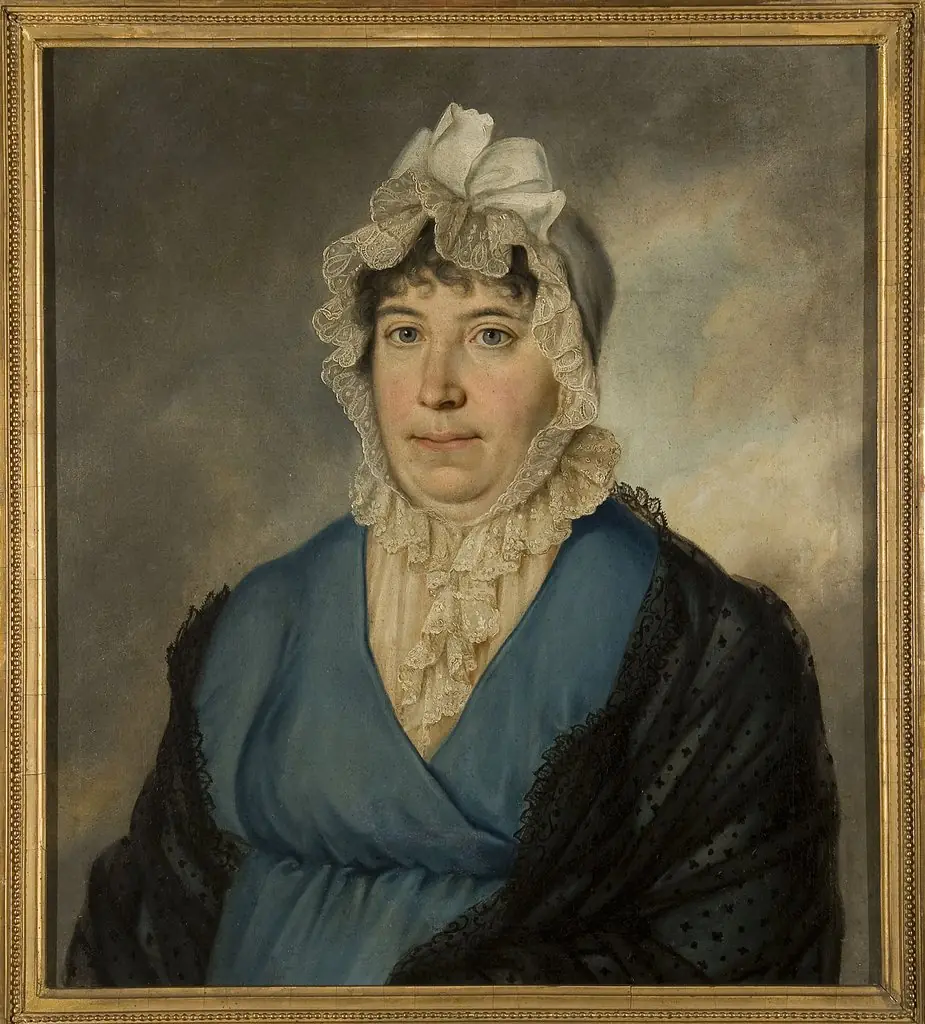 Portrait of Mrs. Luboradzka /?/
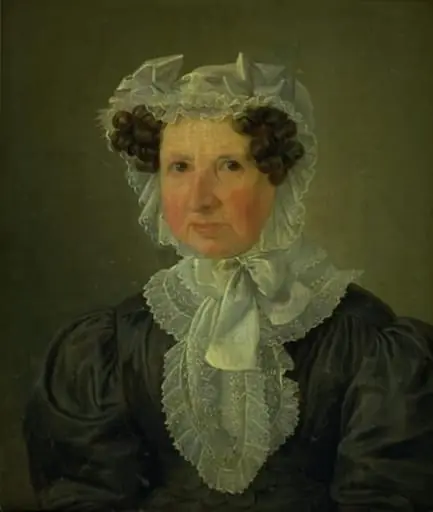 Portræt af jomfru Nissen
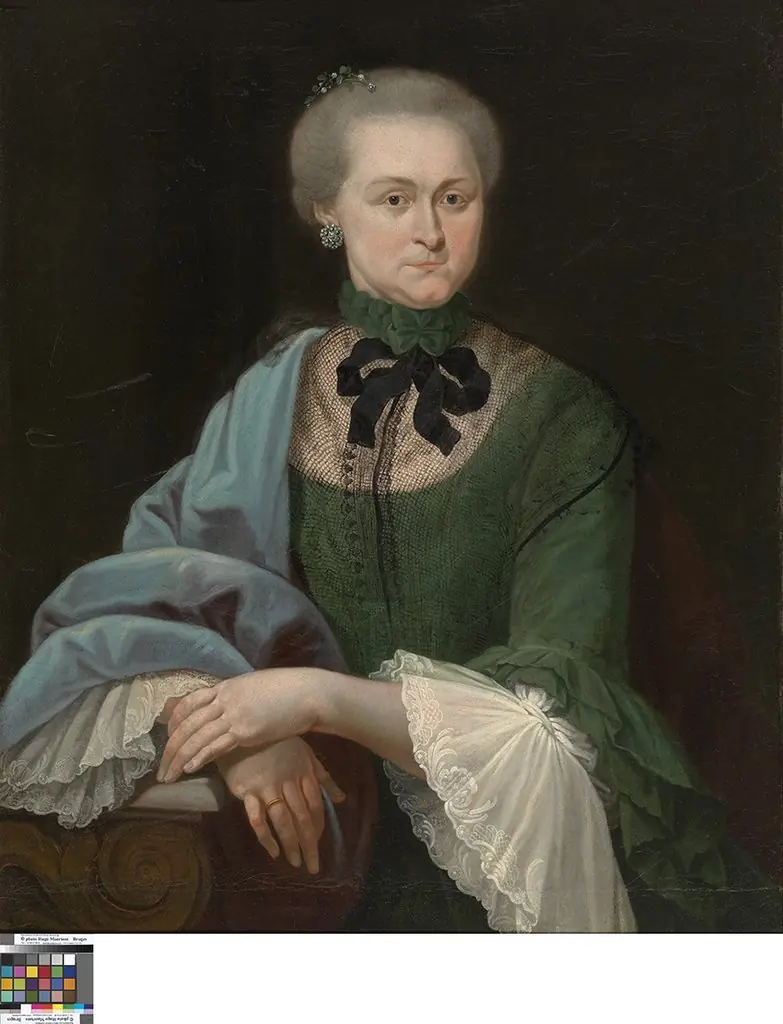 Portret van een vrouw
 Taiteilijan äitipuoli Mariana Juliana Lauréus poikineen
 Elizabeth Sophia Augusta Graff, born Sulzer (1753-1812) and her Daughter Caroline Susanne (1781-1828)
 Portrait of Anna Kurpiewska née Olszakiewicz
 Portrait of a woman in a red scarf
 Portrait of Teresa Potocka née Ossolińska with her grandson Alfred