Artwork
Four Putti with Grapes
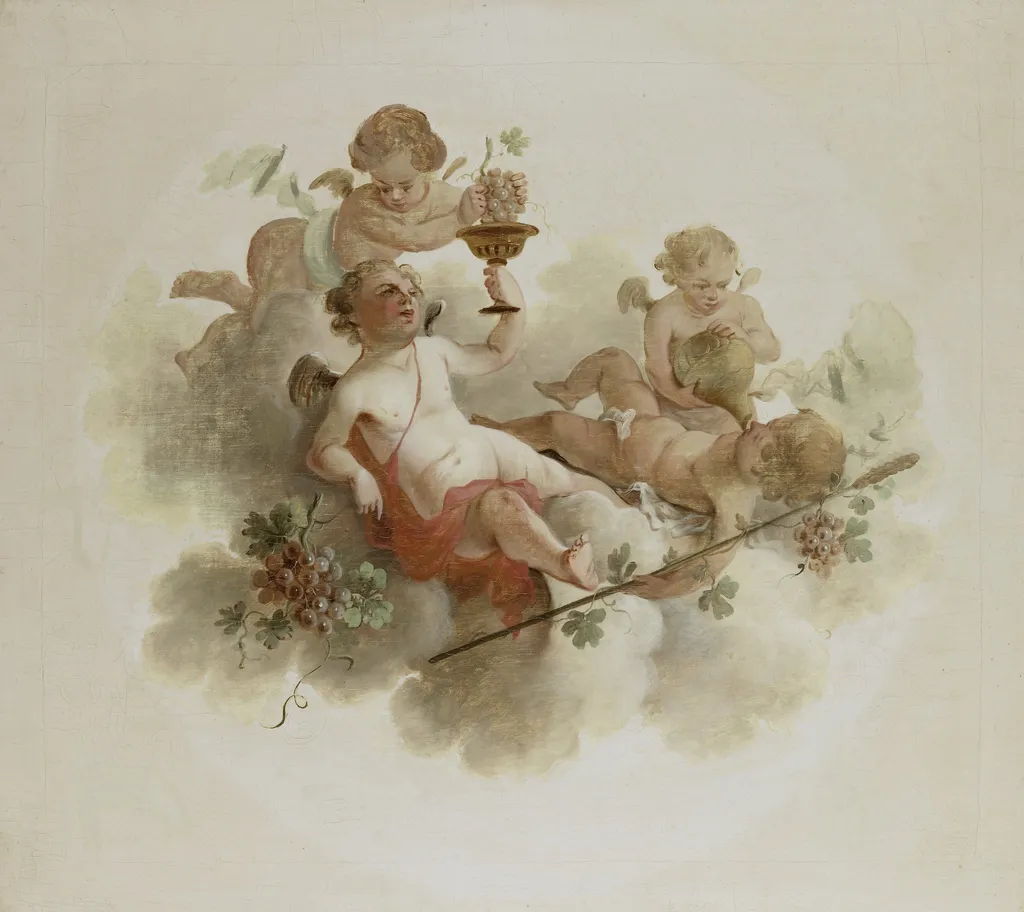
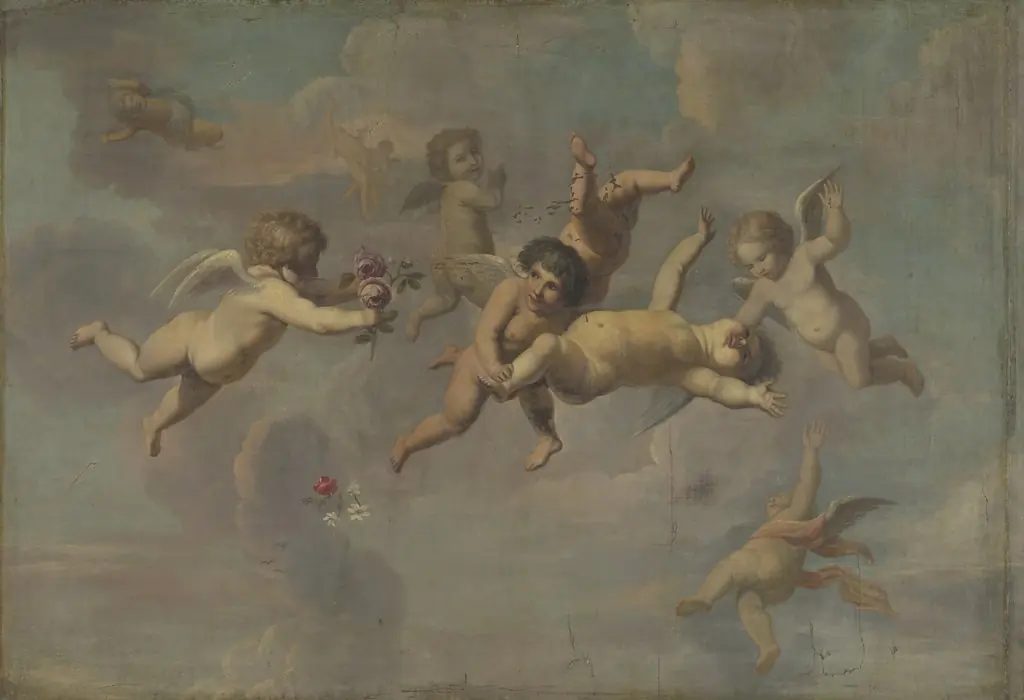
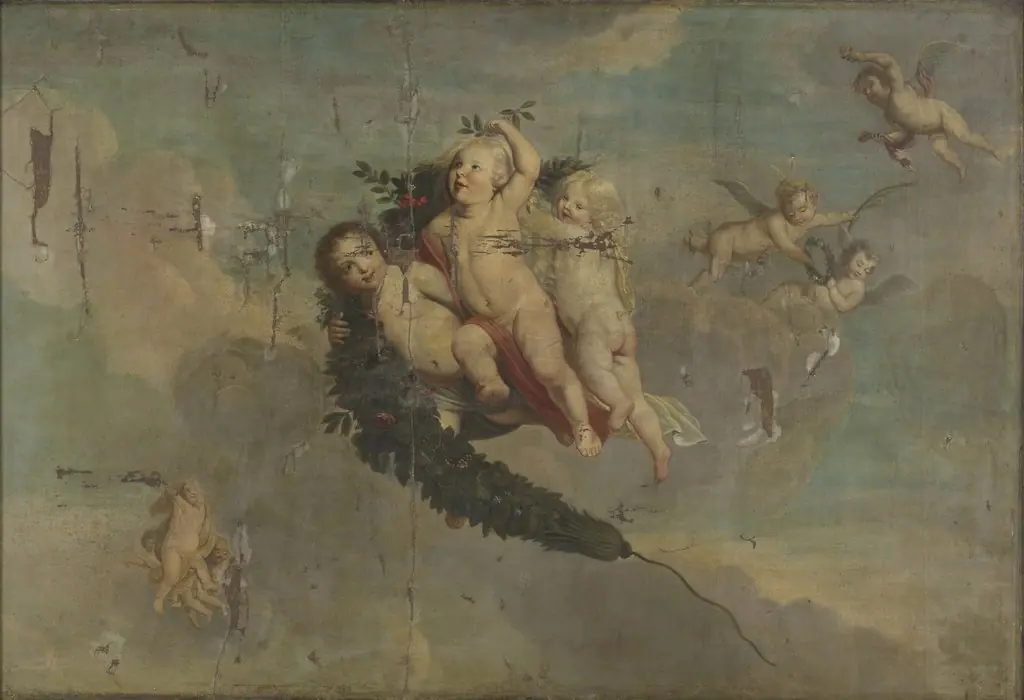
Four Putti with Grapes is an oil painting by the Rococo painting artist Unknown. It dates from 1750 and is held in the collection of the Rijksmuseum. This oil painting depicts four winged putti amid a hazy sky, engaged in a quiet, playful interaction with grapes and a pitcher.
About this work
Overview
The figures, rendered with soft modeling and pale skin, hover above a vine-laden ground, their forms suggesting childhood innocence rather than divine presence.
This oil painting depicts four winged putti amid a hazy sky, engaged in a quiet, playful interaction with grapes and a pitcher. The figures, rendered with soft modeling and pale skin, hover above a vine-laden ground, their forms suggesting childhood innocence rather than divine presence. The composition centers on a seated child holding a red cloth, while others tend to the fruit, evoking themes of abundance and lightheartedness without overt religious or mythological narrative.
Subject & Meaning
The putti, drawn from classical traditions of cherubic figures, function here as symbols of fertility and seasonal joy. Their association with grapes—harvested, held, and poured—points to themes of abundance and the cyclical nature of growth. The absence of deities or narrative context shifts focus to the quiet, earthly pleasure of the moment, aligning the scene with secular celebrations of nature’s bounty rather than sacred allegory.
Technique & Style
The artist employs delicate brushwork to render the putti’s smooth skin and the translucent quality of their wings, contrasting with the thicker application of paint in the vine’s leaves and fruit. The sky is softly blurred, creating a sense of weightlessness, while the vine at the base grounds the composition with structured detail. Color is restrained, with the red cloth serving as the only strong accent against muted tones.
History & Provenance
The painting’s origins are not fully documented, but its style and subject align with early modern Northern European works that adapted classical putti for decorative, non-religious contexts. It likely belonged to a private collection, possibly intended for domestic interiors where themes of nature and play were favored. Its current location is not specified, though similar works appear in Dutch and Flemish collections of the period.
Context
During the 16th and 17th centuries, putti became common in secular art as symbols of innocence and earthly delight, particularly in still-life and genre scenes. Their presence here reflects a broader trend of blending classical motifs with everyday observations, moving away from overt religious symbolism toward more personal, sensory experiences of nature and childhood.
Legacy
This work contributes to a visual language that influenced later still-life and pastoral painting, where putti served as gentle emblems of natural harmony. While not widely reproduced or studied, its quiet composition reflects a shift in artistic focus toward intimate, non-didactic imagery, a tendency that would grow in prominence across European art in the following centuries.
Artist & collection

 Domestic Scene
 Giacomo and Cardinal Marco, investing Andrea, Abbot of San Zeno, with his Benefice
 The Nymph of Fontainebleau
 Portrait of a Woman
 Madonna and Child with Saints in the Enclosed Garden
 Venus and Minerva
 Family Group of Four on Sofa
 Wall painting from Room H of the Villa of P. Fannius Synistor at Boscoreale