Artwork
La folie
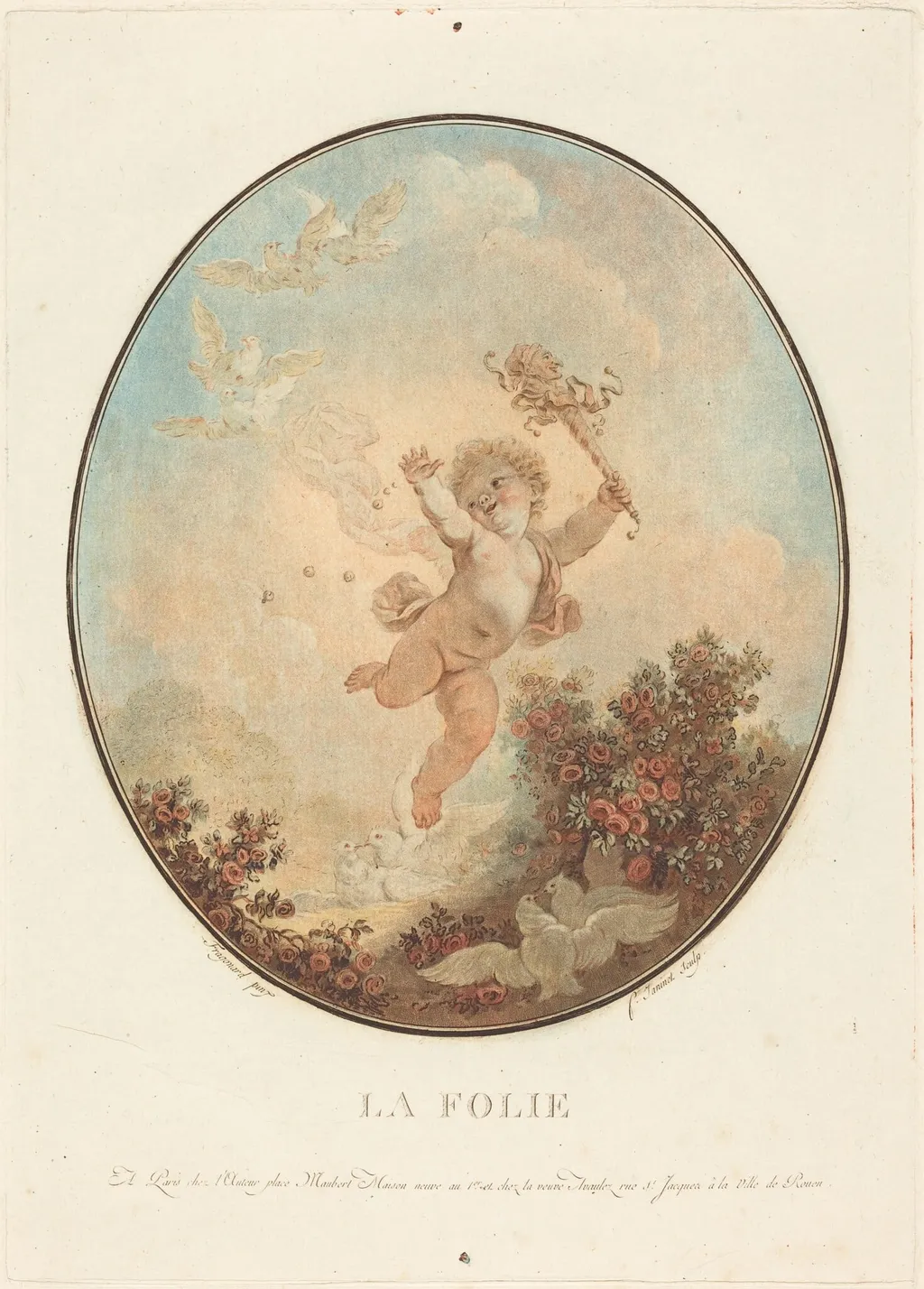
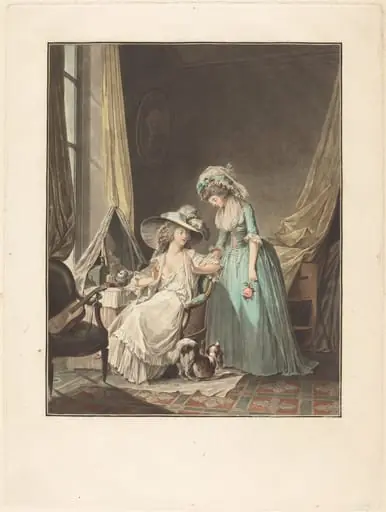
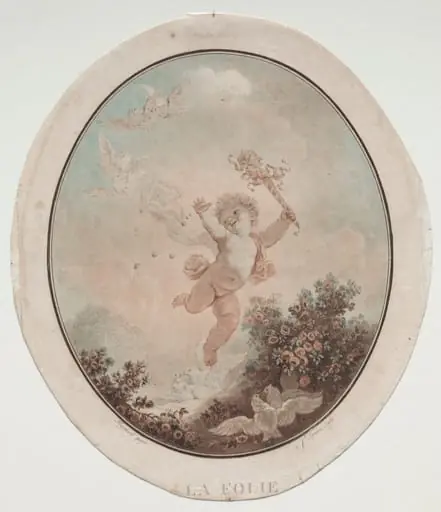
La folie is an ink print by the Romanticist artist Jean-François Janinet. It dates from 1777 and is held in the collection of the National Gallery of Art.
About this work
Overview
La folie is a color aquatint and etching produced by Jean-François Janinet in 1777. The work captures a single figure in a moment of expressive intensity, rendered through fine lines and textured shading. Janinet employed a roulette tool to generate subtle tonal variations, enhancing the psychological presence of the subject against a deep, unmodulated background.
Subject & Meaning
Her elaborate hat and held fan imply social refinement, contrasting with her unruly demeanor.
The figure is a woman depicted with exaggerated facial expression—wide eyes, open mouth, and a forced smile—suggesting a state of emotional or mental disruption. Her elaborate hat and held fan imply social refinement, contrasting with her unruly demeanor. The title, meaning 'madness,' frames her as a figure of societal anxiety, possibly commenting on the performative nature of femininity or the fragility of composure.
Technique & Style
Janinet combined etching with aquatint to achieve gradations of tone, using a roulette—a notched wheel—to create soft, stippled shadows across the woman’s face and attire. The dark background isolates her form, heightening the impact of her expression. Fine, controlled lines define her features, while the textured areas suggest movement and instability, reinforcing the theme of psychological unease.
History & Provenance
Created in 1777, La folie emerged during a period when printmaking in France was increasingly used to explore social and psychological themes. Janinet, known for his reproductive engravings, here turned to original subject matter. The work was likely circulated among collectors and intellectuals, reflecting contemporary fascination with emotion, gender, and the boundaries of reason.
Context
In late 18th-century France, depictions of madness were gaining cultural traction, often linked to Enlightenment debates on reason and emotion. Portraits of eccentric or hysterical women appeared in literature and visual art, sometimes as moral warnings. Janinet’s print aligns with this trend, using visual exaggeration to interrogate societal expectations of female decorum under pressure.
Legacy
La folie stands as an early example of printmaking used to convey psychological depth rather than mere portraiture. Janinet’s technical innovation with the roulette influenced later artists exploring texture and mood in etching. Though not widely reproduced, the work contributed to a growing visual language for depicting inner states, anticipating 19th-century explorations of mental life in art.
Artist & collection