Artwork
Farhad Carrying Shirin and Her Horse, from a copy of the Khamsa of Nizami
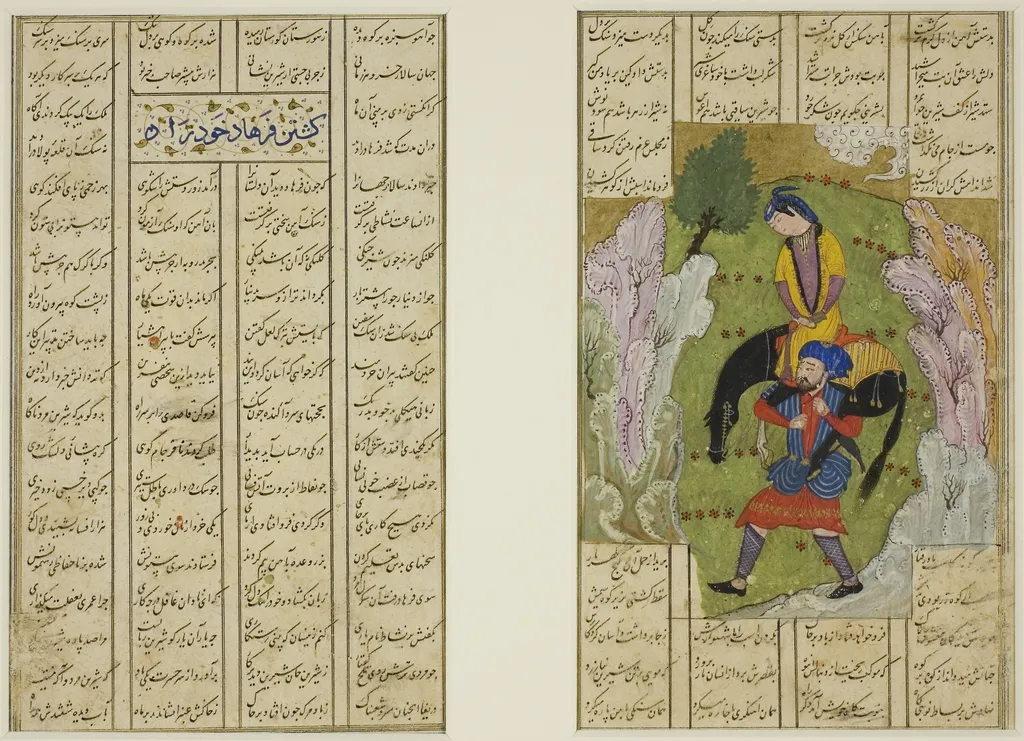
Farhad Carrying Shirin and Her Horse, from a copy of the Khamsa of Nizami is an unspecified painting by the Persian Miniature artist Unknown. It dates from 1493 and is held in the collection of the Art Institute of Chicago. This painting illustrates a scene from the Khamsa of Nizami, a Persian poetic cycle.
About this work
Overview
This painting illustrates a scene from the Khamsa of Nizami, a Persian poetic cycle. It captures Farhad, a stonemason, bearing Shirin, a princess, along with her black horse. The figures are rendered in vivid hues against a sparse landscape of rocks and foliage. The composition emphasizes motion, with dynamic poses and flowing drapery suggesting urgency or emotional intensity.
Subject & Meaning
Farhad carries Shirin after she is rescued from danger, a moment of devotion in their tragic love story. His laborious act symbolizes selfless love, while Shirin’s passive posture reflects her status and vulnerability. The horse, a symbol of nobility, reinforces her identity. The scene underscores themes of sacrifice and longing central to Nizami’s narrative.
Technique & Style
The work employs fine brushwork and layered pigments typical of Persian miniature painting. Figures are elongated and stylized, with attention to textile patterns and color contrast—blue, red, yellow, and purple create visual rhythm. The rocky foreground and sparse vegetation suggest depth without perspective, adhering to traditional compositional conventions of the period.
History & Provenance
This painting is a copy from a 16th-century manuscript of Nizami’s Khamsa, likely produced in a royal atelier. Its style aligns with Safavid-era Persian art, indicating it was made for an elite patron. The original manuscript may have been compiled during the reign of Shah Tahmasp, a known patron of illustrated poetry.
Context
Illustrated manuscripts of the Khamsa were prestigious objects in Persian courts, used to display literary refinement and artistic patronage. Scenes from romantic epics like Farhad and Shirin were favored for their emotional resonance and moral undertones. This painting reflects the cultural value placed on poetry as both art and moral instruction.
Legacy
Copies of such illustrations helped preserve and disseminate Nizami’s narratives across generations. Though not original to the 12th-century text, these visual interpretations shaped how later audiences perceived the characters and their stories. The painting stands as evidence of the enduring link between Persian poetry and visual art.
Artist & collection

 Domestic Scene
 Giacomo and Cardinal Marco, investing Andrea, Abbot of San Zeno, with his Benefice
 The Nymph of Fontainebleau
 Portrait of a Woman
 Madonna and Child with Saints in the Enclosed Garden
 Venus and Minerva
 Family Group of Four on Sofa
 Wall painting from Room H of the Villa of P. Fannius Synistor at Boscoreale
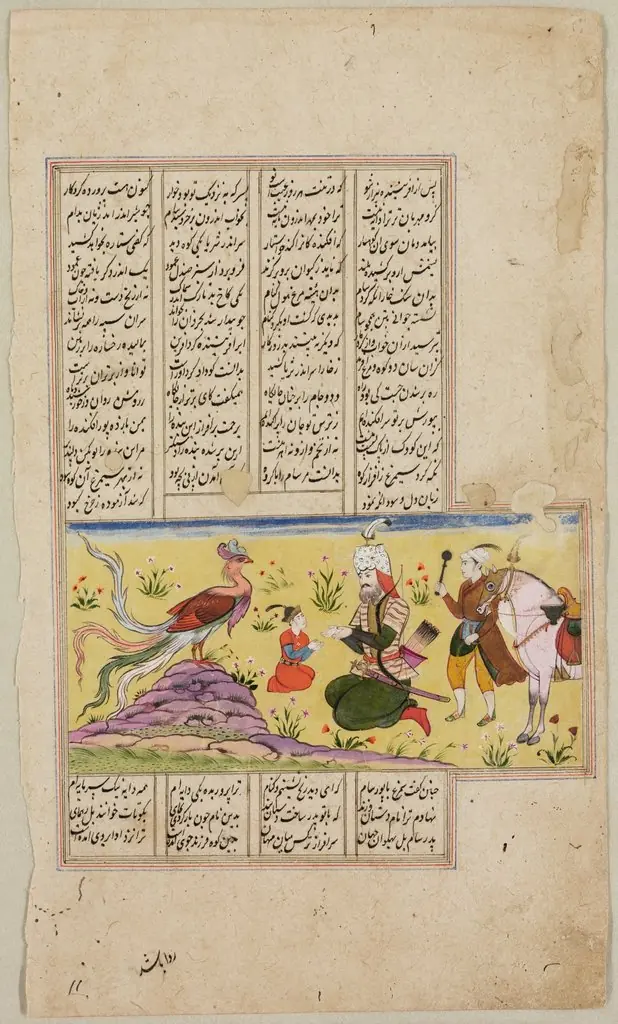 Rustam and the Simurgh
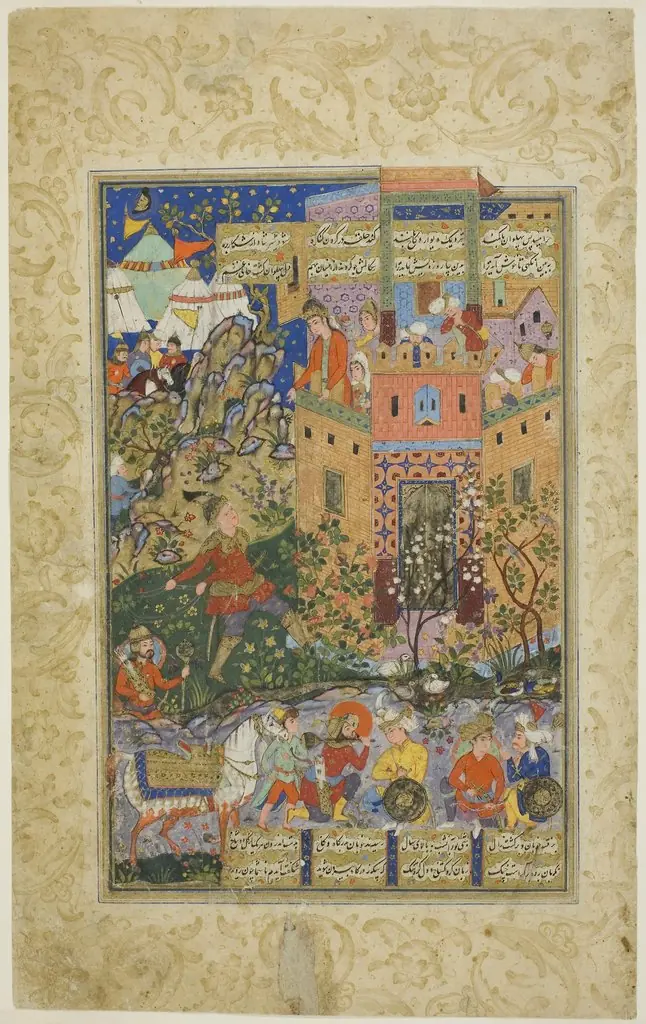 Zal Climbing to Rudaba, page from a copy of the Shahnama of Firdausi
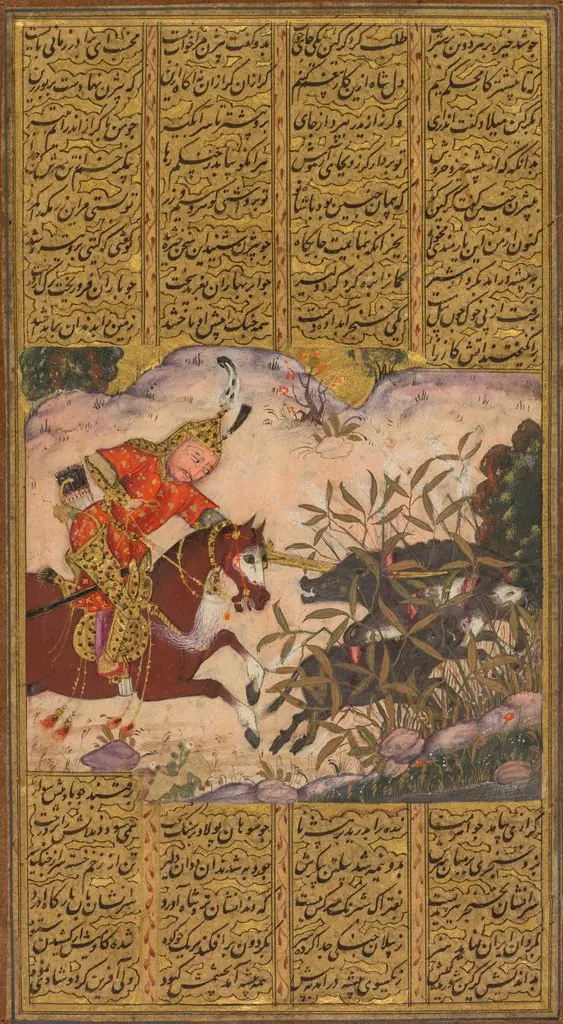 Bijan killing the wild boars of Irman, from a Shah-nama (Book of Kings) of Firdausi (Persian, about 934–1020)
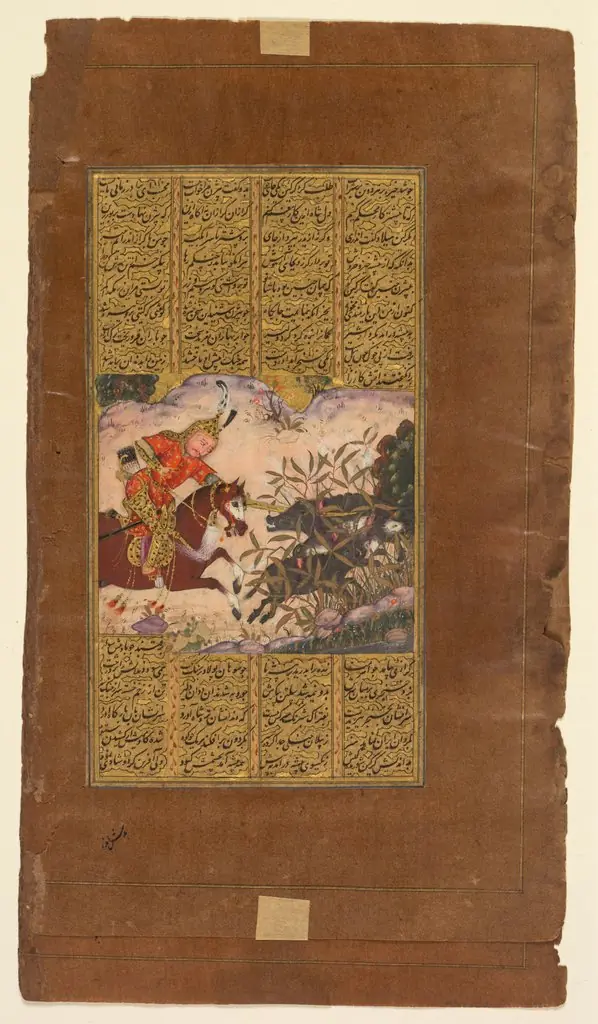 Bijan killing the wild boars of Irman, from a Shah-nama (Book of Kings) of Firdausi (Persian, about 934–1020) (verso)
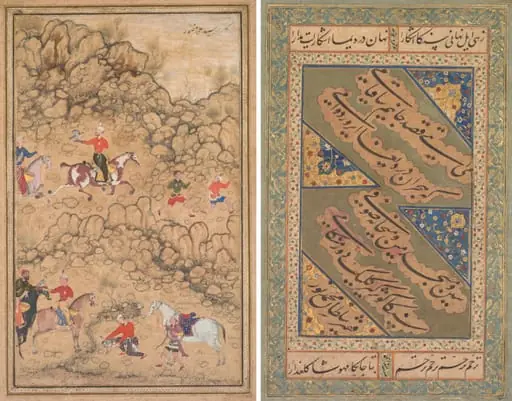 Hunting with falcons in a landscape; verso: Calligraphy of Chaghatai Turkish poems in praise of wine, Sultan Muhammad Nur (Persian, c. 1472–1536) and Mirza Muhammad (probably Persian, active c. 1520s)
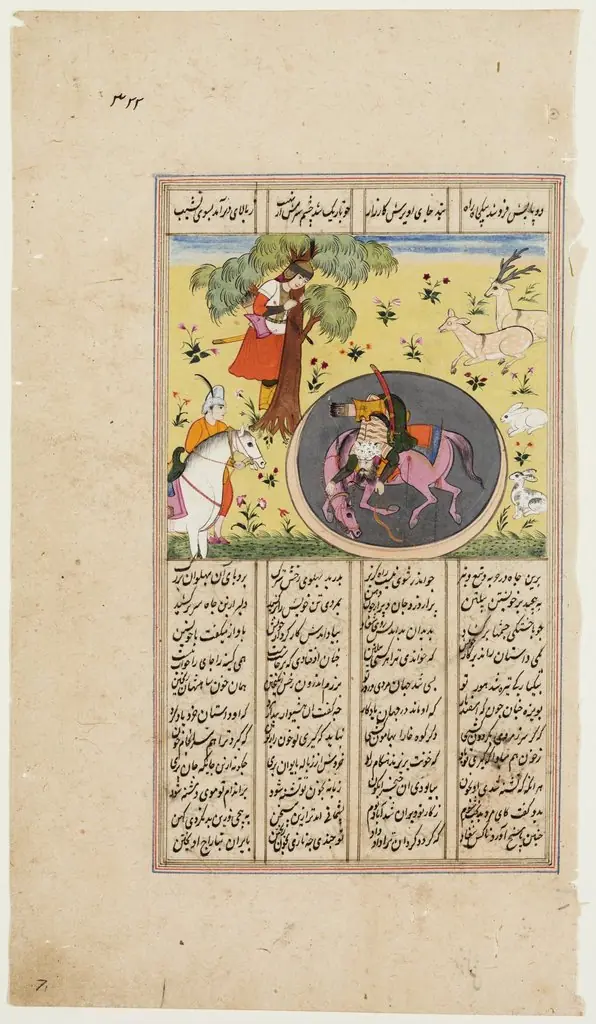 Rustam and Raksh Entrapped
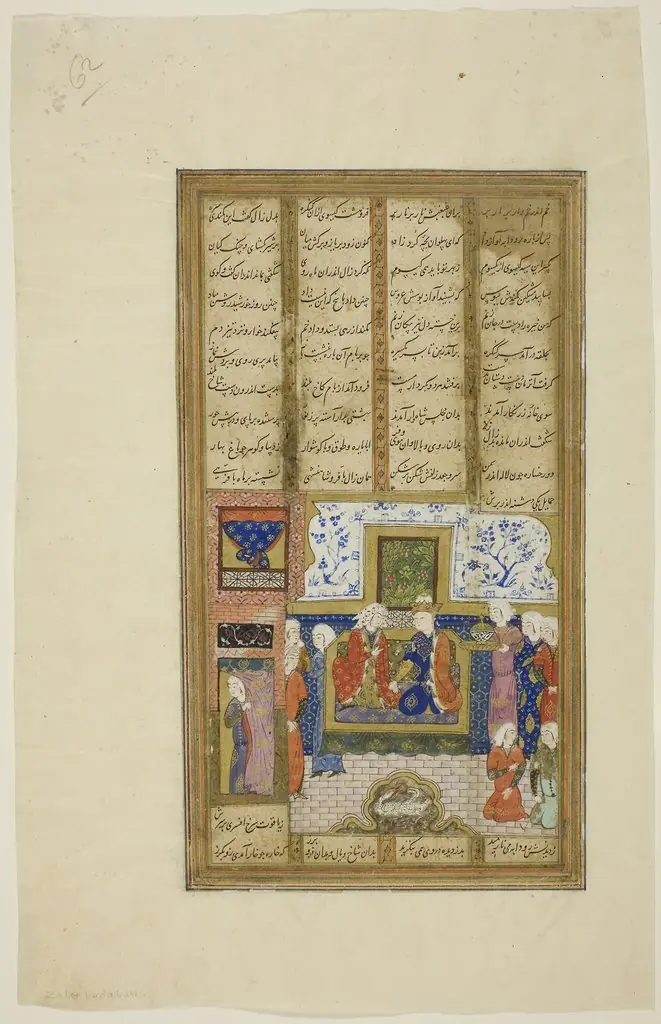 Zal and Rudaba in a Palace, page from a copy of the Shahnama of Firdausi