Artwork
Rustam and Raksh Entrapped
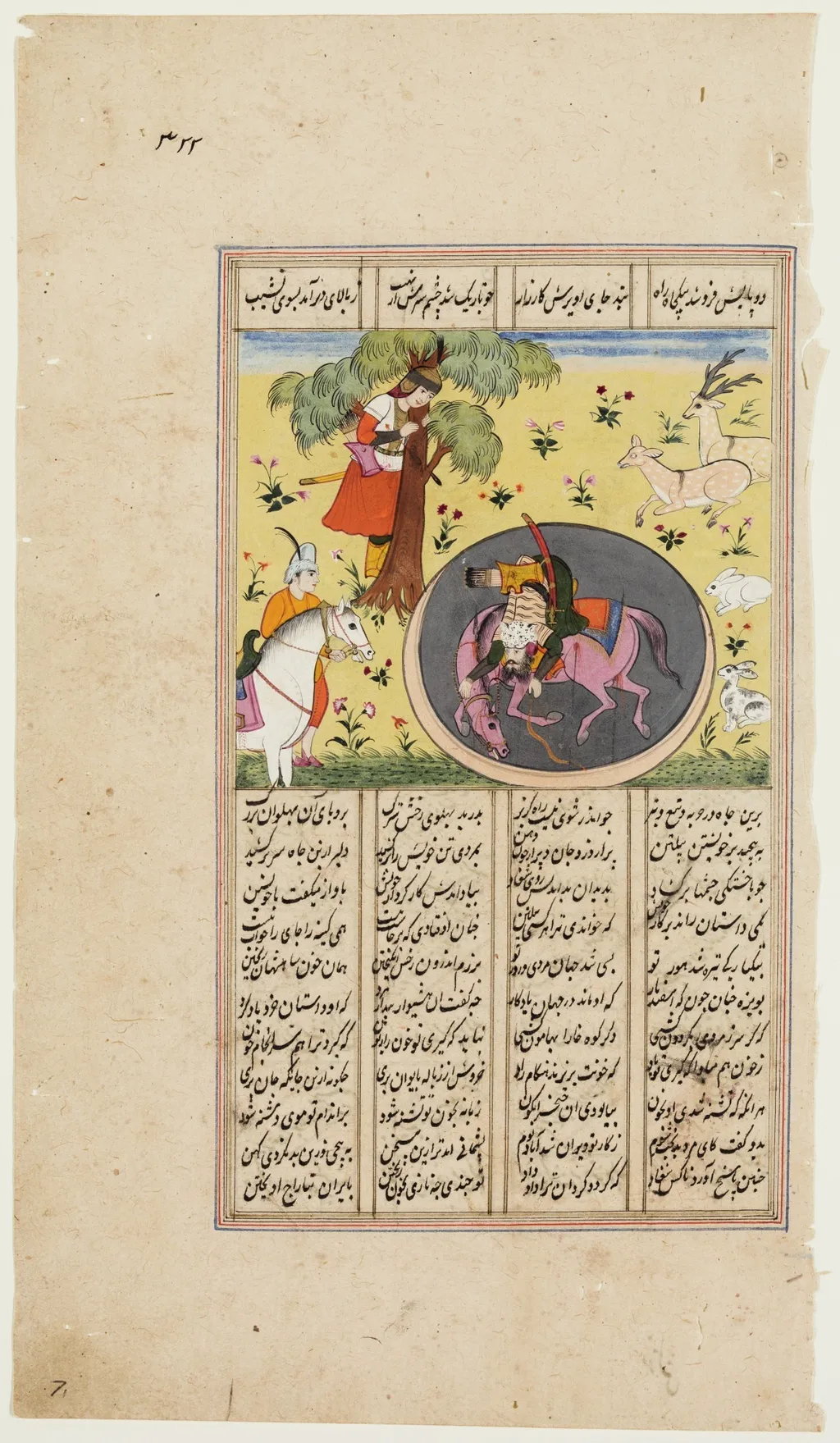
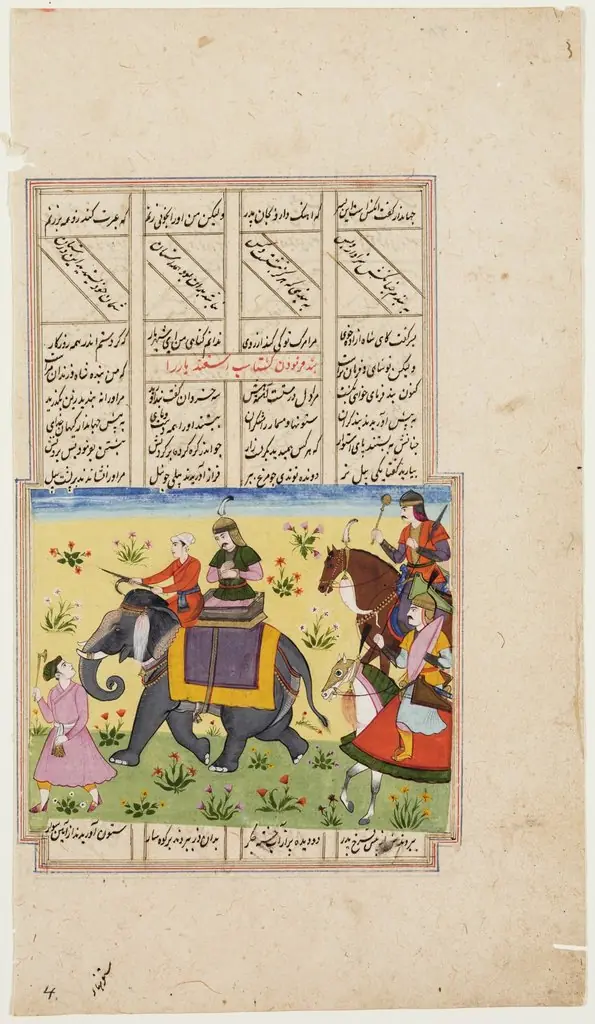
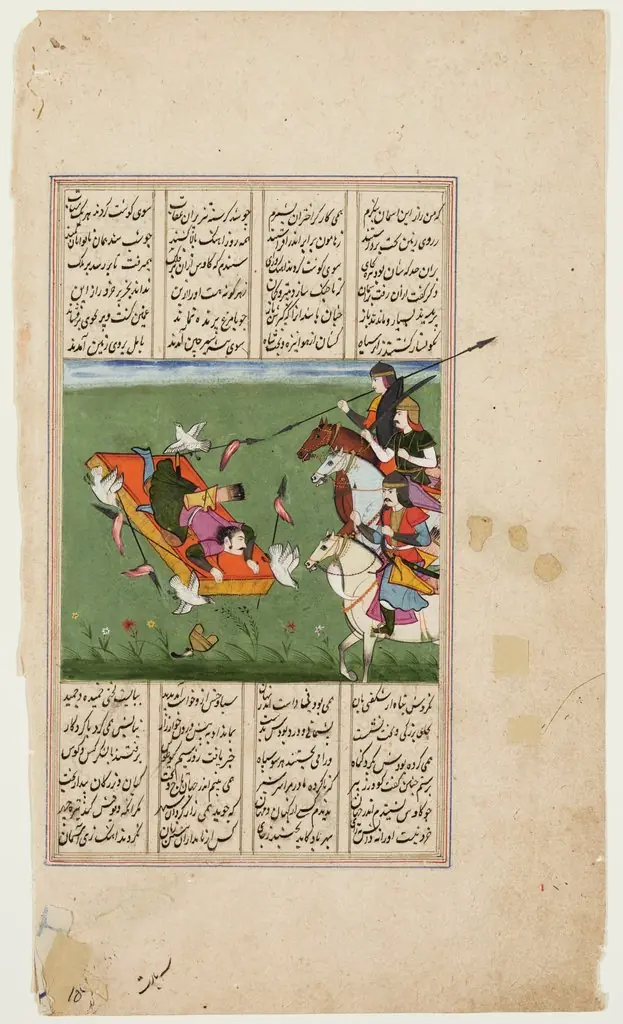
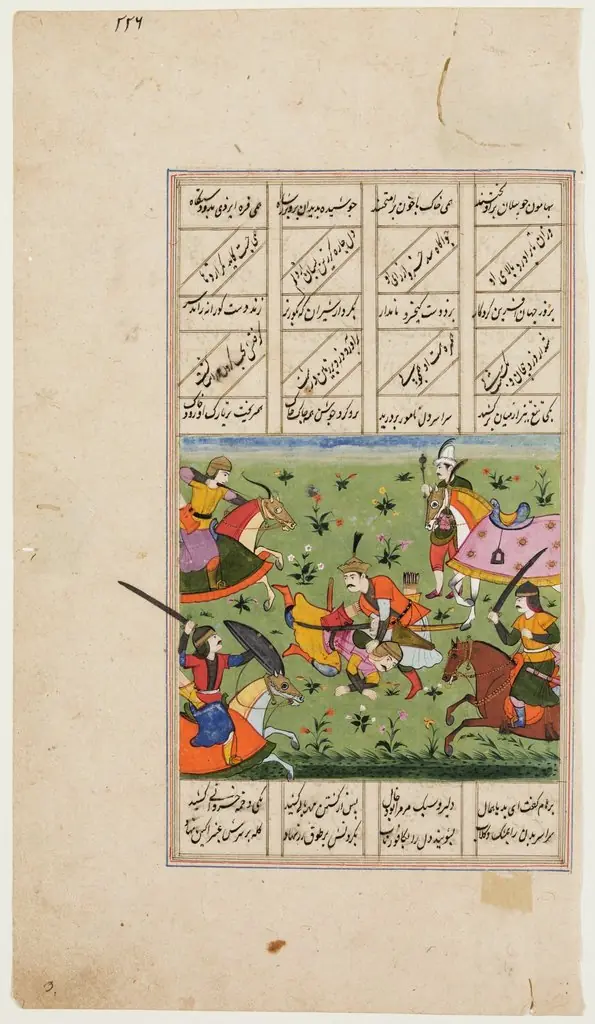
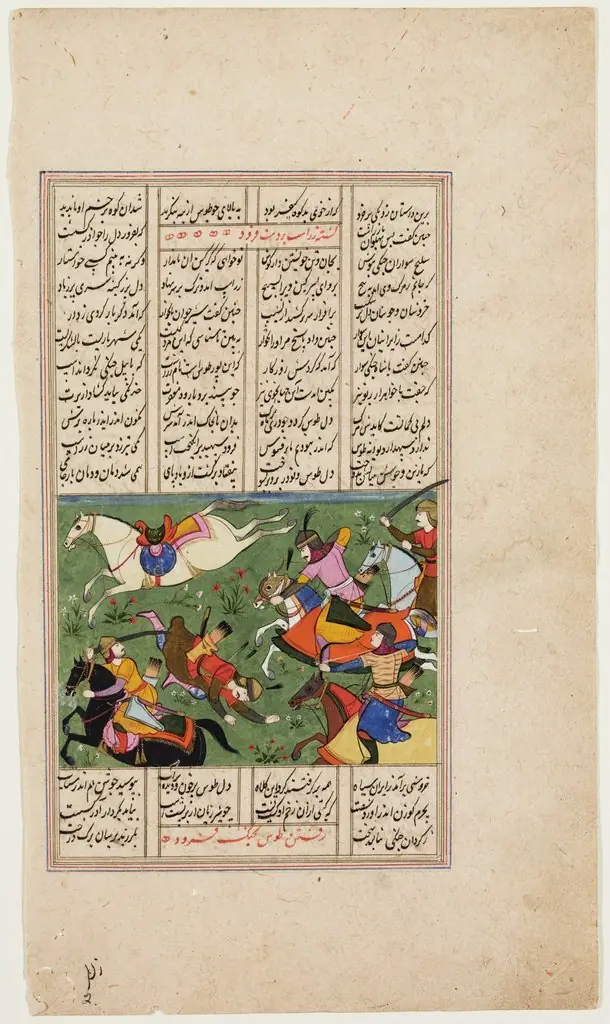
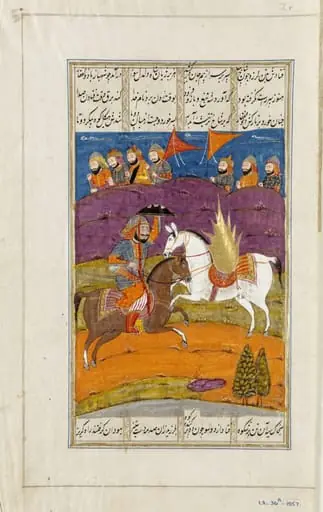
Rustam and Raksh Entrapped is an unspecified painting by the Mughal Painting artist Unknown. It dates from 1620 and is held in the collection of the Detroit Institute of Arts. This painting illustrates a moment from Persian epic tradition, capturing a confrontation between the hero Rustam and the demon Raksh.
About this work
Overview
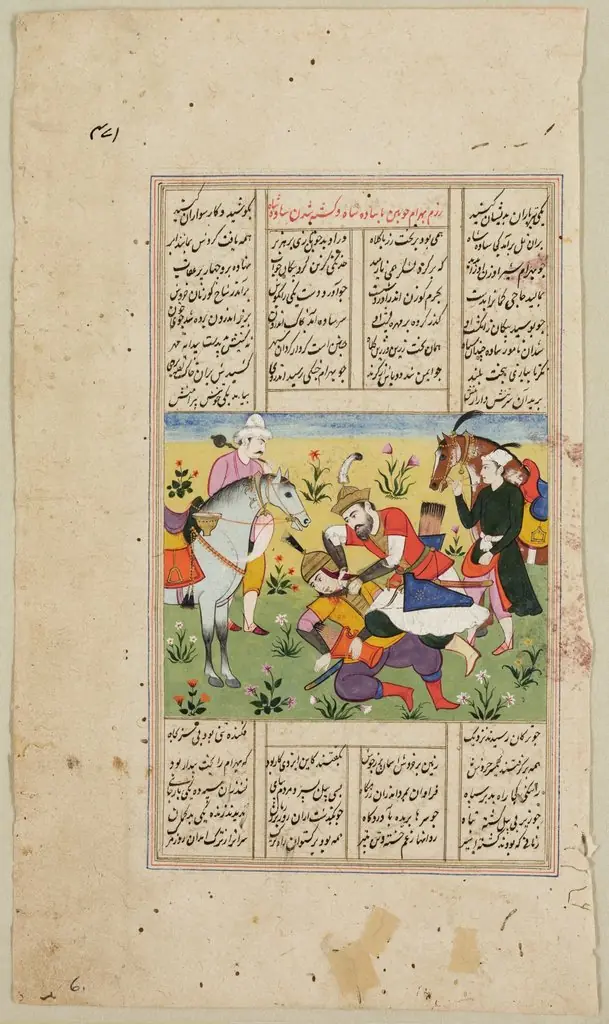
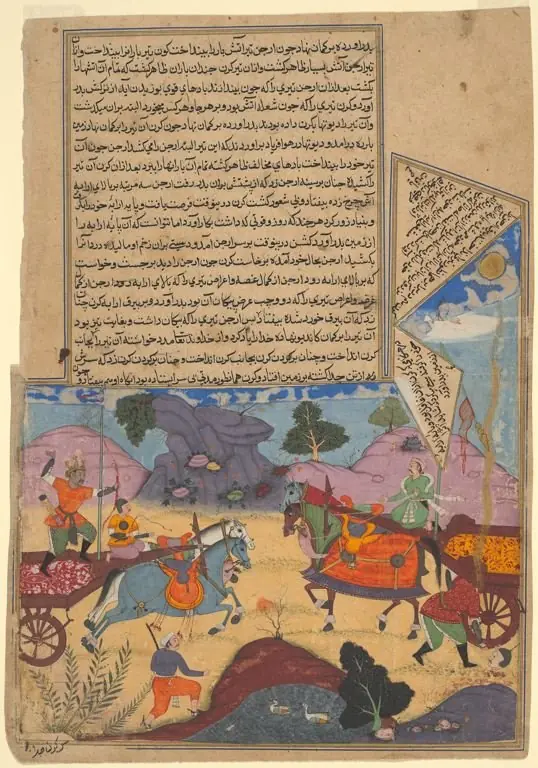
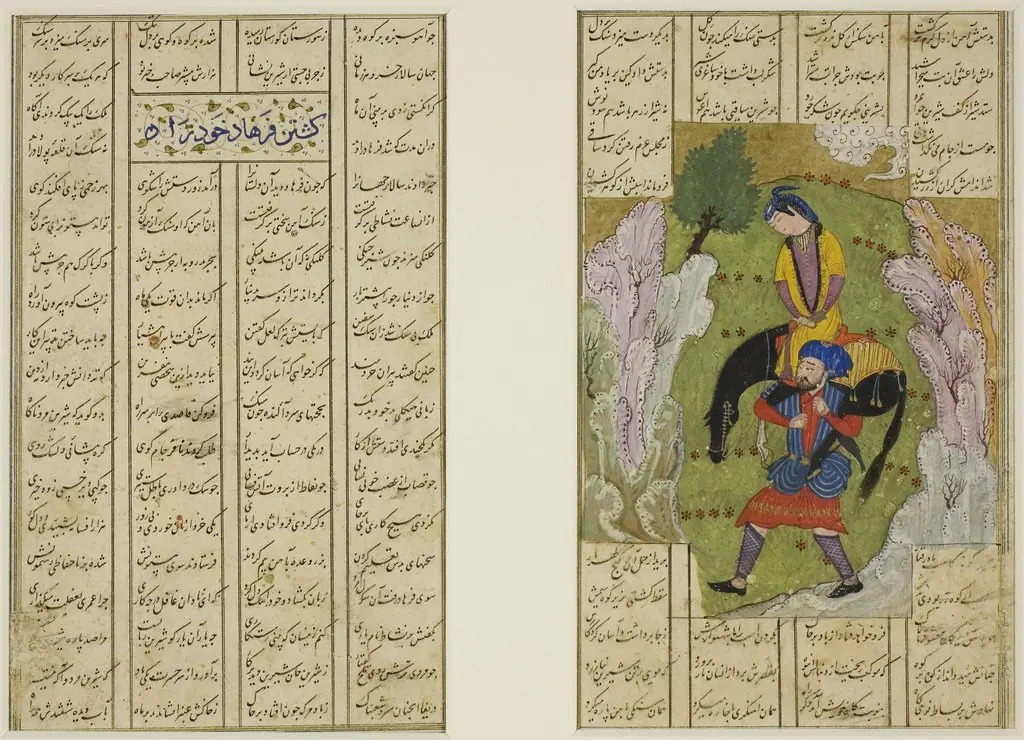
This painting illustrates a moment from Persian epic tradition, capturing a confrontation between the hero Rustam and the demon Raksh. The scene unfolds in a lush, natural setting with trees, flowers, and animals, suggesting a mythic landscape rather than a literal one. Dynamic poses and flowing lines convey motion, emphasizing the tension between the two figures as they engage in combat.
Subject & Meaning
The bow and arrow in Rustam’s hand signify his skill and divine favor, contrasting with Raksh’s sword, which hints at brute force.
Rustam, the legendary Persian warrior, faces Raksh, a monstrous adversary from the Shahnameh. The white horse symbolizes purity and heroism, while the pink horse may reflect Raksh’s otherworldly nature. The bow and arrow in Rustam’s hand signify his skill and divine favor, contrasting with Raksh’s sword, which hints at brute force. The scene embodies the eternal struggle between order and chaos in Persian cosmology.
Technique & Style
The artist employs fine brushwork to render intricate textiles, ornate saddles, and delicate floral details. Colors range from vivid reds and blues to softer earth tones, creating visual harmony and depth. The composition directs attention to the central figures through diagonal lines and contrasting hues, while the background’s muted water and trees recede to enhance the drama of the foreground.
History & Provenance
The painting originates from a 16th-century Persian manuscript of the Shahnameh, likely produced in a royal atelier during the Safavid period. Such illustrations were commissioned for elite patrons and served both aesthetic and didactic purposes. Its survival suggests it was valued as a cultural artifact, possibly passed through royal collections before entering modern museum holdings.
Context
Illustrated manuscripts of the Shahnameh were central to Persian court culture, blending literature, art, and political identity. Artists drew from established iconography to depict heroic tales that reinforced ideals of kingship and moral courage. This scene, though dramatic, adheres to conventional visual codes used across centuries to honor Rustam’s legendary deeds.
Legacy
The painting exemplifies the sophistication of Persian miniature painting, influencing later artistic traditions in South Asia and Central Asia. Its detailed realism and symbolic use of color set a standard for narrative illustration. Though created for a specific literary context, its visual language continues to inform interpretations of Persian epic themes in contemporary art.
Artist & collection

 Domestic Scene
 Giacomo and Cardinal Marco, investing Andrea, Abbot of San Zeno, with his Benefice
 The Nymph of Fontainebleau
 Portrait of a Woman
 Madonna and Child with Saints in the Enclosed Garden
 Venus and Minerva
 Family Group of Four on Sofa
 Wall painting from Room H of the Villa of P. Fannius Synistor at Boscoreale