Artwork
Hunting with falcons in a landscape; verso: Calligraphy of Chaghatai Turkish poems in praise of wine, Sultan Muhammad Nur (Persian, c. 1472–1536) and Mirza Muhammad (probably Persian, active c. 1520s)
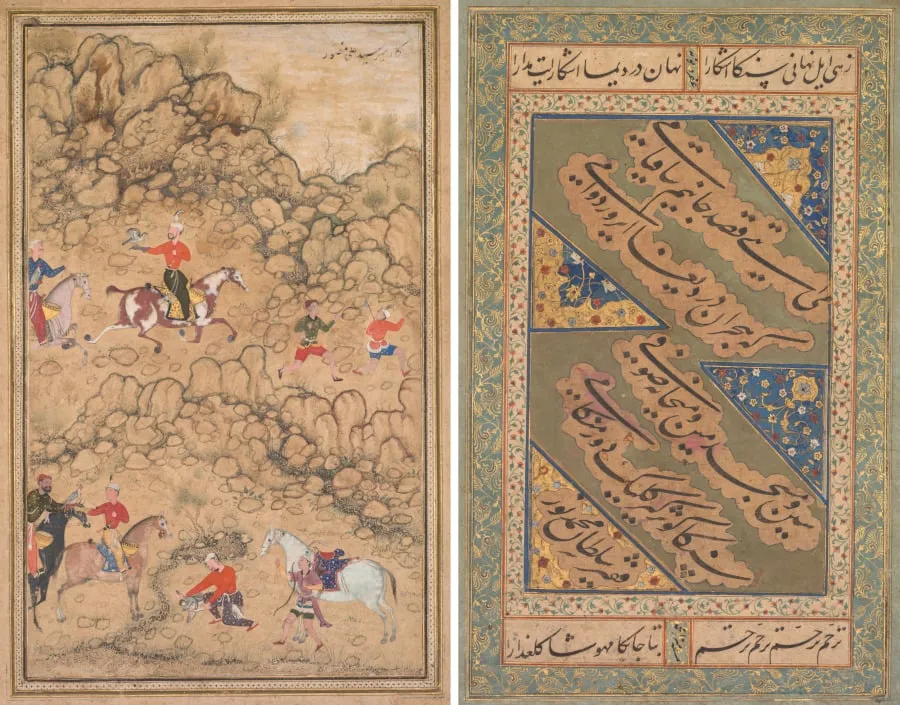
Hunting with falcons in a landscape; verso: Calligraphy of Chaghatai Turkish poems in praise of wine, Sultan Muhammad Nur (Persian, c. 1472–1536) and Mirza Muhammad (probably Persian, active c. 1520s) is an unspecified painting by the Mughal Painting artist Abd al-Samad. It is held in the collection of the Cleveland Museum of Art. This composite artwork features a hunting scene on the recto and Chaghatai Turkish calligraphy on the verso.
About this work
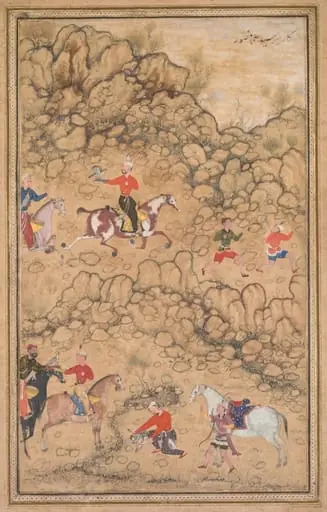
You see a group of men on horseback in a golden field, a hooded falcon clutching a duck mid-air between two riders.
You see a group of men on horseback in a golden field, a hooded falcon clutching a duck mid-air between two riders.
This painting was made for Akbar, the Mughal emperor, when he was still a teenager. The young man with the black feather in his turban might be him. The back of the page is covered in poetry praising wine—something Akbar later banned.
If you like royal hunts, look up *mughal india, court of akbar (reigned 1556–1605), indian art*.
Overview
This composite artwork features a hunting scene on the recto and Chaghatai Turkish calligraphy on the verso. Created for Mughal Emperor Akbar during his teenage years, it showcases the artistic blend of Persian and Mughal styles, with contributions from Persian artists Sultan Muhammad Nur and possibly Mirza Muhammad.
Subject & Meaning
The recto depicts a falconry hunt, possibly showing a young Akbar (identified by a black feather in his turban) participating in this traditional Mughal sport. The verso's calligraphy, praising wine, contrasts with Akbar's later prohibition of alcohol, highlighting a shift in imperial values.
Technique & Style
The painting exhibits delicate illumination and the use of a flowing nasta‘liq script for the calligraphy. The golden field and detailed horseback scenes reflect Persian artistic influences, characteristic of the period's Mughal court art.
History & Provenance
Originally created for Akbar, this work was later mounted into a Mughal album. An inscription on the recto, naming another artist, is likely a later addition. The pre-Mughal calligraphy page was repurposed for the album, indicating the evolving tastes and collections of the Mughal court.
Context
The work reflects the early Mughal period's cultural exchange, with Persian artists contributing to the imperial court's artistic output. The contrast between the hunting scene (a royal pursuit) and the wine-praising poetry (later banned) underscores the complex, changing norms of Akbar's reign.
Artist & collection
Artist
'Abd al-Ṣamad or Khwaja 'Abd-us-Ṣamad Shirazi (Persian: خواجه عبدالصمد شیرازی), was a 16th century painter of Persian miniatures who moved to India and became one of the founding masters of the Mughal miniature…

 Hunting with falcons in a landscape (recto)
 Akbar supervising the capture of wild elephants at Malwa in 1564, painting 90 from an Akbar-nama (Book of Akbar) of Abu’l Fazl (Indian 1551–1602)
 Akbar supervising the capture of wild elephants at Malwa in 1564, painting 90 from an Akbar-nama (Book of Akbar) of Abu’l Fazl (Indian 1551–1602)
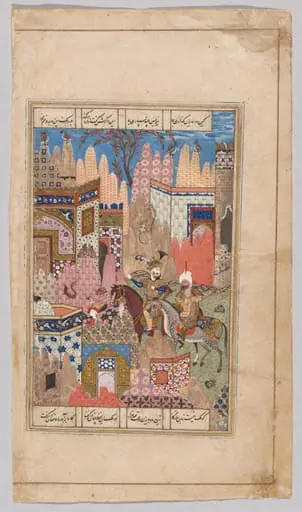 King Anushirwan and the Owls, from the Khamsa of Nizami
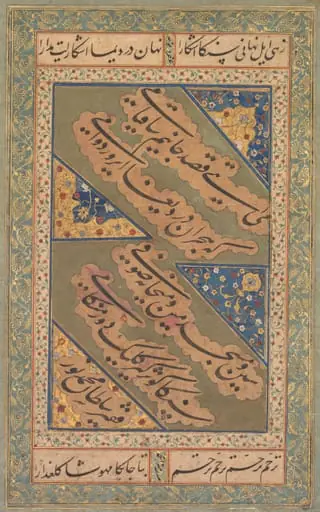 Calligraphy of Chaghatai Turkish Poems in Praise of Wine (verso)
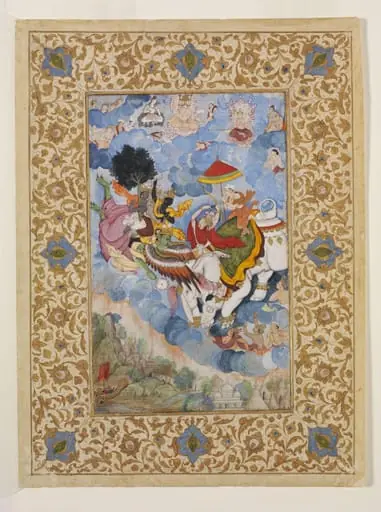 Krishna and Indra
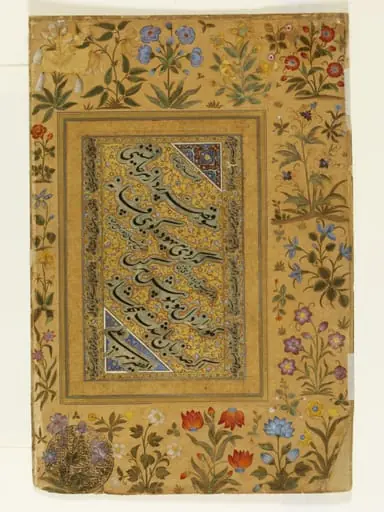 Untitled
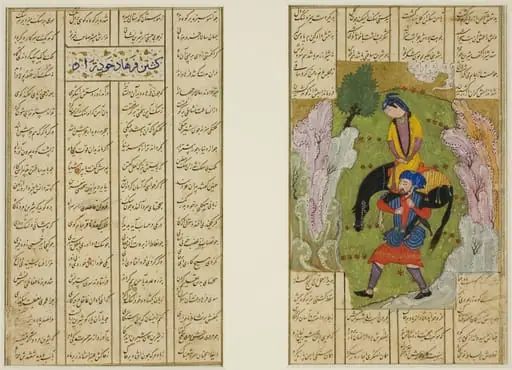 Farhad Carrying Shirin and Her Horse, from a copy of the Khamsa of Nizami
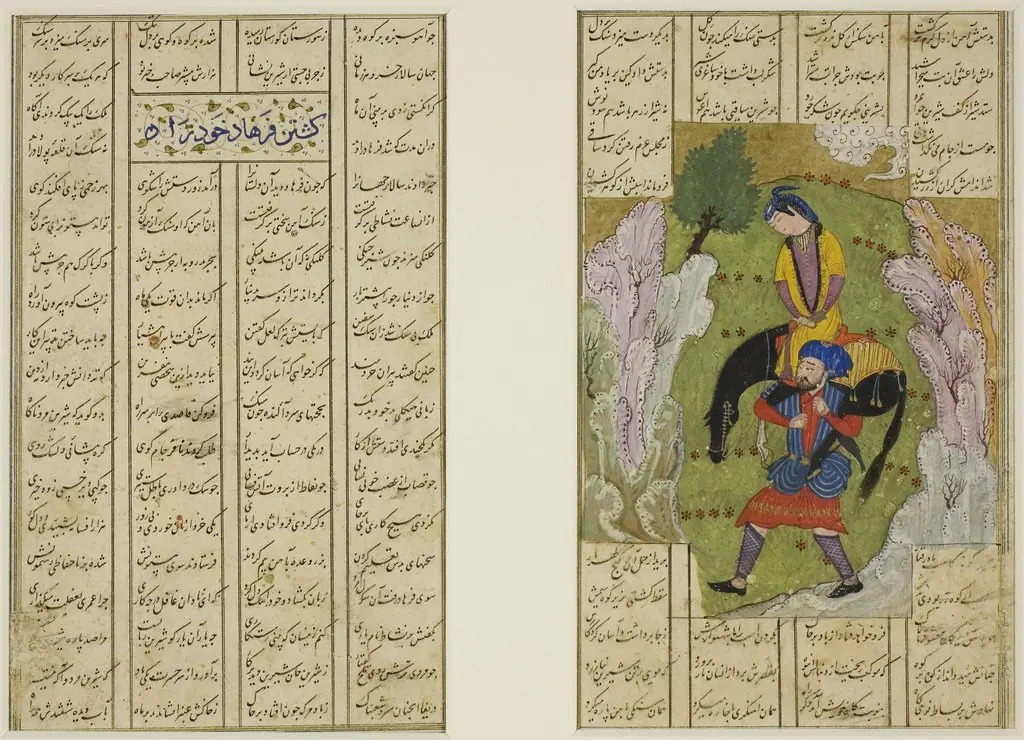 Farhad Carrying Shirin and Her Horse, from a copy of the Khamsa of Nizami
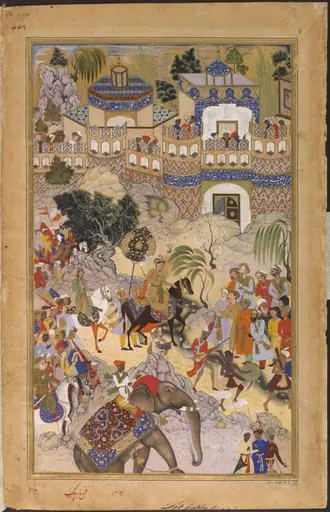 Akbar
Akbar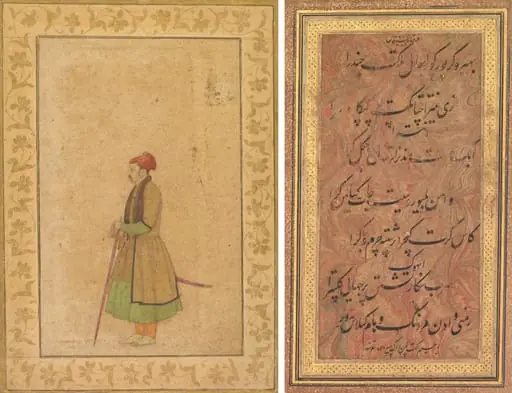 Portrait of Raja Ram Singh of Amber (r. 1667-1688) with a Deccan Sword (recto); Calligraphy (verso)
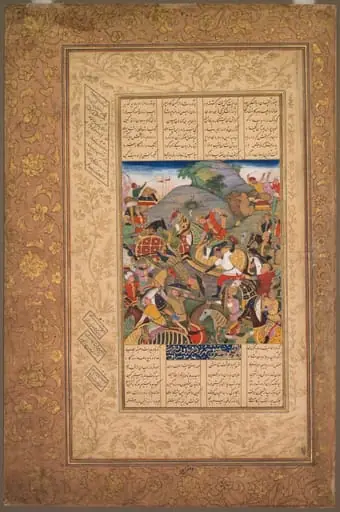 Battle between Manuchihr and Tur, from a Shah-nama (Book of Kings) of Firdausi (Persian, c. 934–1020)