Artwork
White Mahakala
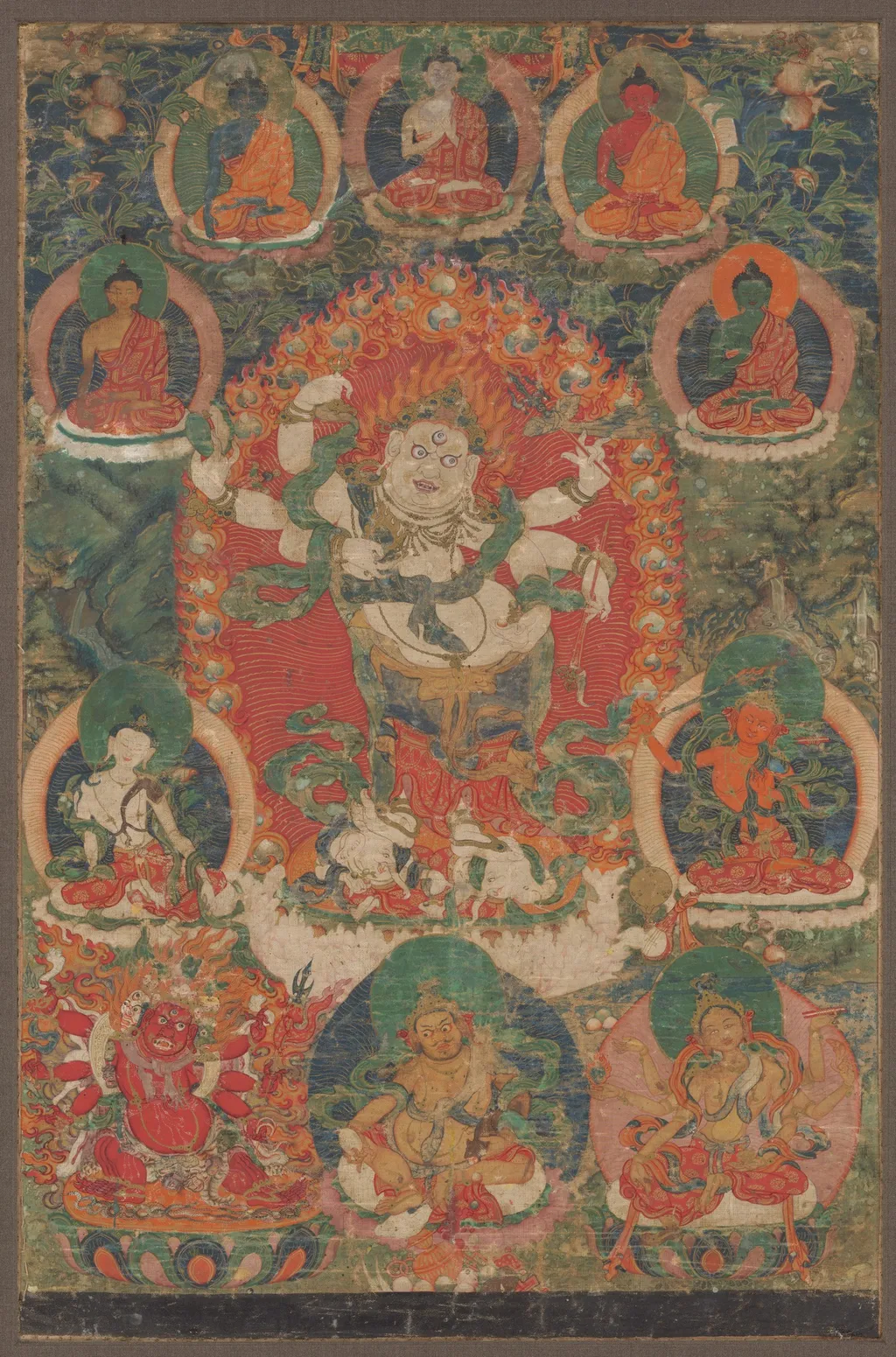
White Mahakala is an unspecified painting by Unknown. It dates from 1750 and is held in the collection of the Metropolitan Museum of Art.
About this work
Overview
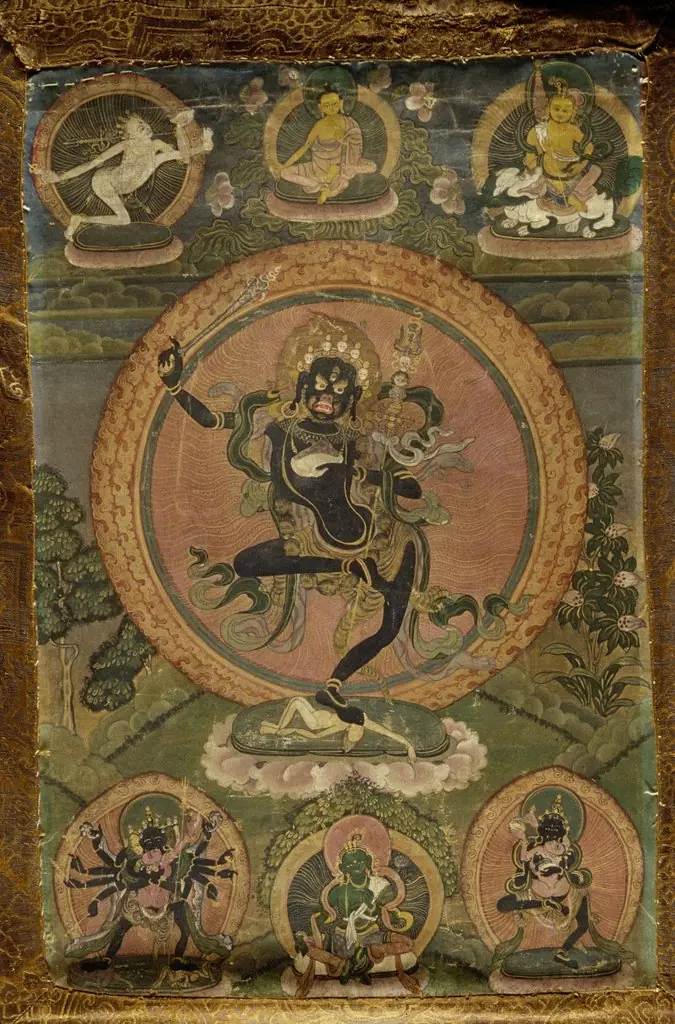
This painting depicts White Mahakala, a protective deity in Tibetan Buddhist tradition. Rendered in traditional thangka style, it serves as a devotional object used in meditation and ritual practice. The composition follows iconographic conventions established in Himalayan Buddhist art, emphasizing symbolic elements over naturalistic representation.
Subject & Meaning
White Mahakala is a wrathful yet compassionate guardian associated with removing obstacles and preserving spiritual practice. Unlike his darker forms, the white hue signifies purity and pacifying power. He is often shown standing on a corpse, symbolizing the triumph over ego and ignorance, while holding a skull cup and a curved knife to cut through delusion.
Technique & Style
Executed in mineral pigments on cotton, the painting employs fine brushwork and precise line definition typical of Tibetan thangka traditions. Gold leaf accents highlight divine attributes, and the background is filled with intricate patterns and symbolic motifs. The figure is centered with symmetrical balance, reinforcing its sacred function and meditative focus.
History & Provenance
The work likely originated in Tibet or a neighboring Himalayan region during the 17th to 19th centuries, a period of flourishing Buddhist artistic production. It may have been commissioned by a monastery or high-ranking lama for use in ritual spaces. Its survival suggests careful preservation within a religious context, possibly passed through generations of practitioners.
Context
White Mahakala worship became prominent in Tibetan Buddhism following the spread of the Kagyu and Gelug schools. Paintings like this were not merely decorative but integral to liturgical life, used in ceremonies to invoke protection and clarity. Artists trained in monastic workshops followed strict textual guidelines to ensure doctrinal accuracy in each depiction.
Legacy
This painting continues to function within Buddhist communities as a tool for spiritual practice. It also serves as a cultural artifact studied for its artistic discipline and religious symbolism. While no longer produced for ritual use in all contexts, its form remains influential in contemporary Himalayan Buddhist art and scholarly analysis.
Artist & collection

 Domestic Scene
 Giacomo and Cardinal Marco, investing Andrea, Abbot of San Zeno, with his Benefice
 The Nymph of Fontainebleau
 Portrait of a Woman
 Madonna and Child with Saints in the Enclosed Garden
 Venus and Minerva
 Family Group of Four on Sofa
 Wall painting from Room H of the Villa of P. Fannius Synistor at Boscoreale
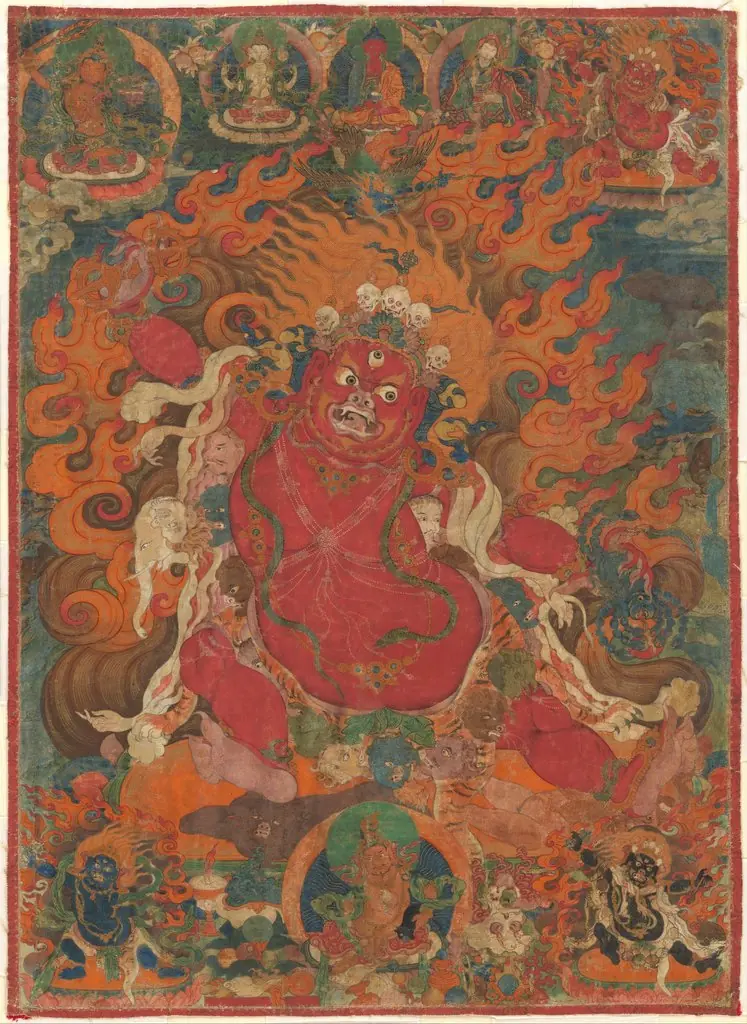 Guru Dragpo
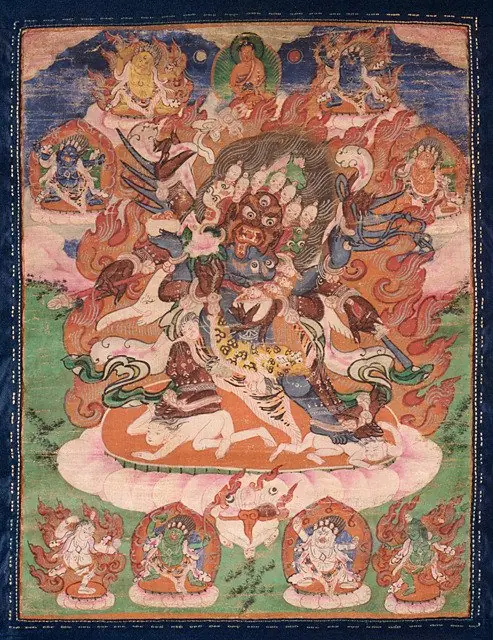 Garuda-Feathered Hayagriva and Consort
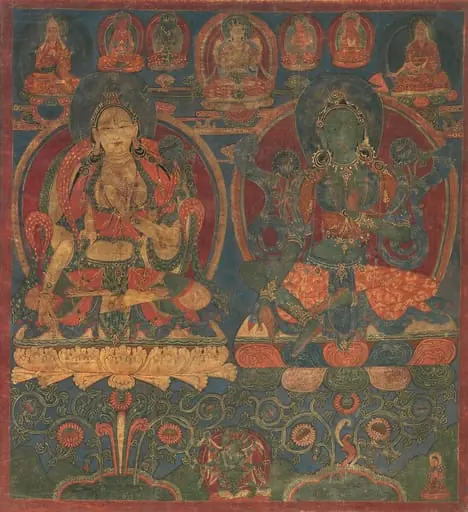 Untitled
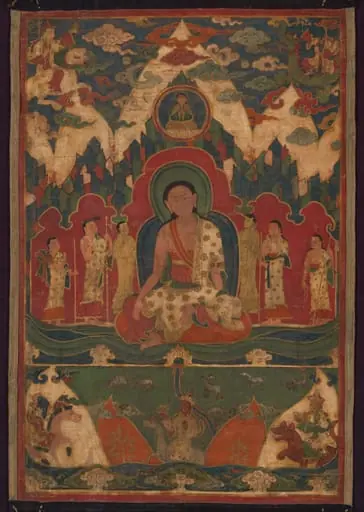 Milarepa on Mount Kailash
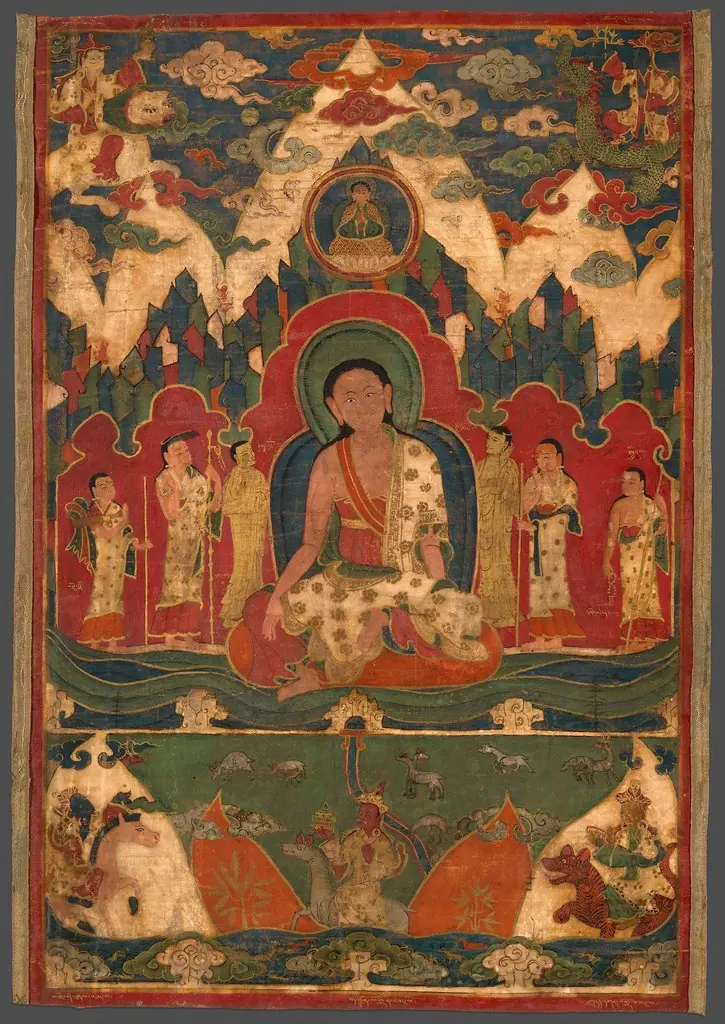 Painted Banner (Thangka) of Milarepa on Mount Kailasha
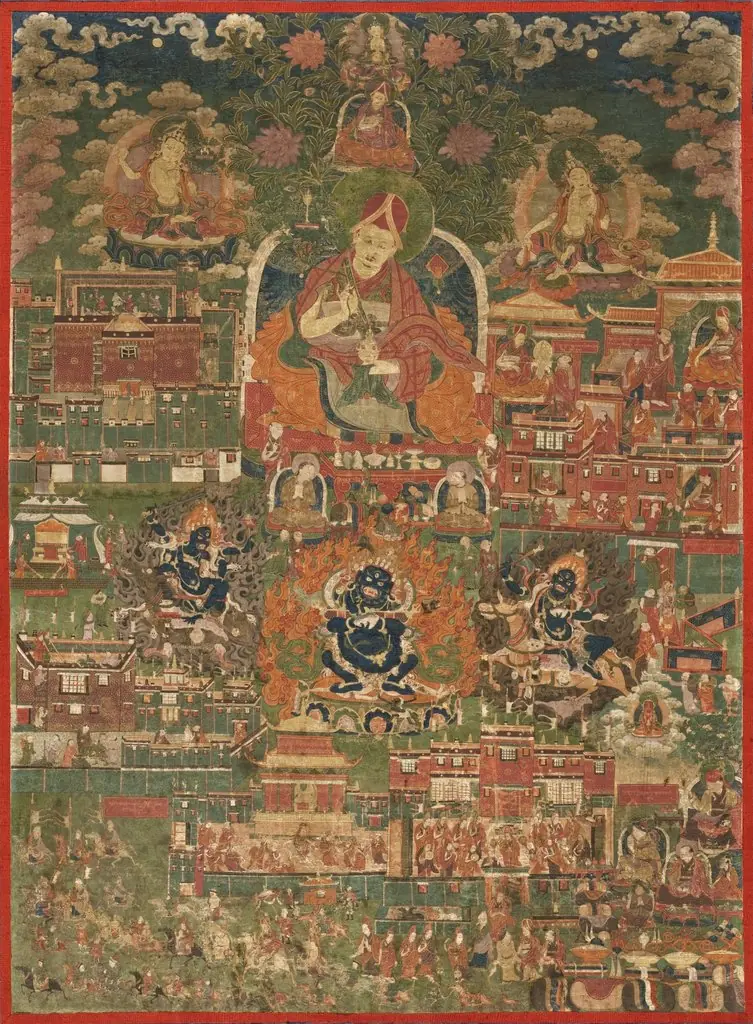 Kunga Tashi and Incidents from His Life (Abbot of Sakya Monastery, 1688-1711)
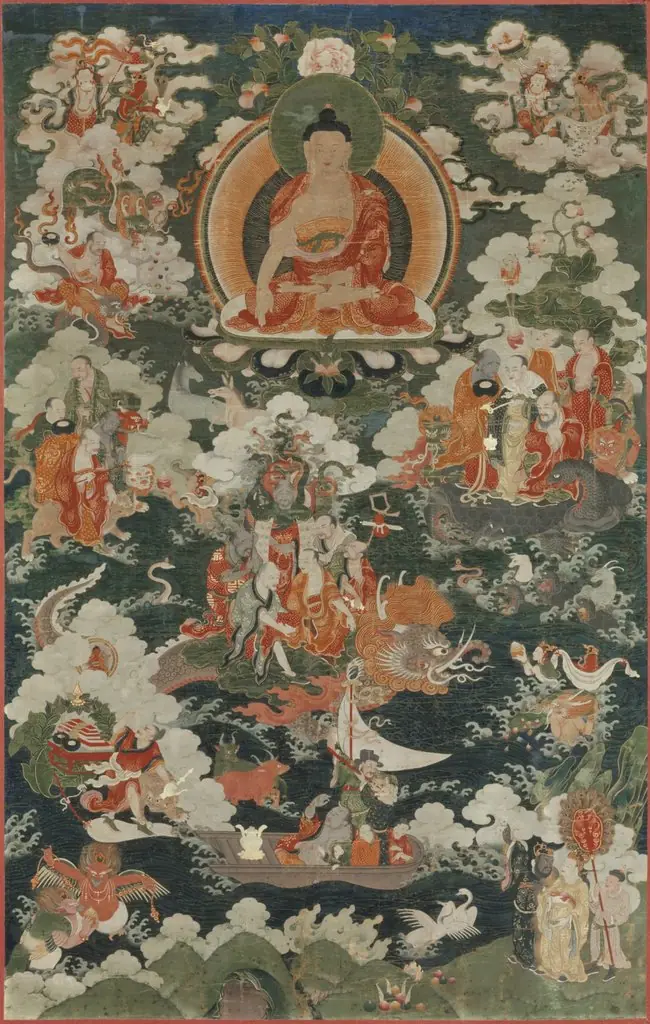 Buddha Shakyamuni and the Eighteen Arhats
 Khadgayogini
 Vajradhara, Nairatmya, and Mahasiddhas Virupa and Kanha