Artwork
Legend of a Knight (end panel of a cassone)
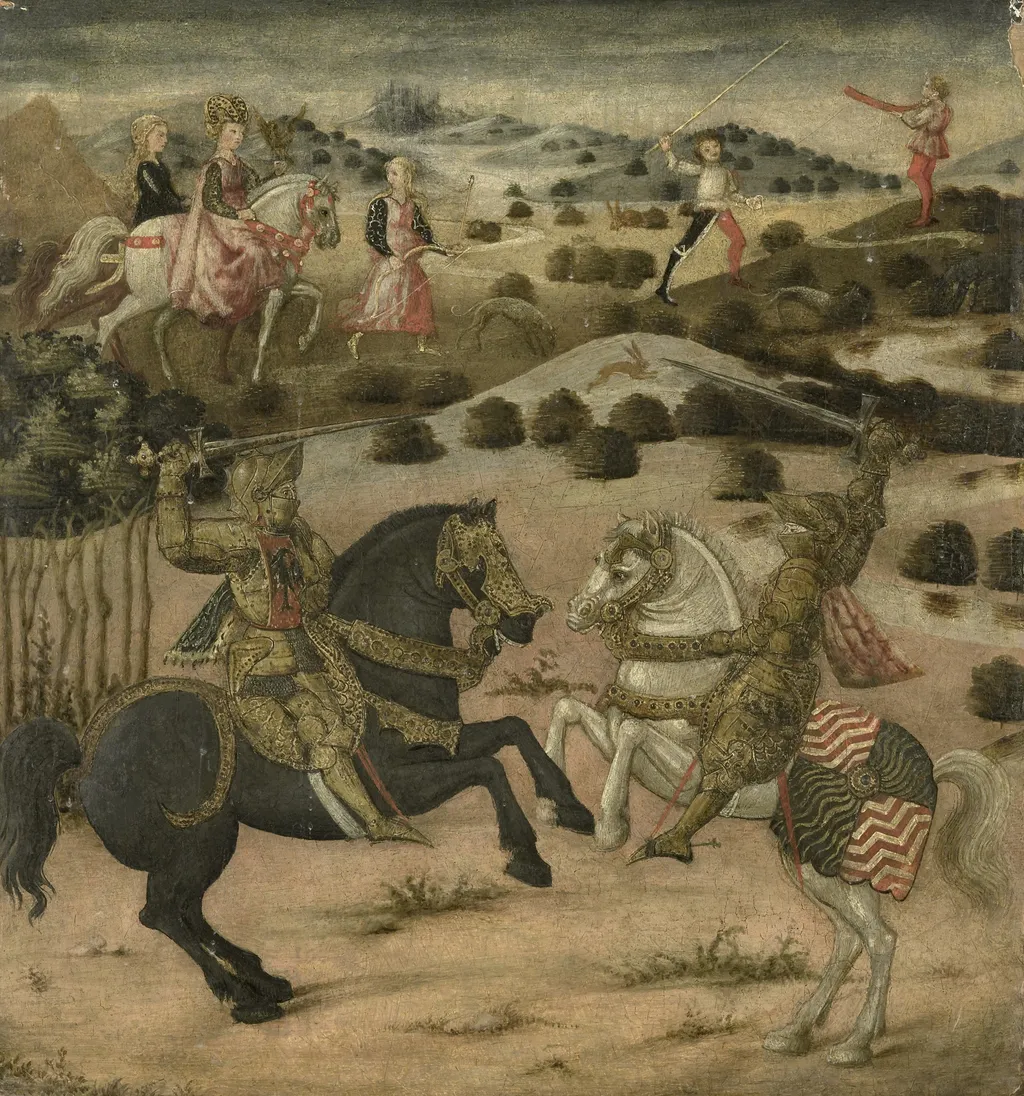
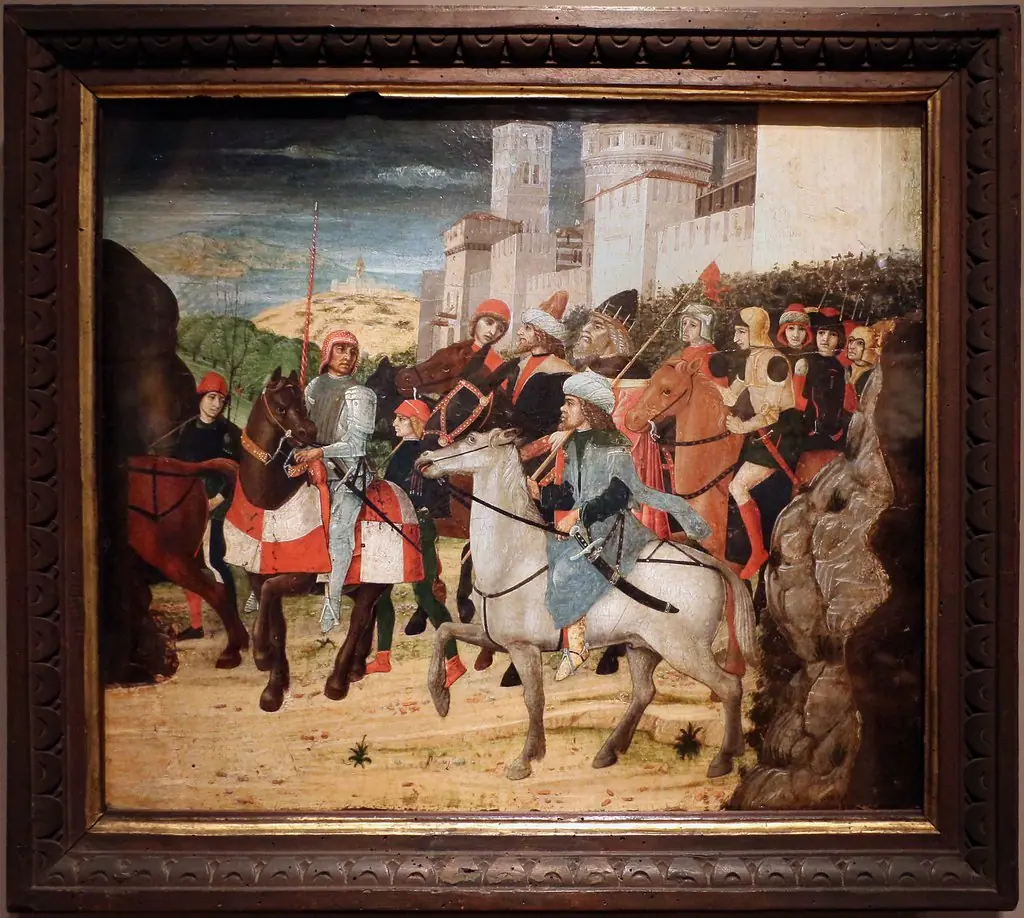
Legend of a Knight (end panel of a cassone) is a tempera painting by the Early Renaissance artist Unknown. It dates from 1450 and is held in the collection of the Rijksmuseum. The panel, the concluding piece of a cassone, depicts a lively jousting scene rendered in tempera.
About this work
In the background, three women are seated on horseback, accompanied by a man standing on a hill, holding a long pole.
This painting shows a scene with several figures on horseback, set against a backdrop of hills and mountains. The central figures are two armored knights on horseback, engaged in a jousting match. One knight is dressed in black and gold, while the other wears white and red.
In the background, three women are seated on horseback, accompanied by a man standing on a hill, holding a long pole. The overall atmosphere of the painting is one of action and movement, with the jousting knights taking center stage.
The painting is a tempera work, characteristic of the medium's use in the 15th century. To learn more about the artist's technique, explore the world of tempera.
Overview
The panel, the concluding piece of a cassone, depicts a lively jousting scene rendered in tempera. Central to the composition are two armored riders locked in contest, their contrasting livery—black and gold versus white and red—drawing the eye. A trio of women on horseback occupies the distant background, while a solitary figure on a hill holds a long pole, adding narrative depth to the action.
Subject & Meaning
The work illustrates a chivalric tournament, a popular motif in Renaissance domestic art that celebrated martial virtue and courtly love. The opposing colors of the knights suggest rivalry, while the presence of the women may allude to spectatorship or the patron’s familial connections, reinforcing the cassone’s role as a marriage chest that conveyed ideals of honor and alliance.
Technique & Style
Executed in egg tempera, the panel displays the medium’s characteristic fine brushwork and luminous color layers typical of the 15th century. The artist employs a clear delineation of forms and a restrained palette, allowing the metallic sheen of armor and the vivid heraldic hues to stand out against the muted landscape of hills and distant mountains.
Context
Cassoni were richly decorated marriage chests popular in northern Italy during the early Renaissance, often featuring narrative panels that reflected the values of the commissioning family. This jousting scene aligns with contemporary visual culture that glorified knighthood, while the inclusion of female figures hints at the domestic setting for which the chest was intended.
Artist & collection

 Domestic Scene
 Giacomo and Cardinal Marco, investing Andrea, Abbot of San Zeno, with his Benefice
 The Nymph of Fontainebleau
 Portrait of a Woman
 Madonna and Child with Saints in the Enclosed Garden
 Venus and Minerva
 Family Group of Four on Sofa
 Wall painting from Room H of the Villa of P. Fannius Synistor at Boscoreale
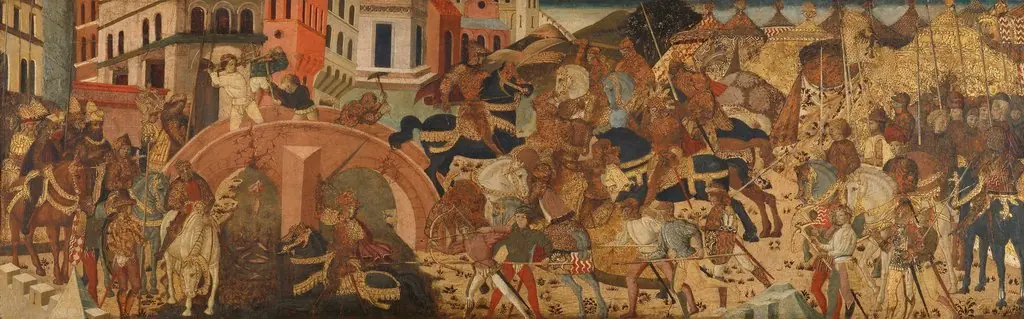 Horatius Cocles Defending the Sublician Bridge
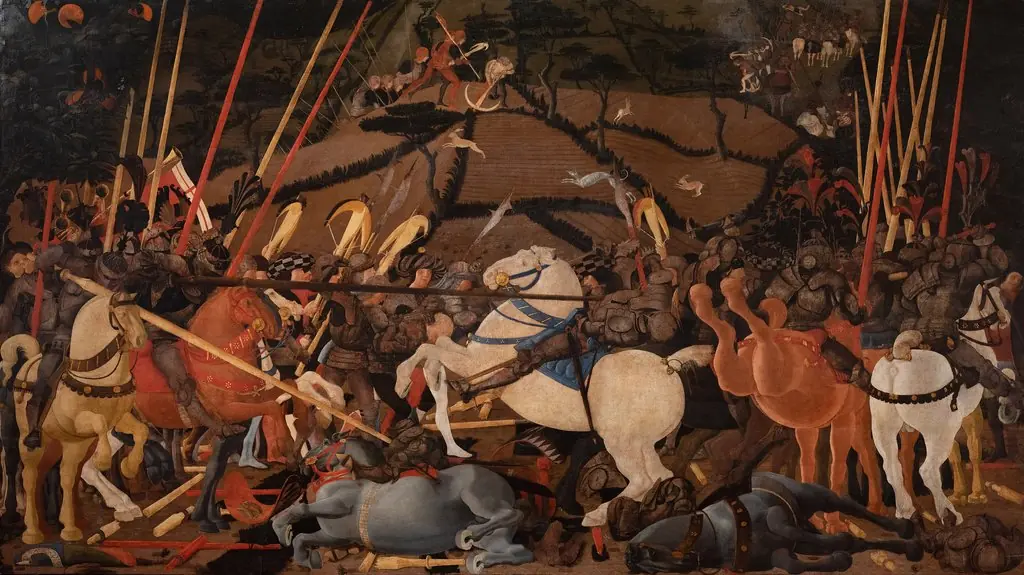 Niccolò Mauruzi da Tolentino unseats Bernardino della Ciarda at the Battle of San Romano
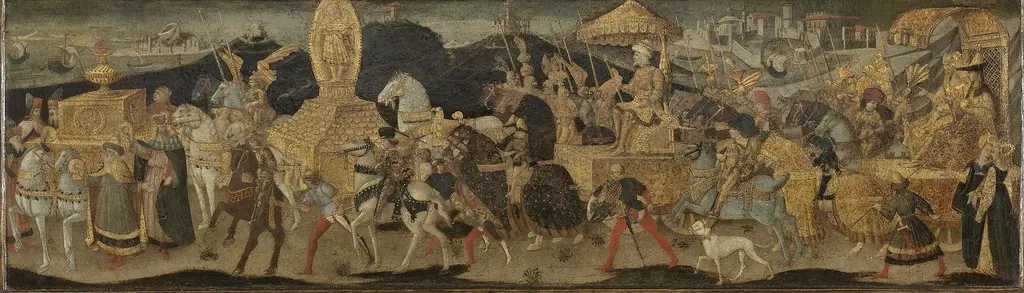 Darius Marching to the Battle of Issus
 processione dei magi
 The Triumph of Camillus
 Procession of the Magi
 The Taking of Pisa
 Emperor Heraclius Slays the King of Persia
 War of the Emperor Charles V against Tunis (1535): Turks from La Goletta
 Battle Before a Walled City