Artwork
Niccolò Mauruzi da Tolentino unseats Bernardino della Ciarda at the Battle of San Romano
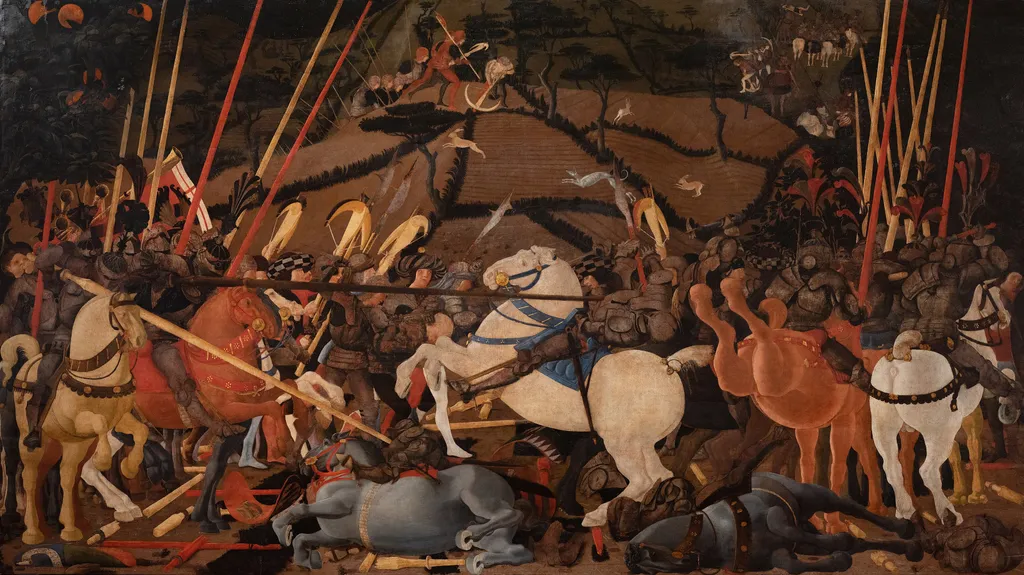
Niccolò Mauruzi da Tolentino unseats Bernardino della Ciarda at the Battle of San Romano is a tempera painting by the Early Renaissance artist Paolo Uccello. It dates from 1436 and is held in the collection of the Uffizi Gallery.
About this work
Overview
Created in 1436 by the Florentine artist Paolo Uccello, this tempera panel illustrates a fragment of the 1432 Battle of San Romano. It captures the dramatic moment when the condottiero Niccolò Mauruzi da Tolentino dismounts his rival, Bernardino della Ciarda. The work belongs to the early Renaissance and is one of three panels that together narrate the larger conflict.
Subject & Meaning
The composition focuses on a chaotic melee of cavalry and infantry, emphasizing the physical struggle of two opposing knights. By isolating the unseating of Mauruzi’s foe, the painting underscores themes of martial prowess and the shifting fortunes of war, reflecting contemporary interest in heroic individual actions within collective battle.
Technique & Style
Executed in tempera, the panel displays Uccello’s characteristic bright palette and precise modeling of figures. The artist employs his experimental approach to linear perspective, arranging the crowded scene so that receding lines guide the eye toward the central encounter, while the dynamic poses of horses and riders convey movement and tension.
History & Provenance
The panel formed part of a triptych commissioned to commemorate the San Romano engagement and was later incorporated into the Uffizi Gallery’s collection. Its survival alongside the other two battle scenes provides scholars with a rare, cohesive visual record of Uccello’s early Renaissance narrative program.
Own this work as a print
Artist & collection
Artist
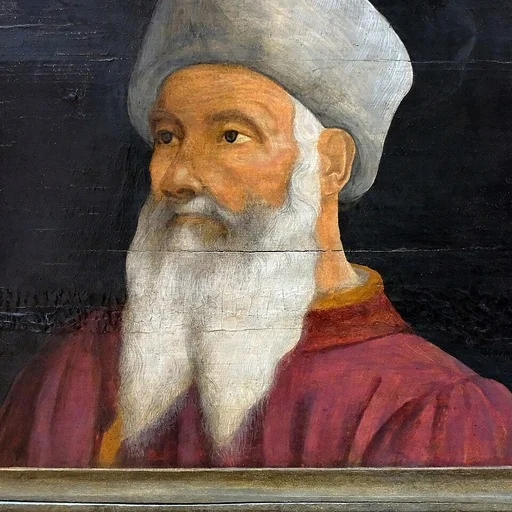
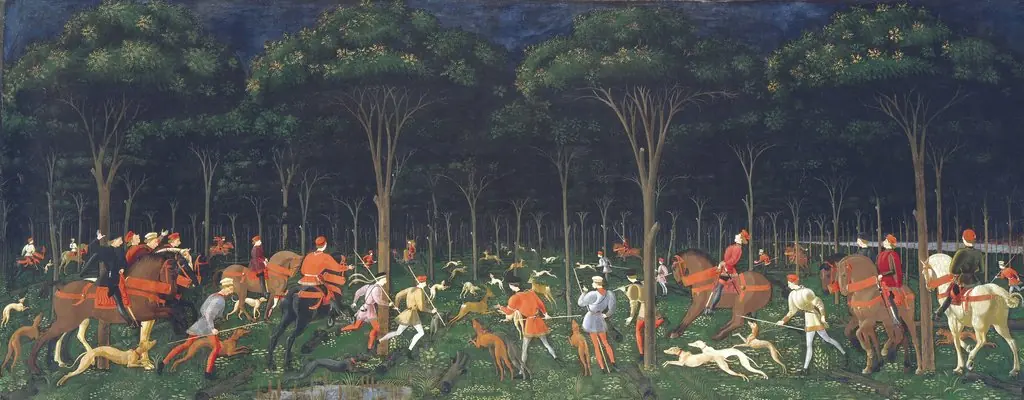
Paolo Uccello ( oo-CHEL-oh, Italian: ; 1397 – 10 December 1475), born Paolo di Dono, was an Italian Renaissance painter and mathematician from Florence who was notable for his pioneering work on visual perspective in art.

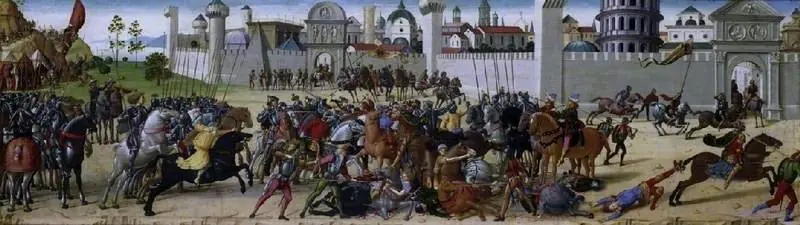 The Siege of Troy - The Death of Hector
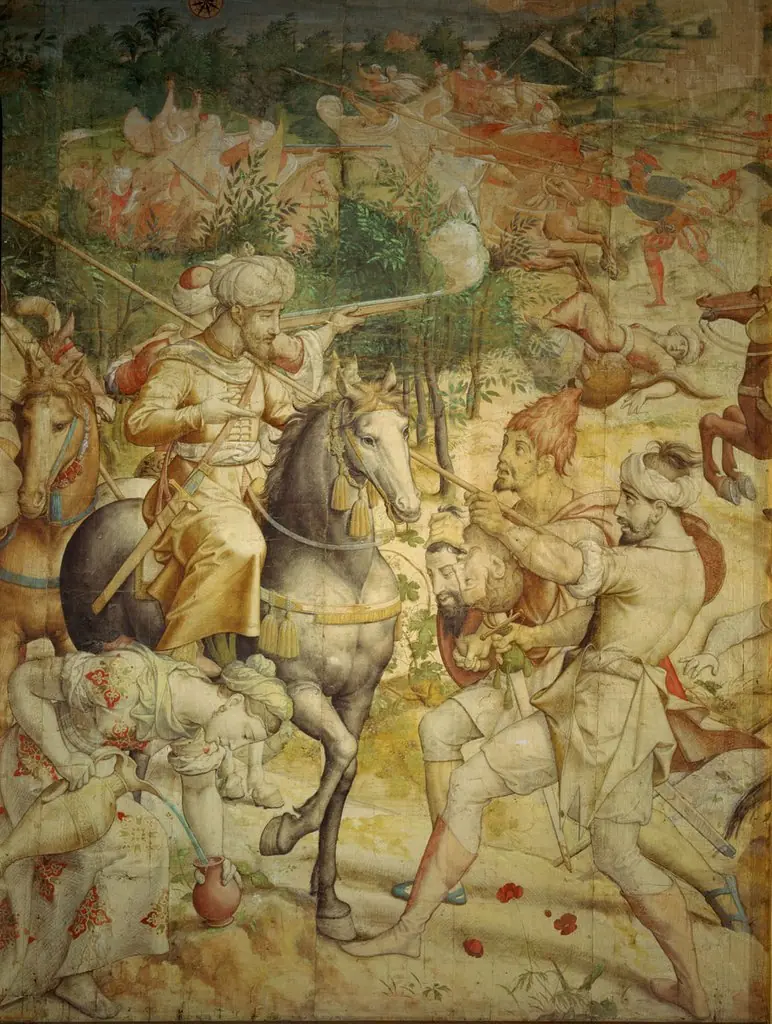 War of the Emperor Charles V against Tunis (1535): Turks from La Goletta
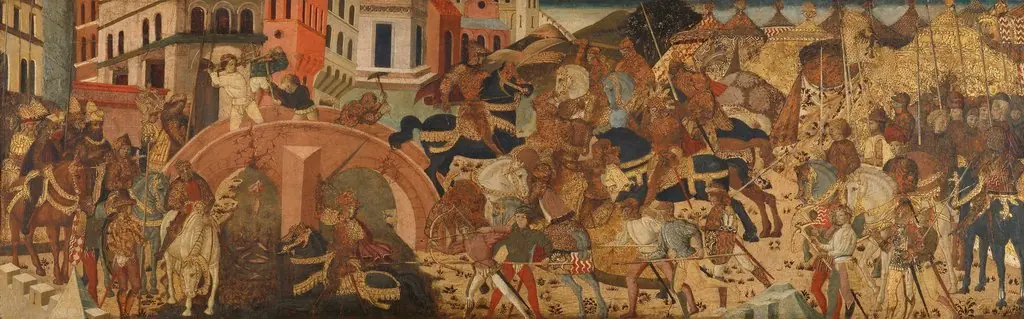 Horatius Cocles Defending the Sublician Bridge
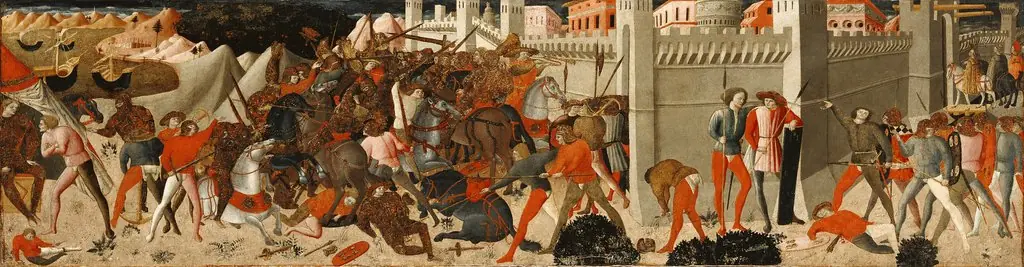 Battle Before a Walled City
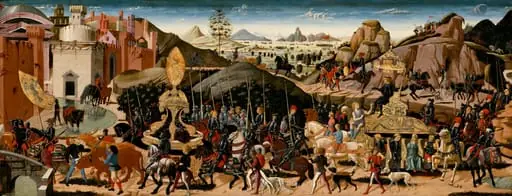 The Triumph of Camillus
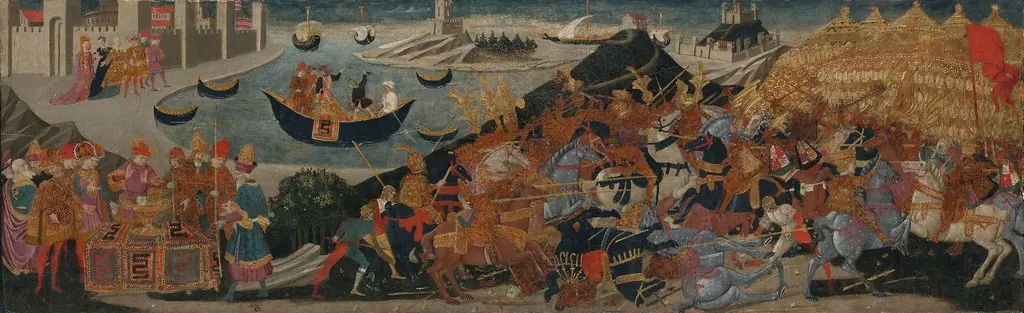 The Battle of Pharsalus and the Death of Pompey
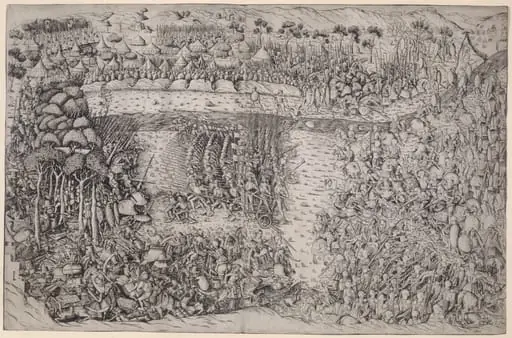 The Battle of Fornovo
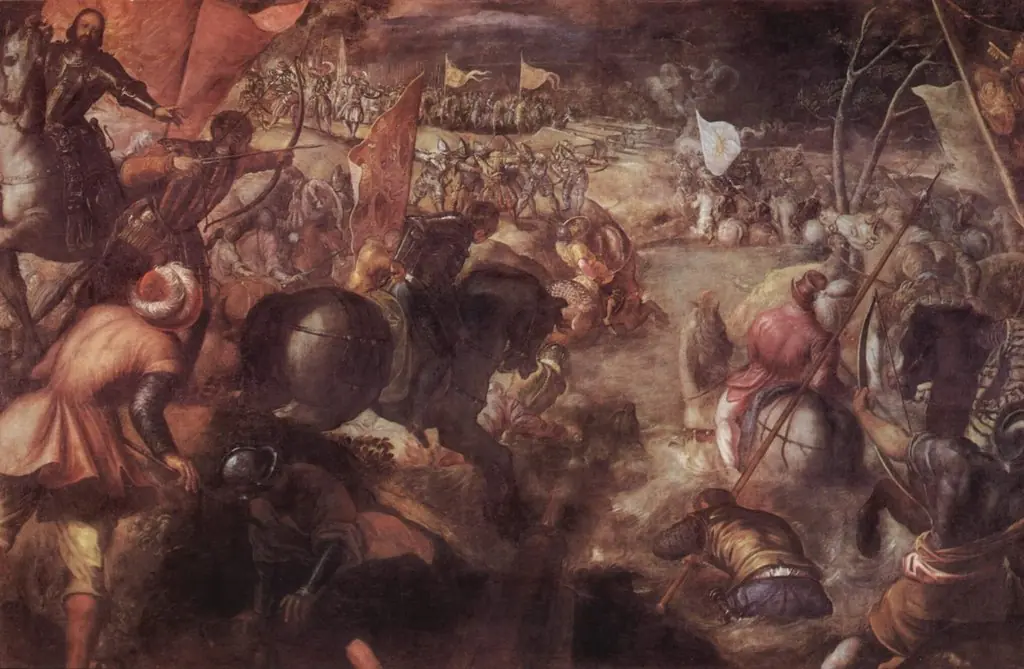 The battle of Taro
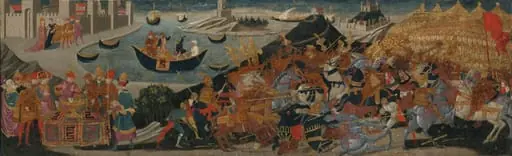 The Battle of Pharsalus and the Death of Pompey
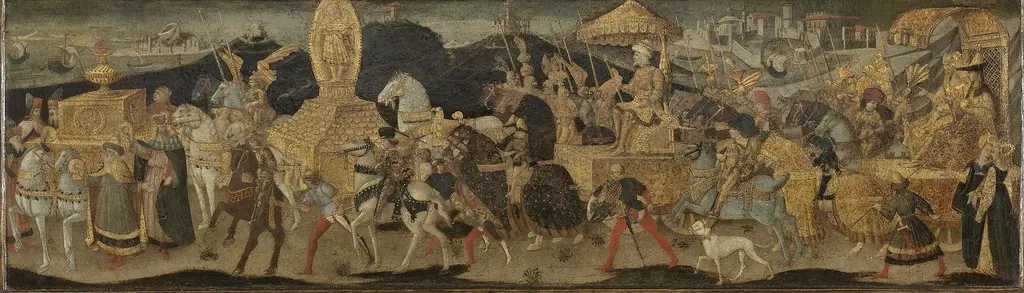 Darius Marching to the Battle of Issus