Artwork
Tantric Temple Banner of a Dancing Goddess Flanked by Dakinis
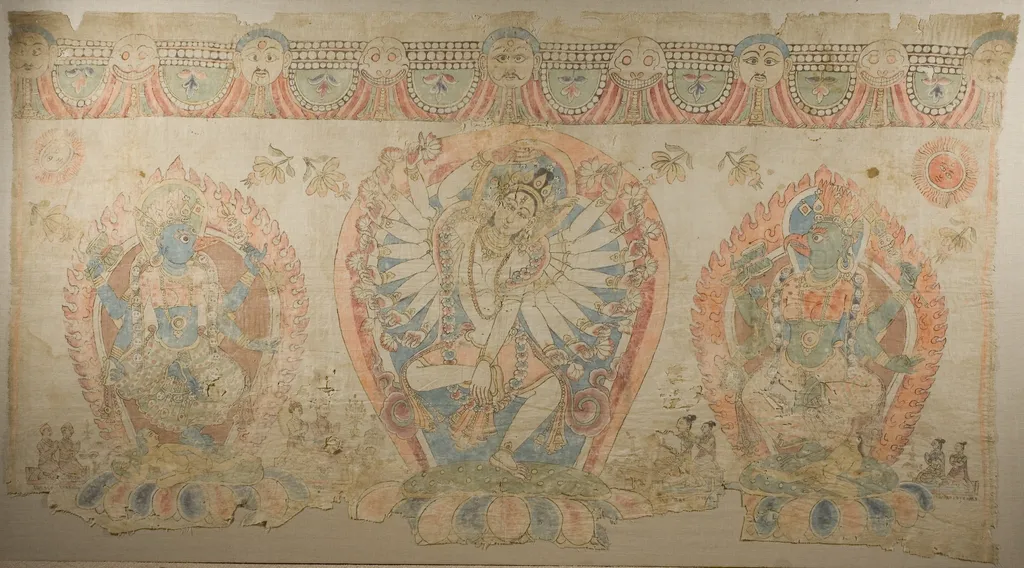
Tantric Temple Banner of a Dancing Goddess Flanked by Dakinis is an unspecified painting by the Mughal Painting artist Unknown. It dates from 1650 and is held in the collection of the Art Institute of Chicago. This Tibetan Buddhist painting depicts a central dancing goddess surrounded by two dakini figures, rendered in vivid pigments on cloth.
About this work
Overview
The work belongs to a tradition of portable devotional art, designed to be unfurled during rituals to invoke spiritual presence and transformative energy.
This Tibetan Buddhist painting depicts a central dancing goddess surrounded by two dakini figures, rendered in vivid pigments on cloth. The composition emphasizes dynamic motion and sacred geometry, typical of tantric ritual banners used in meditative and ceremonial contexts. The work belongs to a tradition of portable devotional art, designed to be unfurled during rituals to invoke spiritual presence and transformative energy.
Subject & Meaning
The central figure represents a tantric deity, likely a form of Vajrayogini or a similar wrathful wisdom goddess, engaged in a ritual dance symbolizing the destruction of ignorance. The flanking dakini figures, female spiritual attendants, embody enlightened energy and serve as guides or manifestations of the goddess’s power. Their synchronized movement suggests a sacred choreography, aligning the viewer with esoteric Buddhist principles of impermanence and transcendence.
Technique & Style
Executed in mineral pigments on cotton, the painting employs fine brushwork to render intricate textile patterns and flowing drapery. The figures are outlined in bold lines, with contrasting hues of white, blue, and red enhancing their luminosity against a warm, earth-toned background. The lack of perspective and flattened space follow traditional thangka conventions, prioritizing symbolic clarity over naturalism to support meditative focus.
History & Provenance
The banner likely originated in Tibet during the 17th to 19th centuries, a period when tantric practices flourished in monastic communities. It was probably commissioned for use in a temple or retreat setting, carried during processions or displayed during specific rites. Acquired by The Art Institute of Chicago in the 20th century, its journey from ritual object to museum artifact reflects broader patterns of cultural preservation and displacement.
Context
Tantric Buddhist art in Tibet often served as a visual aid for advanced meditation, where deities and their retinues represented inner psychological states and spiritual pathways. Such banners were not merely decorative but functional, activated through ritual chanting and visualization. Their portability allowed them to be used in diverse settings, from monastic halls to remote hermitages, reinforcing the integration of art and practice.
Legacy
This banner continues to inform contemporary understanding of Tibetan Buddhist aesthetics and ritual culture. As a preserved example of devotional painting, it offers insight into how spiritual concepts were materialized through color, gesture, and composition. Its presence in a major museum underscores the global recognition of Tibetan art as a vital expression of religious thought, beyond its original liturgical function.
Artist & collection

 Domestic Scene
 Giacomo and Cardinal Marco, investing Andrea, Abbot of San Zeno, with his Benefice
 The Nymph of Fontainebleau
 Portrait of a Woman
 Madonna and Child with Saints in the Enclosed Garden
 Venus and Minerva
 Family Group of Four on Sofa
 Wall painting from Room H of the Villa of P. Fannius Synistor at Boscoreale
 The Bodhisattva Avalokiteshvara and Four Taras
![The Guardian Generals of the Directions (Lokapalas) Dhritarashtra (East) [top] and Virudhaka (South) [bottom], by Unknown](https://artifactworldgallery.com/img/unknown--the-guardian-generals-of-the-directions-lokapalas-dhritarash--26a8da85b3fb4c5a-w320.webp) The Guardian Generals of the Directions (Lokapalas) Dhritarashtra (East) [top] and Virudhaka (South) [bottom]
The Guardian Generals of the Directions (Lokapalas) Dhritarashtra (East) [top] and Virudhaka (South) [bottom] Eleven-Headed, Thousand-Armed Bodhisattva of Compassion (Avalokiteshvara)
 Untitled
 Untitled
 Untitled
 The Jina Buddha of Infinite Light (Amitabha) in His Pure Land Paradise (Sukhavati)
 Untitled
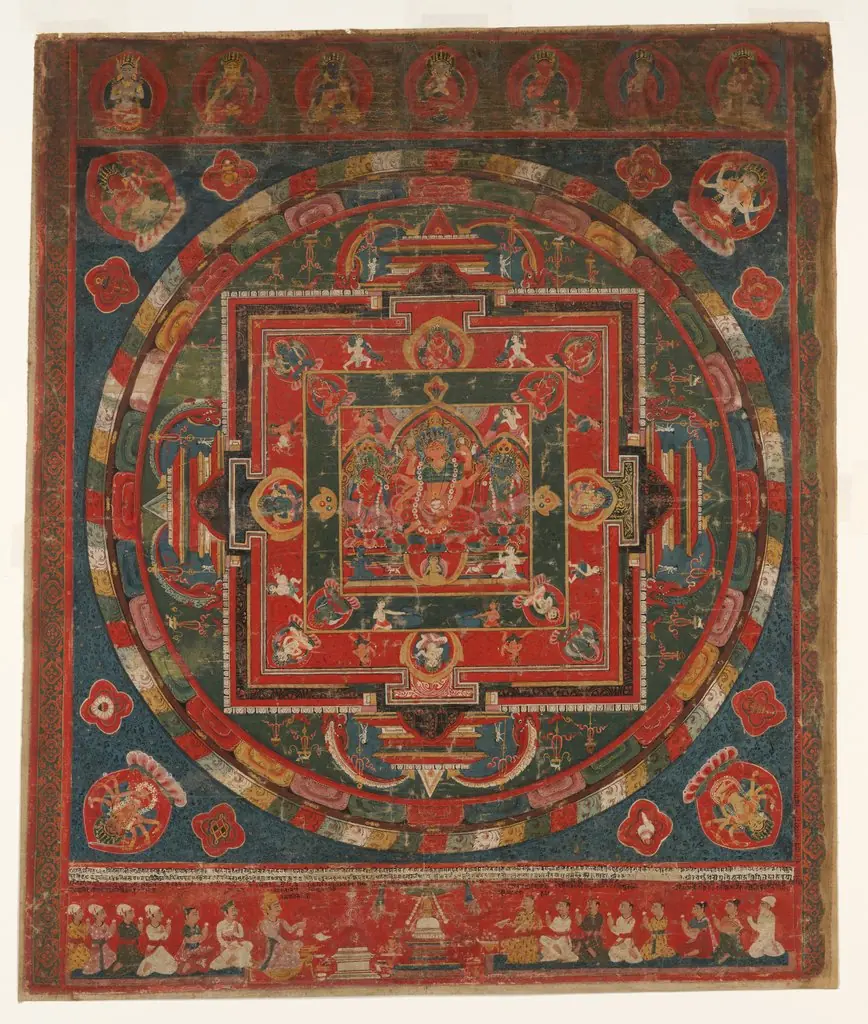 Vasudhara Mandala
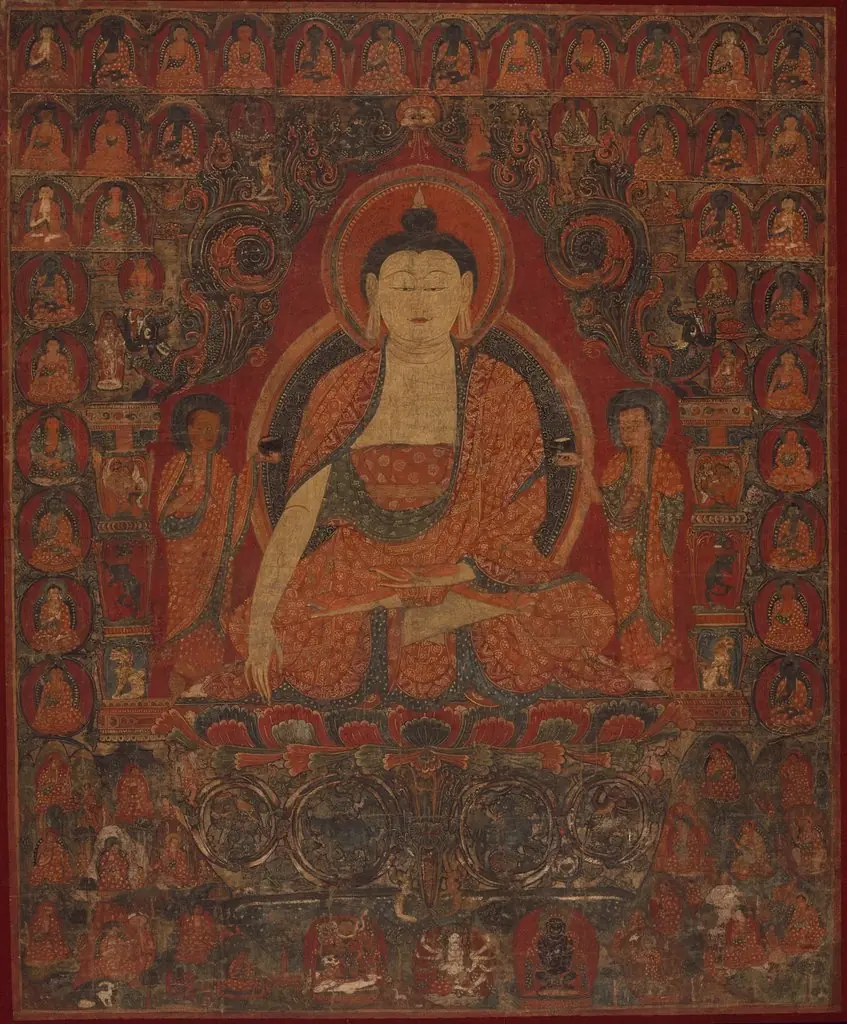 Shakyamuni with the Thirty-Five Buddhas of the Confession of Sins and the Eighteen Arhats
 Eleven-Headed, Thousand-Armed Bodhisattva of Compassion (Avalokiteshvara)
 Untitled