Artwork
Danae
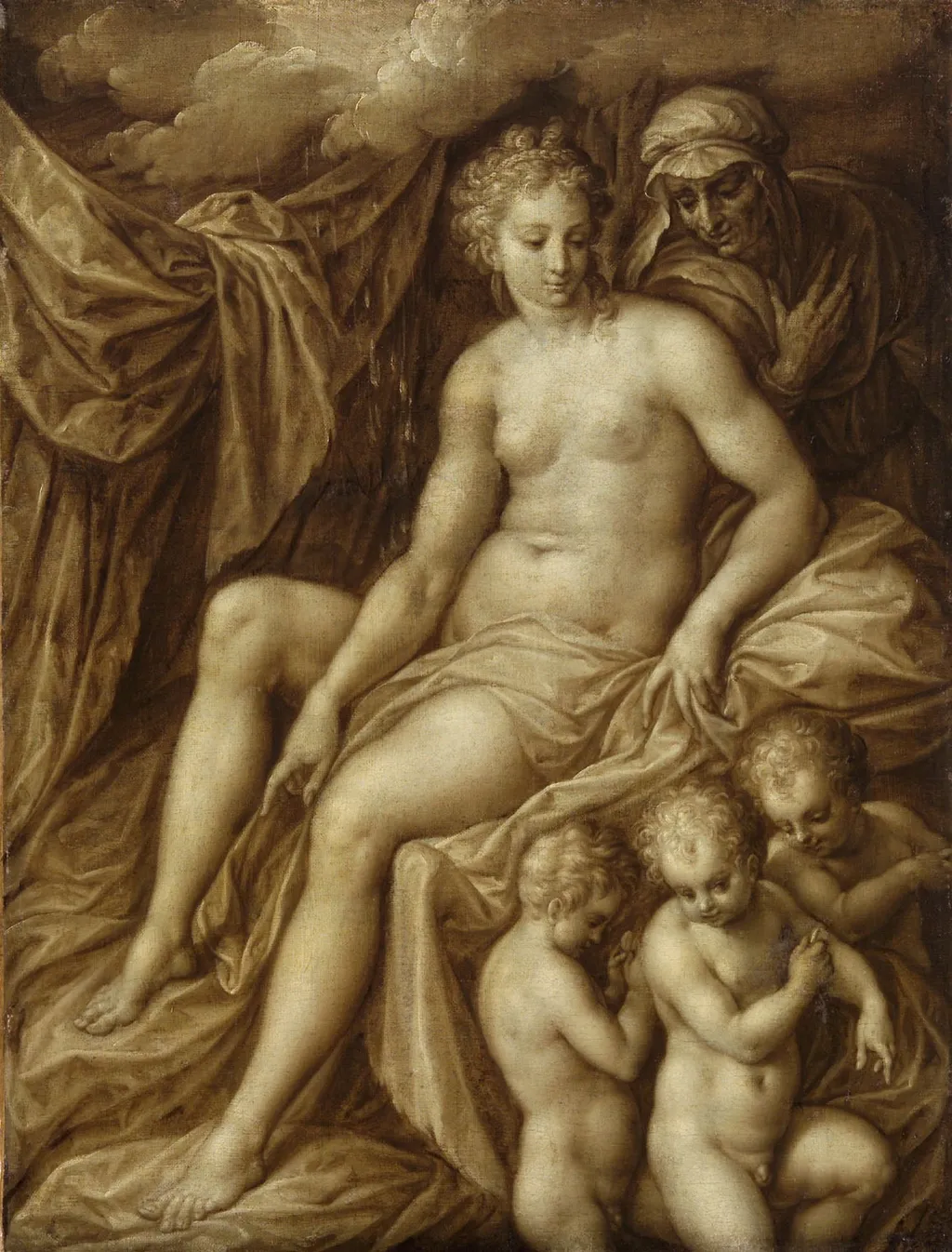
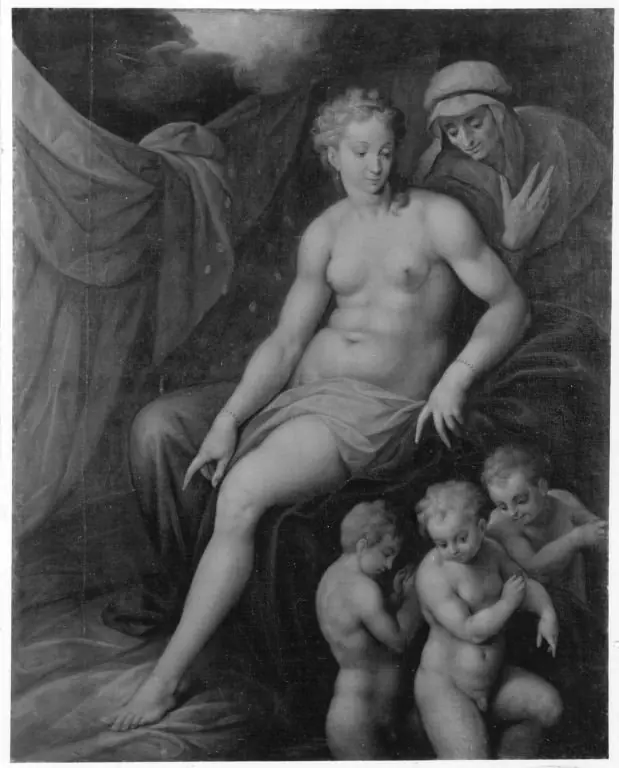
Danae is an unspecified painting by the Mannerist artist Unknown. It dates from 1560 and is held in the collection of the Kunsthistorisches Museum. The canvas depicts a partially unclothed female figure seated upon a cloud, her form wrapped in a flowing drapery.
About this work
Overview
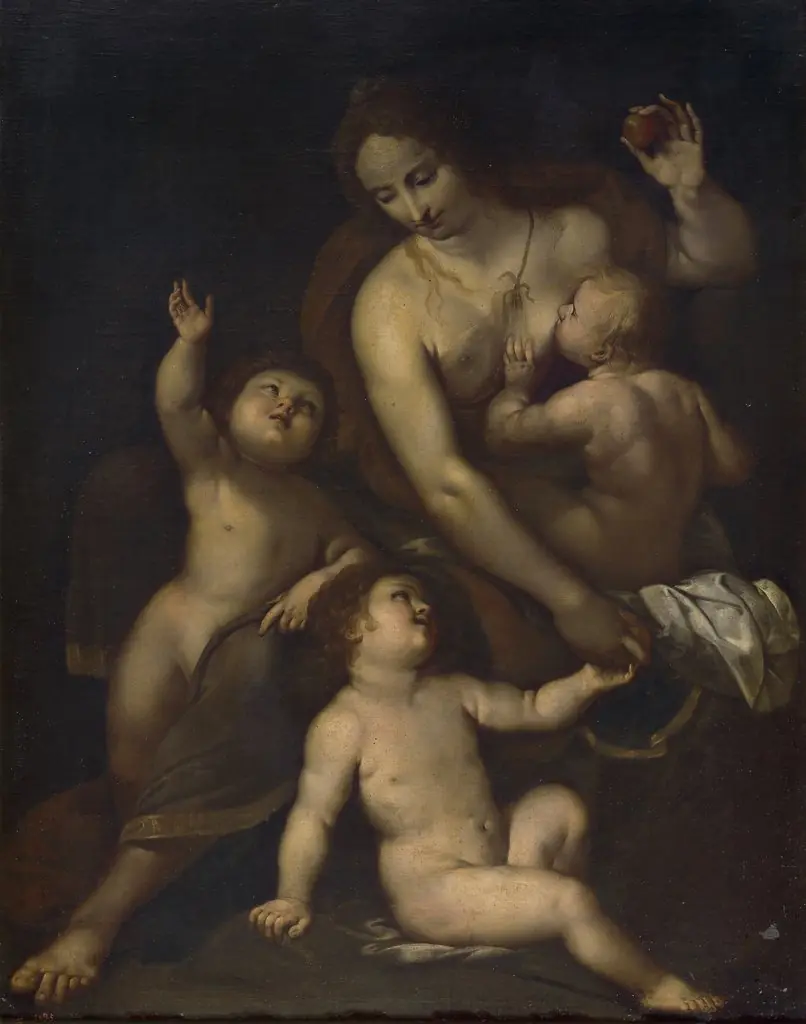
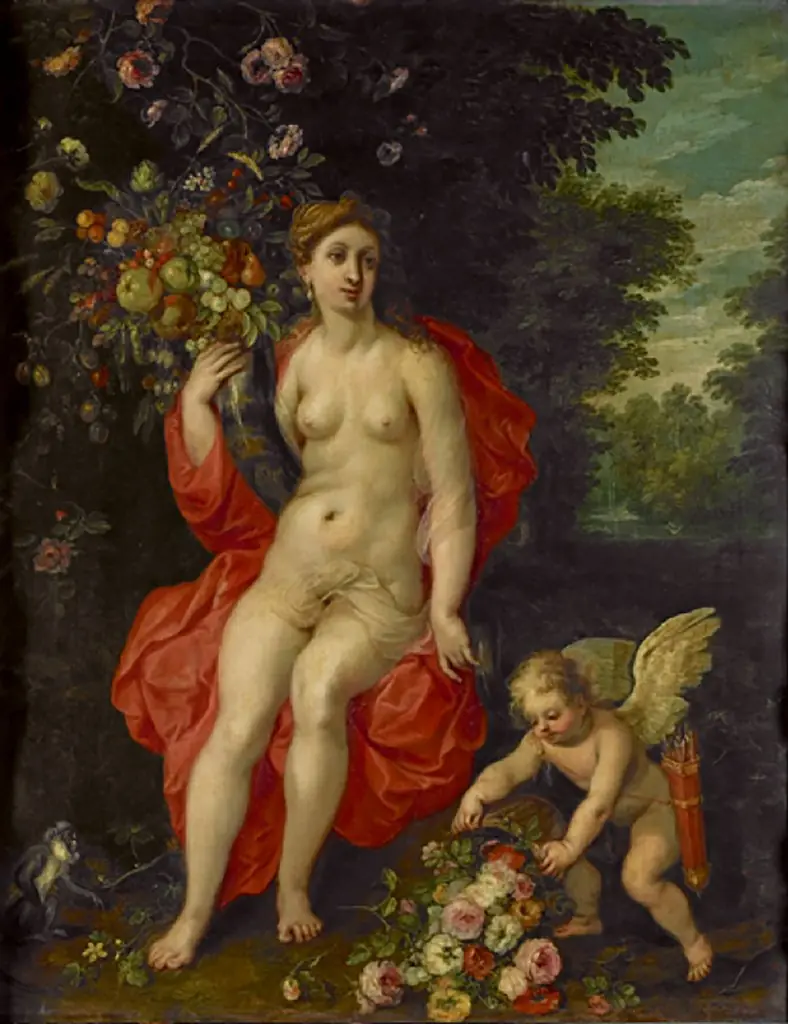
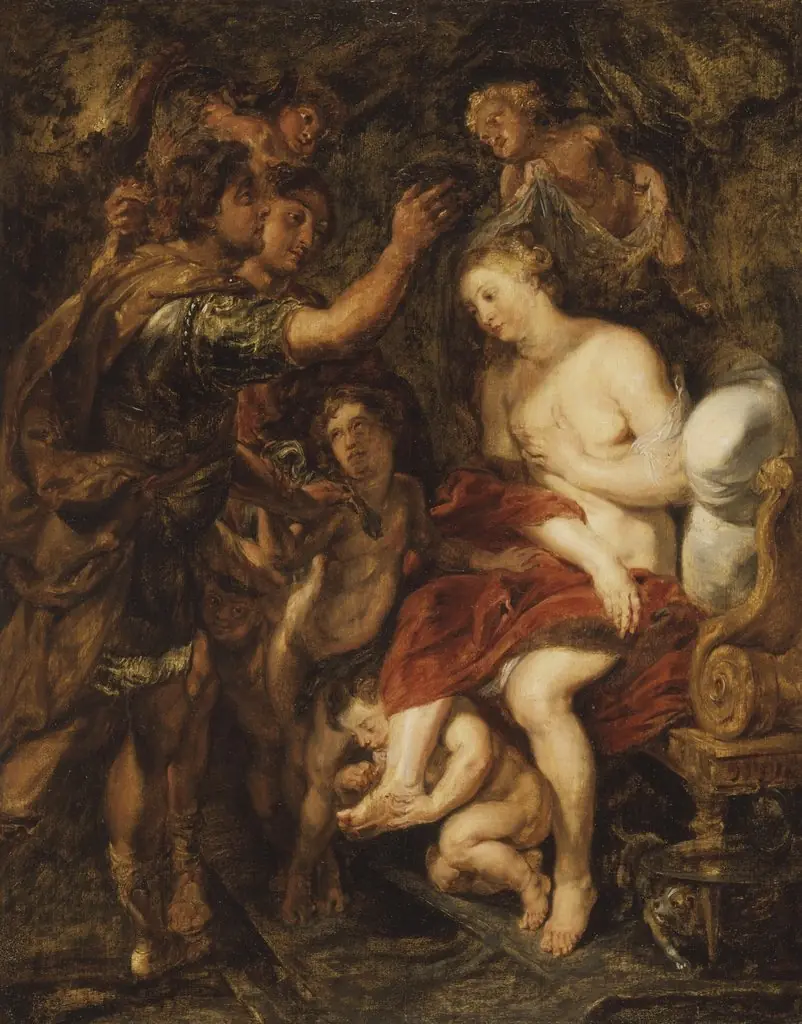
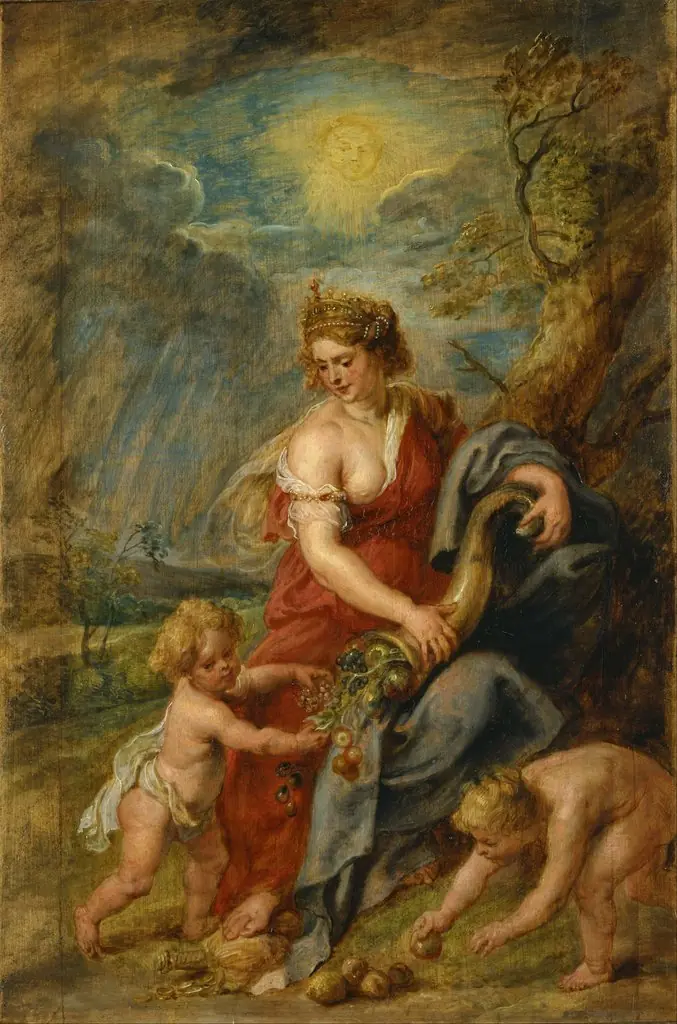
The canvas depicts a partially unclothed female figure seated upon a cloud, her form wrapped in a flowing drapery. Behind her stands a robed man with a solemn expression, while three small, nude cherubic figures—putti—play at her feet. Warm brown and golden tones dominate the palette, with gentle shadows that merge into the background.
Subject & Meaning
The central woman is identified as Danaë, the mythological princess visited by Zeus in the form of golden rain. The robed figure likely represents Zeus in his divine guise, while the surrounding putti serve as allegorical symbols of innocence and the playful aspects of mythic narratives.
Technique & Style
The artist employs a limited chromatic range of browns and golds, creating a cohesive, warm atmosphere. Soft modeling of light produces subtle gradations, allowing the figures to emerge from the background without harsh outlines. The elongated, smooth contours of the female form contrast with the rounded, chubby bodies of the putti, emphasizing differing symbolic roles.
Context
Putti appear frequently in European art, especially during the Baroque and Rococo periods, where they often convey themes of love, innocence, or divine presence. Their inclusion here aligns the work with that tradition, using the cherubs to underscore the mythological and sensual dimensions of the Danaë story.
Artist & collection

 Domestic Scene
 Giacomo and Cardinal Marco, investing Andrea, Abbot of San Zeno, with his Benefice
 The Nymph of Fontainebleau
 Portrait of a Woman
 Madonna and Child with Saints in the Enclosed Garden
 Venus and Minerva
 Family Group of Four on Sofa
 Wall painting from Room H of the Villa of P. Fannius Synistor at Boscoreale