Artwork
Abundance (Abundantia)
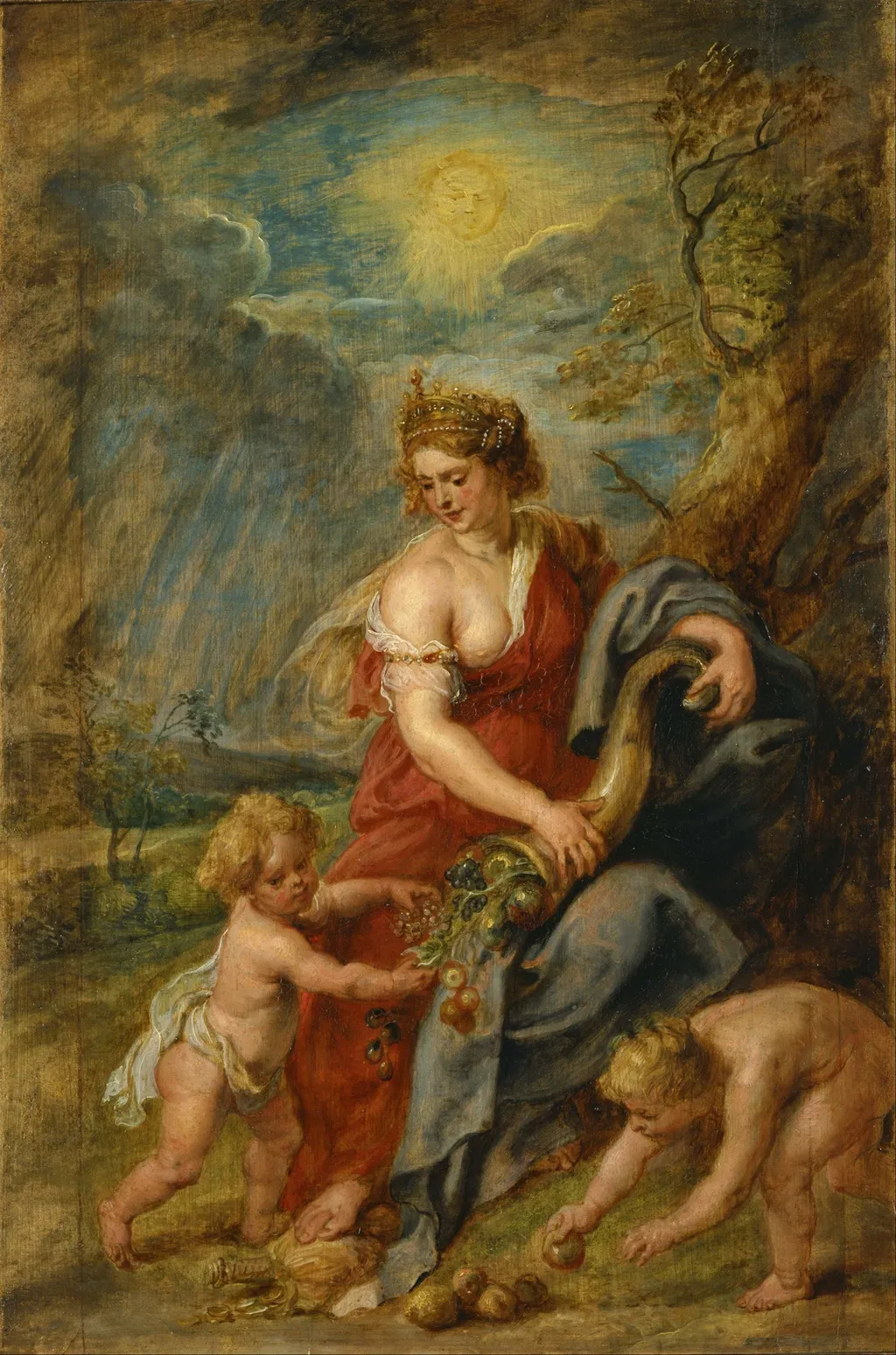
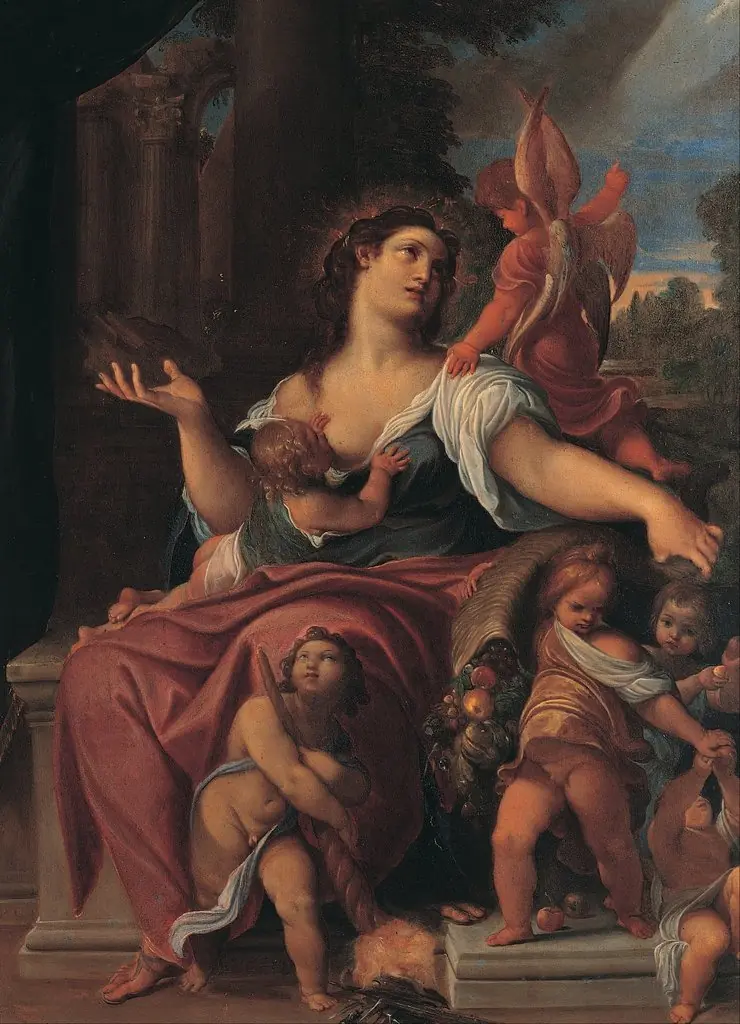
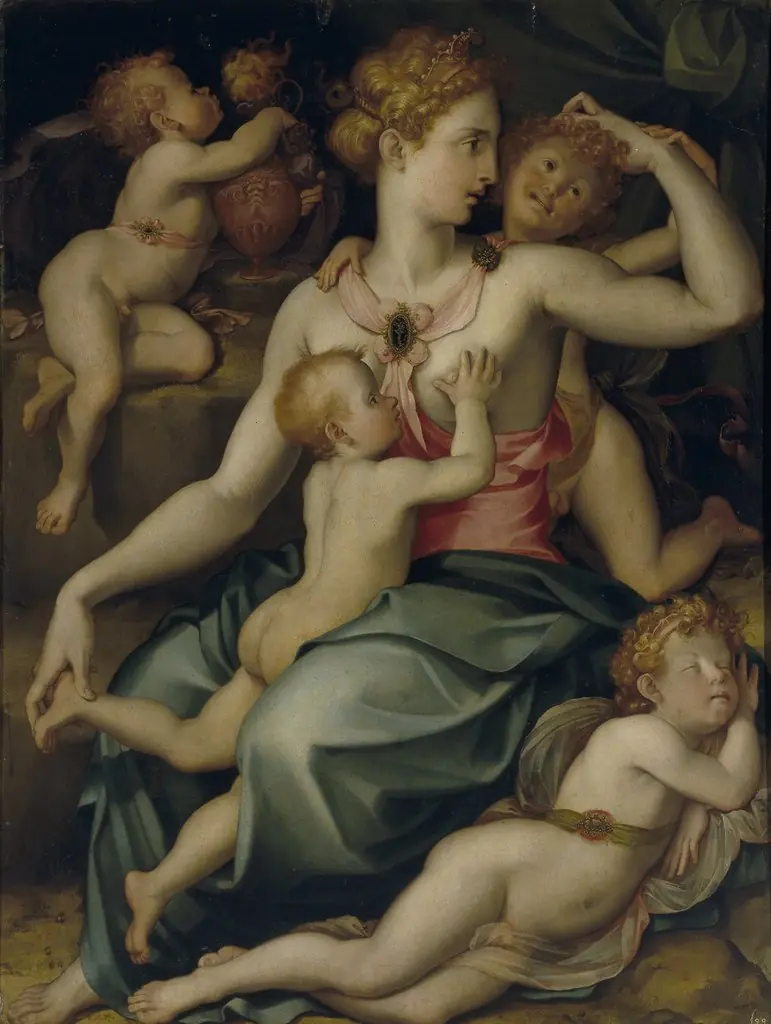
Abundance (Abundantia) is an oil painting by the Flemish Baroque painting artist Peter Paul Rubens. It dates from 1630 and is held in the collection of the National Museum of Western Art.
About this work
Overview
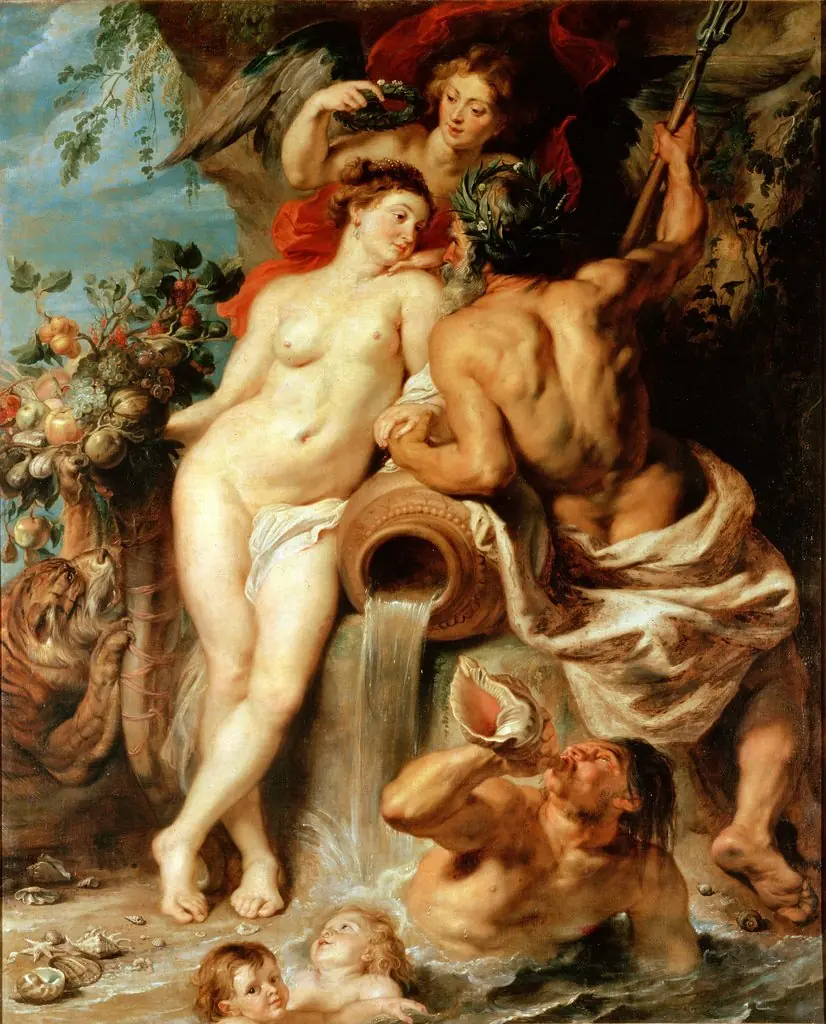
Created in 1630, this oil painting by the Flemish artist Peter Paul Rubens portrays an allegorical figure of Abundance. The central female figure, seated on a rocky outcrop, holds a cornucopia that overflows with fruit, while two cherubic infants attend her feet. The composition is set beneath a sky pierced by sunlight and framed by distant trees, conveying a sense of plentiful fertility.
Subject & Meaning
She is crowned and dressed in a vivid red garment, with a blue drape draped over her shoulder, emphasizing her regal status.
The work personifies the Roman goddess Abundantia, symbolizing wealth and plenty. She is crowned and dressed in a vivid red garment, with a blue drape draped over her shoulder, emphasizing her regal status. The cornucopia, a traditional emblem of harvest, rests in her lap, and the playful cherubs reinforce the theme of generous bounty and the prosperity celebrated during the Counter‑Reformation era.
Technique & Style
Rubens employs his hallmark Baroque dynamism, using vigorous brushwork and a rich palette to animate the scene. The contrast between the luminous skin tones and the deep reds and blues creates a tactile sense of volume. Atmospheric perspective is achieved through the soft, cloud‑filtered light that bathes the figures, while the fluid movement of drapery and the cherubs’ poses exemplify the artist’s skill in rendering flesh and fabric.
History & Provenance
The painting has been part of the National Museum of Western Art’s collection since the mid‑20th century, acquired through a donation that expanded the museum’s holdings of Flemish Baroque works. Its provenance prior to this acquisition traces back to private European collections, reflecting the work’s continued appreciation among connoisseurs of Rubens’ oeuvre.
Context
Executed during Rubens’ mature period, the piece aligns with the artist’s diplomatic career, wherein allegorical subjects were often employed to convey political and religious messages. The emphasis on abundance resonated with contemporary desires for stability and prosperity in post‑war Europe, while the inclusion of cherubs reflects the Counter‑Reformation’s use of emotive imagery to inspire devotion.
Own this work as a print
Artist & collection
Artist
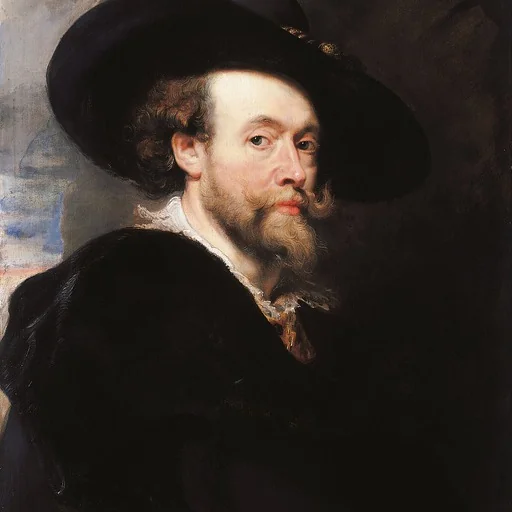
Sir Peter Paul Rubens ( ROO-bənz; Dutch: ; 28 June 1577 – 30 May 1640) was a Flemish artist and diplomat.