Artwork
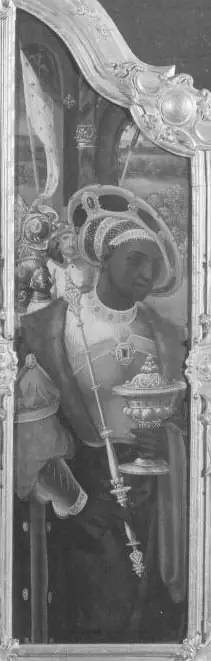
Balthazar, the African Magus
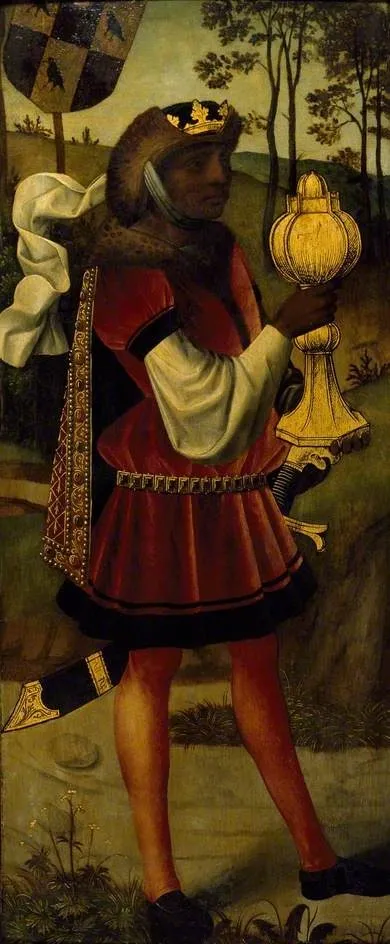
Balthazar, the African Magus is an oil painting by the Northern Renaissance artist Unknown. It dates from 1500 and is held in the collection of the Ashmolean Museum.
About this work
Overview
Balthazar, the African Magus is an oil painting portraying a dark-skinned figure identified as Balthazar, one of the Three Magi. The subject is rendered in muted colors, predominantly browns, greens, and golds, set against a landscape background.
Subject & Meaning
The painting depicts Balthazar wearing regal attire—a red robe with a black hem, white shirt, and a fur-trimmed hat crowned with gold. He holds a gold object (likely a gift or symbol of his status) in his left hand and a sword in his right, with a red and gold sash draped over his left shoulder. These elements signify his role as a wise and powerful Magus.
Technique & Style
The artist employed oil paint to achieve a muted color palette, emphasizing earthy tones and subtle gold accents. The style suggests a focus on solemnity and dignity, characteristic of depictions of religious figures from the period.
History & Provenance
No specific historical or provenance details are provided for this painting, leaving its exact date, artist, and ownership history unspecified.
Context
The painting reflects the broader European artistic tradition of depicting the Three Magi, often emphasizing their diverse origins. Balthazar’s African representation aligns with this narrative of global homage to Christianity.
Legacy
Without specific attribution or date, the painting’s direct influence or place within art historical canons cannot be precisely determined. However, it contributes to the visual legacy of Magi representations in Christian art.
Artist & collection

 Domestic Scene
 Giacomo and Cardinal Marco, investing Andrea, Abbot of San Zeno, with his Benefice
 The Nymph of Fontainebleau
 Portrait of a Woman
 Madonna and Child with Saints in the Enclosed Garden
 Venus and Minerva
 Family Group of Four on Sofa
 Wall painting from Room H of the Villa of P. Fannius Synistor at Boscoreale
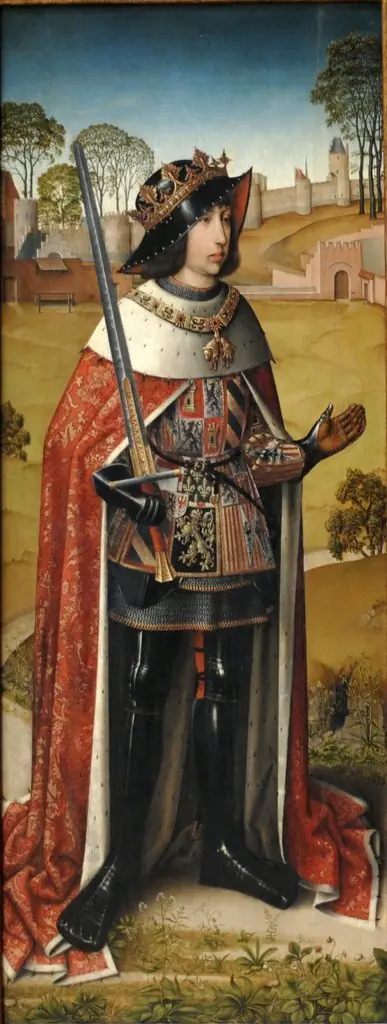 Philip the Fair
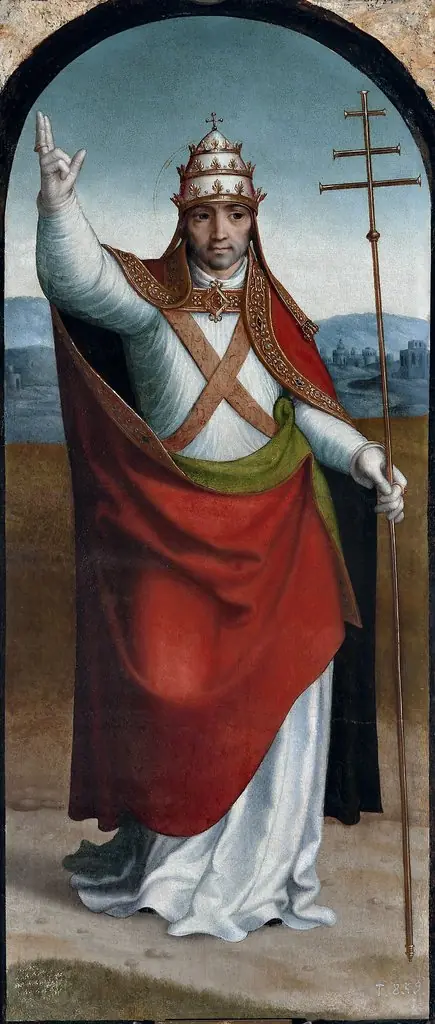 San Clemente Papa
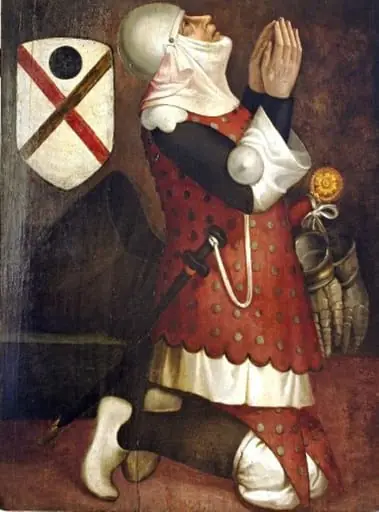 Cavaler cruciat
 Saint Michael
 Triptych: King Balthazar
 Saint Barbara
 Papa Gregorio Magno
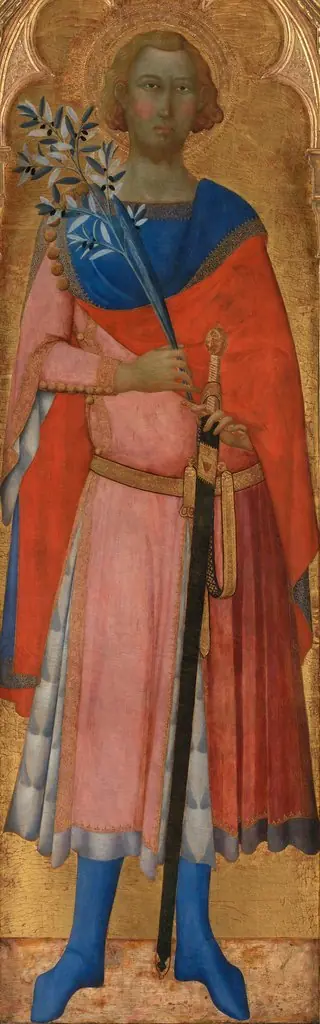 St Victor of Siena
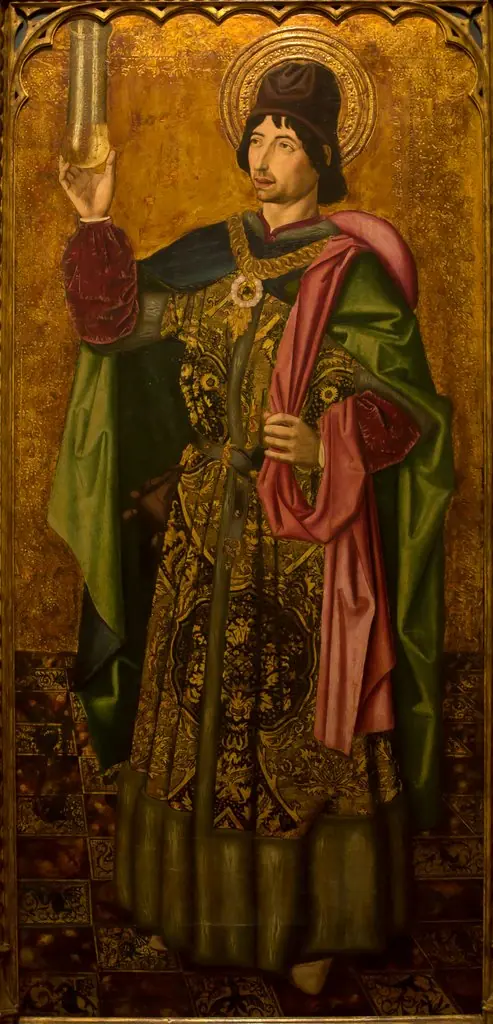 Saint Damian
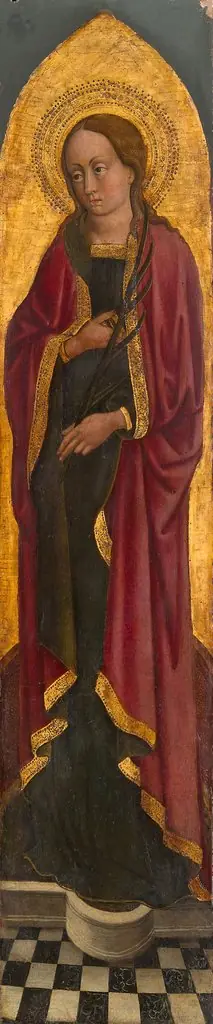 Saint Giustina of Padua from an Augustinian altarpiece
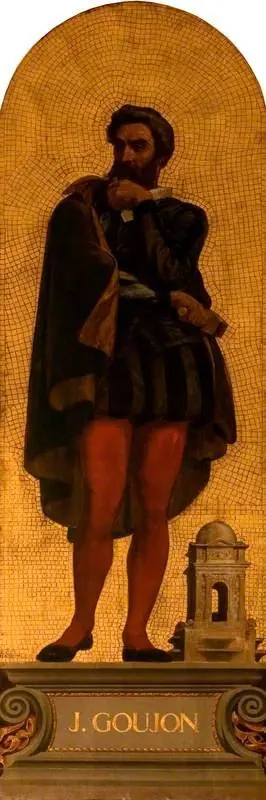 Jean Goujon (c.1510–1565) (design for a mosaic in the Victoria and Albert Museum)
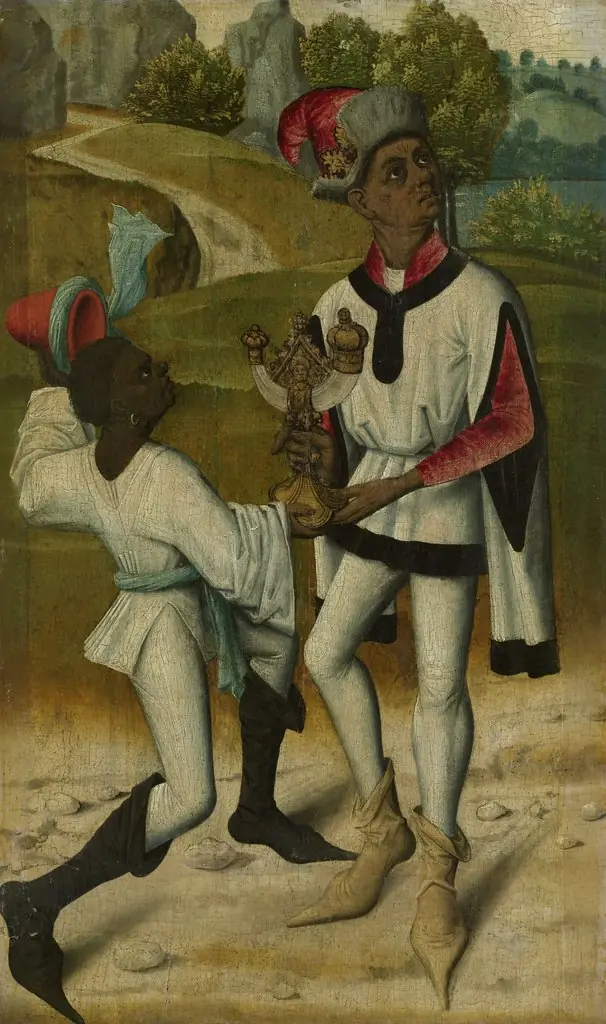 Balthazar, one of the three Magi, with a servant