Artwork
Child Holding a Dove
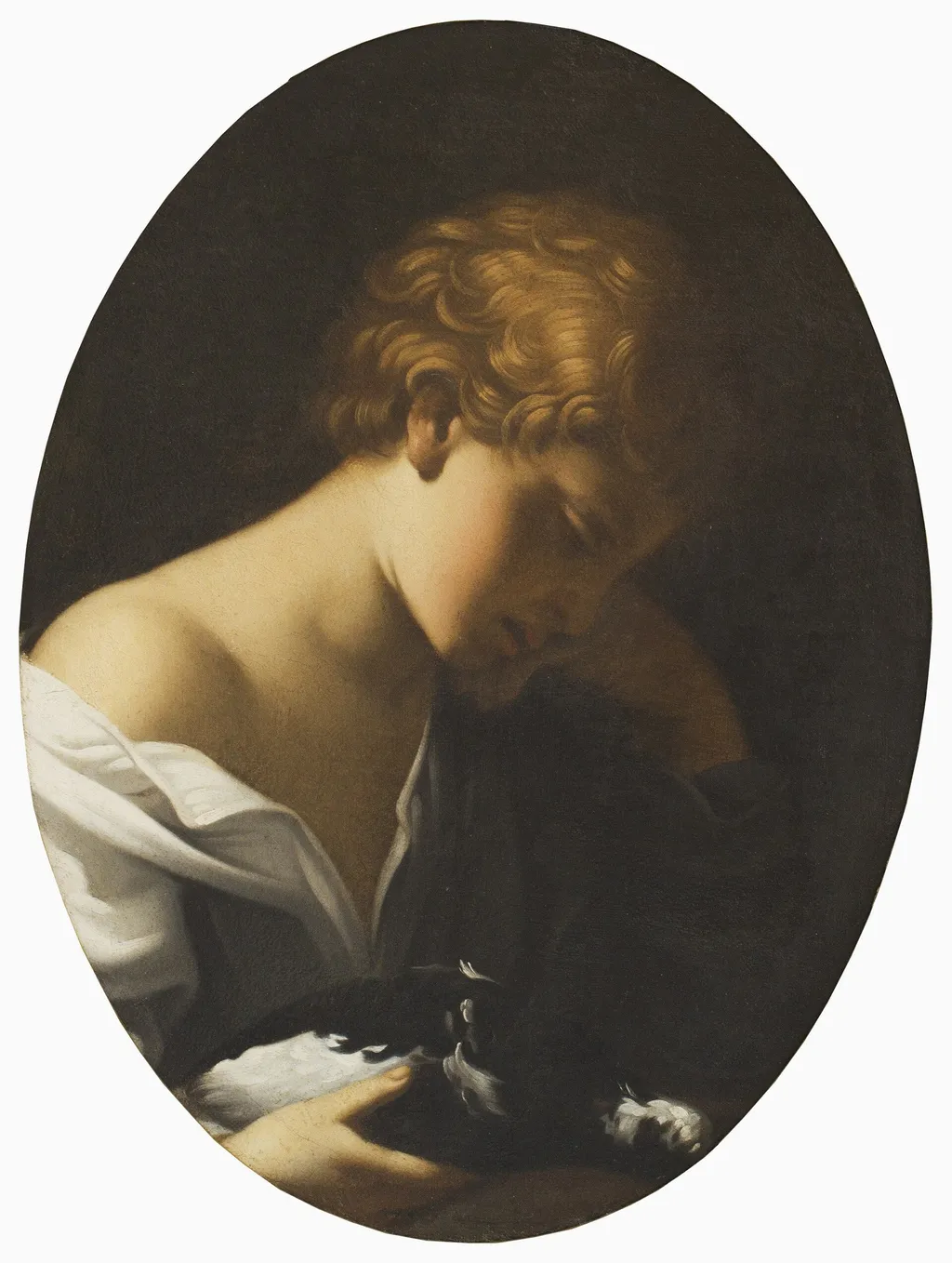
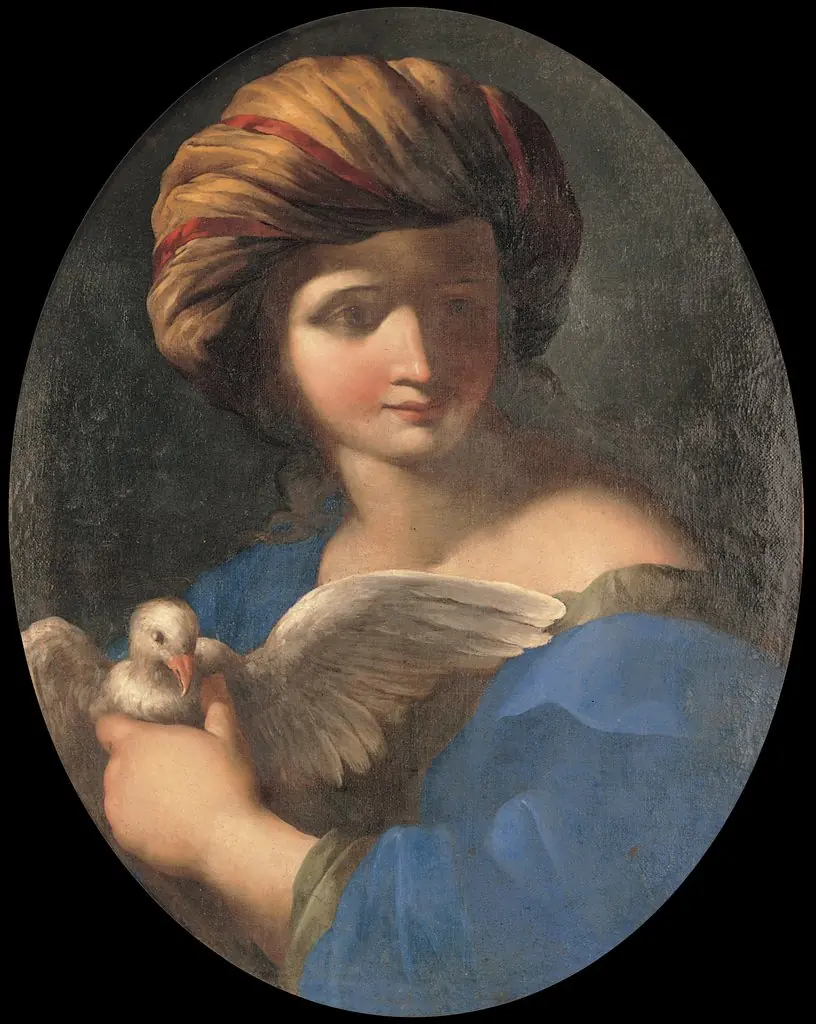
Child Holding a Dove is an oil painting by Unknown. It is held in the collection of the Nationalmuseum. This oil painting portrays a young boy, depicted from the chest upward, cradling a black-and-white dove.
About this work
Overview
The boy’s open collar and soft expression suggest innocence, while the dove’s poised stillness reinforces a moment of tender stillness.
This oil painting portrays a young boy, depicted from the chest upward, cradling a black-and-white dove. The dark background isolates the figures, drawing focus to their quiet interaction. The boy’s open collar and soft expression suggest innocence, while the dove’s poised stillness reinforces a moment of tender stillness. The composition relies on subtle lighting to define form and emotion without overt narrative.
Subject & Meaning
The boy and dove form a silent, reciprocal gaze, suggesting a bond beyond mere possession. The dove, often associated with peace or purity, is held gently, not as a symbol but as a living presence. The boy’s calm wonder implies a moment of intuitive connection, perhaps reflecting childhood’s unspoken empathy with nature. No religious or allegorical cues are overt, leaving interpretation open to observation.
Technique & Style
The artist employs chiaroscuro to model the boy’s form and the dove’s feathers, using sharp contrasts between light and shadow to create volume. The dark backdrop absorbs ambient light, enhancing the three-dimensionality of the figures. Brushwork is restrained, favoring smooth transitions in skin and fabric, while the dove’s plumage is rendered with delicate, varied strokes to suggest texture without detail.
History & Provenance
The painting’s origin and early ownership remain undocumented. It lacks a signature or dated inscription, and no exhibition records from the artist’s lifetime have been identified. It entered a public collection in the mid-20th century, likely acquired through private sale or bequest. Its attribution to a specific artist is based on stylistic comparison with known works of the period.
Context
Created during a time when intimate portraiture of children was gaining traction in European art, this work aligns with a broader trend of depicting youth with psychological nuance rather than idealization. Unlike formal portraits, it avoids props or settings, focusing instead on a private, unguarded moment. This reflects a shift toward naturalism and emotional subtlety in 18th- to 19th-century genre painting.
Legacy
Though not widely reproduced or studied, the painting contributes to a quieter lineage of domestic portraiture that values quiet observation over grandeur. Its emphasis on tenderness between child and animal resonates with later realist traditions. It remains a modest but resonant example of how light, gesture, and restraint can convey emotional depth without narrative exposition.
Artist & collection

 Domestic Scene
 Giacomo and Cardinal Marco, investing Andrea, Abbot of San Zeno, with his Benefice
 The Nymph of Fontainebleau
 Portrait of a Woman
 Madonna and Child with Saints in the Enclosed Garden
 Venus and Minerva
 Family Group of Four on Sofa
 Wall painting from Room H of the Villa of P. Fannius Synistor at Boscoreale