Artwork
Kunwar Sabal Singhji (reigned 1848-1881)
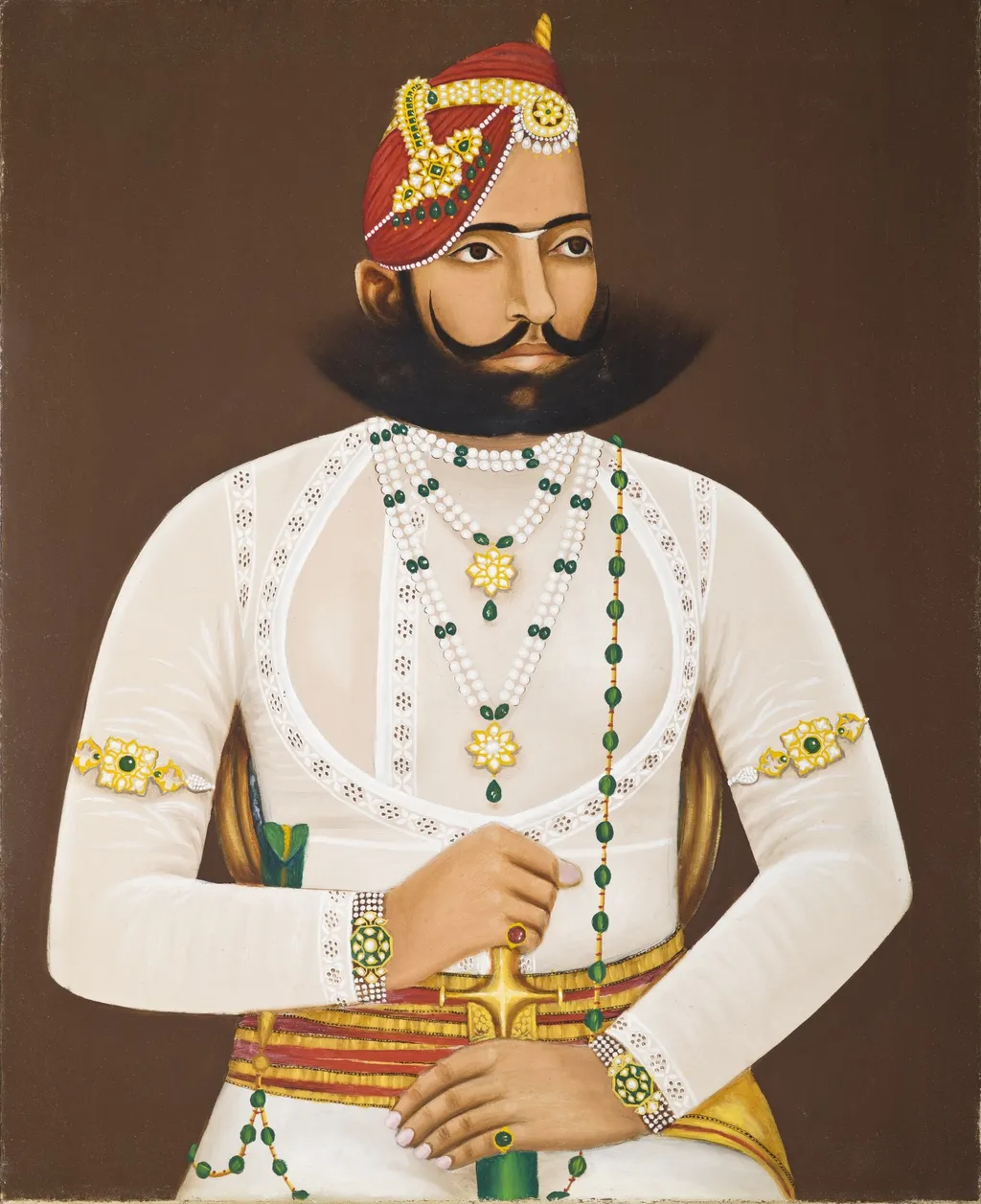
Kunwar Sabal Singhji (reigned 1848-1881) is an unspecified painting by Unknown. It dates from 1896 and is held in the collection of the Los Angeles County Museum of Art. This portrait captures Kunwar Sabal Singhji, a ruler of the princely state of Bikaner who reigned from 1848 to 1881.
About this work
Overview
Painted in the 19th century, it presents him in full regalia, emphasizing his status through elaborate clothing and jewelry.
This portrait captures Kunwar Sabal Singhji, a ruler of the princely state of Bikaner who reigned from 1848 to 1881. Painted in the 19th century, it presents him in full regalia, emphasizing his status through elaborate clothing and jewelry. The composition centers on his upper body, with careful attention to facial expression and adornment, reflecting both personal identity and royal authority within a North Indian courtly tradition.
Subject & Meaning
Kunwar Sabal Singhji is depicted not merely as an individual but as a symbol of sovereignty. His jeweled turban, gold belt with green gemstone, and beaded necklace signify rank and wealth, while the beard and mustache align with contemporary ideals of masculine authority. The portrait functions as a visual assertion of lineage and power, intended for display within courtly or ceremonial contexts to reinforce his position among peers and subjects.
Technique & Style
The artist employs chiaroscuro to model the face and torso, creating a three-dimensional effect against a flat background. Fine brushwork renders the textures of silk, metal, and gemstones with precision, while the red turban and white shirt contrast sharply to draw focus. Color is used symbolically and decoratively, with green accents in the gemstones and beads adding visual rhythm without overwhelming the composition’s formal dignity.
History & Provenance
The painting likely originated in the Bikaner court studio, where artists served royal patrons with portraiture and illustrated manuscripts. It was probably commissioned during Sabal Singhji’s reign to commemorate his rule or for use in palace collections. Its survival suggests it remained in family or state custody, possibly transferred to institutional care in the 20th century as princely states were integrated into modern India.
Context
Created during British colonial influence in India, this portrait reflects a continued investment in indigenous courtly traditions despite political change. While European techniques like chiaroscuro were adopted, the iconography—jewelry, turban style, and posture—remains rooted in Rajasthani and Mughal precedents. The work illustrates how regional rulers adapted artistic forms to assert cultural continuity amid shifting power structures.
Legacy
The portrait stands as a record of 19th-century North Indian elite aesthetics and the persistence of local artistic practices under colonial rule. It contributes to scholarly understanding of how Indian rulers used visual culture to maintain legitimacy. Today, it serves as a historical artifact, offering insight into the material culture and self-representation of princely states during a period of profound transformation.
Artist & collection

 Domestic Scene
 Giacomo and Cardinal Marco, investing Andrea, Abbot of San Zeno, with his Benefice
 The Nymph of Fontainebleau
 Portrait of a Woman
 Madonna and Child with Saints in the Enclosed Garden
 Venus and Minerva
 Family Group of Four on Sofa
 Wall painting from Room H of the Villa of P. Fannius Synistor at Boscoreale
 Maharaja Sawai Jagat Singh
 Thakur Yaswanta Singhji (reigned 1688-1707)
 Maharaja Sawai Banai Singh
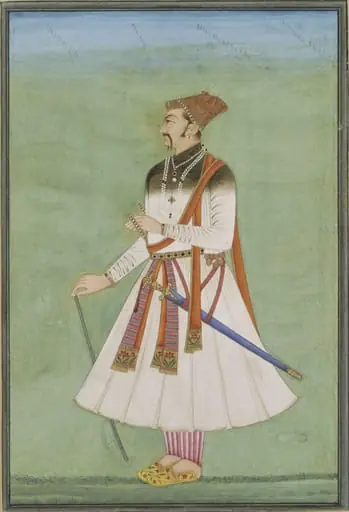 Raja Rawal Sabal Singh Bhatti
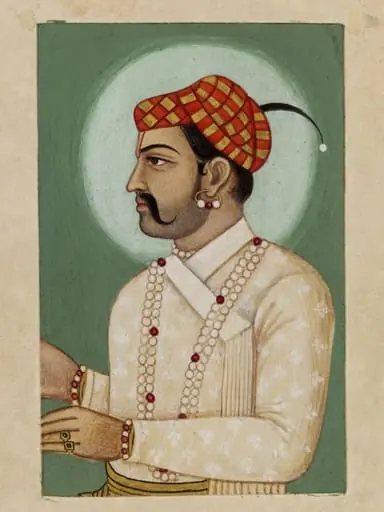 Maharaja Bhao Singh
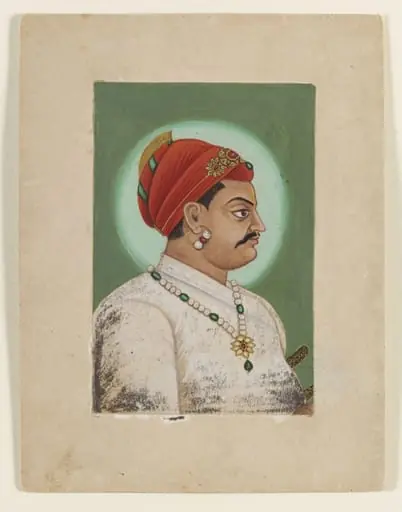 Maharaja Sawai Isri Singh
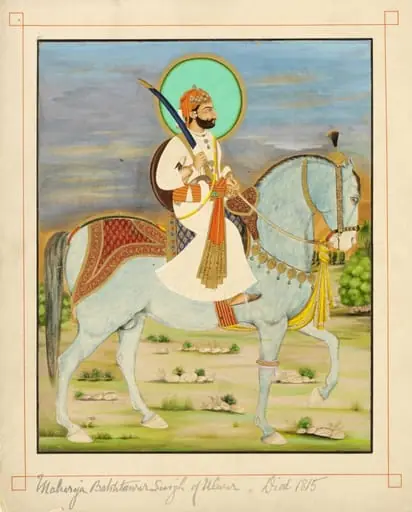 Maharaja Bakhtawar Singh
 Jaswant Singh of Jodhpur (reigned 1635–1678)
 Jaswant Singh of Jodhpur (reigned 1635–1678)
 Kharak Singh
 Maharaja Shiraj Rawatji Sri Pirthi Singh