Artwork
Jaswant Singh of Jodhpur (reigned 1635–1678)
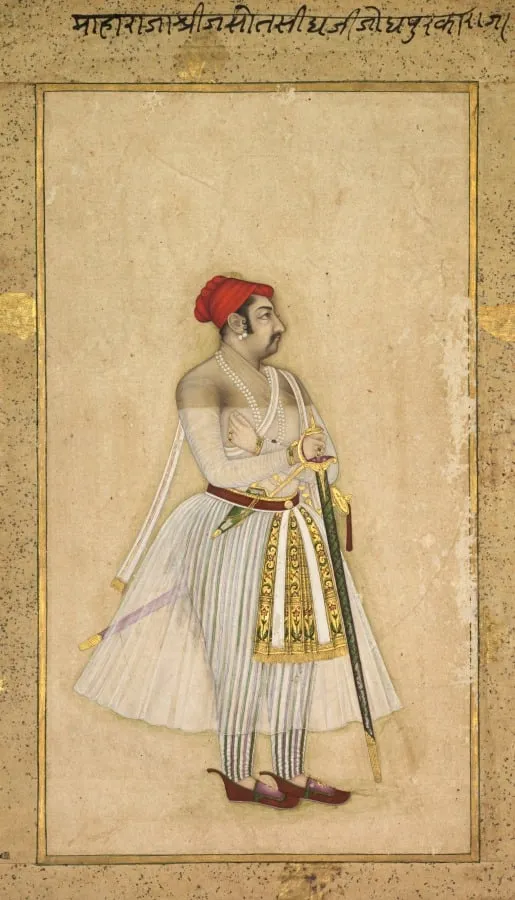
Jaswant Singh of Jodhpur (reigned 1635–1678) is an unspecified painting by the Baroque artist Unknown. It dates from 1662 and is held in the collection of the Cleveland Museum of Art.
About this work
Overview
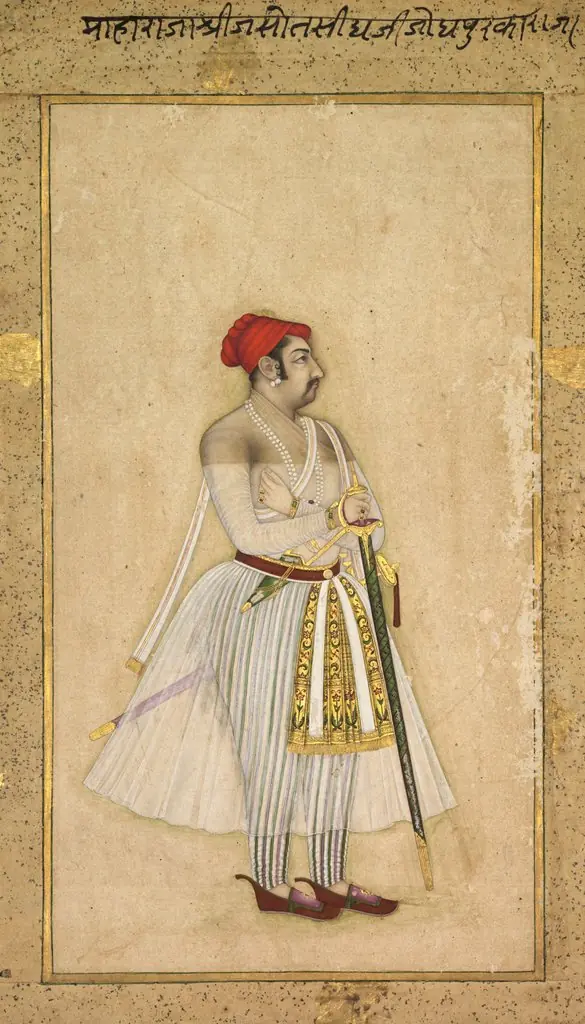
This portrait depicts Jaswant Singh, the Rajput ruler of Jodhpur, who held high military rank in the Mughal court during the reigns of Shah Jahan and Aurangzeb.
This portrait depicts Jaswant Singh, the Rajput ruler of Jodhpur, who held high military rank in the Mughal court during the reigns of Shah Jahan and Aurangzeb. Painted in the Mughal style, it emphasizes his dual identity as both a regional sovereign and an imperial officer. His attire, weapons, and decorative details reflect the visual language of Mughal aristocracy, signaling his integration into the empire’s power structure.
Subject & Meaning
Jaswant Singh is portrayed as a loyal servant of the Mughal state, armed with two swords and a dagger—symbols of his military role. The inclusion of flowering vines at the end of his sash references a courtly fashion initiated by Shah Jahan, linking him to imperial aesthetics. The image conveys political alignment: his authority as a Hindu prince is framed within Mughal norms, reinforcing his status as a trusted ally rather than a rival.
Technique & Style
The painting employs fine brushwork to render intricate embroidery, metallic threads, and delicate floral motifs with precision. Shading and modeling follow Mughal conventions, lending volume and realism to the figure’s form and garments. The attention to textile detail—especially the goldwork on his coat—demonstrates a technical mastery aligned with imperial workshops, while the composition adheres to the formal portraiture traditions of the Mughal court.
History & Provenance
Commissioned during Jaswant Singh’s service under Shah Jahan and Aurangzeb, the portrait likely originated in a Mughal atelier or a regional studio influenced by imperial styles. It may have been created to affirm his loyalty or to commemorate his military appointments. The painting’s survival suggests it remained in the possession of his lineage or was preserved within Mughal collections before entering modern institutional care.
Context
In the 17th century, Mughal rulers routinely integrated Rajput elites into their administration, granting them military command in exchange for political loyalty. Jaswant Singh’s portrait reflects this strategy: his regalia blends Rajput identity with Mughal symbolism. The adoption of imperial fashions, such as the sash flowers, was a visual gesture of alignment, helping to stabilize relations between the central court and powerful regional dynasties.
Legacy
The portrait stands as a testament to the cultural and political negotiations between Mughal and Rajput courts. It illustrates how regional rulers adopted imperial visual codes to assert legitimacy within a broader imperial framework. Such images helped shape perceptions of loyalty and power, influencing later portraiture in North Indian courts and preserving a complex record of alliance rather than conquest.
Artist & collection

 Domestic Scene
 Giacomo and Cardinal Marco, investing Andrea, Abbot of San Zeno, with his Benefice
 The Nymph of Fontainebleau
 Portrait of a Woman
 Madonna and Child with Saints in the Enclosed Garden
 Venus and Minerva
 Family Group of Four on Sofa
 Wall painting from Room H of the Villa of P. Fannius Synistor at Boscoreale