Artwork
Tantric Manuscript "Sangrahani Sutra"
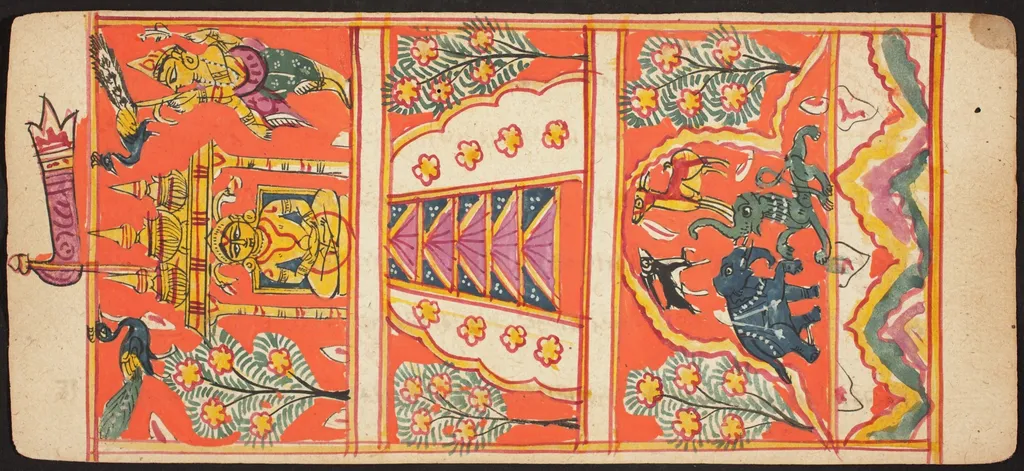
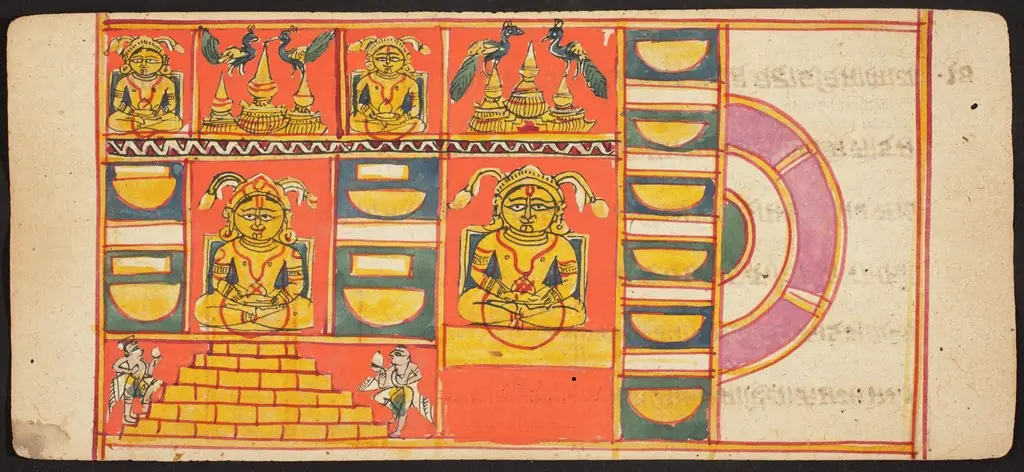
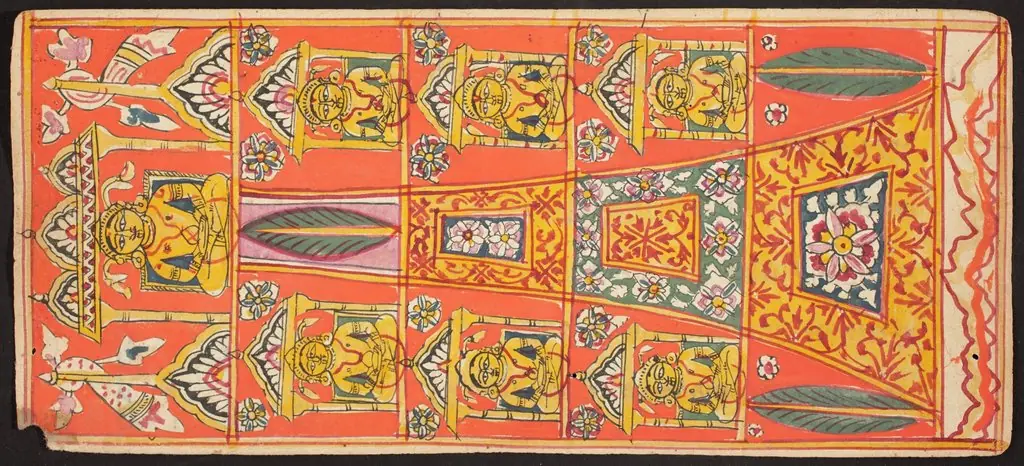
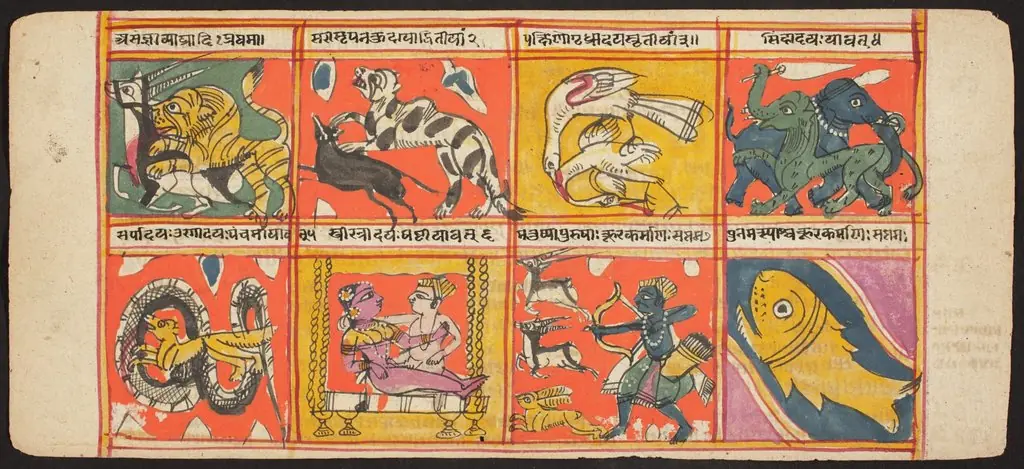
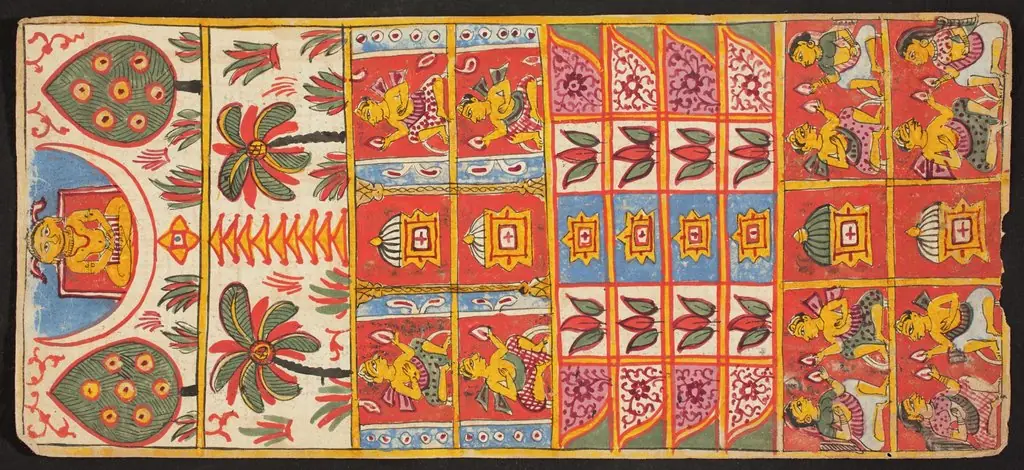
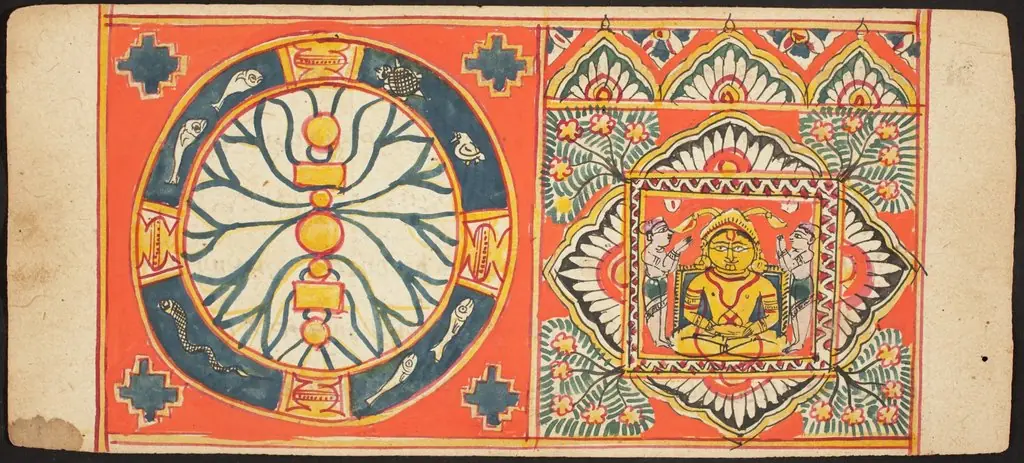
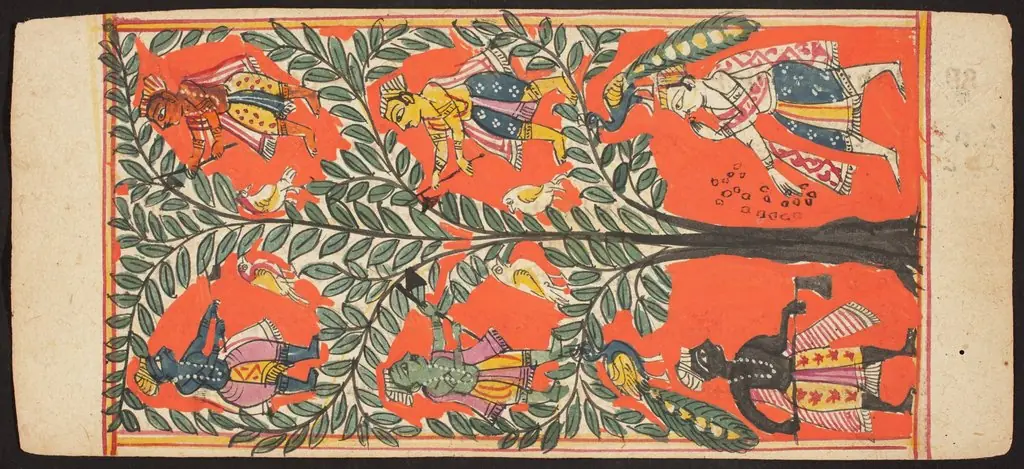
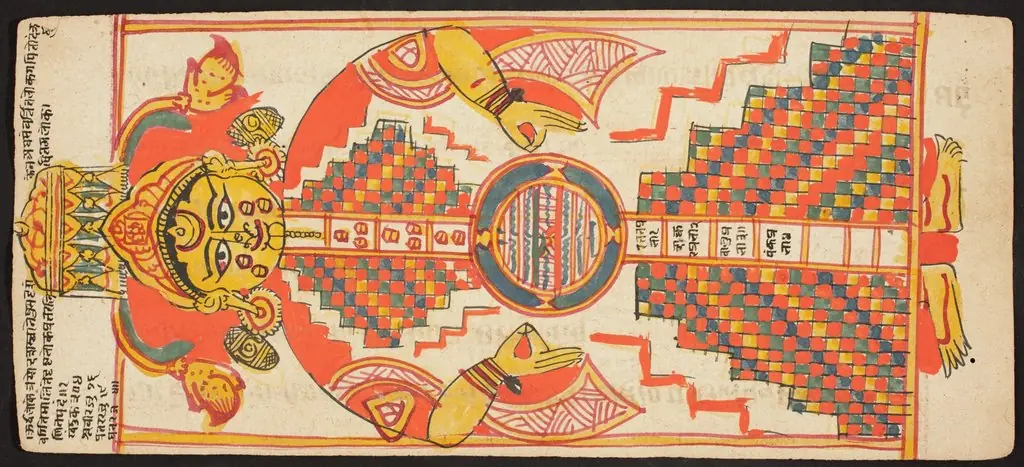
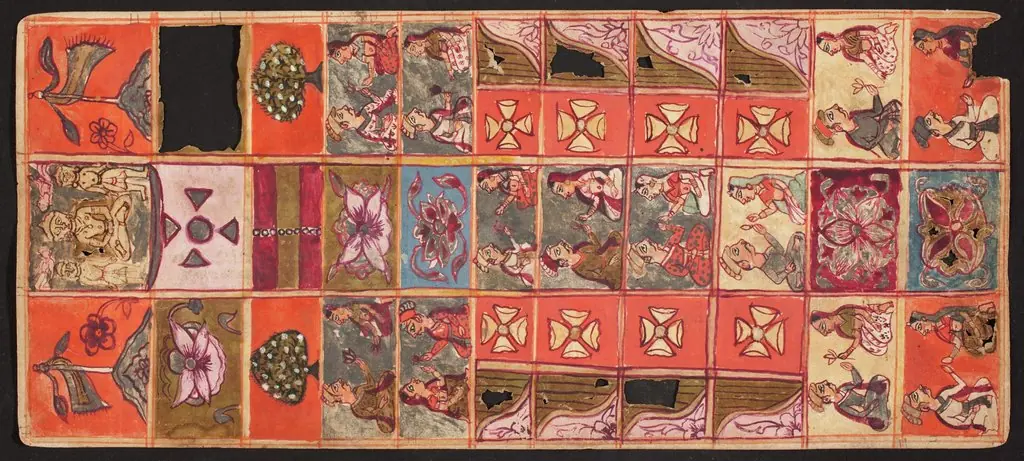
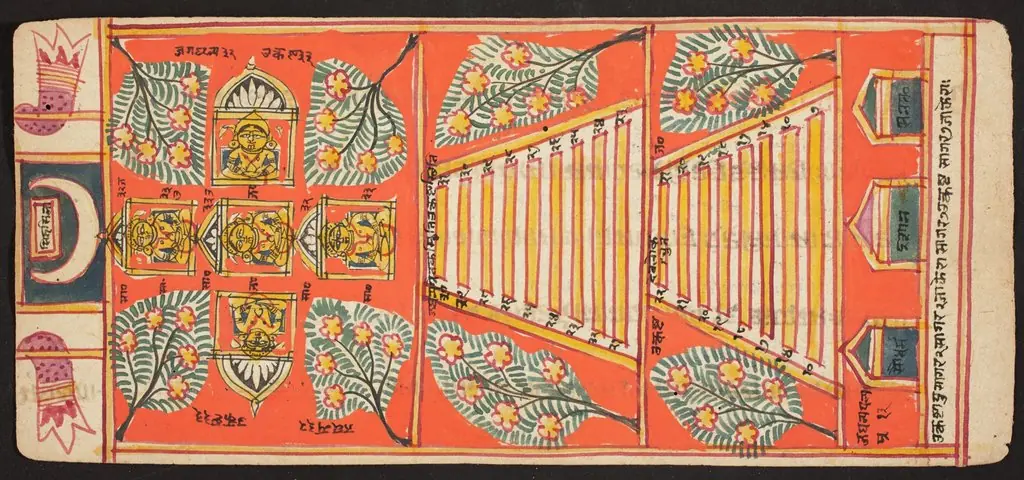
Tantric Manuscript "Sangrahani Sutra" is an unspecified painting by Unknown. It is held in the collection of the Detroit Institute of Arts. This painted manuscript folio originates from a Tantric Buddhist text known as the Sangrahani Sutra.
About this work
Overview
It is structured in three distinct horizontal panels, each illustrating a separate ritual or symbolic scene.
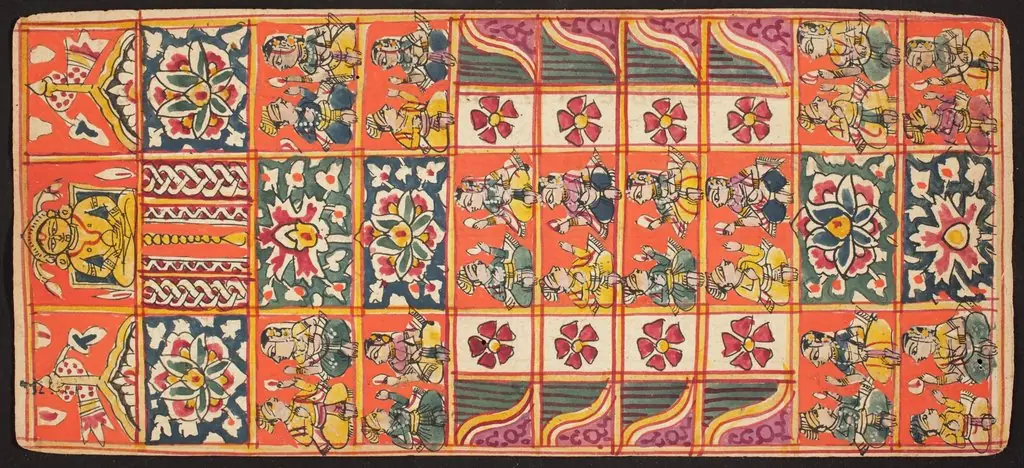
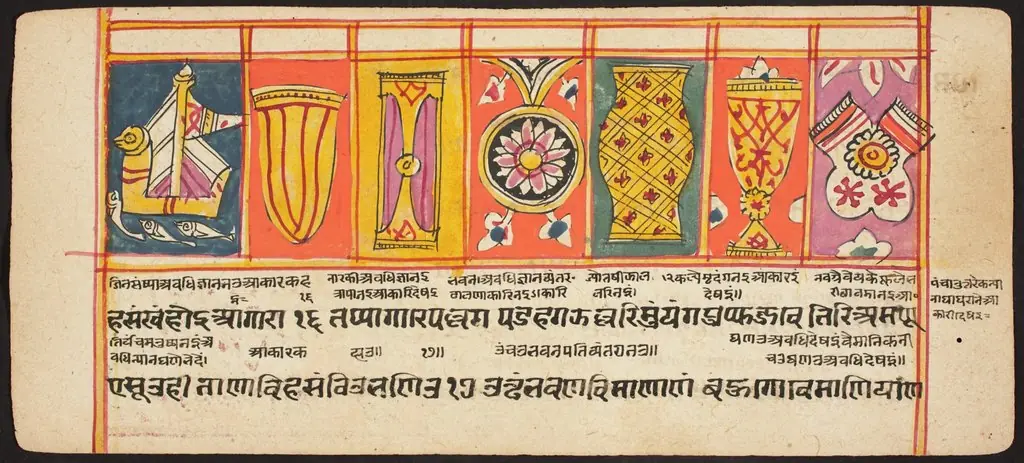
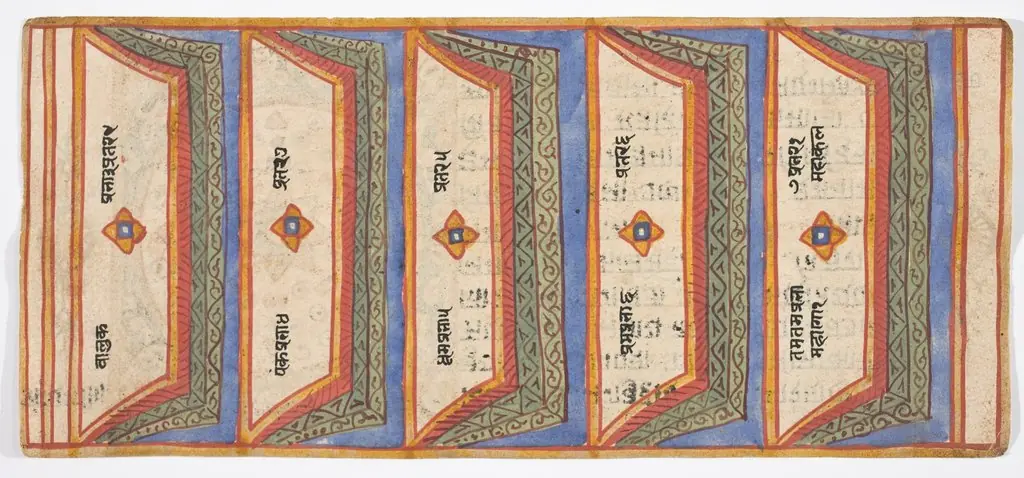
This painted manuscript folio originates from a Tantric Buddhist text known as the Sangrahani Sutra. It is structured in three distinct horizontal panels, each illustrating a separate ritual or symbolic scene. Executed with fine brushwork and mineral pigments, the composition emphasizes sacred figures and celestial elements within a tightly organized spatial framework typical of Himalayan manuscript illumination.
Subject & Meaning
The left panel presents a crowned figure holding a curved ritual object, flanked by a peacock and a hovering devotee, suggesting divine authority and spiritual ascent. The central scene shows a seated figure on a throne amid floral motifs, likely representing a meditative deity or enlightened teacher. The right panel depicts a rider on an elephant, with a figure on the ground and a bird aloft, symbolizing the journey from earthly devotion to transcendent insight.
Technique & Style
The painting employs mineral pigments in vivid reds, yellows, and greens, applied with precision to intricate patterns on garments and backgrounds. Fine lines define facial features and ornamental details, while flat, layered planes create depth without perspective. The style reflects the conventions of 15th-century Tibetan or Nepalese manuscript art, prioritizing symbolic clarity over naturalistic representation.
History & Provenance
The folio was likely produced in the Himalayan region during the late medieval period as part of a larger devotional manuscript. It entered the collection of the Detroit Institute of Arts through documented acquisition, though its exact provenance prior to the 20th century remains unrecorded. Its preservation suggests it was valued as a sacred object before becoming a museum artifact.
Context
Tantric Buddhist manuscripts like this one served as visual aids for meditation and ritual practice, encoding complex cosmologies through iconography. The scenes reflect esoteric teachings where deities, animals, and gestures convey spiritual states. Such folios were often carried by monks or kept in temple libraries, used intermittently during ceremonies rather than displayed continuously.
Legacy
As a surviving example of Himalayan manuscript painting, this folio contributes to the understanding of how Buddhist teachings were visually transmitted across centuries. Its presence in a Western museum underscores the global circulation of religious art, while its preservation allows continued study of iconographic traditions that remain active in Himalayan Buddhist communities today.
Artist & collection

 Domestic Scene
 Giacomo and Cardinal Marco, investing Andrea, Abbot of San Zeno, with his Benefice
 The Nymph of Fontainebleau
 Portrait of a Woman
 Madonna and Child with Saints in the Enclosed Garden
 Venus and Minerva
 Family Group of Four on Sofa
 Wall painting from Room H of the Villa of P. Fannius Synistor at Boscoreale
 Tantric Manuscript "Sangrahani Sutra"
 Tantric Manuscript "Sangrahani Sutra"
 Tantric Manuscript "Sangrahani Sutra"
 Tantric Manuscript "Sangrahani Sutra"
 Tantric Manuscript "Sangrahani Sutra"
 Tantric Manuscript "Sangrahani Sutra"
 Tantric Manuscript "Sangrahani Sutra"
 Tantric Manuscript "Sangrahani Sutra"
 Tantric Manuscript "Sangrahani Sutra"
 Tantric Manuscript "Sangrahani Sutra"
 Tantric Manuscript, "Sangrahani Sutra"
 Tantric Manuscript "Sangrahani Sutra"