Artwork
Text page from a Tuti-nama (Tales of a Parrot)
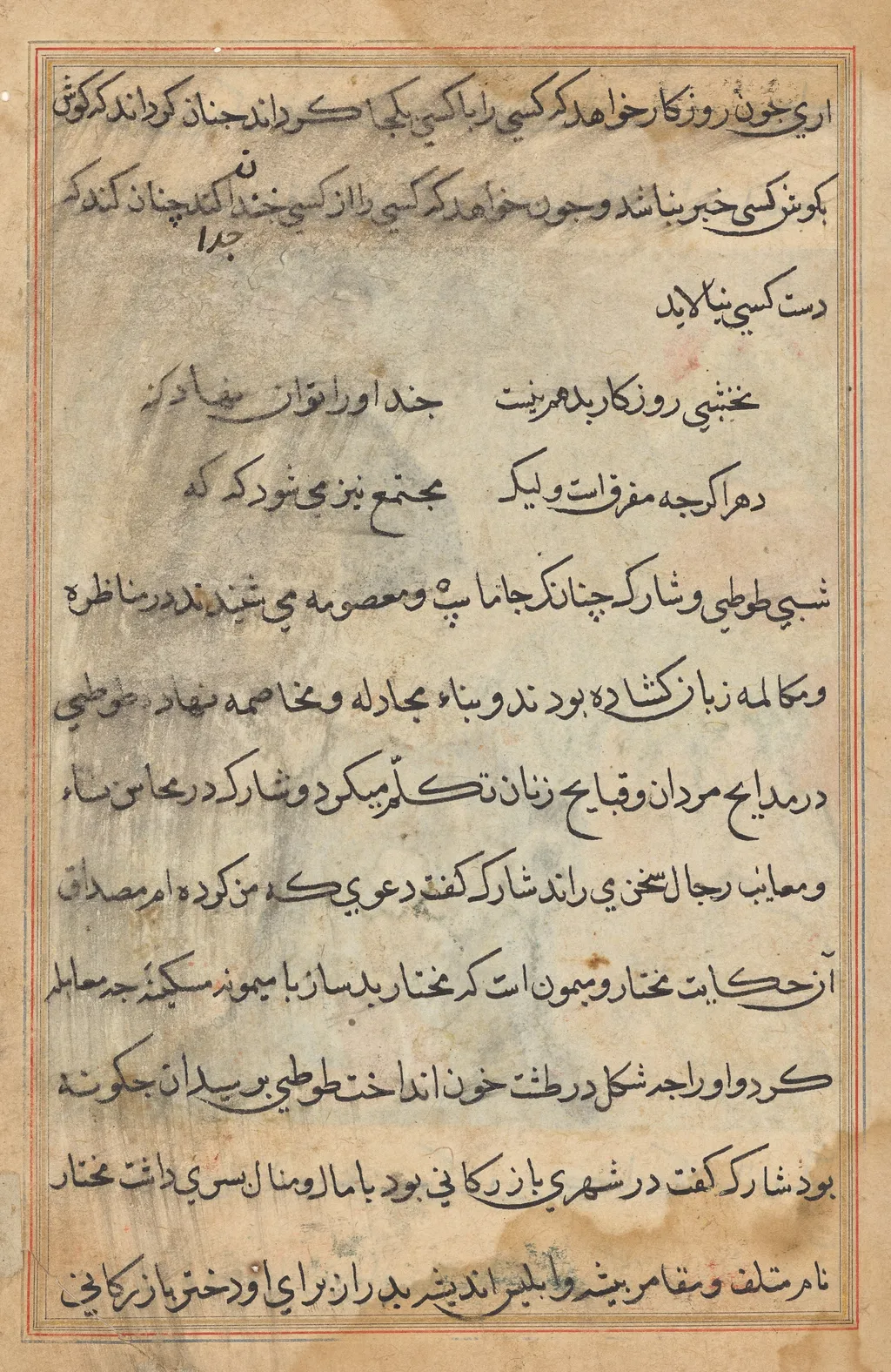
Text page from a Tuti-nama (Tales of a Parrot) is an unspecified painting. It dates from 1560 and is held in the collection of the Cleveland Museum of Art. The object is a single folio from a Persian manuscript titled *Tuti-nama* ("Tales of a Parrot").
About this work
Overview
The object is a single folio from a Persian manuscript titled *Tuti-nama* ("Tales of a Parrot"). The page is composed entirely of black calligraphic script arranged in tight, orderly rows, bordered by thin red lines that frame the text. The paper exhibits the patina of age, with a warm yellowish hue and occasional ink spots where the pigment has faded or bled.
Subject & Meaning
*Tuti-nama* is a narrative work that recounts moral and allegorical stories featuring a parrot as a storyteller. The text on this leaf forms part of that larger literary tradition, intended to convey ethical lessons through the parrot’s dialogues and anecdotes, a common motif in Persian didactic literature.
Technique & Style
The manuscript’s paper, handmade and slightly yellowed, reflects the material standards of Persian book production in the early modern period.
The calligraphy follows a classic Persian script, likely Nastaʿlīq, noted for its fluid, curving strokes that create a rhythmic visual flow. The red marginal lines were added by the scribe to delineate the text block, a decorative convention that also aids readability. The manuscript’s paper, handmade and slightly yellowed, reflects the material standards of Persian book production in the early modern period.
History & Provenance
Handwritten Persian manuscripts such as this were typically produced by professional scribes for patrons, scholars, or collectors. While the specific origin of this folio is not recorded, its style and materials suggest it belongs to a series created for a private library, possibly in the Safavid or later era. The page now resides in a museum collection, where it is displayed alongside other historic Persian codices.
Artist & collection

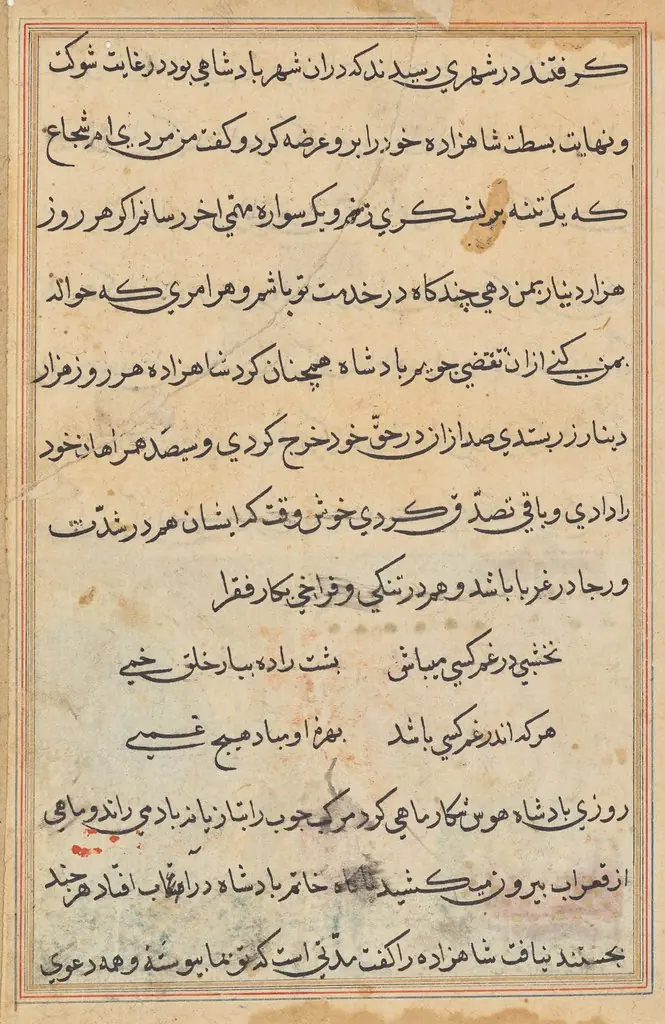 Page from Tales of a Parrot (Tuti-nama): text page
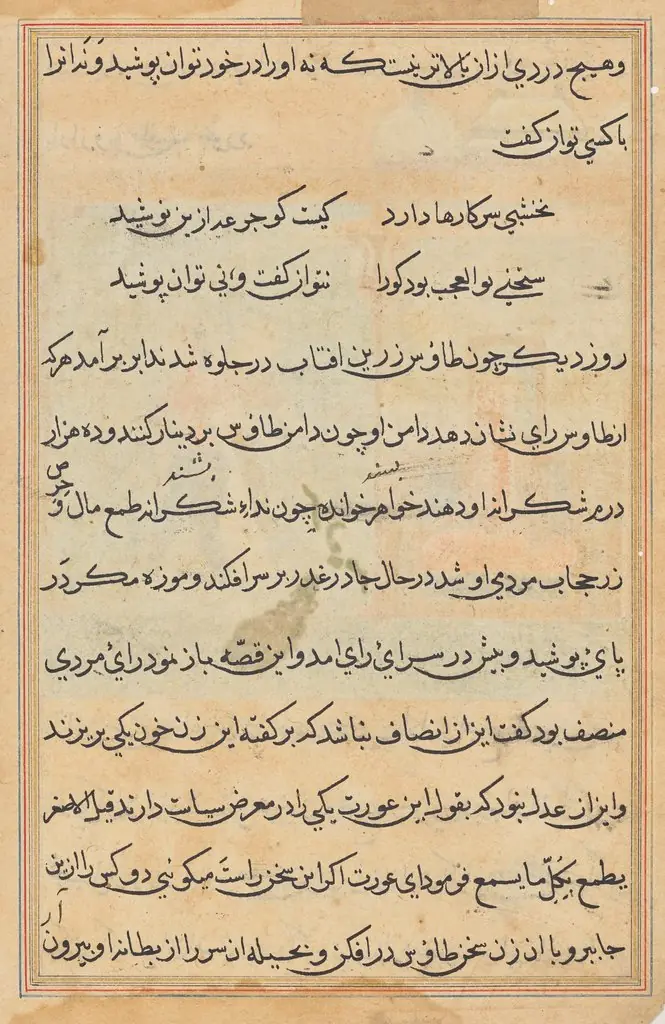 Page from Tales of a Parrot (Tuti-nama): text page
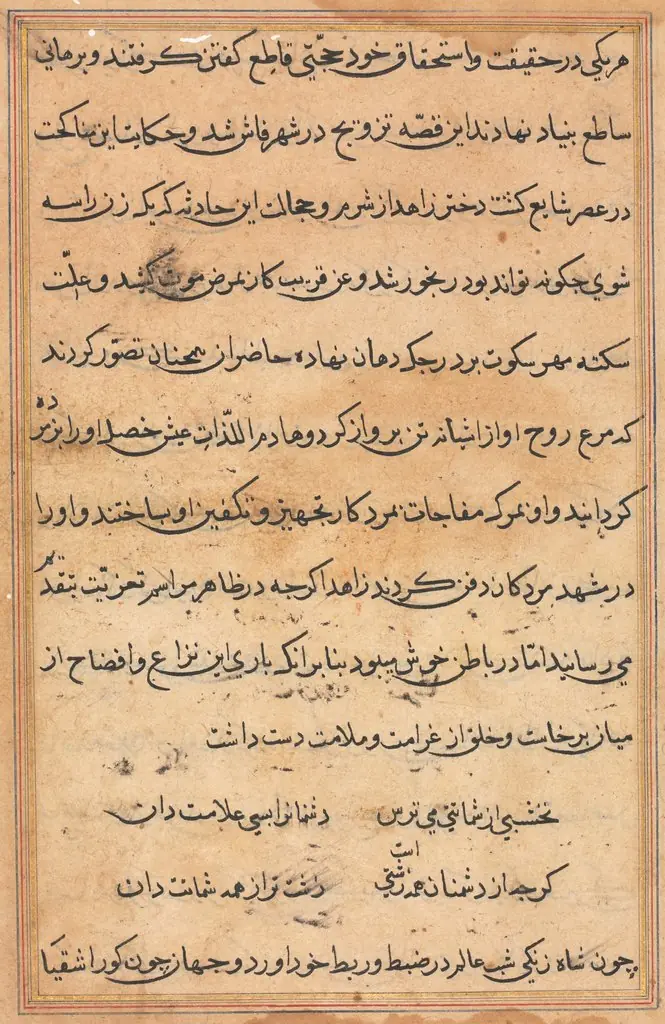 Page from Tales of a Parrot (Tuti-nama): text page
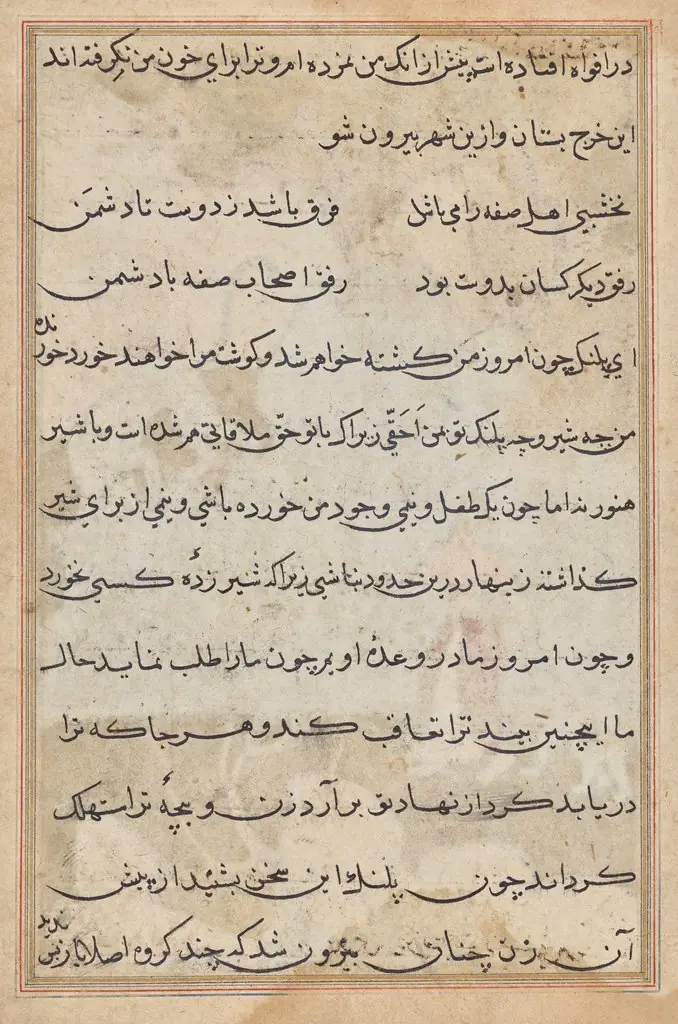 Page from Tales of a Parrot (Tuti-nama): text page
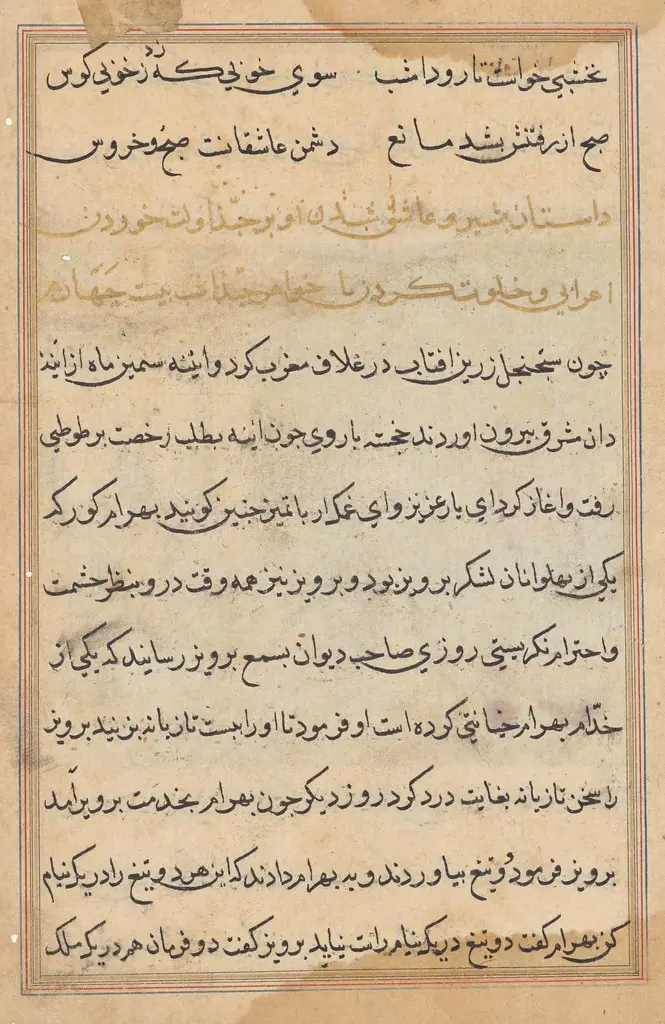 Page from Tales of a Parrot (Tuti-nama): text page
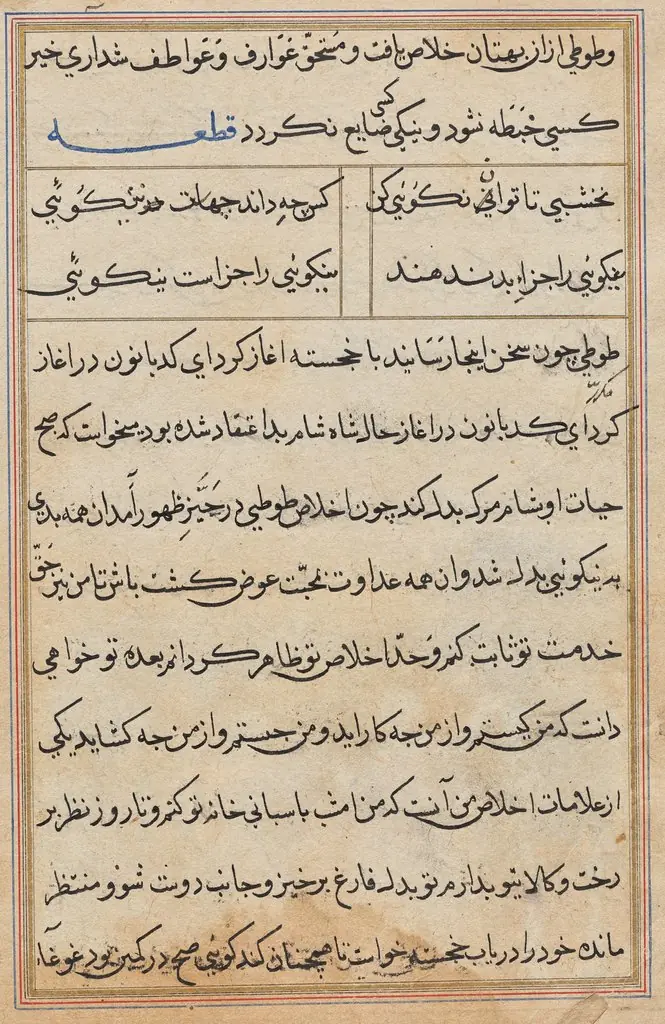 Page from Tales of a Parrot (Tuti-nama): text page
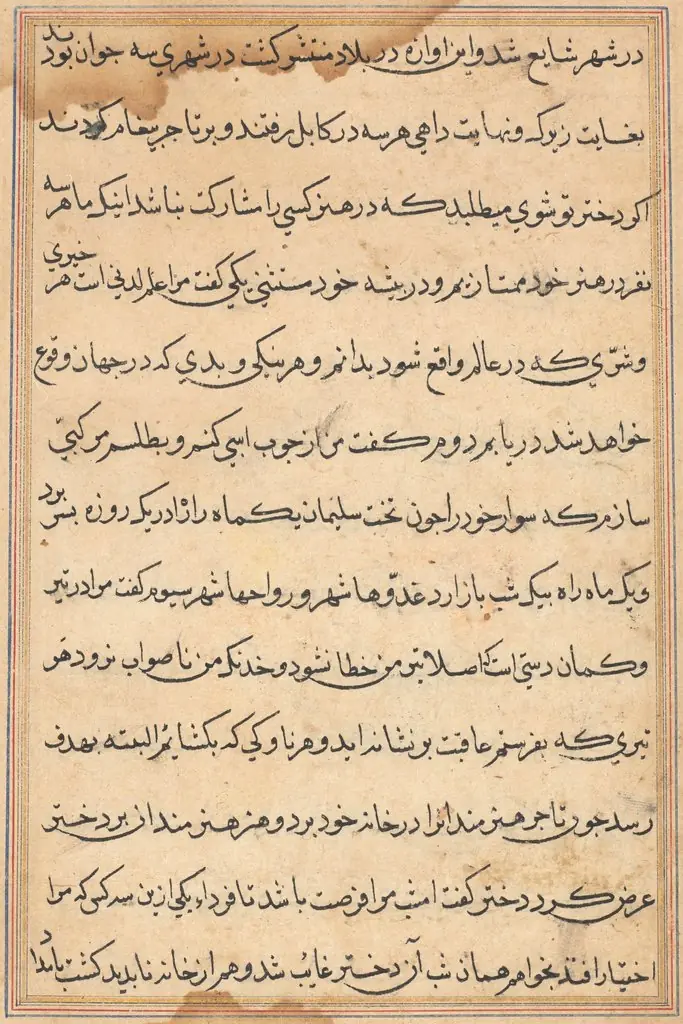 Page from Tales of a Parrot (Tuti-nama): text page
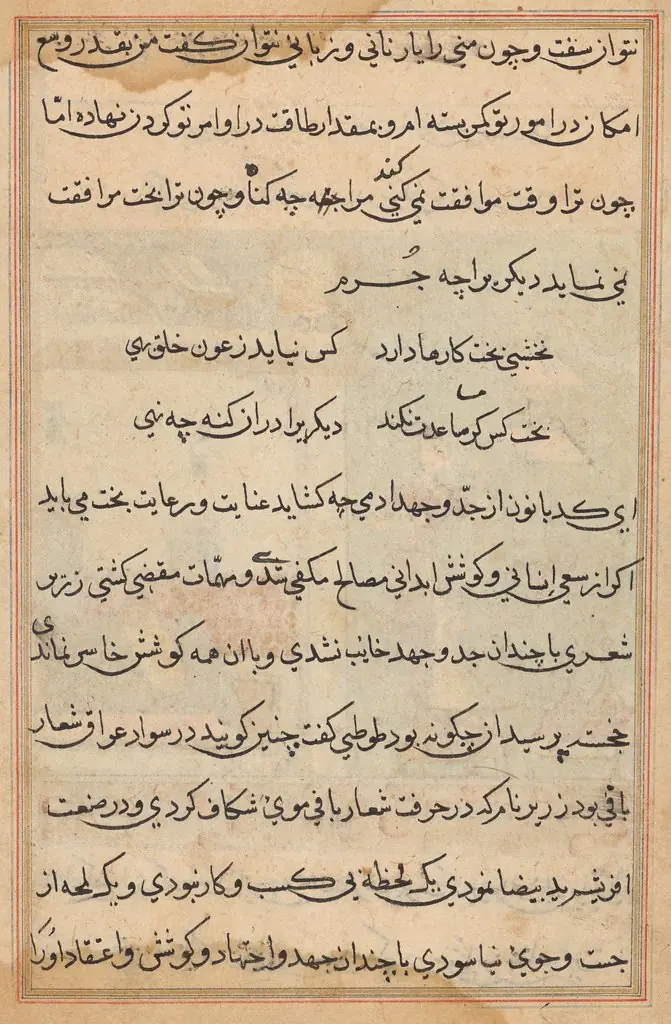 Tuti-Nama (Tales of a Parrot)
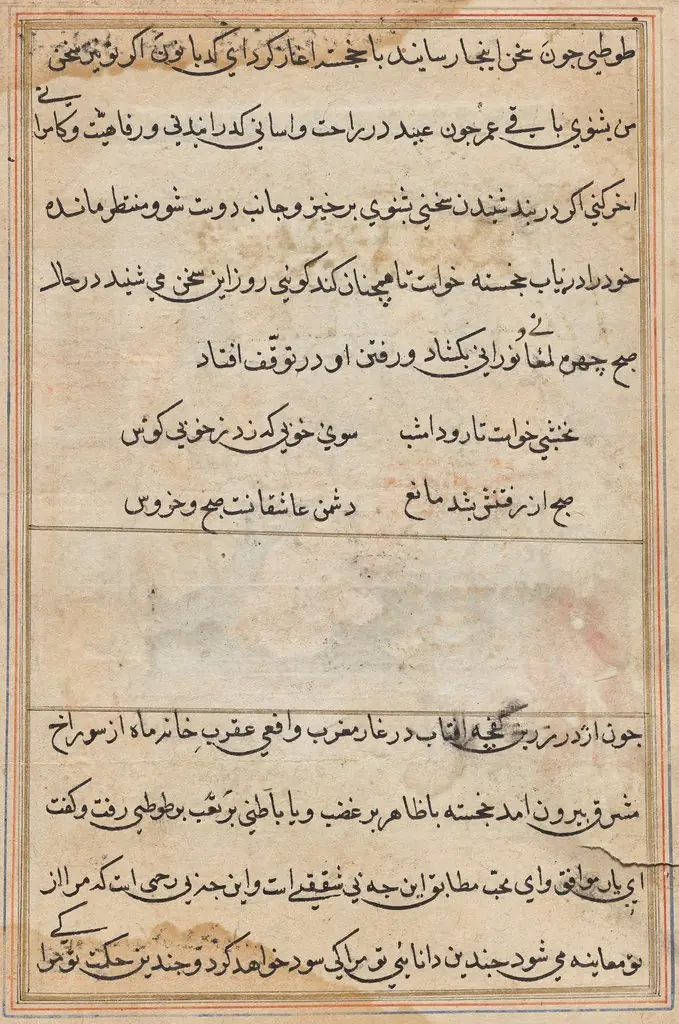 Page from Tales of a Parrot (Tuti-nama): text page
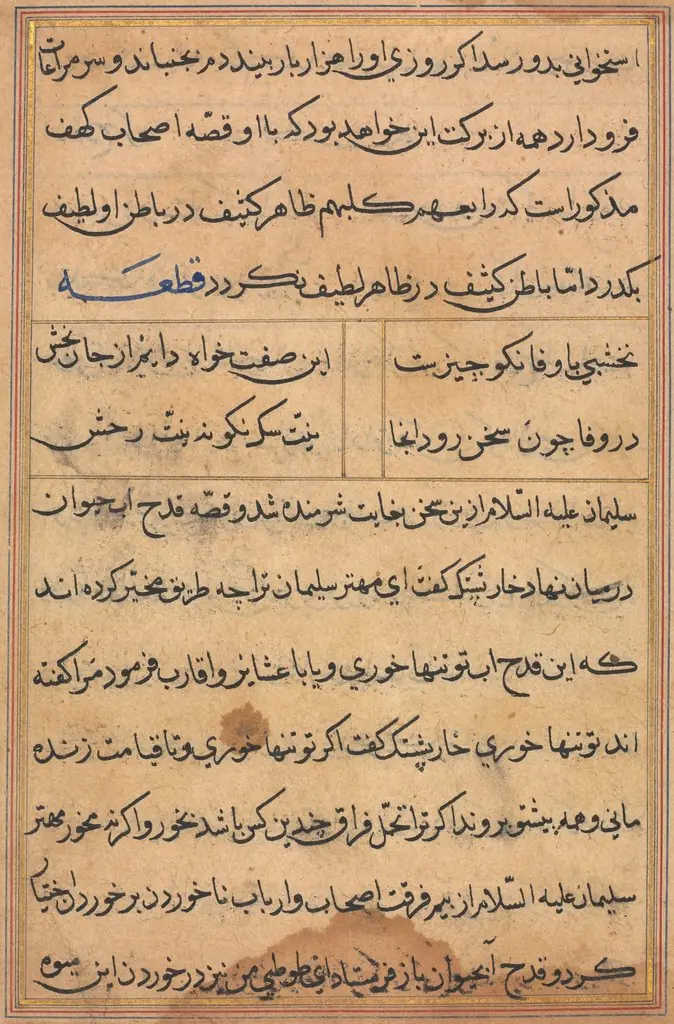 Page from Tales of a Parrot (Tuti-nama): text page
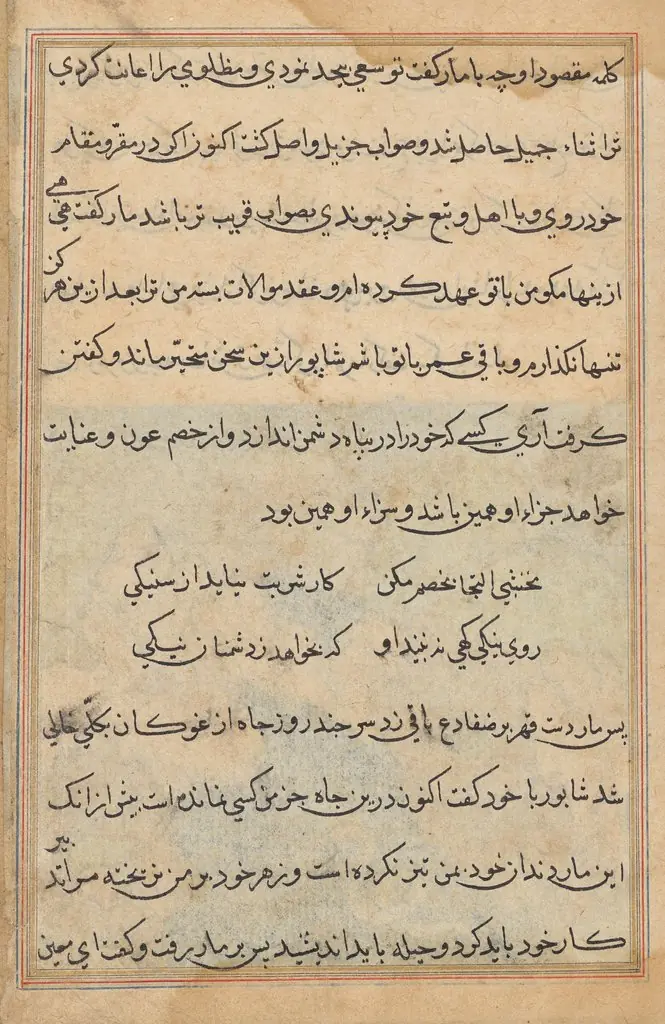 Page from Tales of a Parrot (Tuti-nama): text page