Artwork
Page from Tales of a Parrot (Tuti-nama): text page
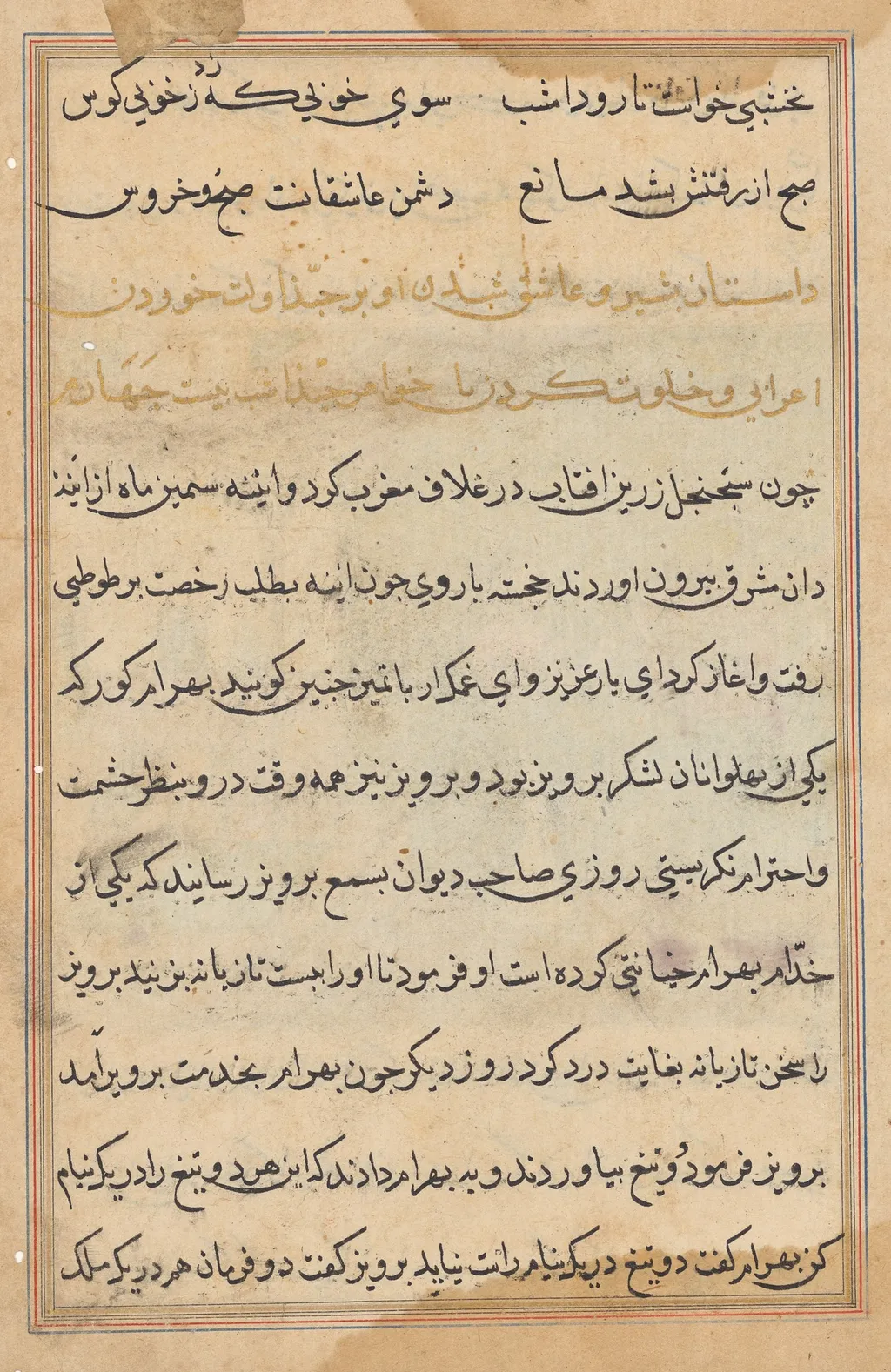
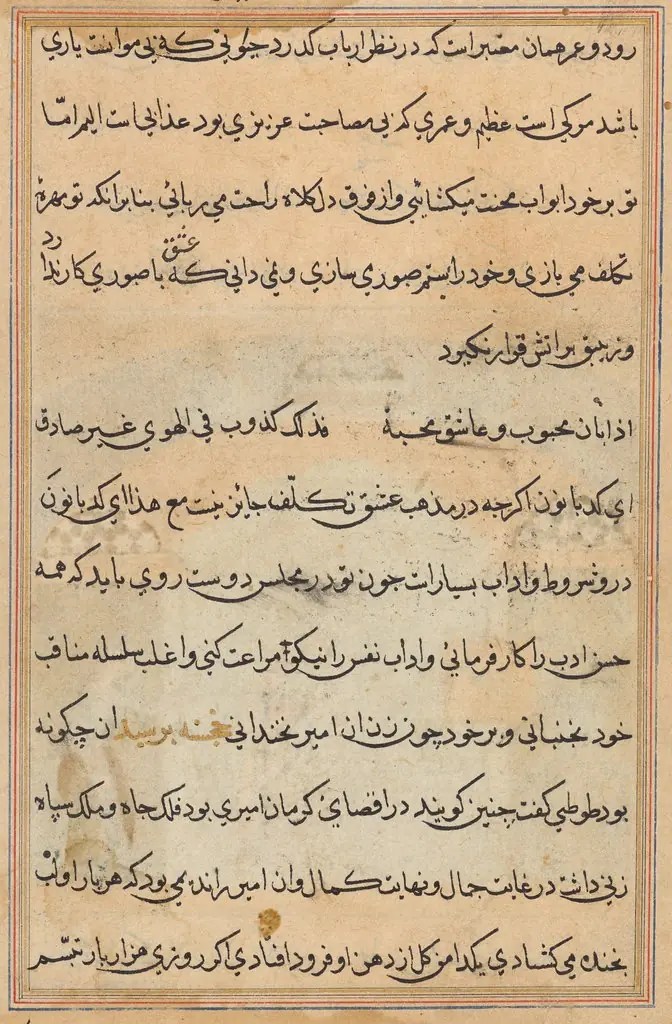
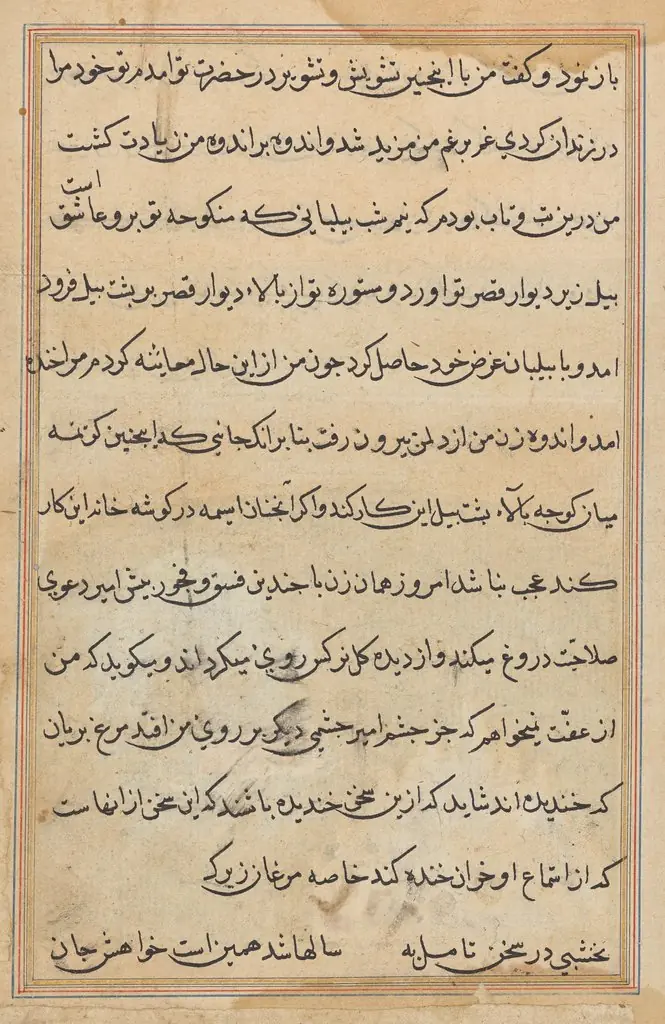
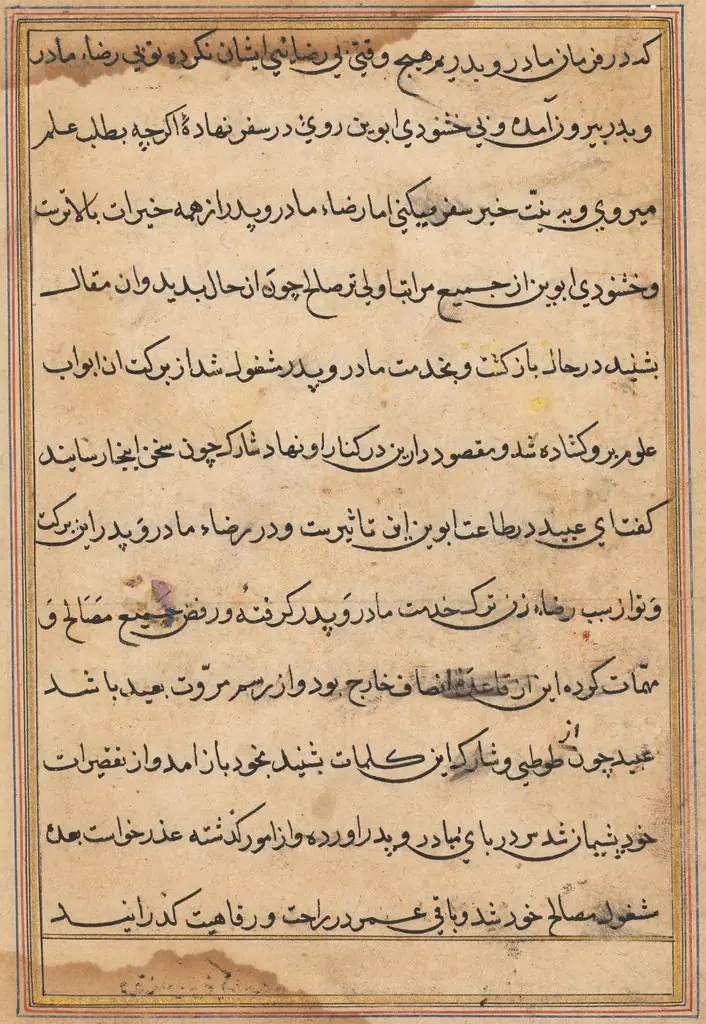
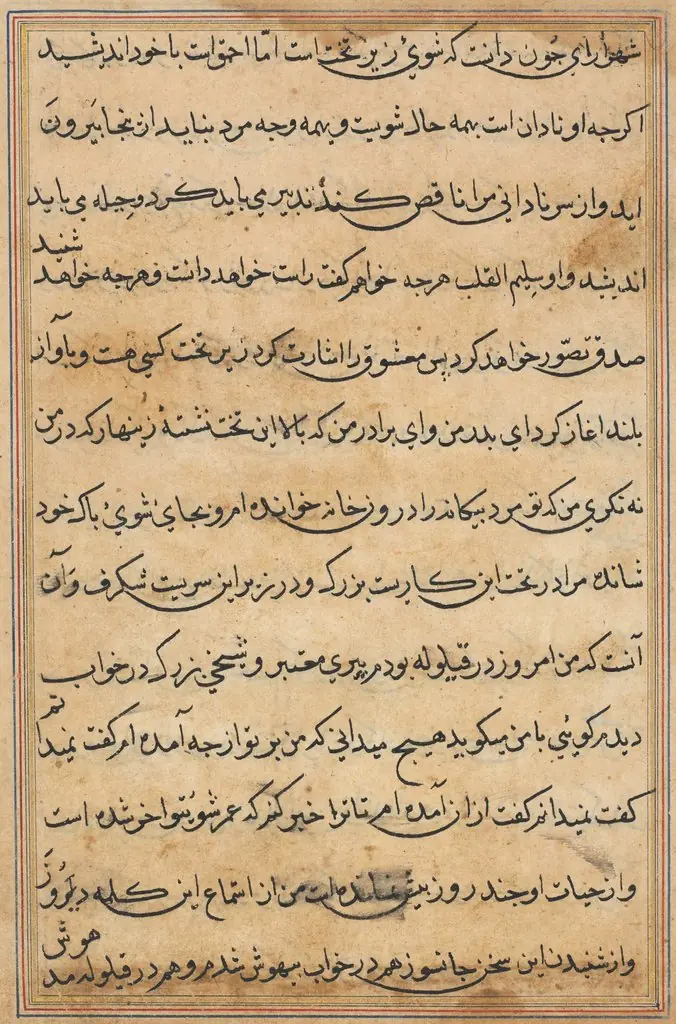
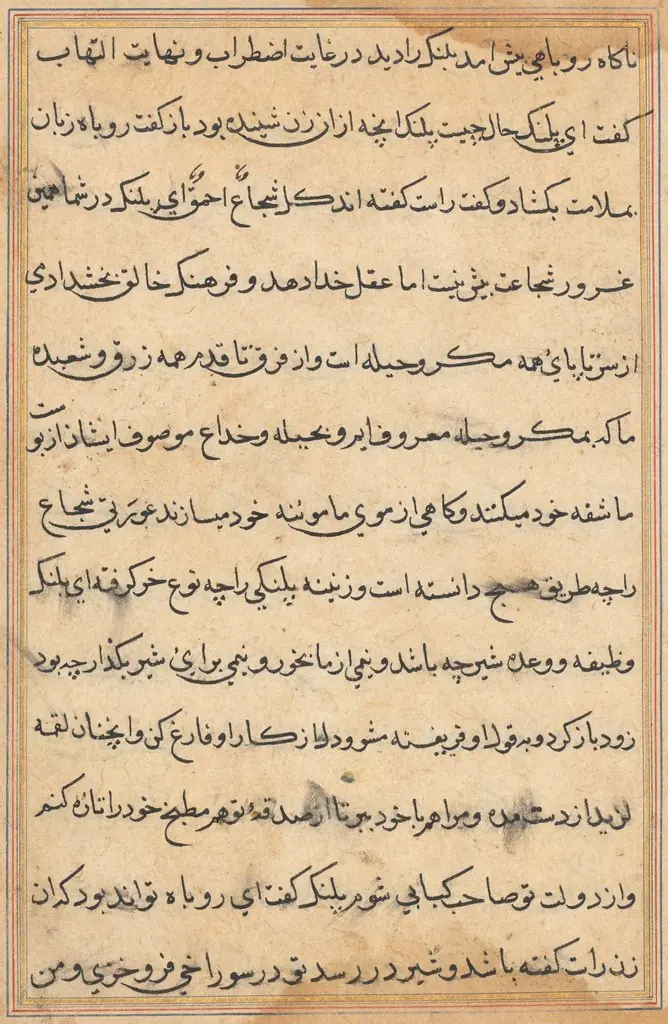
Page from Tales of a Parrot (Tuti-nama): text page is an unspecified painting. It dates from 1560 and is held in the collection of the Cleveland Museum of Art. This object is a single leaf from the medieval manuscript known as the *Tales of a Parrot* (Tuti‑nama).
About this work
Overview
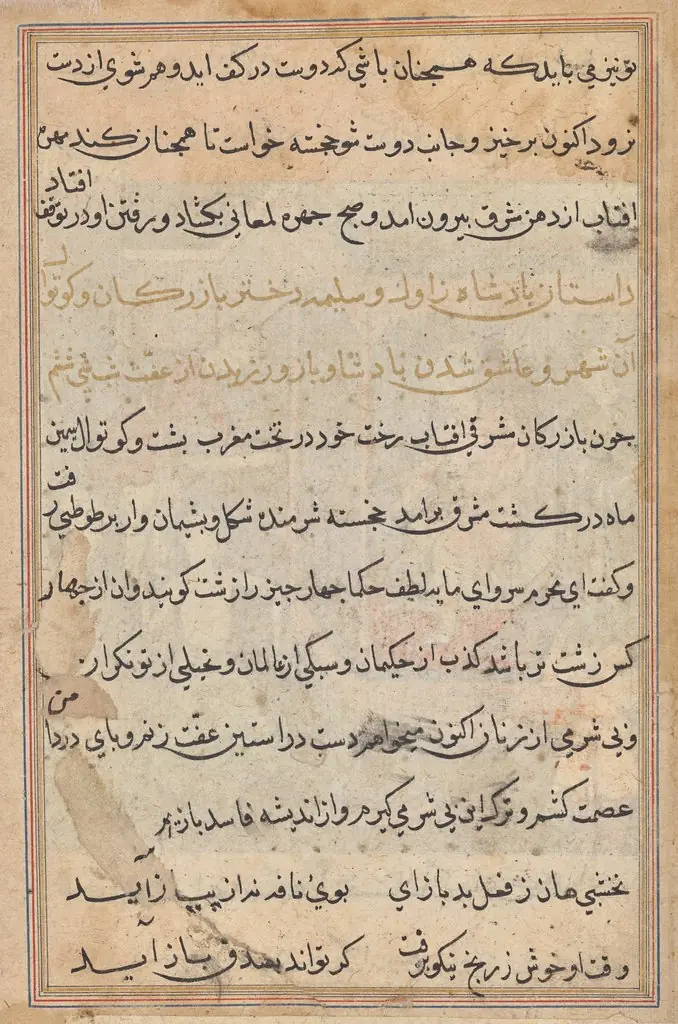
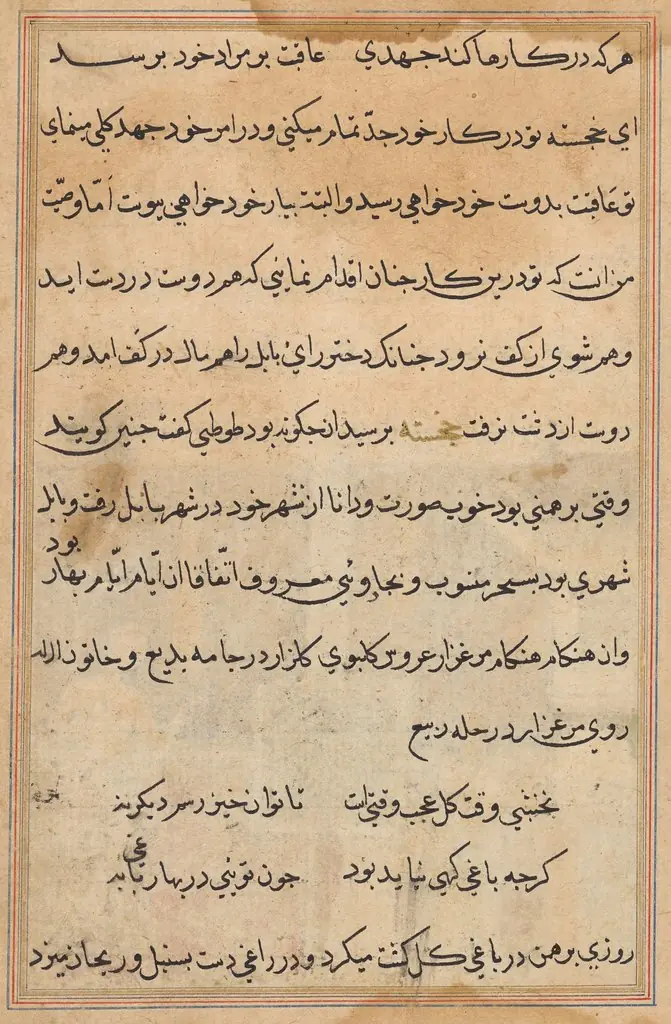
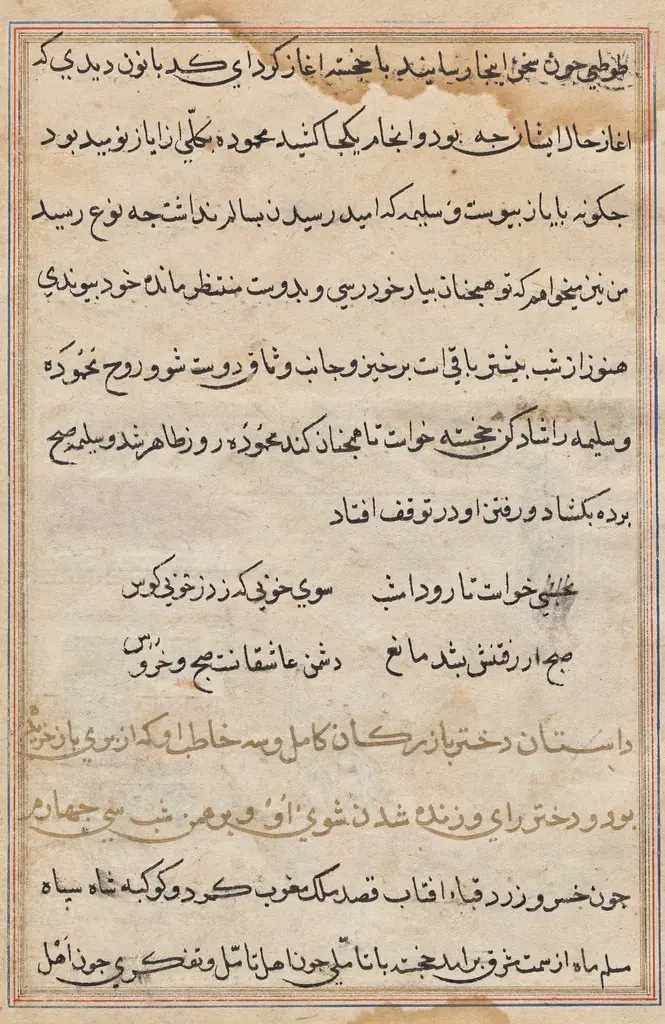
This object is a single leaf from the medieval manuscript known as the *Tales of a Parrot* (Tuti‑nama). The folio measures roughly a hand‑size page, its parchment dyed a light brown and edged with a narrow decorative border. Black ink forms the main body of the text, while selected words are accentuated with gold leaf, creating a subtle contrast that draws the eye.
Subject & Meaning
The written portion appears to be a narrative poem or story, typical of the *Tuti‑nama* tradition that blends moral instruction with entertainment. The content, though partially obscured by age, suggests a tale involving a parrot, a common motif used to convey ethical lessons through the bird’s speech and behavior.
Technique & Style
The scribe employed a fine-point reed pen for the black script, a standard tool in Persian‑influenced manuscript production. Gold highlights were applied with a thin leaf of metallic foil, then burnished to achieve a luminous sheen. Decorative motifs—floral vines and geometric patterns—frame the text, reflecting the intricate aesthetic of 14th‑century Persian illustrated books.
History & Provenance
The folio originates from an early Persian manuscript tradition, likely produced in a courtly workshop of the Ilkhanid period.
The folio originates from an early Persian manuscript tradition, likely produced in a courtly workshop of the Ilkhanid period. Its exact provenance is undocumented, but the style of illumination and script align with works circulated across Central Asia and the Indian subcontinent during the 13th–15th centuries. The page shows signs of extensive handling, with tears, creases, and faded pigments indicative of long-term use.
Context
Manuscripts such as the *Tales of a Parrot* were intended for elite patrons, serving both as literary entertainment and as objects of visual refinement. The integration of gold lettering within the text underscores the value placed on the narrative, while the ornamental border situates the work within a broader tradition of richly illustrated Persian literature.
Artist & collection

 Page from Tales of a Parrot (Tuti-nama): text page
 Page from Tales of a Parrot (Tuti-nama): text page
 Page from Tales of a Parrot (Tuti-nama): text page
 Page from Tales of a Parrot (Tuti-nama): text page
 Page from Tales of a Parrot (Tuti-nama): text page
 Page from Tales of a Parrot (Tuti-nama): text page
 Page from Tales of a Parrot (Tuti-nama): text page
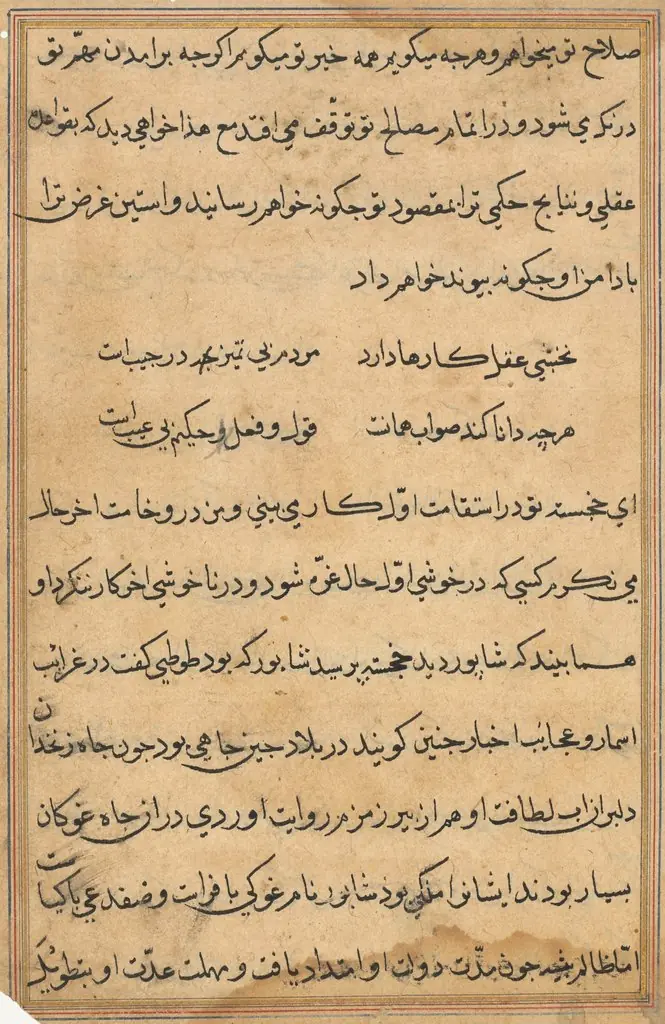 Page from Tales of a Parrot (Tuti-nama): text page
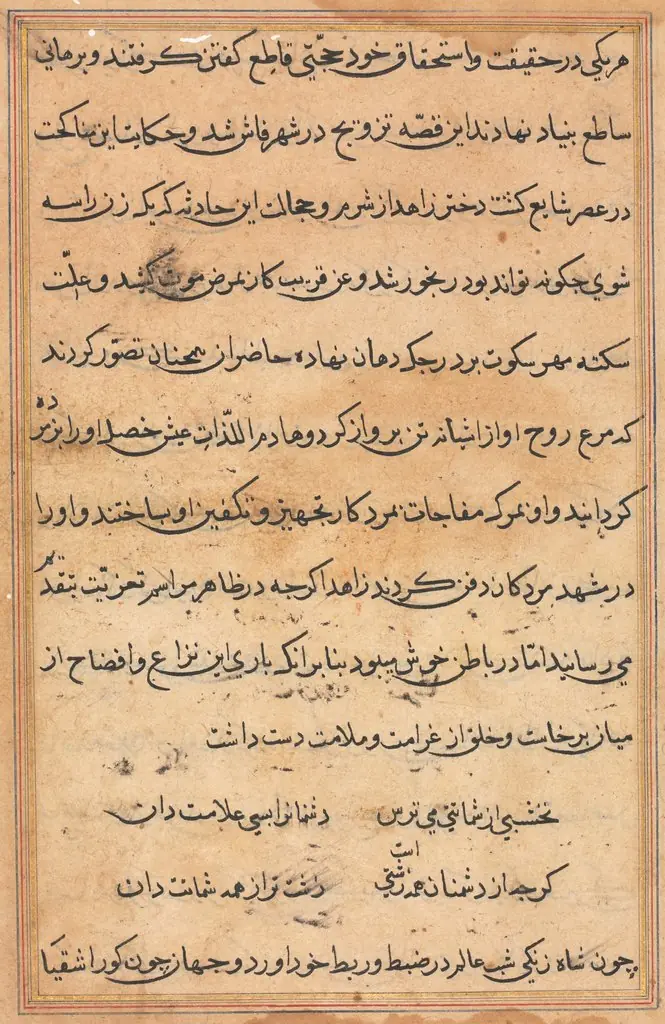 Page from Tales of a Parrot (Tuti-nama): text page
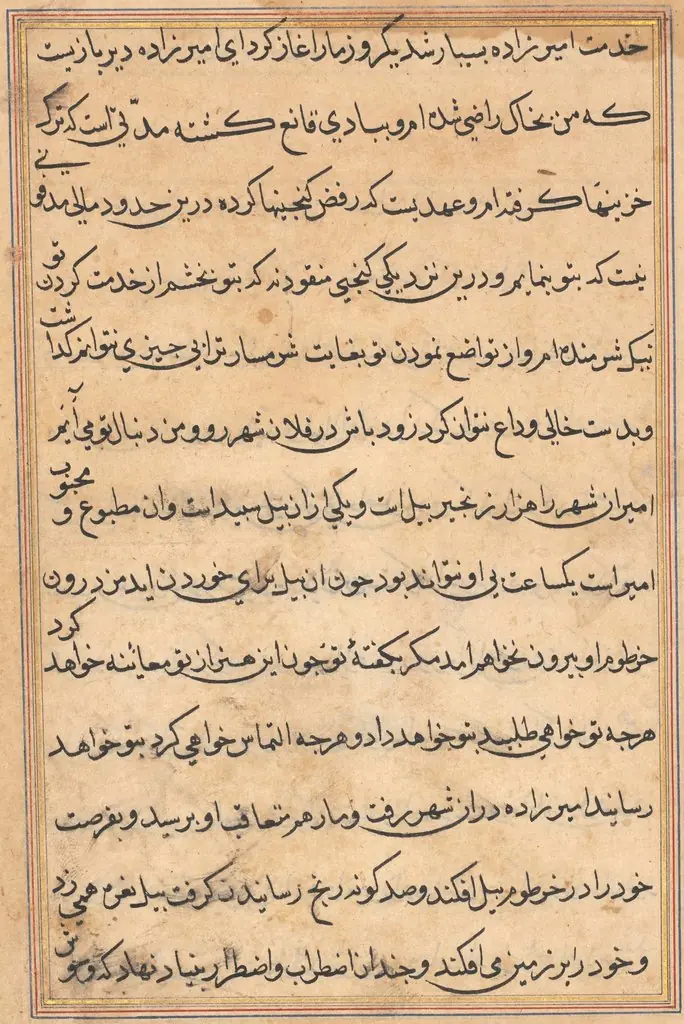 Page from Tales of a Parrot (Tuti-nama): text page
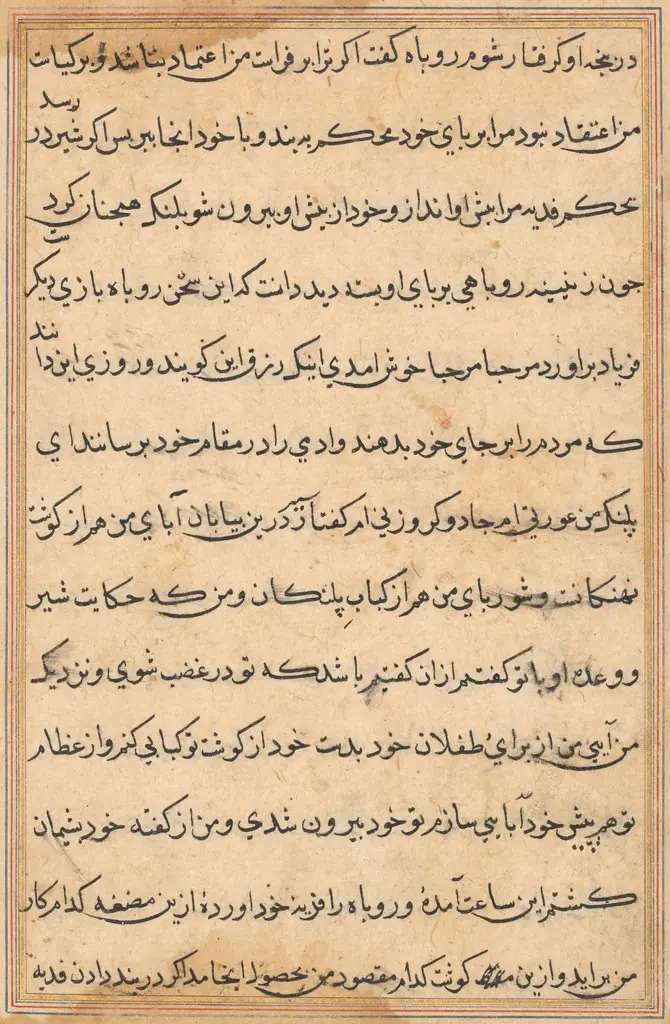 Page from Tales of a Parrot (Tuti-nama): text page
 Page from Tales of a Parrot (Tuti-nama): text page