Artwork
Tuti-Nama (Tales of a Parrot)
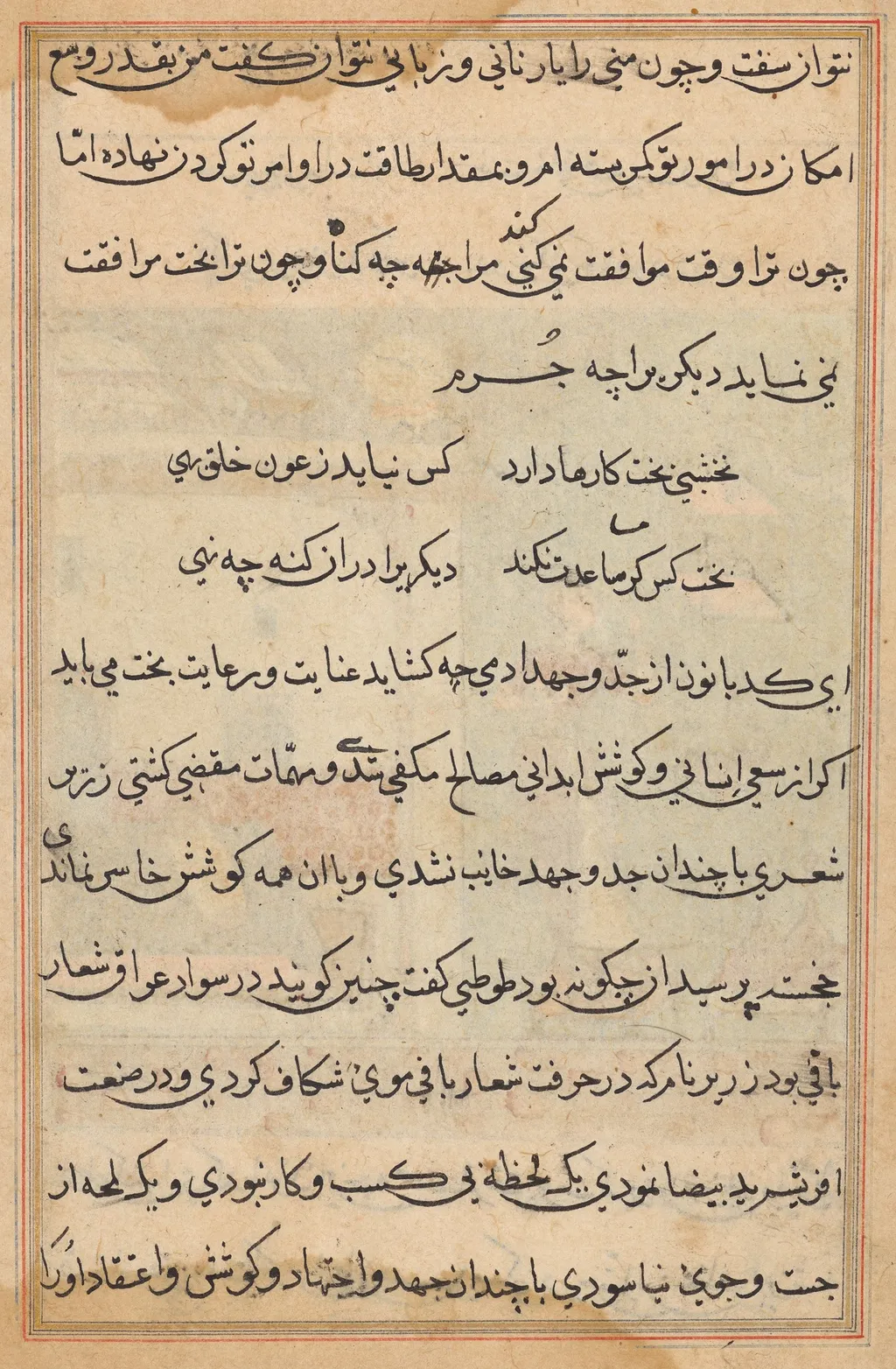
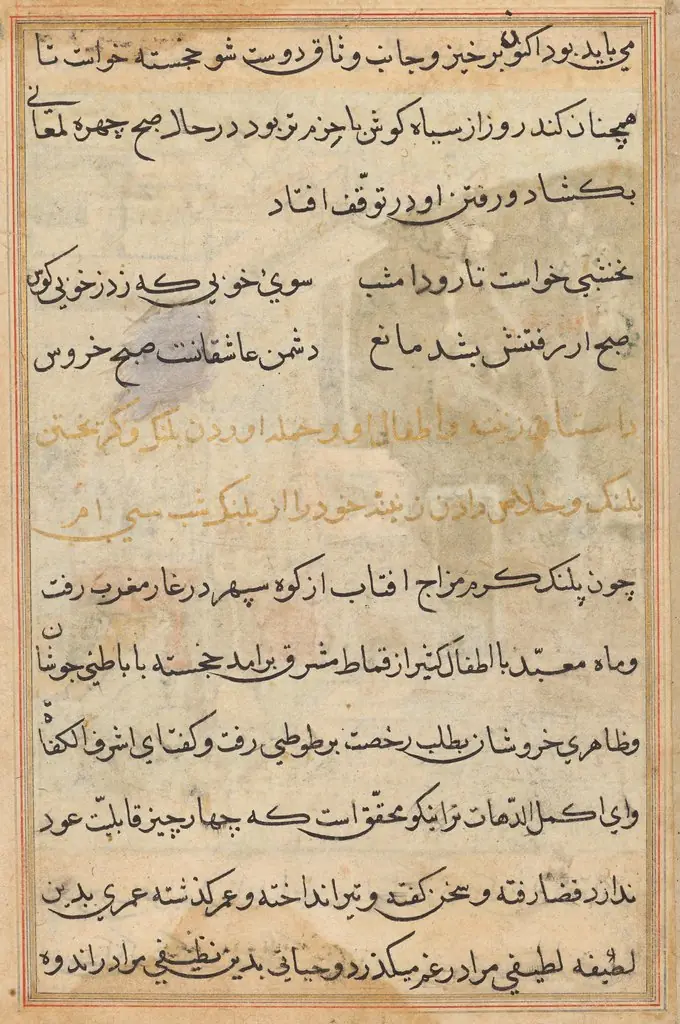
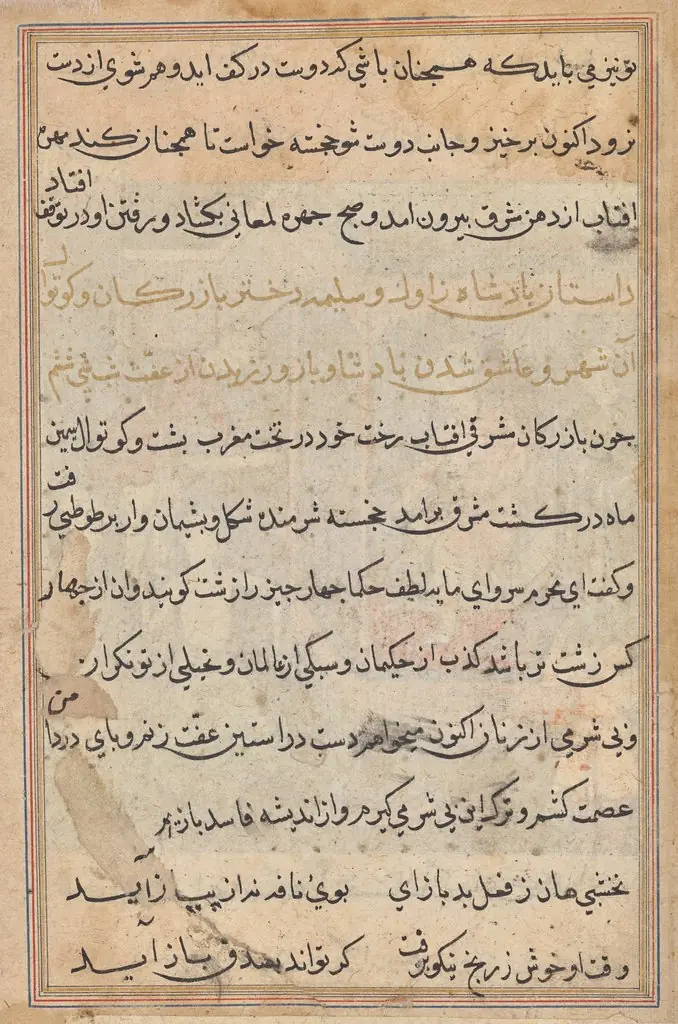
Tuti-Nama (Tales of a Parrot) is an unspecified painting. It dates from 1560 and is held in the collection of the Cleveland Museum of Art. Tuti-Nama, translated as “Tales of a Parrot,” is a painted work that presents a single page of handwritten script.
About this work
Overview
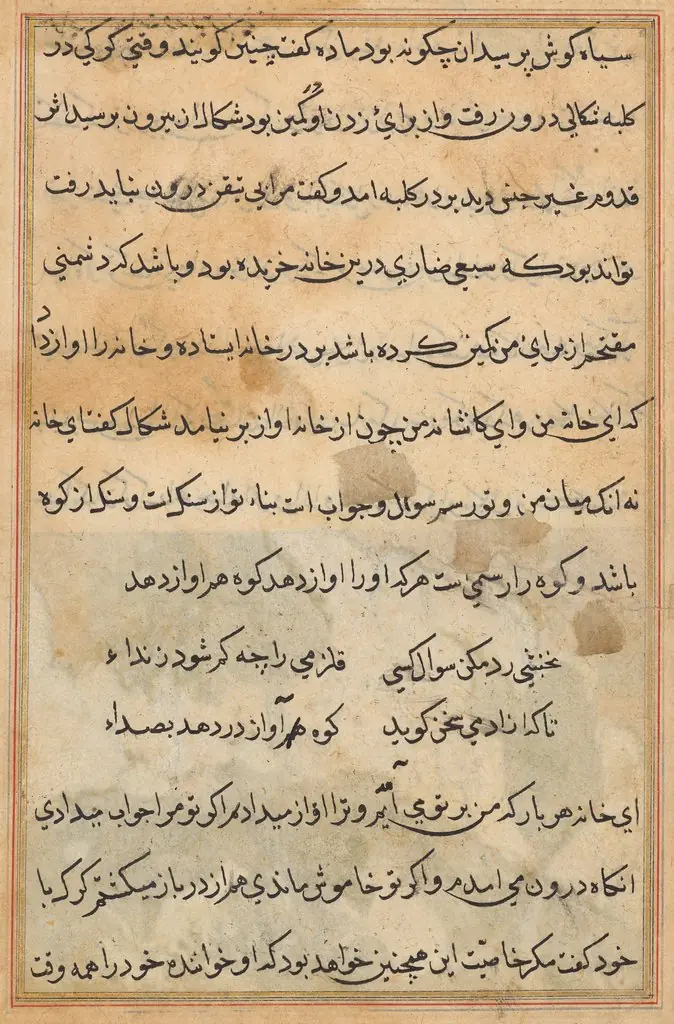
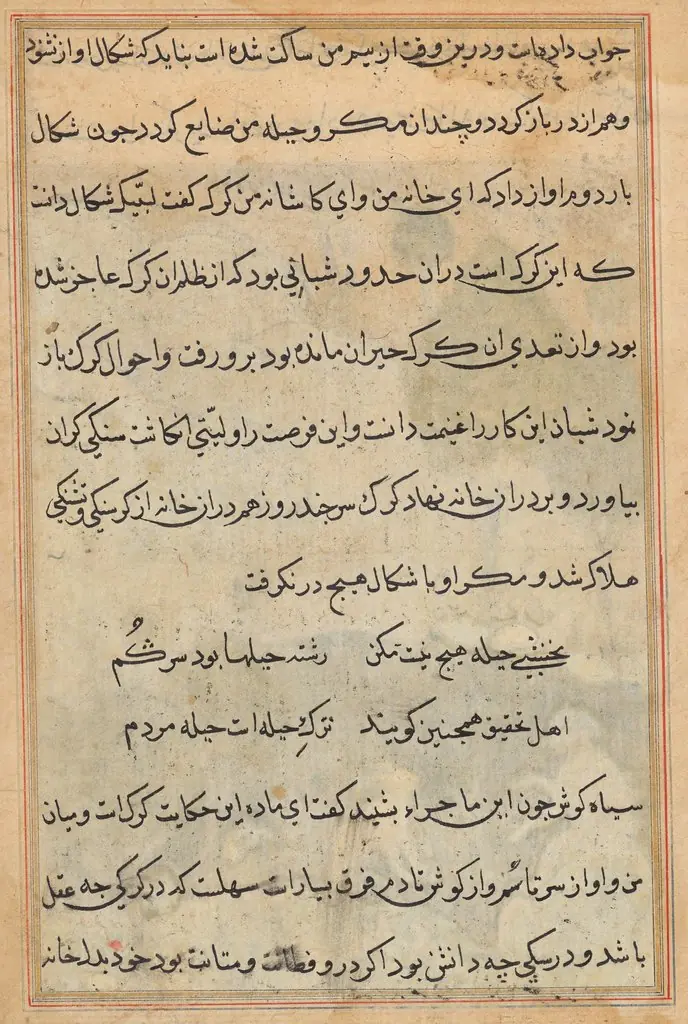
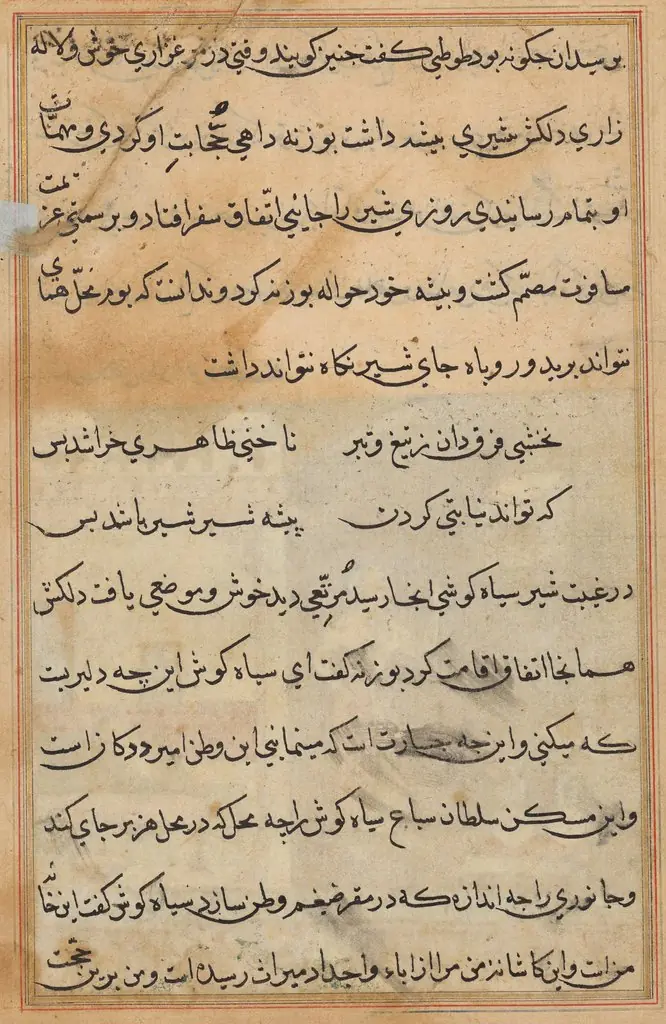
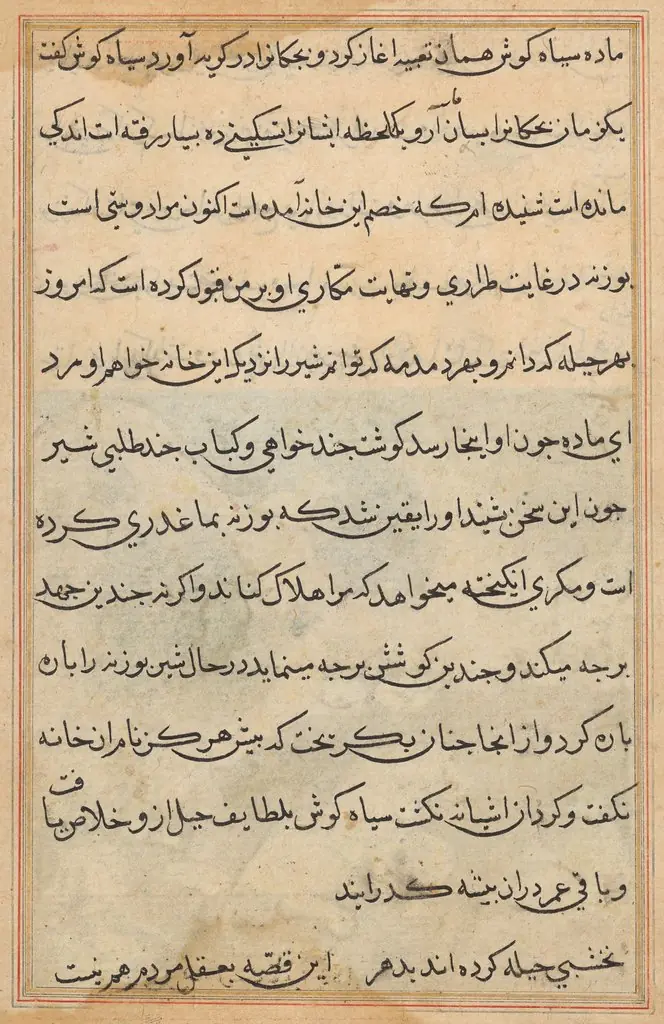
Tuti-Nama, translated as “Tales of a Parrot,” is a painted work that presents a single page of handwritten script. The composition centers on the page, which rests on a light‑beige ground and is framed by a thin red border that defines its edges.
Subject & Meaning
The focal element is an unidentified script rendered in black ink. Its cursive, flowing characters and ornamental flourishes at the beginning and end of the line suggest a literary or poetic text, though the language and content remain unknown.
Technique & Style
The artist employed ink on a painted surface, using a fine brush to achieve a smooth, continuous hand that links letters together. The red border was likely applied with a separate pigment, providing a visual contrast that highlights the central page and adds a decorative touch.
Context
The work’s emphasis on calligraphic elegance and the use of a bordered format echo traditions of manuscript illumination, where text and visual framing are combined to convey refinement.
Artist & collection

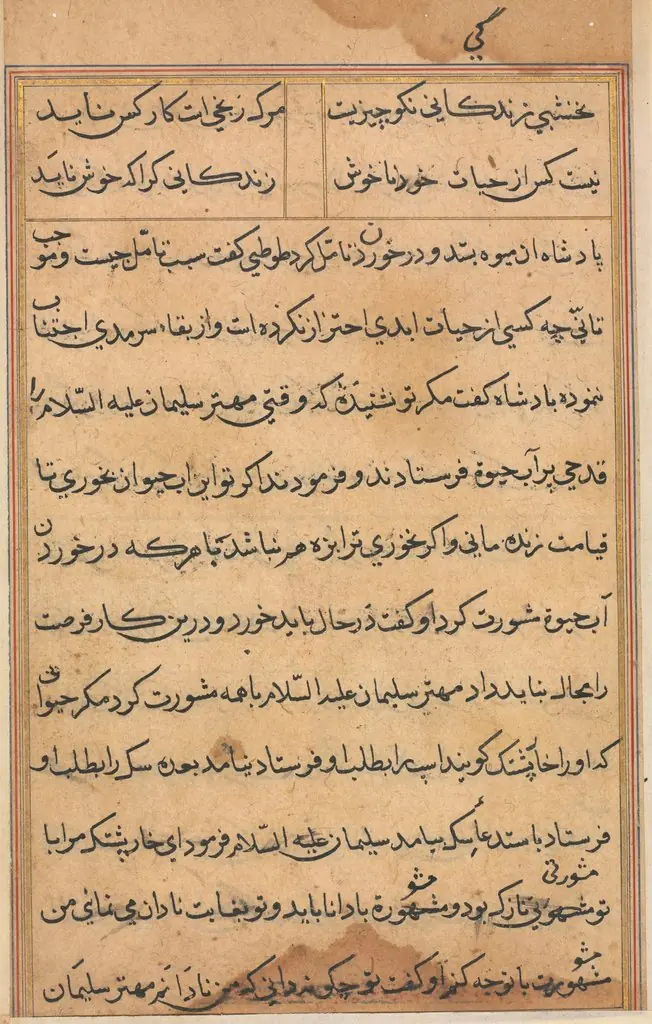 Page from Tales of a Parrot (Tuti-nama): text page
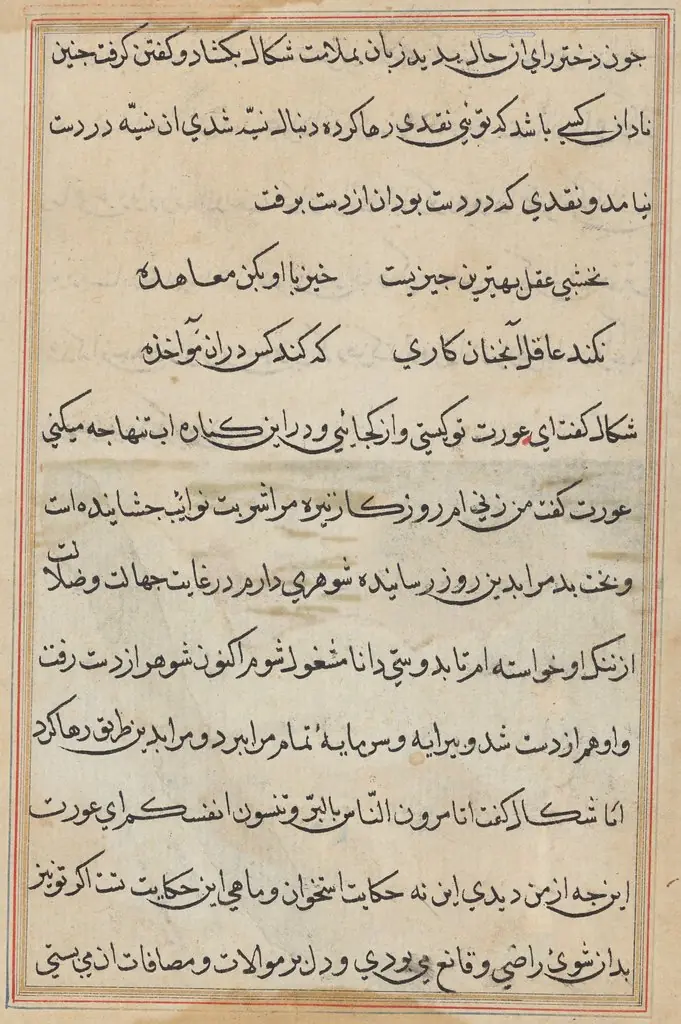 Page from Tales of a Parrot (Tuti-nama): text page
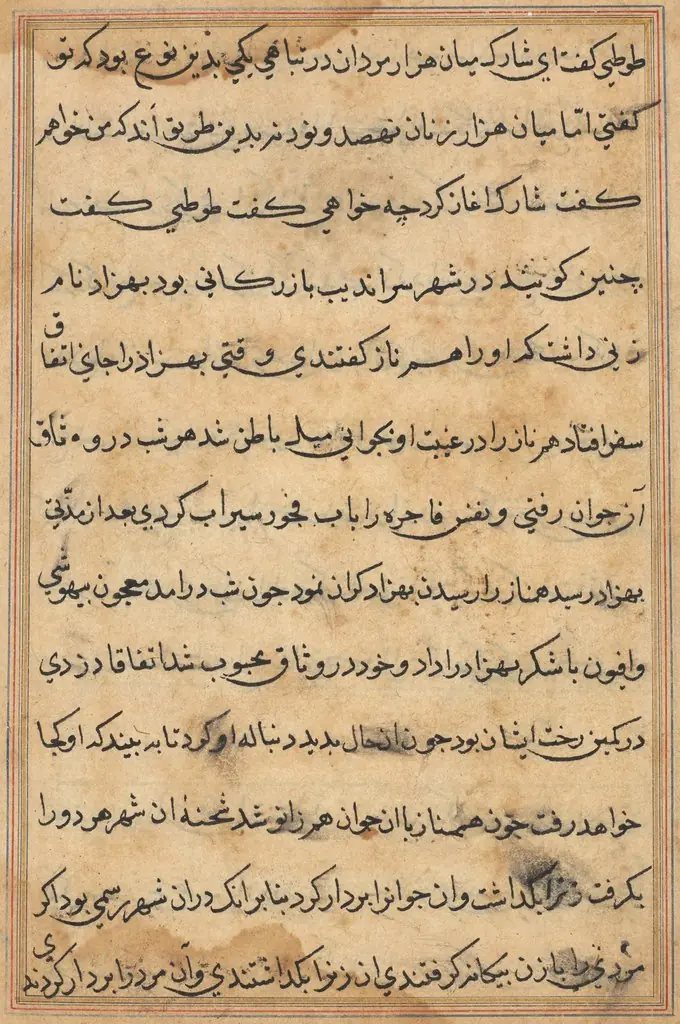 Page from Tales of a Parrot (Tuti-nama): text page
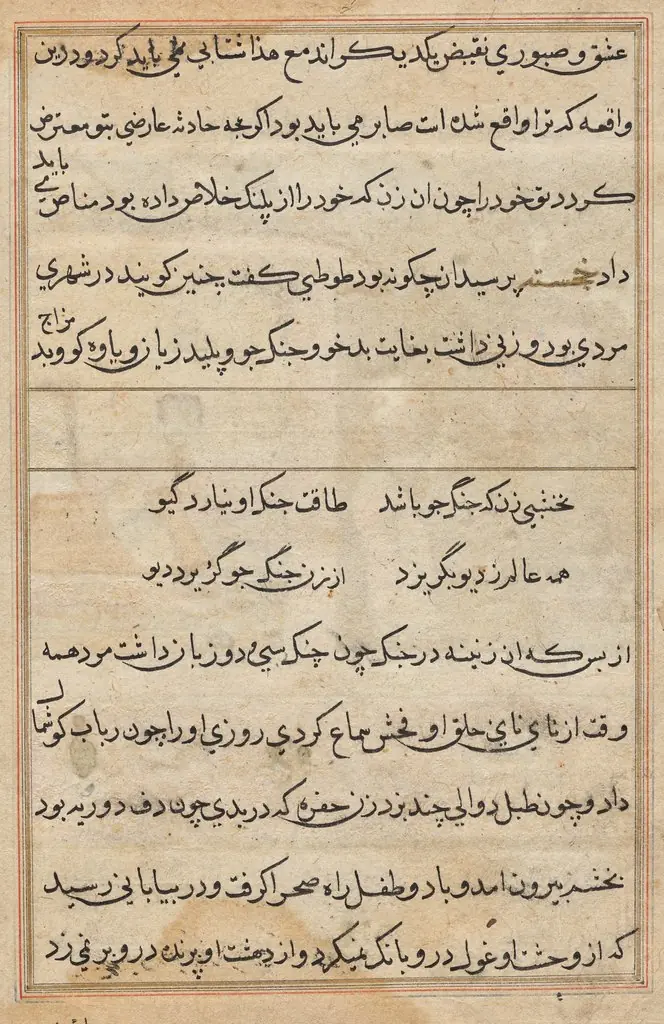 Page from Tales of a Parrot (Tuti-nama): text page
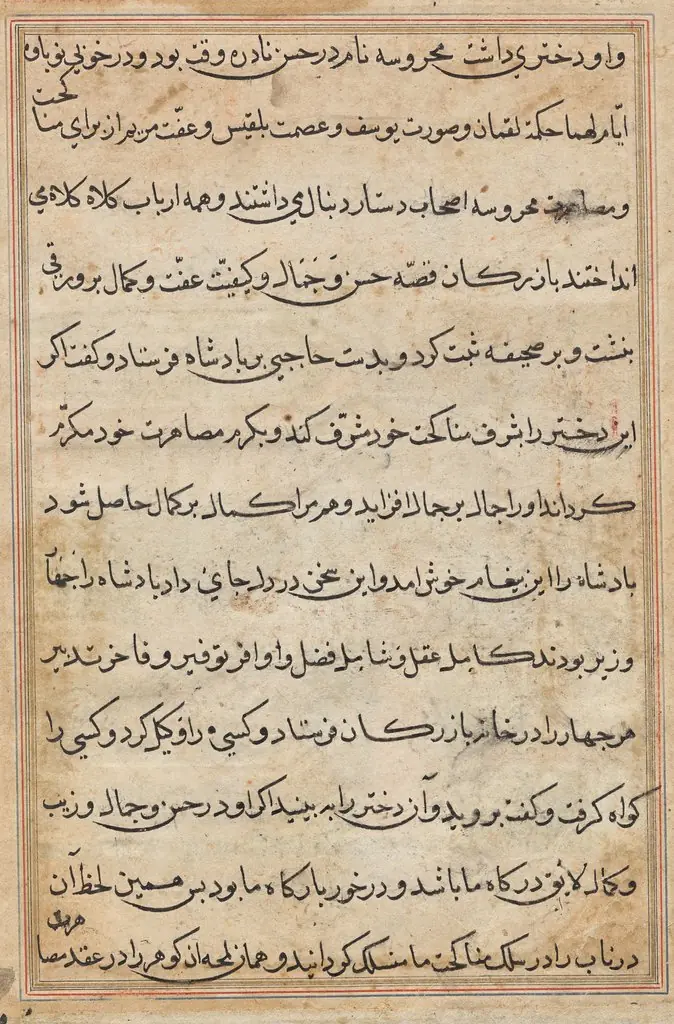 Page from Tales of a Parrot (Tuti-nama): text page
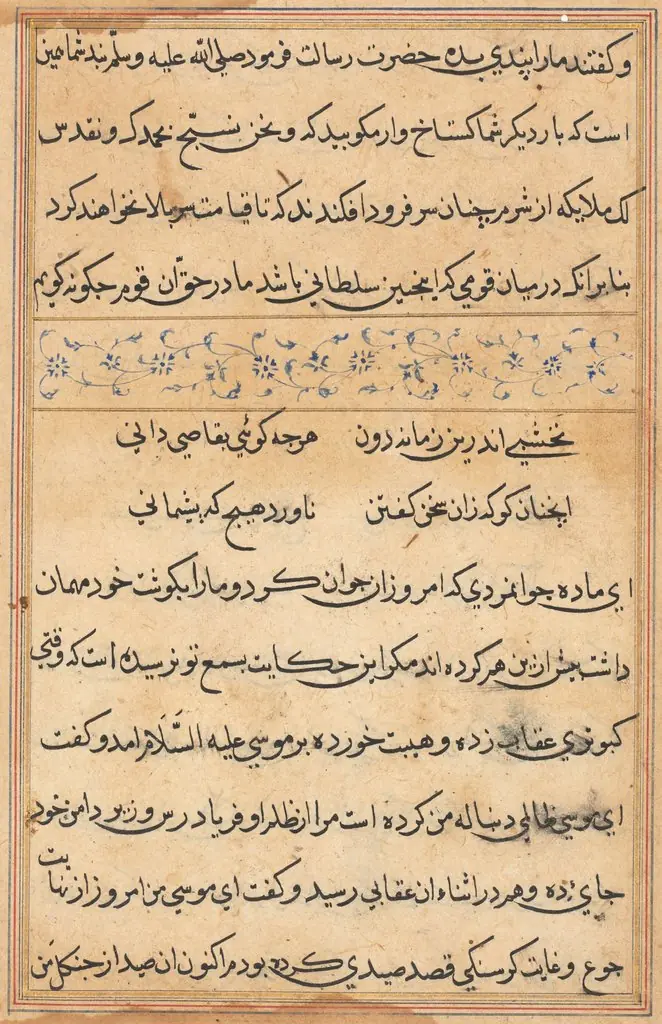 Page from Tales of a Parrot (Tuti-nama): text page
 Page from Tales of a Parrot (Tuti-nama): text page