Artwork
Preparations for a Court Wedding
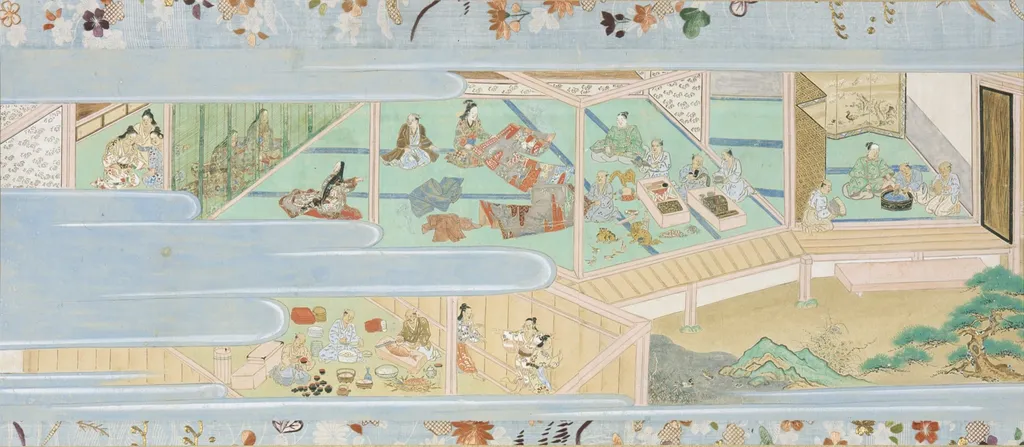
Preparations for a Court Wedding is an unspecified painting by the Rococo painting artist Unknown. It dates from 1750 and is held in the collection of the Los Angeles County Museum of Art. This painting depicts the meticulous planning and ceremonial preparations preceding a royal wedding.
About this work
Overview
This painting depicts the meticulous planning and ceremonial preparations preceding a royal wedding. Figures in period attire arrange decorations, inspect textiles, and oversee logistics, suggesting a high-status event within a courtly setting. The scene captures quiet urgency rather than public celebration, emphasizing the administrative and symbolic weight of dynastic unions.
Subject & Meaning
The work focuses on the unseen labor behind royal ceremonies, highlighting the roles of attendants, artisans, and officials who enable such events. It conveys the ritualized nature of court life, where personal unions serve political ends. The absence of the bride and groom underscores the institution over the individuals, reinforcing the marriage as a state affair.
Technique & Style
Rendered with precise brushwork and muted tones, the composition uses controlled lighting to distinguish figures against shadowed interiors. Details in fabric, jewelry, and furnishings are rendered with clinical accuracy, reflecting a documentary impulse. The spatial arrangement is orderly, guiding the viewer’s eye through layers of activity without dramatic focal points.
History & Provenance
Its early records are sparse, but it entered a public collection in the late 19th century after passing through private aristocratic hands.
The painting likely originated in early modern Europe, possibly in a court workshop associated with a Habsburg or Bourbon dynasty. Its early records are sparse, but it entered a public collection in the late 19th century after passing through private aristocratic hands. No definitive artist attribution remains, though stylistic traits align with Flemish or French court painters of the 17th century.
Context
During the 17th century, royal weddings were carefully orchestrated to secure alliances, legitimize succession, and display wealth. Paintings of such preparations were rare; most commissions favored the ceremony itself. This work stands out for its focus on the backstage mechanics, revealing how power operated through ritual and labor rather than spectacle.
Legacy
Though not widely exhibited, the painting contributes to scholarly understanding of courtly culture beyond grand portraiture. It offers insight into the invisible workforce sustaining monarchy and has influenced later historical reconstructions of domestic court life. Its quiet realism contrasts with the idealized narratives common in contemporary royal imagery.
Artist & collection

 Domestic Scene
 Giacomo and Cardinal Marco, investing Andrea, Abbot of San Zeno, with his Benefice
 The Nymph of Fontainebleau
 Portrait of a Woman
 Madonna and Child with Saints in the Enclosed Garden
 Venus and Minerva
 Family Group of Four on Sofa
 Wall painting from Room H of the Villa of P. Fannius Synistor at Boscoreale
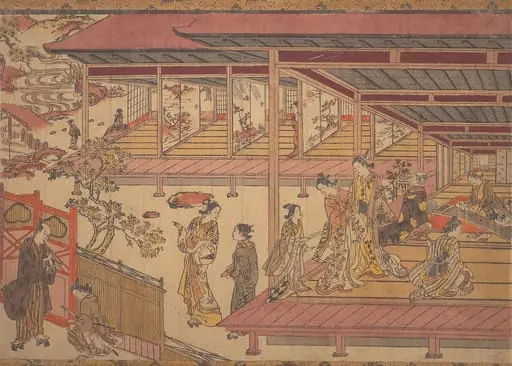 Untitled
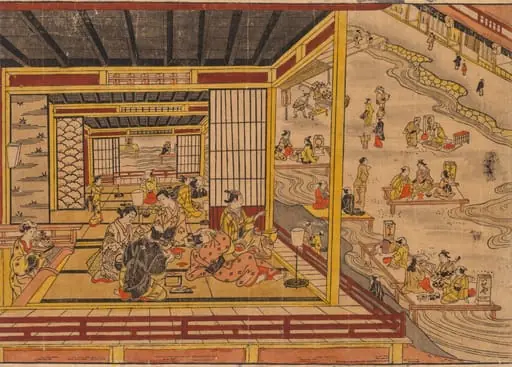 Tea House Beside the Kamo River in Kyoto
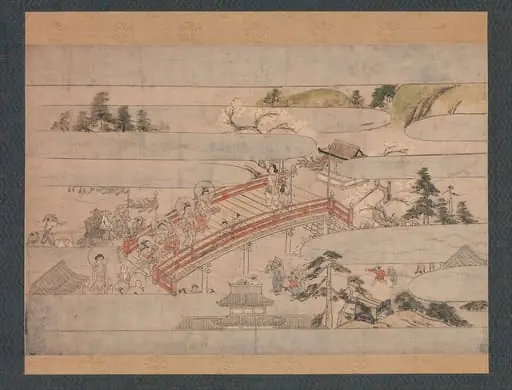 秋夜長物語絵巻断簡|The Final Scene from A Long Tale for an Autumn Night (Aki no yonaga monogatari)
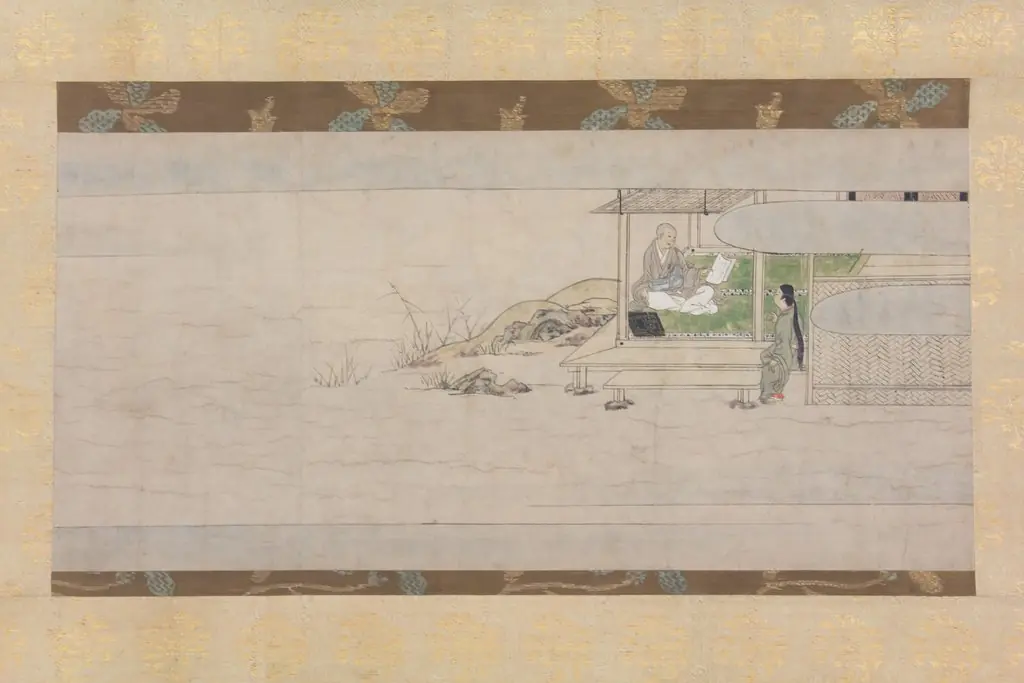 Scene from A Long Tale for an Autumn Night
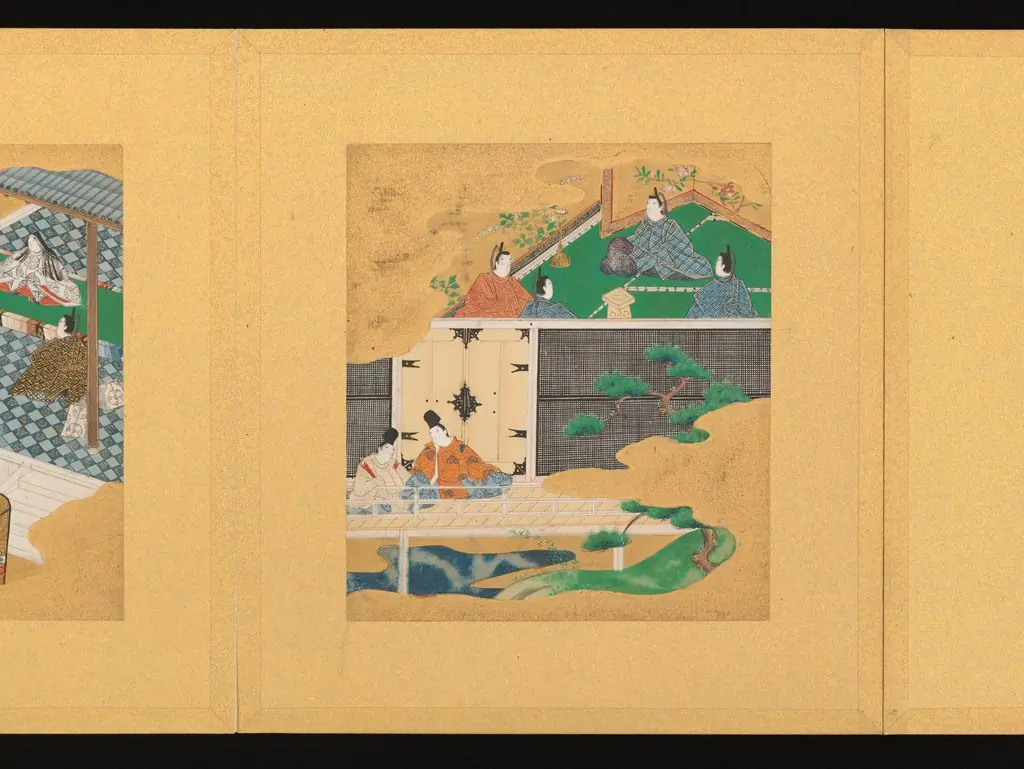 Scenes from The Tale of Genji (Genji monogatari)
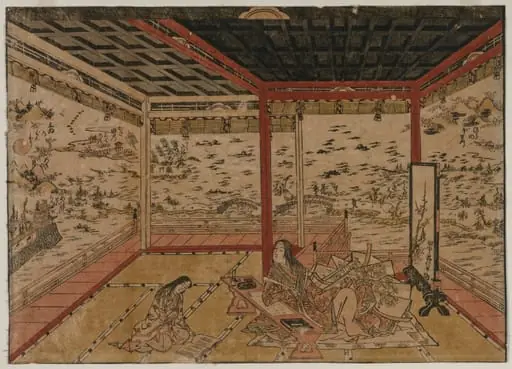 Lady Murasaki at Ishiyama Overlooking a Panorama with Eight Views of Lake Biwa
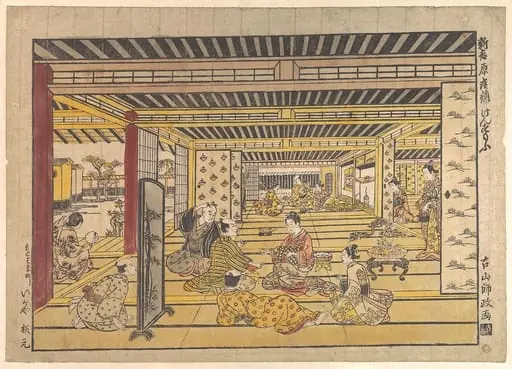 Untitled
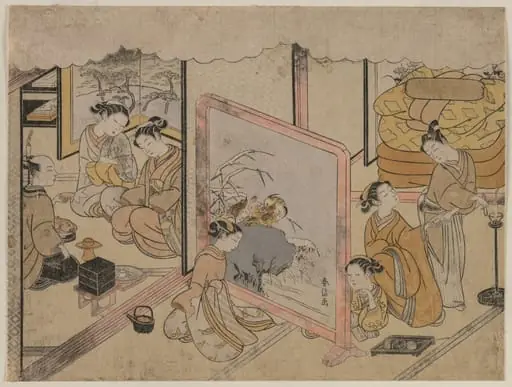 Drinking a Cup of Wine Before Retiring for Bed (From an Untitled Series)
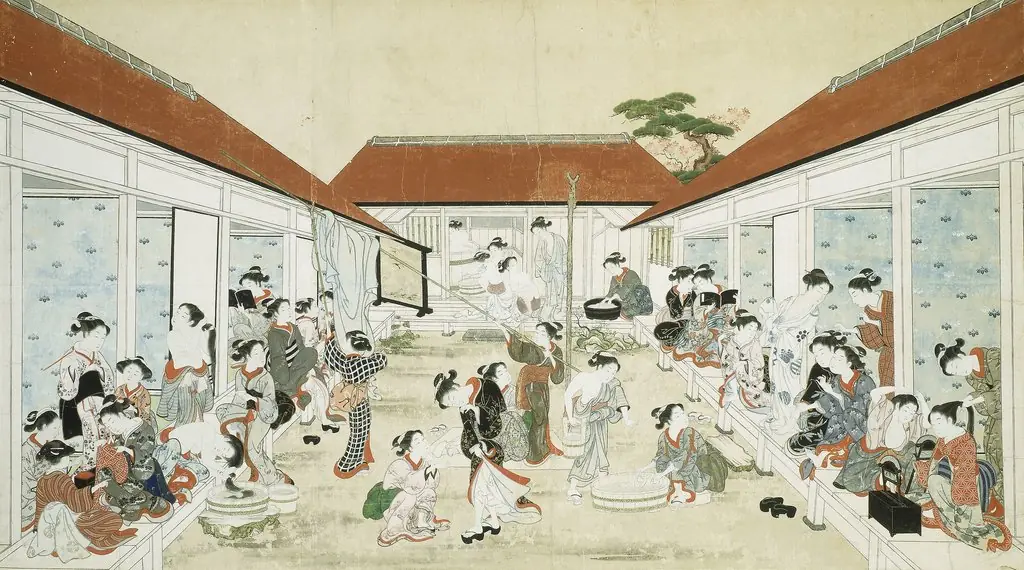 Women's Bathhouse and Laundry
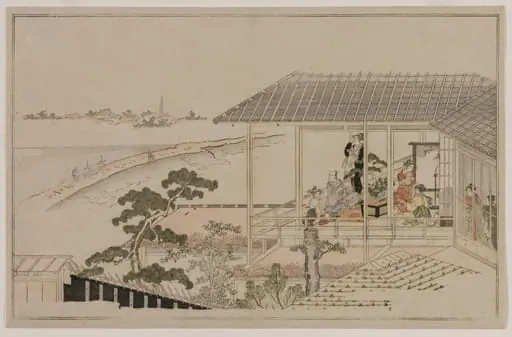 Moonrise Over the Nihon Embankment and the Yoshiwara
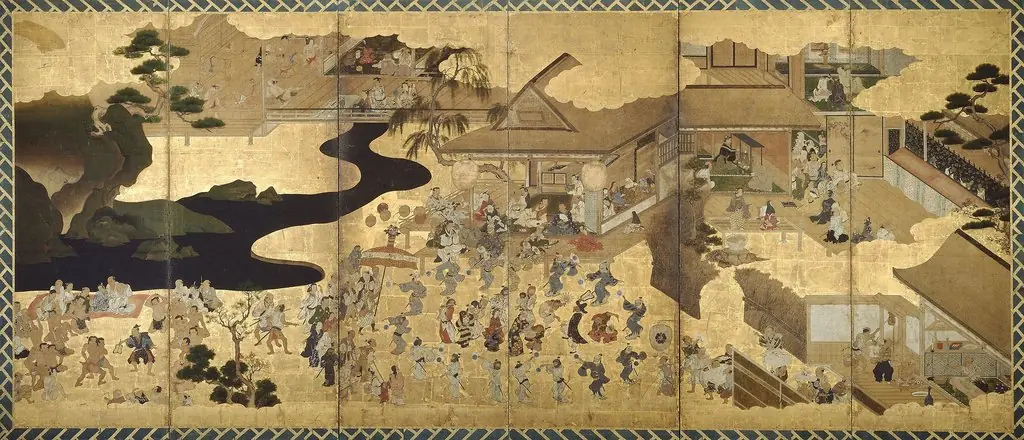 Genre Scenes (Fuzoku byobu)
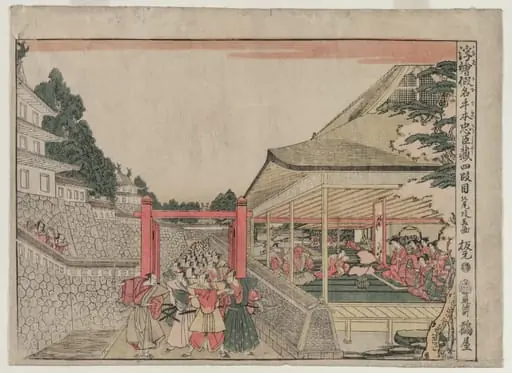 Chushingura: Act IV (from the series Perspective Pictures for The Treasure House of Loyalty)