Artwork
Tea House Beside the Kamo River in Kyoto
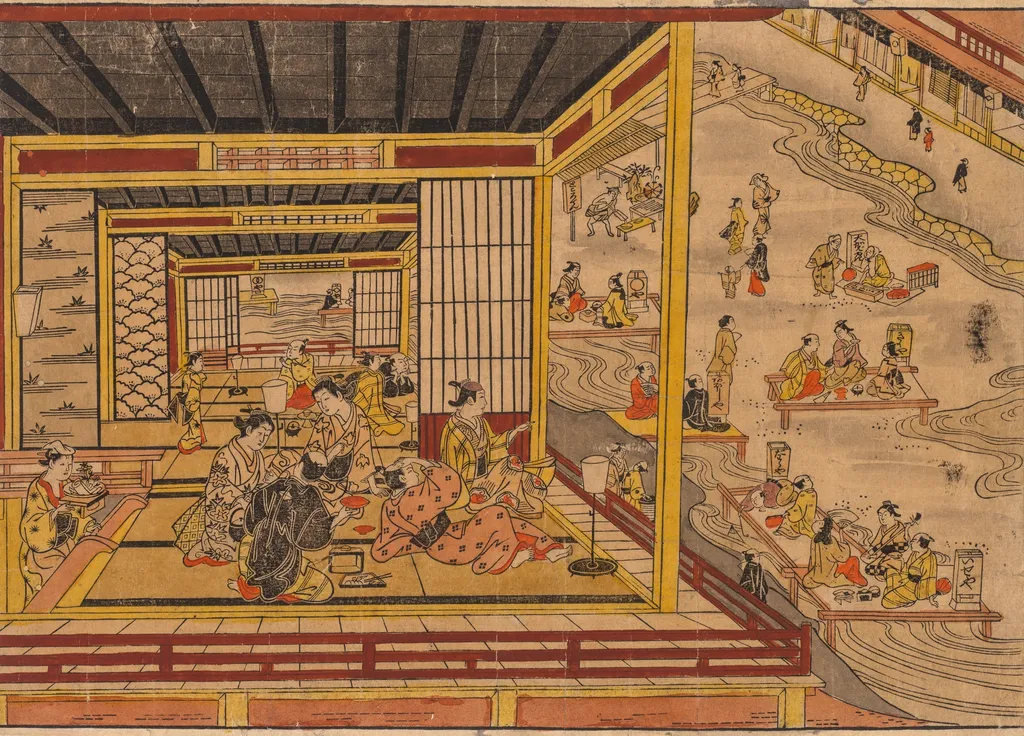
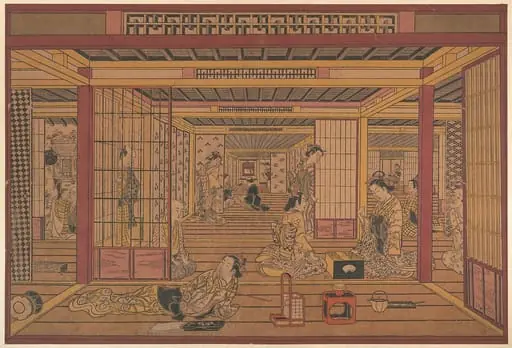
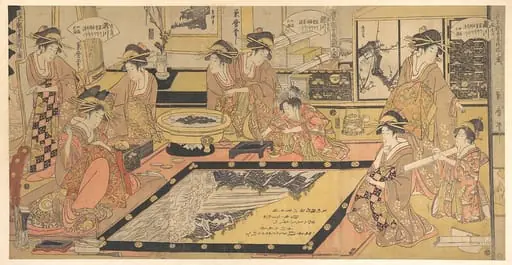
Tea House Beside the Kamo River in Kyoto is a print by the Baroque artist Nishimura Shigenaga. It dates from 1744 and is held in the collection of the Cleveland Museum of Art.
About this work
Overview
The scene captures a moment of ordinary urban life, rendered with careful attention to spatial arrangement and human activity.
Created around 1744 by Nishimura Shigenaga, this woodblock print depicts a tea house situated along the Kamo River in Kyoto. The scene captures a moment of ordinary urban life, rendered with careful attention to spatial arrangement and human activity. It is part of the Cleveland Museum of Art’s collection and exemplifies the ukiyo-e tradition’s focus on contemporary scenes rather than mythological or historical subjects.
Subject & Meaning
The print portrays a bustling tea house and its surrounding grounds, where patrons sit, converse, and move between interior and exterior spaces. Figures are engaged in everyday behaviors—resting, walking, drinking—suggesting a record of social life in mid-18th century Kyoto. The absence of overt symbolism points to an interest in the rhythms of daily existence, reflecting the growing urban culture of the Edo period.
Technique & Style
Shigenaga employs bold black outlines to define forms, with warm hues of ochre, red, and brown applied in flat, unmodulated areas. The composition is densely populated, with figures arranged in layered planes to suggest depth without linear perspective. This approach aligns with ukiyo-e conventions, prioritizing clarity and visual rhythm over naturalistic illusion, enhancing the sense of lively motion within a confined frame.
History & Provenance
The print was produced during the mid-Edo period, a time when woodblock prints became widely accessible to the merchant class. It entered the Cleveland Museum of Art’s collection in the 20th century, likely through early 20th-century acquisitions of Japanese prints by Western collectors. Its preservation reflects broader interest in Edo-period visual culture during the rise of Japonisme in Europe and America.
Context
Tea houses along the Kamo River were popular gathering spots for townspeople, offering respite from city life. Shigenaga’s depiction aligns with a broader trend in ukiyo-e that celebrated transient, pleasurable moments—ukiyo, or 'the floating world.' These scenes responded to an expanding urban middle class seeking entertainment and leisure, distinct from aristocratic or religious themes of earlier art.
Legacy
The print contributes to a visual archive of Edo-period urban life, influencing later artists interested in candid social observation. While not widely known outside specialist circles, it remains a representative example of how Japanese printmakers documented everyday environments with precision and quiet vitality, offering insight into the cultural fabric of 18th-century Kyoto.
Artist & collection
Artist
Nishimura Shigenaga spent his life in Edo, a city now called Tokyo, where he carved and printed pictures for a living.

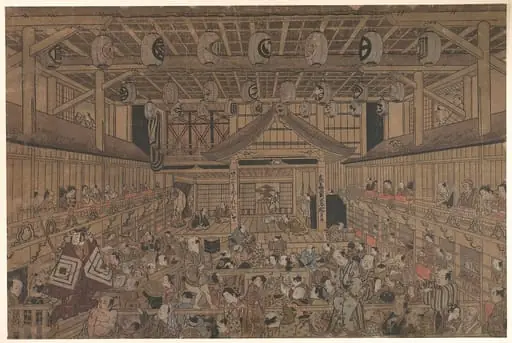 Untitled
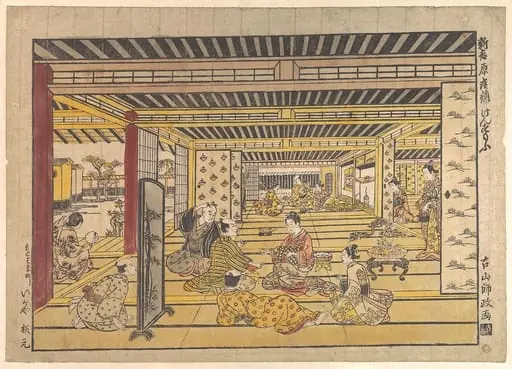 Untitled
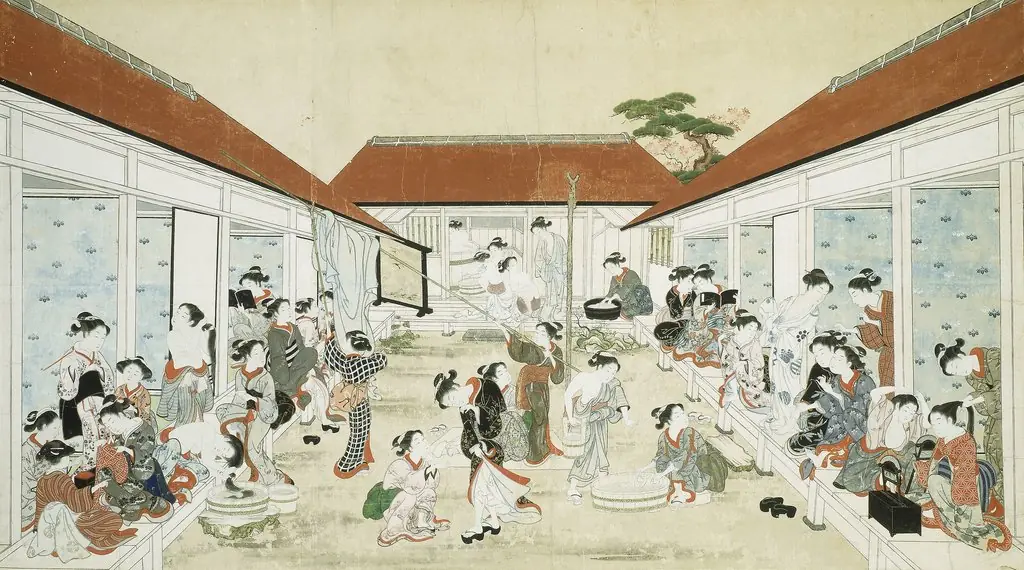 Women's Bathhouse and Laundry
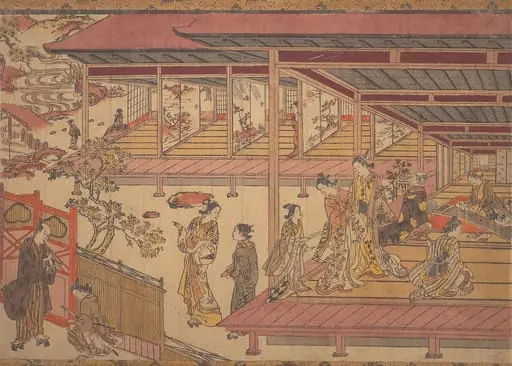 Untitled
 Untitled
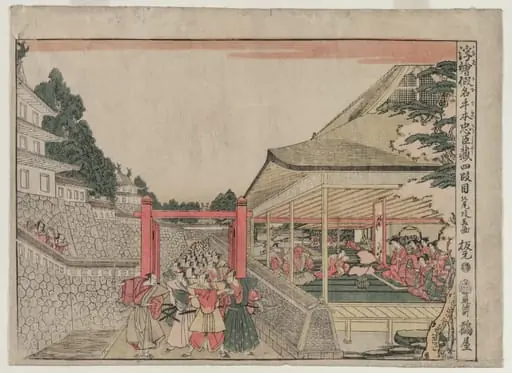 Chushingura: Act IV (from the series Perspective Pictures for The Treasure House of Loyalty)
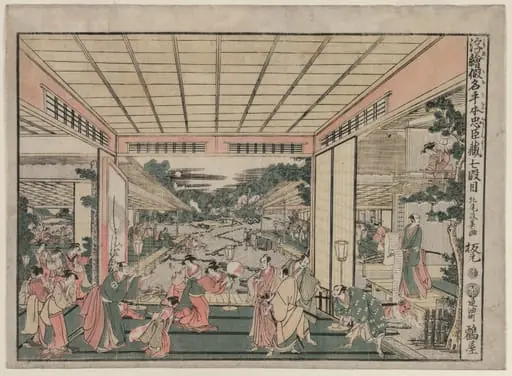 Chushingura: Act VII (from the series Perspective Pictures for The Treasure House of Loyalty)
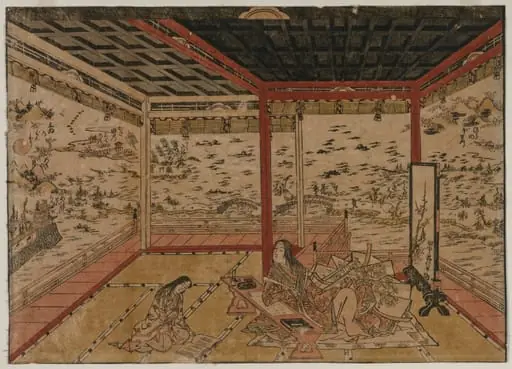 Lady Murasaki at Ishiyama Overlooking a Panorama with Eight Views of Lake Biwa
 『浅草観音奉掛額之 図』 「扇屋内滝川 富川、粂川、玉川、津川、歌川、清川 め浪、お浪」|A Votive Picture to Be Donated to the Kannon of Asakusa (Asakusa Kannon hō kakegaku no zu), by Takigawa of the Ōgiya, Kamuro Menami and Onami, with Tomikawa, Kumegawa, Tamagawa, Tsugawa, Utagawa, and Kiyokawa