Artwork
Women's Bathhouse and Laundry
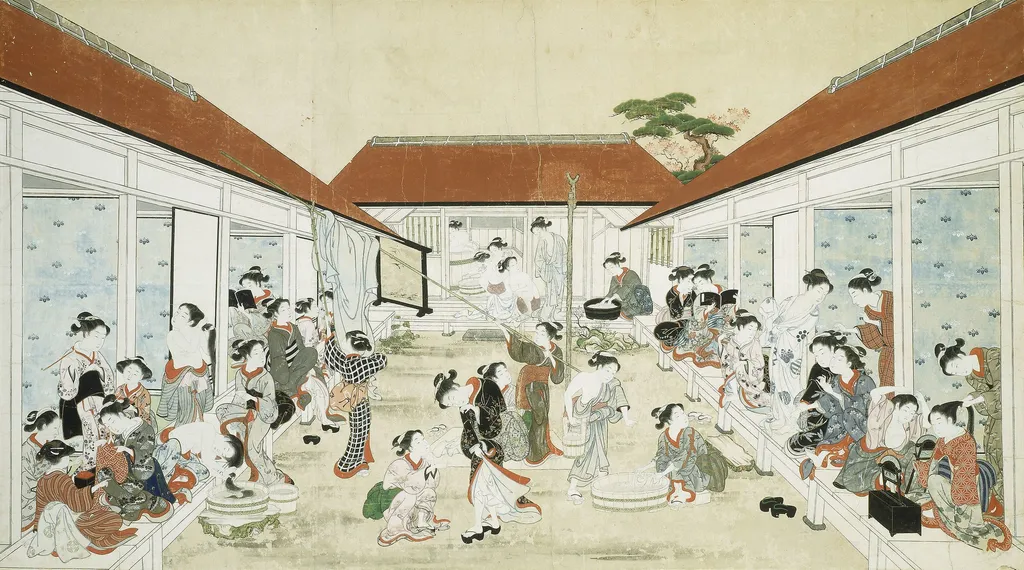
Women's Bathhouse and Laundry is an unspecified painting by the Realist artist Kitao Shigemasa. It is held in the collection of the Art Institute of Chicago.
About this work
Overview
Created in 1825 by Kitao Shigemasa, this woodblock print depicts a communal women’s bathhouse and laundry space. It belongs to the ukiyo-e tradition, capturing everyday urban life in Edo-period Japan. The work is part of the Art Institute of Chicago’s collection, where it serves as a record of domestic routines and social interaction among women outside elite circles.
Subject & Meaning
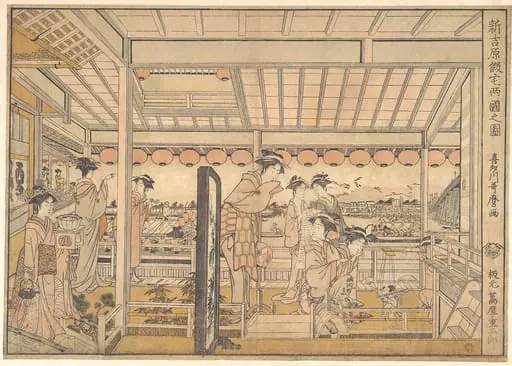
The scene portrays women engaged in bathing and laundering, revealing the social rhythm of daily labor and personal care. These spaces were rare sites of female camaraderie and informal exchange, free from male observation. The composition emphasizes quiet activity over spectacle, suggesting dignity in routine work rather than idealized beauty.
Technique & Style
Executed in polychrome woodblock printing, the image uses soft lines and muted tones to convey texture and atmosphere. Shigemasa employs subtle gradations in fabric folds and steam, enhancing realism without theatricality. Figures are arranged in naturalistic groupings, reflecting his skill in capturing movement and spatial depth within the constraints of printmaking.
History & Provenance
The print was produced during the late Edo period, when ukiyo-e flourished as popular art. It likely circulated as a single-sheet print among urban residents. The Art Institute of Chicago acquired it in the 20th century, part of a broader effort to document Japanese visual culture beyond aristocratic or theatrical subjects.
Context
Public bathhouses were central to Edo’s urban life, serving both hygienic and social functions. Women’s spaces, though less documented than men’s, were vital for community bonding. Shigemasa’s focus on this setting reflects a growing interest in ordinary life, distinct from the more common depictions of actors or courtesans in ukiyo-e.
Legacy
The print contributes to a broader understanding of gendered spaces in pre-modern Japan. It stands as a quiet testament to the visibility of working women in Japanese art, offering insight into domestic labor and social norms. Its preservation allows continued study of how everyday rituals were rendered in popular visual culture.
Artist & collection
Artist
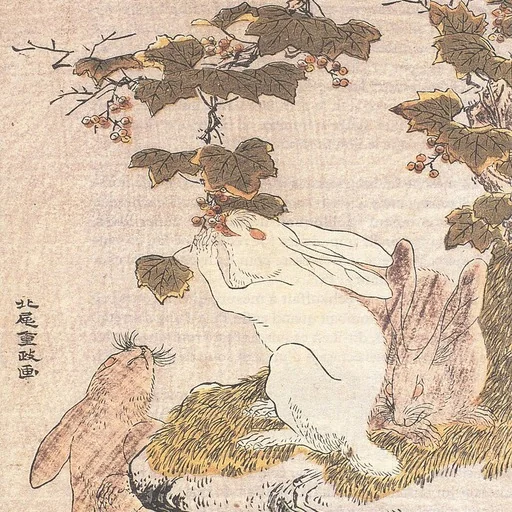
Kitao Shigemasa (北尾 重政; 1739 – 8 March 1820) was a Japanese ukiyo-e artist from Edo.


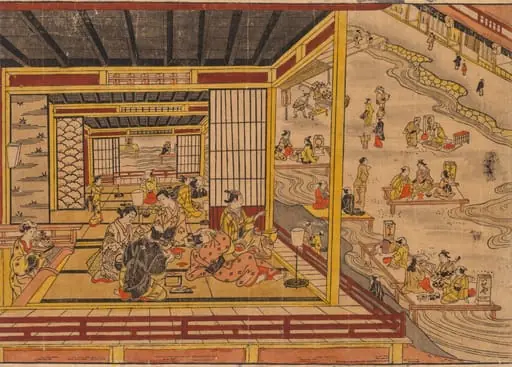 Tea House Beside the Kamo River in Kyoto
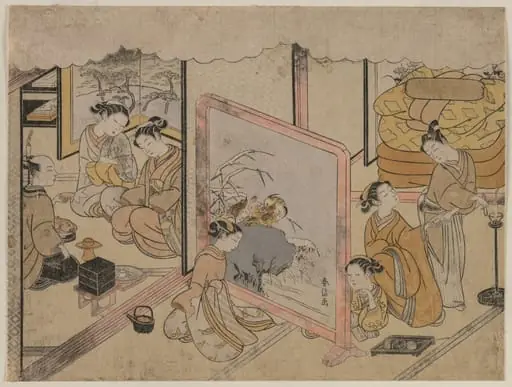 Drinking a Cup of Wine Before Retiring for Bed (From an Untitled Series)
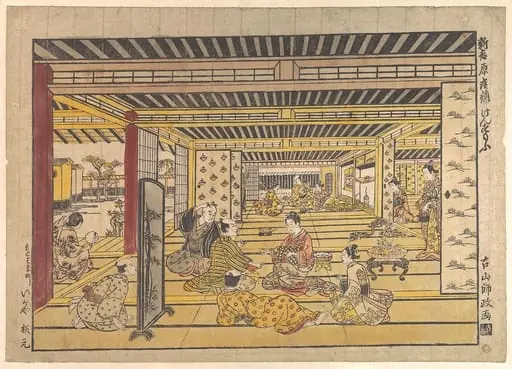 Untitled
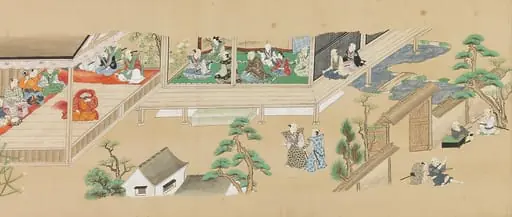 能楽風俗図絵巻|Six Noh Performances in Scenes from Daily Life
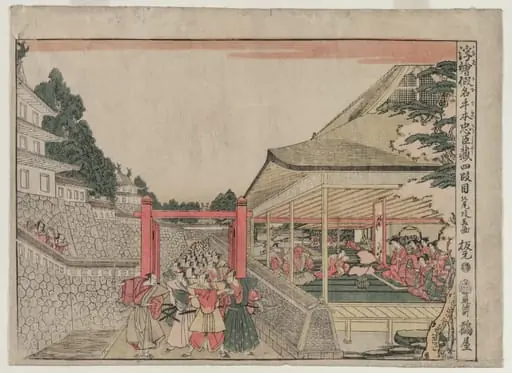 Chushingura: Act IV (from the series Perspective Pictures for The Treasure House of Loyalty)
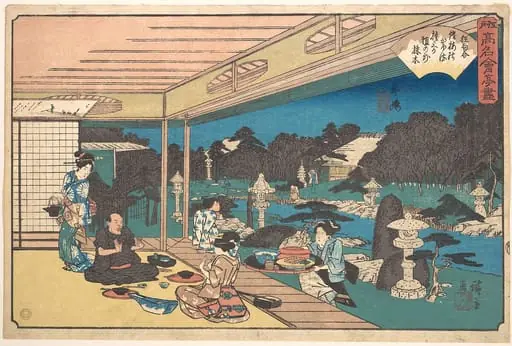 江戸高名会亭尽 牛嶋 武蔵屋|Ushijima (Musashi-ya)
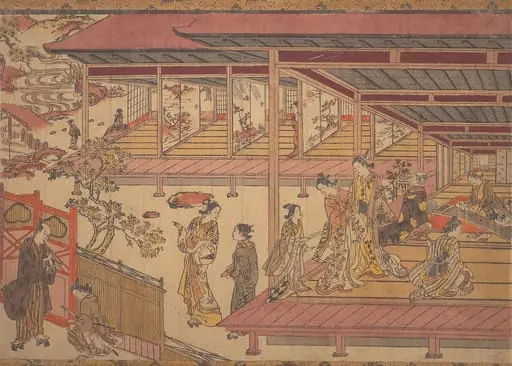 Untitled
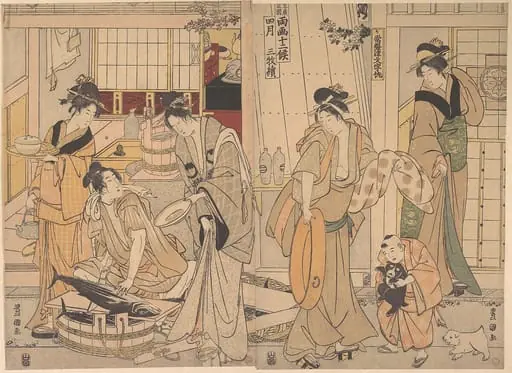 Untitled
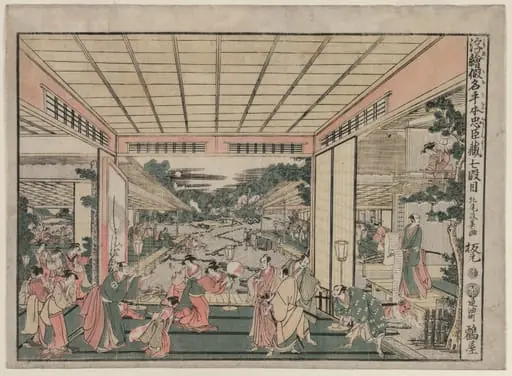 Chushingura: Act VII (from the series Perspective Pictures for The Treasure House of Loyalty)
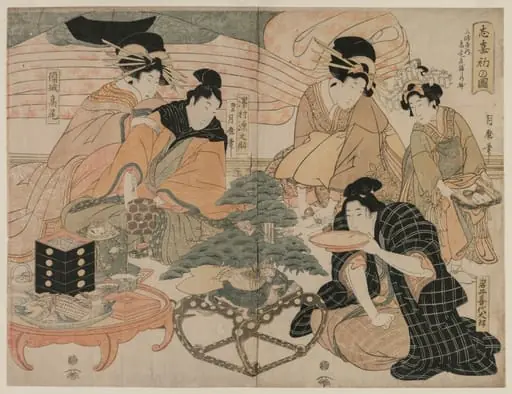 Picture of the First Visit to the Pleasure Quarters
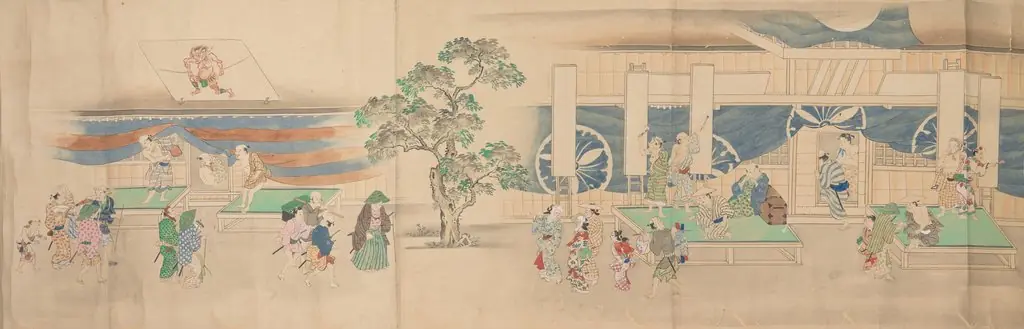 Kabuki Theater
 新吉原仮宅両国之図|Picture of the Temporary Lodgings of the New Yoshiwara Pleasure Quarter at Ryōgoku (Shin Yoshiwara Karitaku Ryogoku no zu)