Artwork
The king plucks fruit from the Tree of Life with his own hands and feeds it to a lady, from a Tuti-nama (Tales of a Parrot): Ninth Night
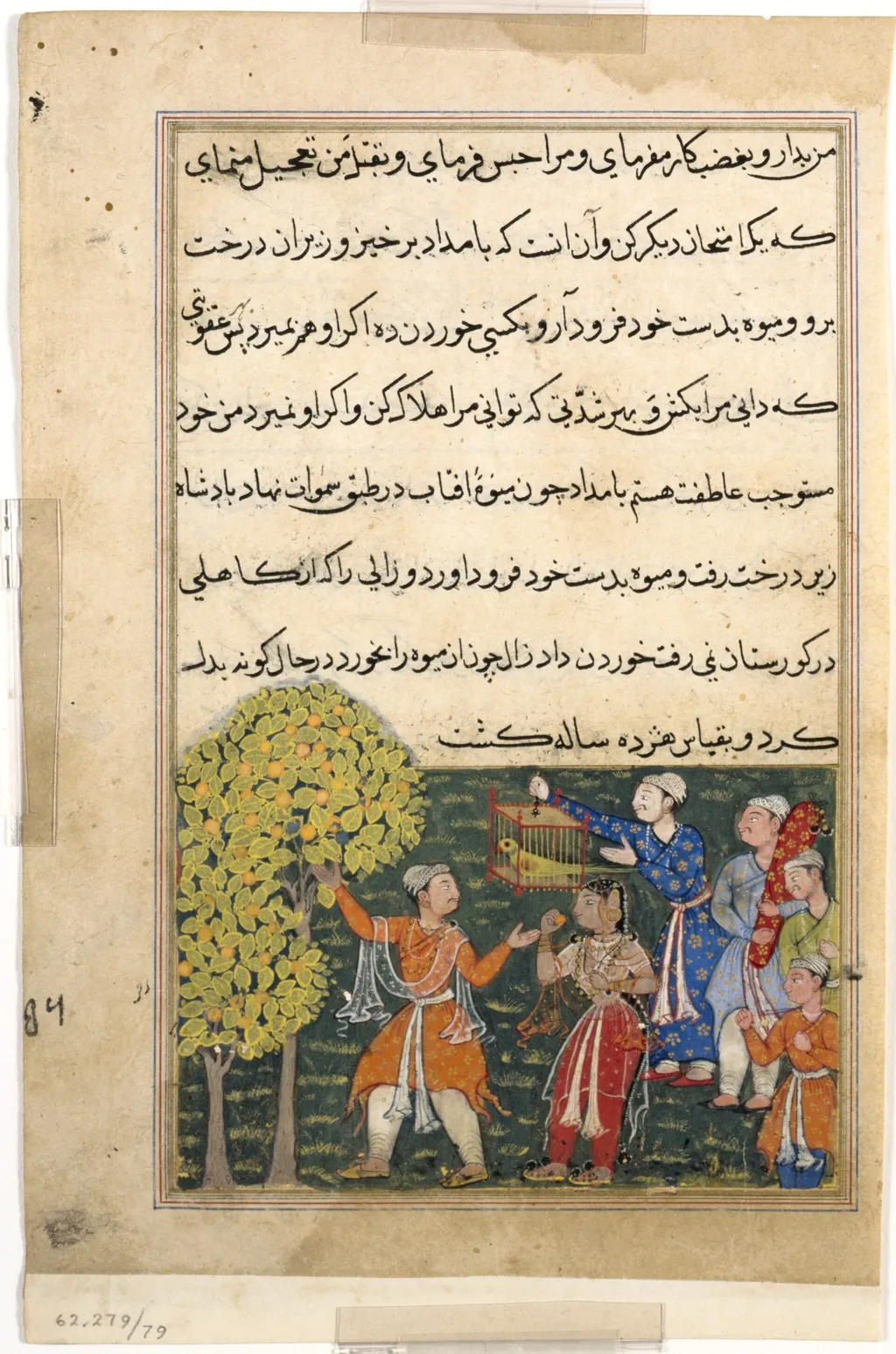
The king plucks fruit from the Tree of Life with his own hands and feeds it to a lady, from a Tuti-nama (Tales of a Parrot): Ninth Night is an unspecified painting. It dates from 1560 and is held in the collection of the Cleveland Museum of Art.
About this work
Overview
The work illustrates a narrative scene from the ninth night of the Persian illustrated manuscript known as the Tuti‑nama, or Tales of a Parrot. Central to the composition is a king reaching up to pluck bright yellow fruit from a laden tree and offering it to a lady, while a child watches the exchange. The picture is framed by a decorative border of text that identifies the episode.
Subject & Meaning
The image captures a moment of generosity and courtly interaction, typical of the moral tales in the Tuti‑nama, where the king’s act of feeding the lady symbolizes benevolent rule. The presence of a small child suggests the transmission of these virtues to the next generation, while the caged bird in the background alludes to the story’s title.
Technique & Style
Executed in flat, vivid pigments, the painting employs bold, unshaded color fields that emphasize the costumes—orange, blue, red, and gold—rather than realistic modeling. The composition is organized in a clear, linear fashion, with the tree and its fruit forming a central axis, and the figures rendered in stylized, decorative outlines characteristic of Persian miniature illustration.
History & Provenance
The piece originates from a 16th‑century Persian manuscript commissioned for a royal patron, reflecting the courtly taste for illustrated moral literature. It later entered European collections during the 19th‑century fascination with Oriental art, eventually becoming part of the Cleveland Museum of Art’s holdings.
Context
The Tuti‑nama belongs to a tradition of illustrated books that combined poetry, prose, and visual storytelling to convey ethical lessons. Such works were produced in workshops attached to royal courts, where artists collaborated with calligraphers to integrate text and image in a harmonious layout.
Artist & collection

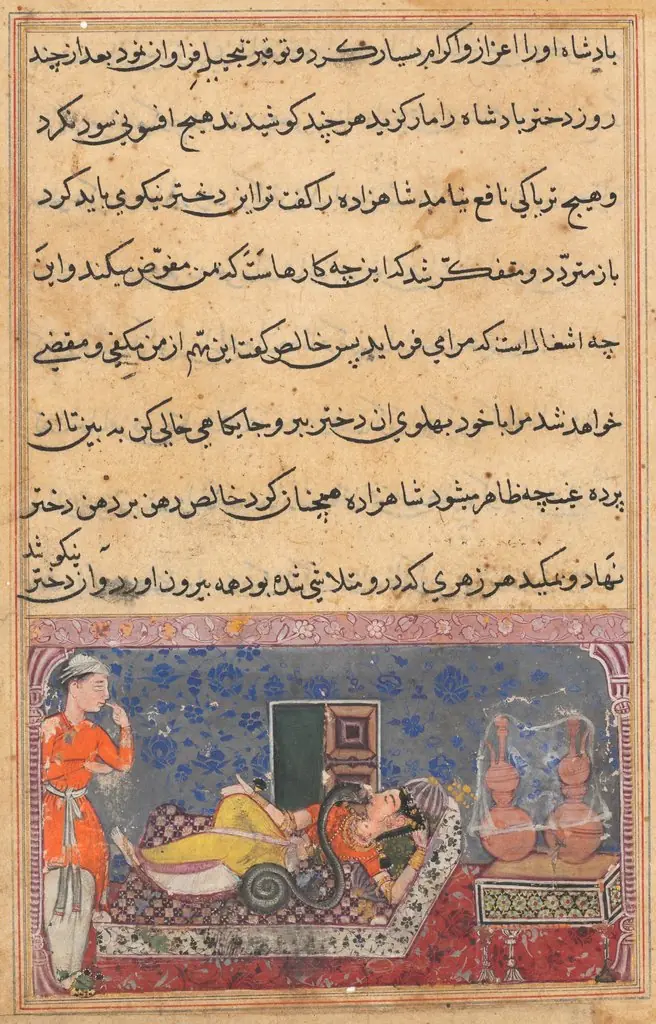 Khalis repays the prince for his kindness by changing into a snake and sucking the poison from the king’s daughter, from a Tuti-nama (Tales of a Parrot): Eighteenth Night
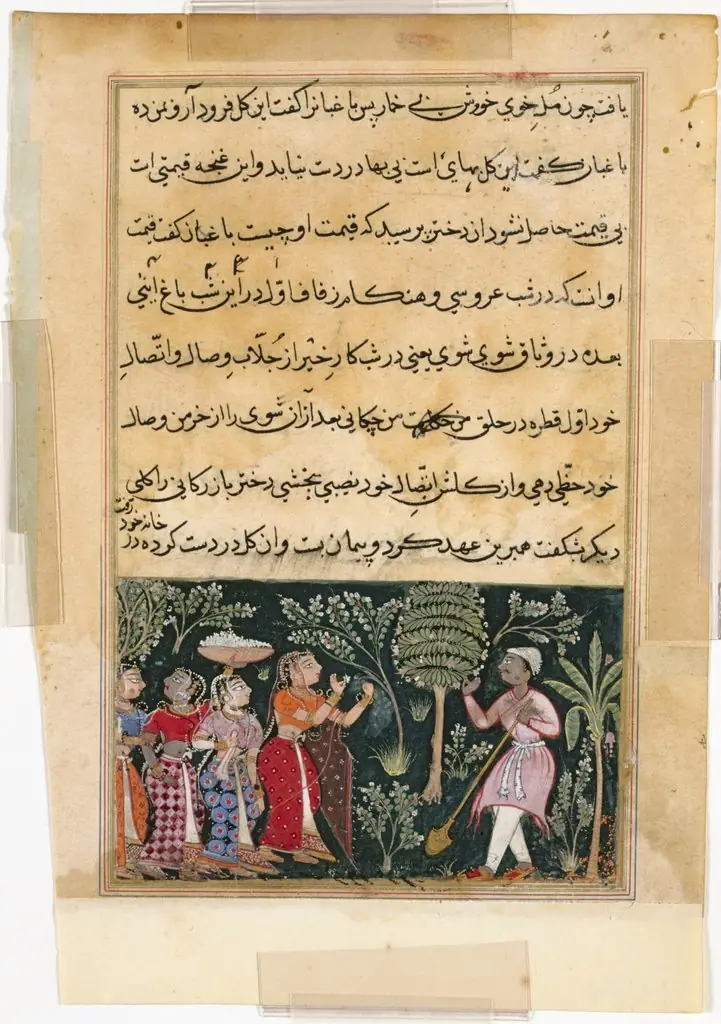 The daughter of the merchant of Mazanderan asks the gardener for the rose, from a Tuti-nama (Tales of a Parrot): Twelfth Night
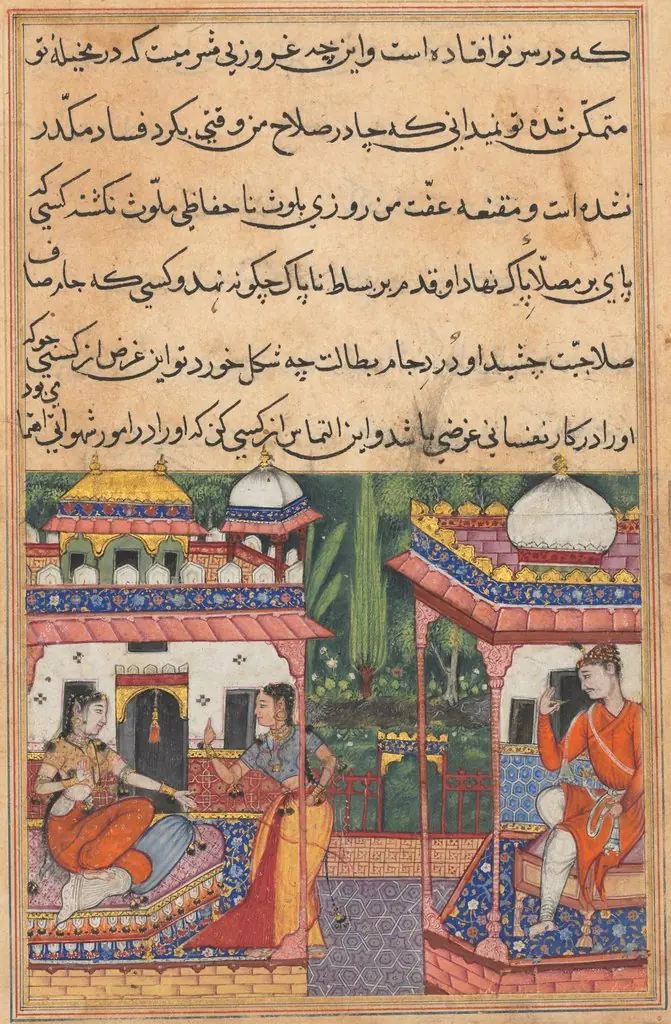 Kaiwan sends a message of love to Khurshid, wife of his brother Utarid who is away on a journey, from a Tuti-nama (Tales of a Parrot): Thirty-second Night
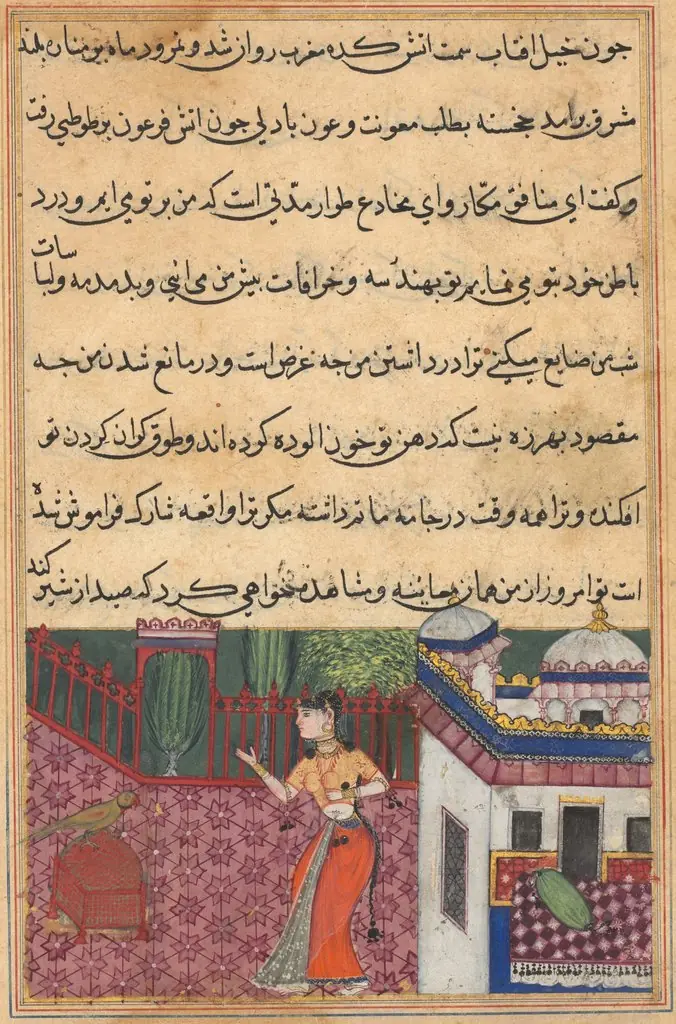 The parrot addresses Khujasta at the beginning of the thirty-third night, from a Tuti-nama (Tales of a Parrot)
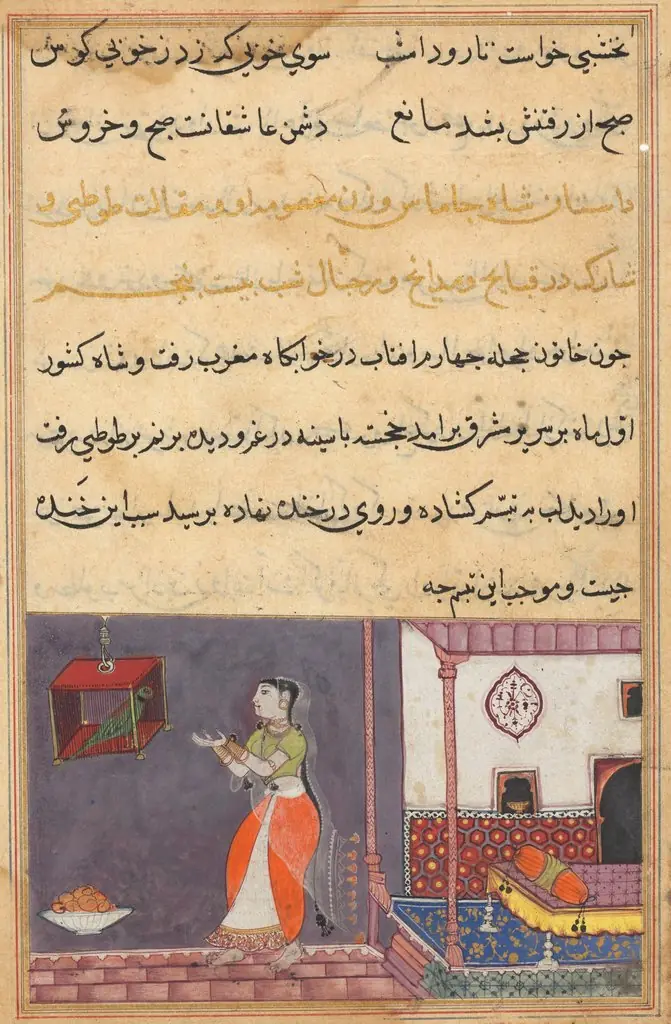 The Parrot Addresses Khujasta at the Beginning of the Twenty-fifth Night, from a Tuti-nama (Tales of a Parrot)
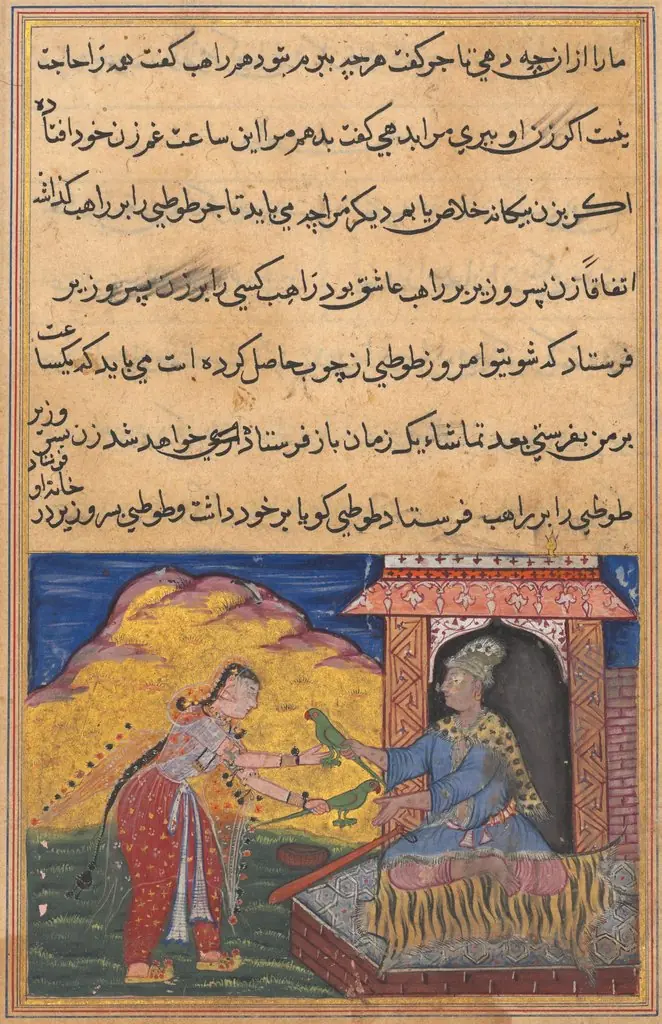 The wife of the son of the vizier brings the magic wooden parrot to her lover, the monk, who exchanges it for the replica, from a Tuti-nama (Tales of a Parrot): Tenth Night
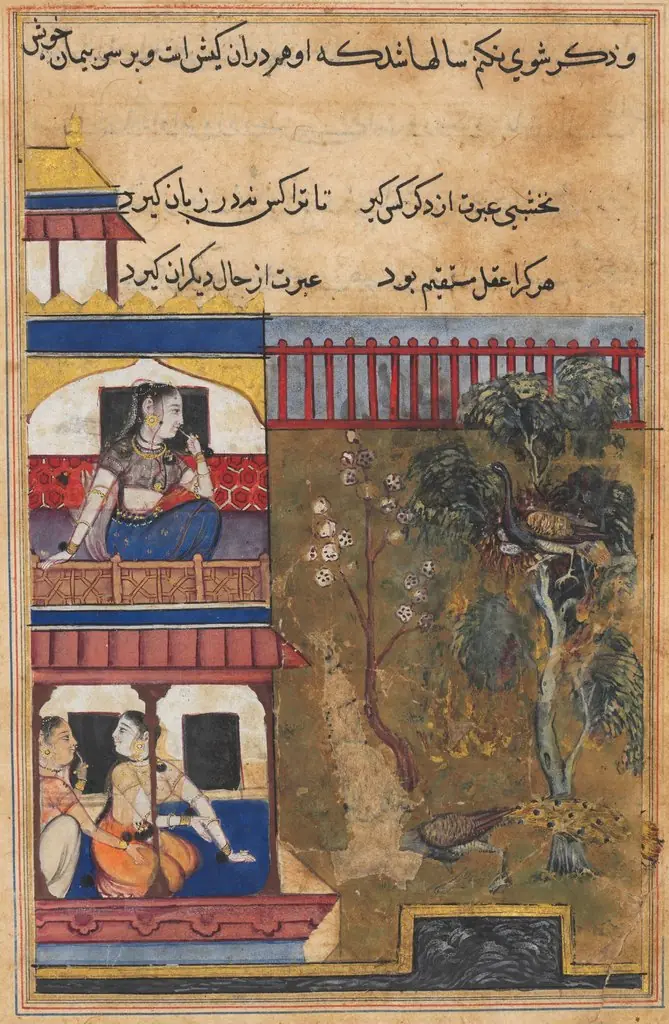 The queen of Rum watches the peahen prefer to burn rather than abandon her eggs while the peacock flees the nest, from a Tuti-nama (Tales of a Parrot): Thirty-ninth Night
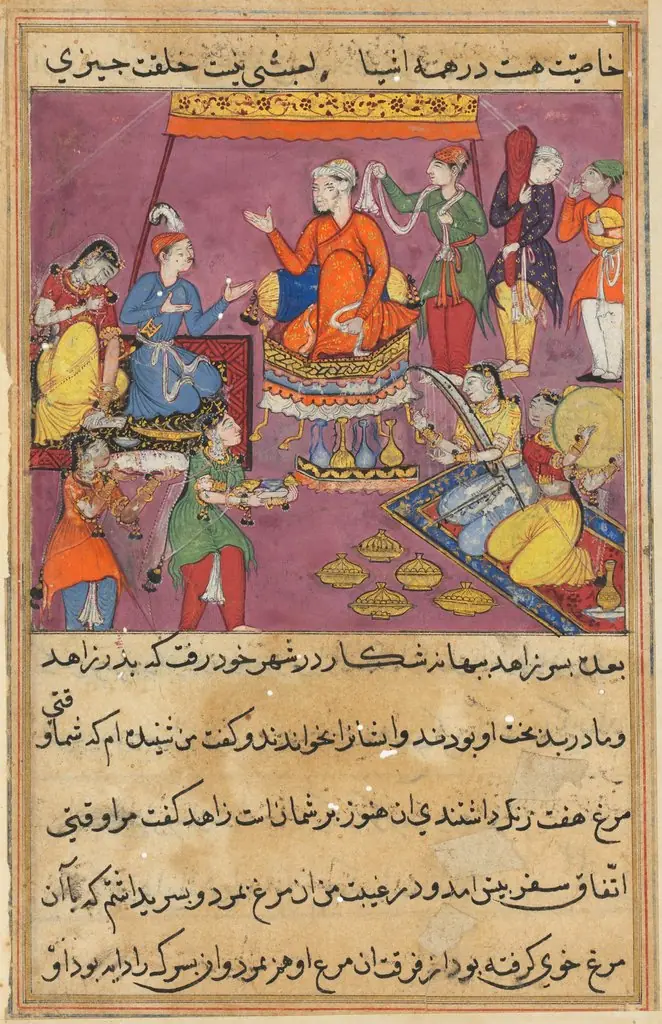 The king gives his daughter in marriage to the pious man’s son, from a Tuti-nama (Tales of a Parrot): Fifty-second Night