Artwork
Page from Tales of a Parrot (Tuti-nama): text page
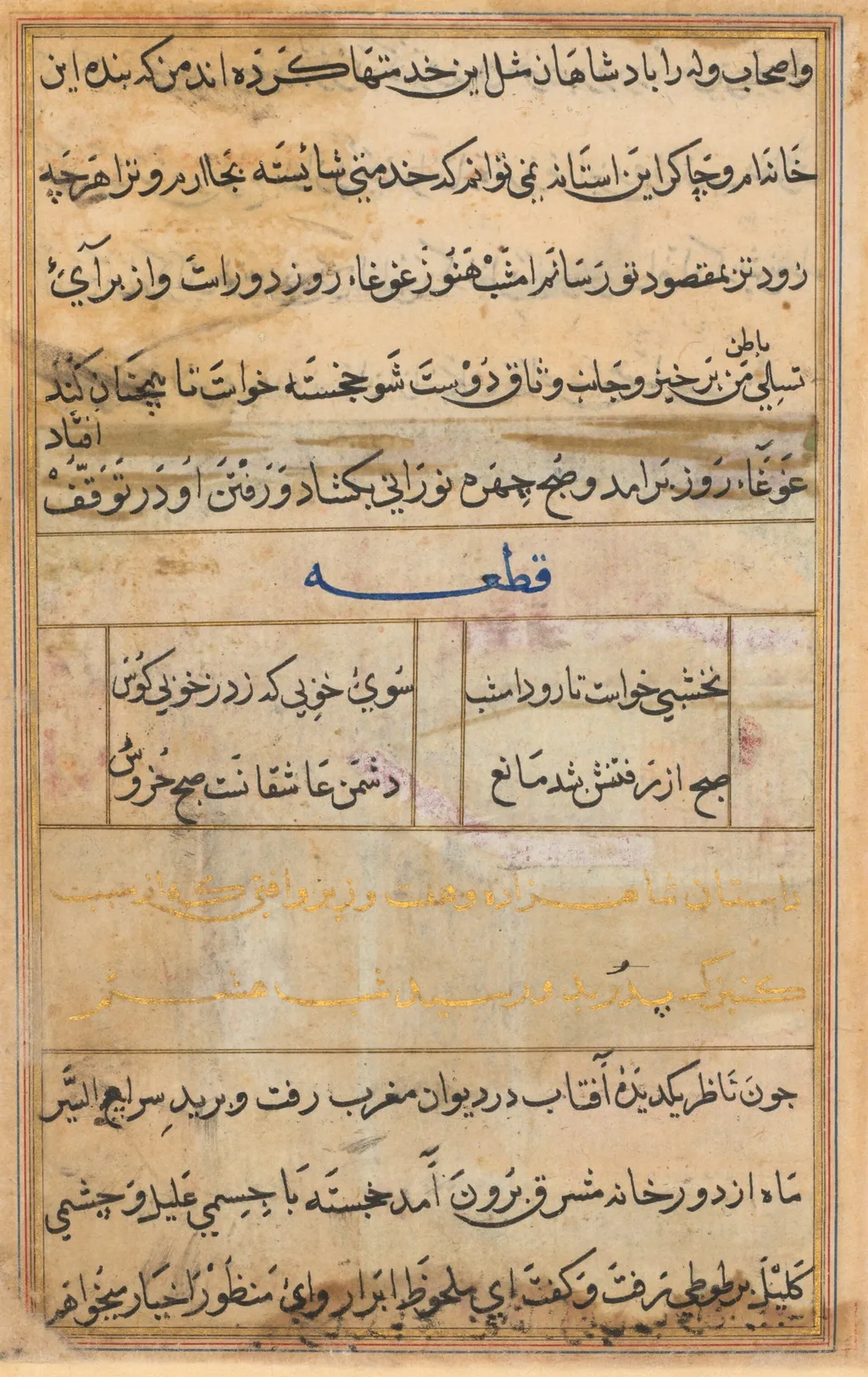
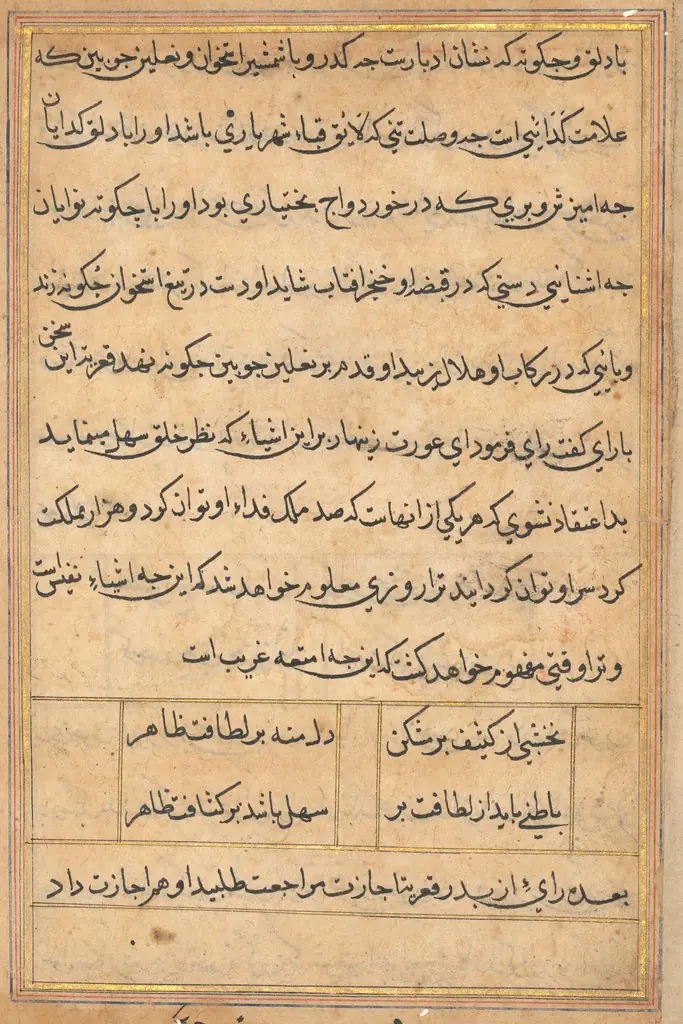
Page from Tales of a Parrot (Tuti-nama): text page is an unspecified painting. It dates from 1560 and is held in the collection of the Cleveland Museum of Art. The object is a painted page from the Persian manuscript known as *Tuti-nama* (The Parrot’s Tale).
About this work
Overview
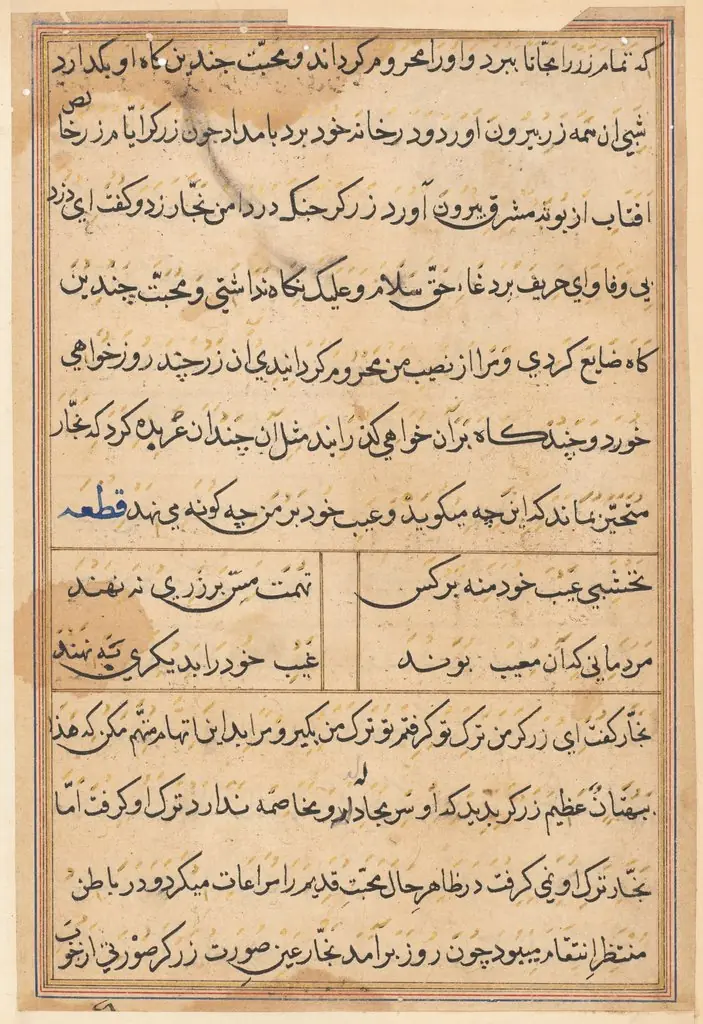
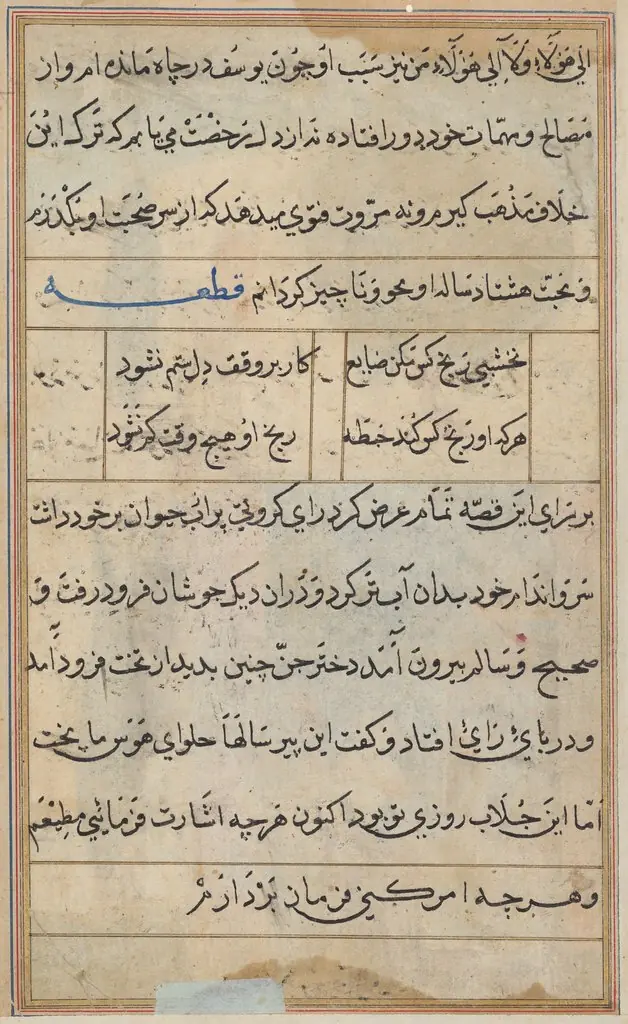
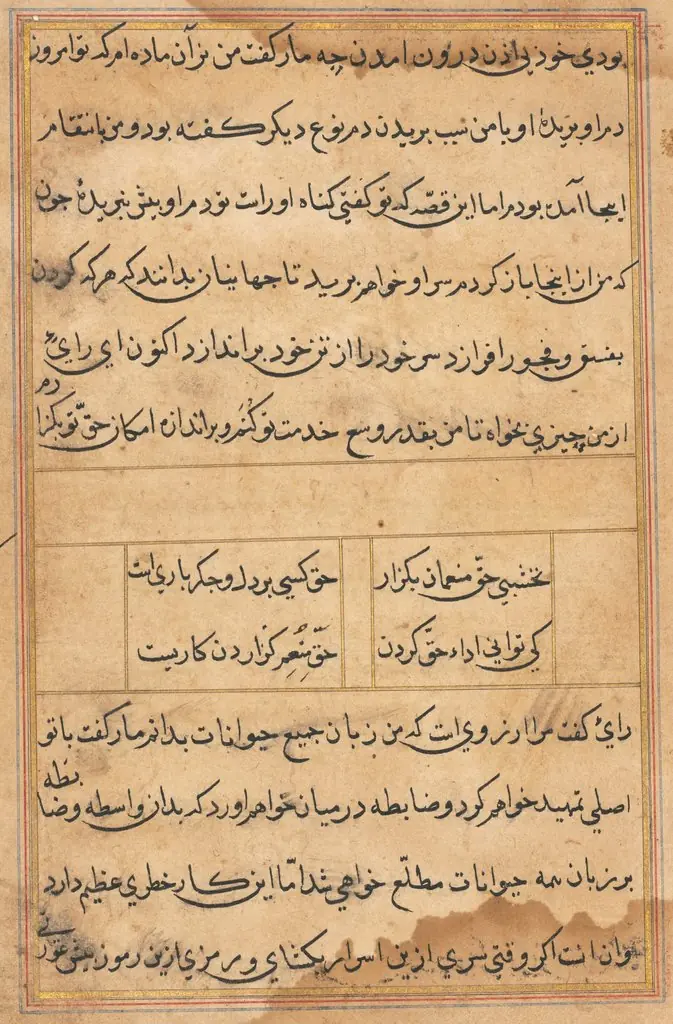
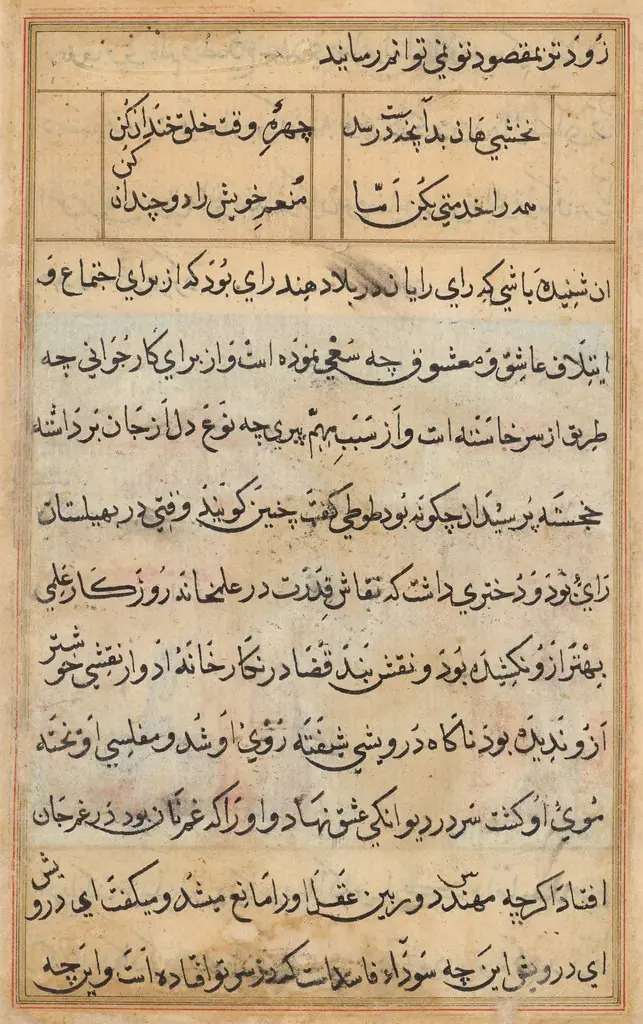
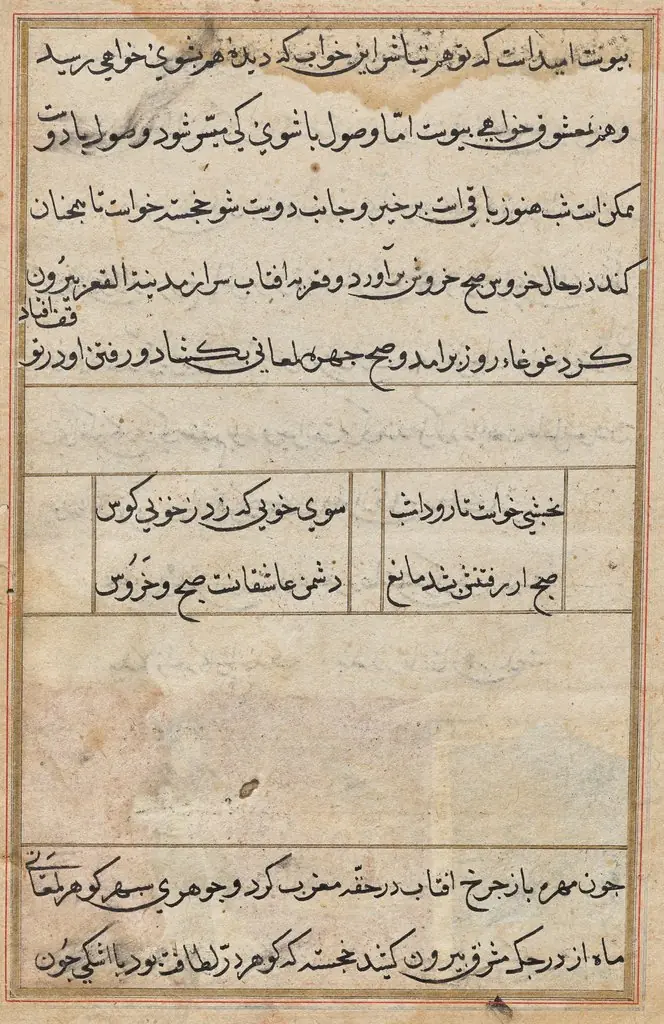
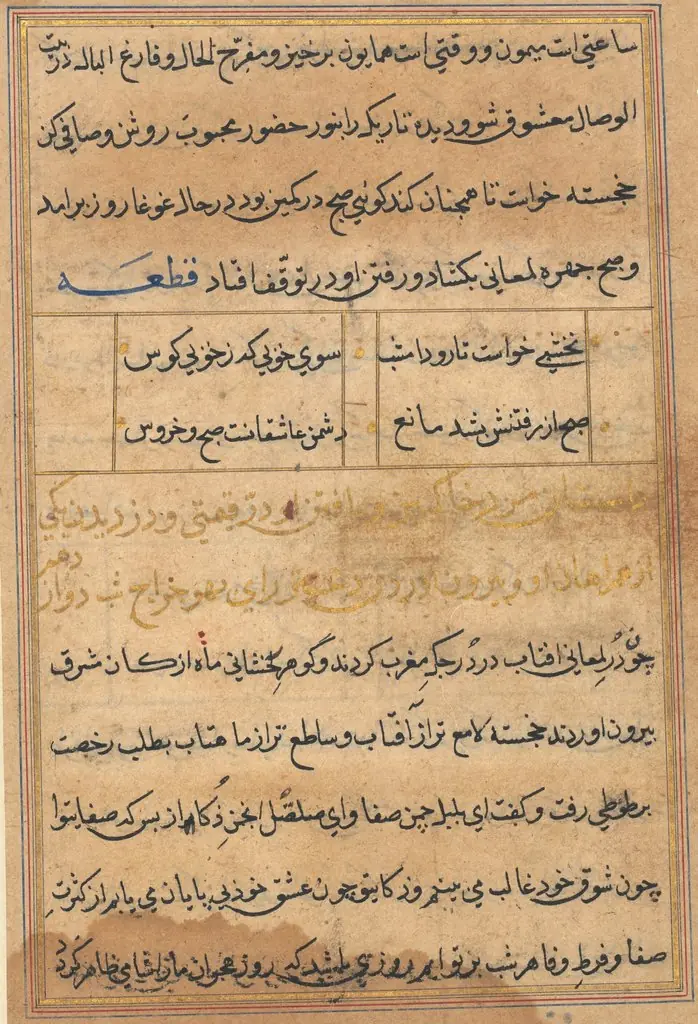
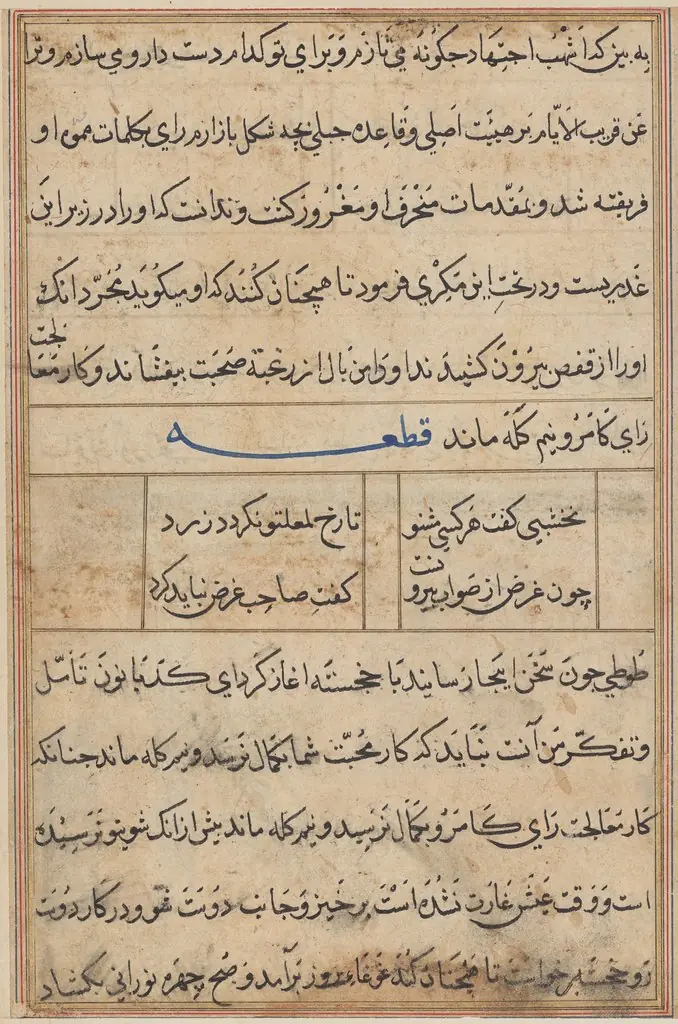
The object is a painted page from the Persian manuscript known as *Tuti-nama* (The Parrot’s Tale). Executed on paper, the surface is covered with dense black Arabic calligraphy, organized into orderly blocks. A modest decorative frame in gold and dark pigment encloses the text, while selective use of gold and blue ink highlights particular words.
Subject & Meaning
The page contains a portion of the *Tuti-nama*, a didactic work that presents moral and philosophical anecdotes through dialogues between a parrot and a king. The highlighted passages likely indicate verses of special significance, perhaps quotations intended for a royal audience or for emphasis in teaching.
Technique & Style
The calligraphic script is rendered in a fluid black ink, characteristic of Persian manuscript traditions. Gold and lapis‑blue pigments are applied as accent strokes, a common method for drawing attention to key terms. The surrounding border combines a simple gold line with a darker ornamental strip, reflecting a restrained yet elegant decorative scheme.
History & Provenance
The page originates from a Persian illustrated manuscript produced for a courtly patron, probably during the Safavid period when such luxury books were commissioned for royalty. It entered the collection of the Cleveland Museum of Art as part of a larger acquisition of Persian miniatures and manuscript pages.
Context
Manuscripts like the *Tuti-nama* were valued as both literary and visual objects, serving educational purposes while also displaying the patron’s refined taste. The use of gold and blue highlights aligns with contemporary practices of emphasizing sacred or authoritative text in elite libraries.
Artist & collection

 Page from Tales of a Parrot (Tuti-nama): text page
 Page from Tales of a Parrot (Tuti-nama): text page
 Page from Tales of a Parrot (Tuti-nama): text page
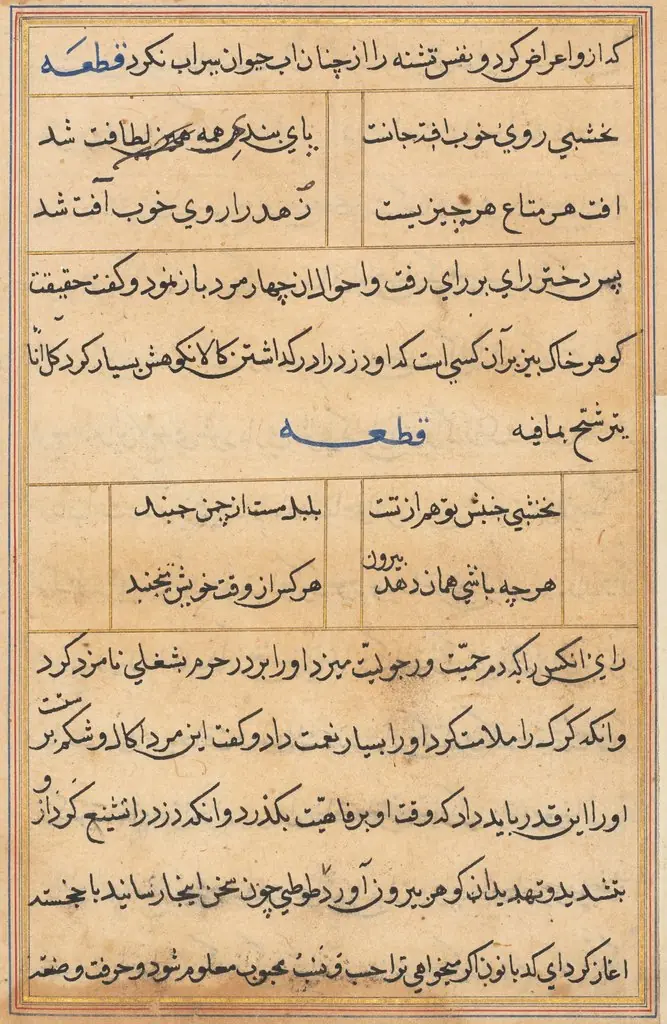 Page from Tales of a Parrot (Tuti-nama): text page
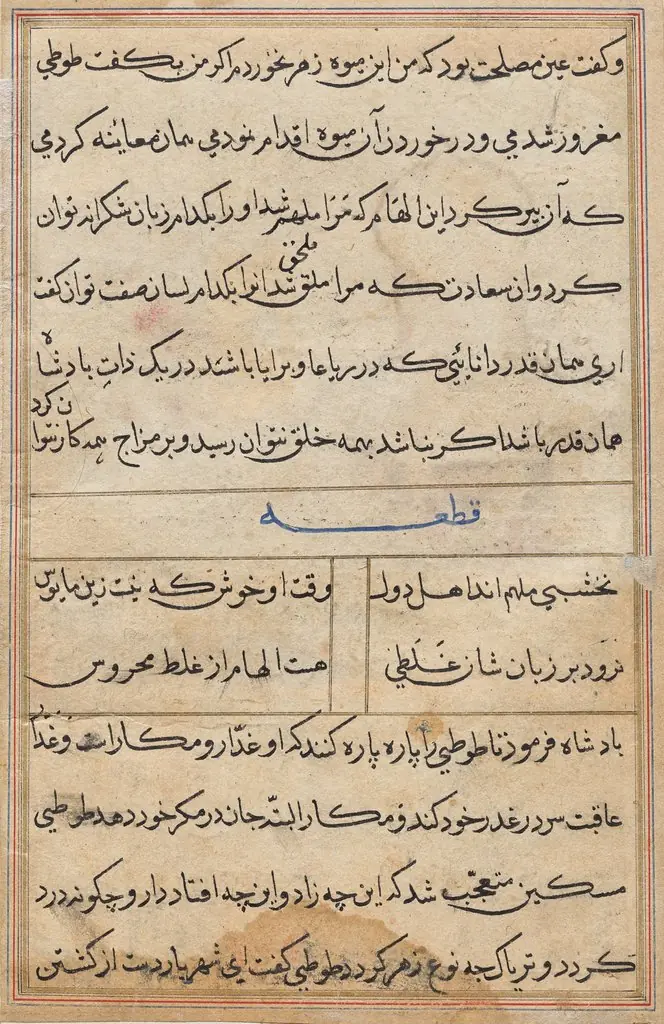 Page from Tales of a Parrot (Tuti-nama): text page
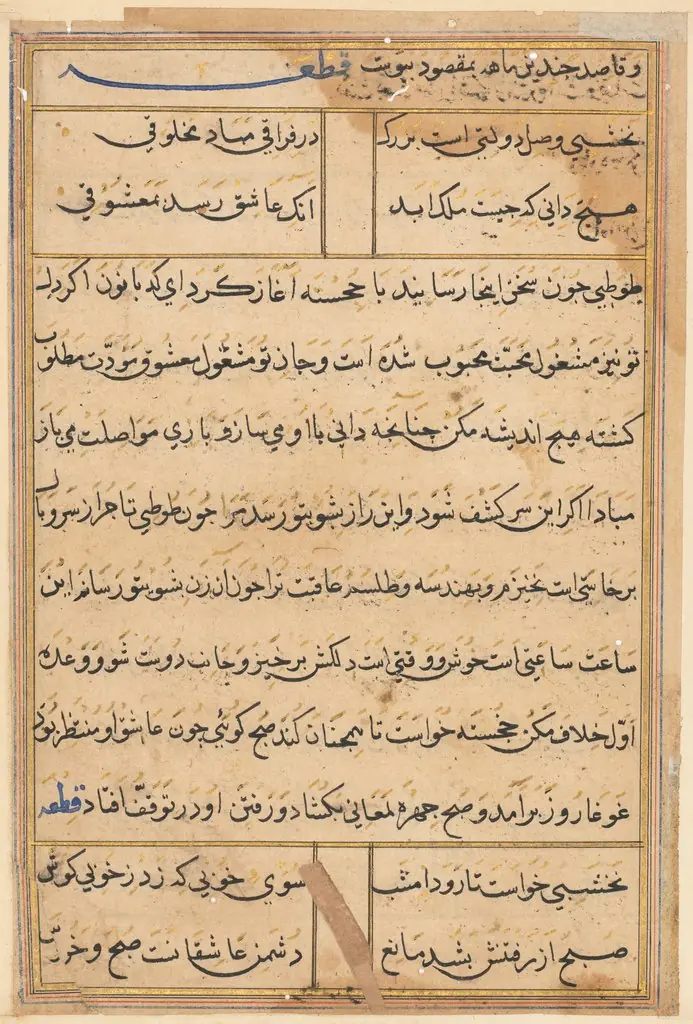 Page from Tales of a Parrot (Tuti-nama): text page
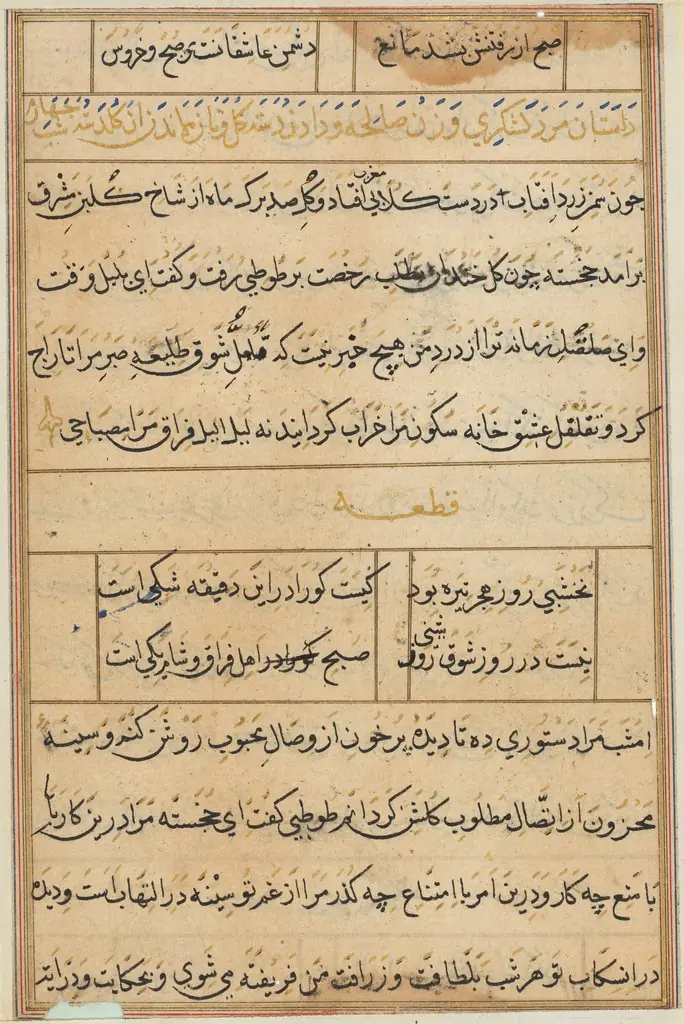 Page from Tales of a Parrot (Tuti-nama): text page
 Page from Tales of a Parrot (Tuti-nama): text page
 Page from Tales of a Parrot (Tuti-nama): text page
 Tuti-Nama (Tales of a Parrot)
 Page from Tales of a Parrot (Tuti-nama): text page
 Page from Tales of a Parrot (Tuti-nama): text page