Artwork
Page from Tales of a Parrot (Tuti-nama): text page
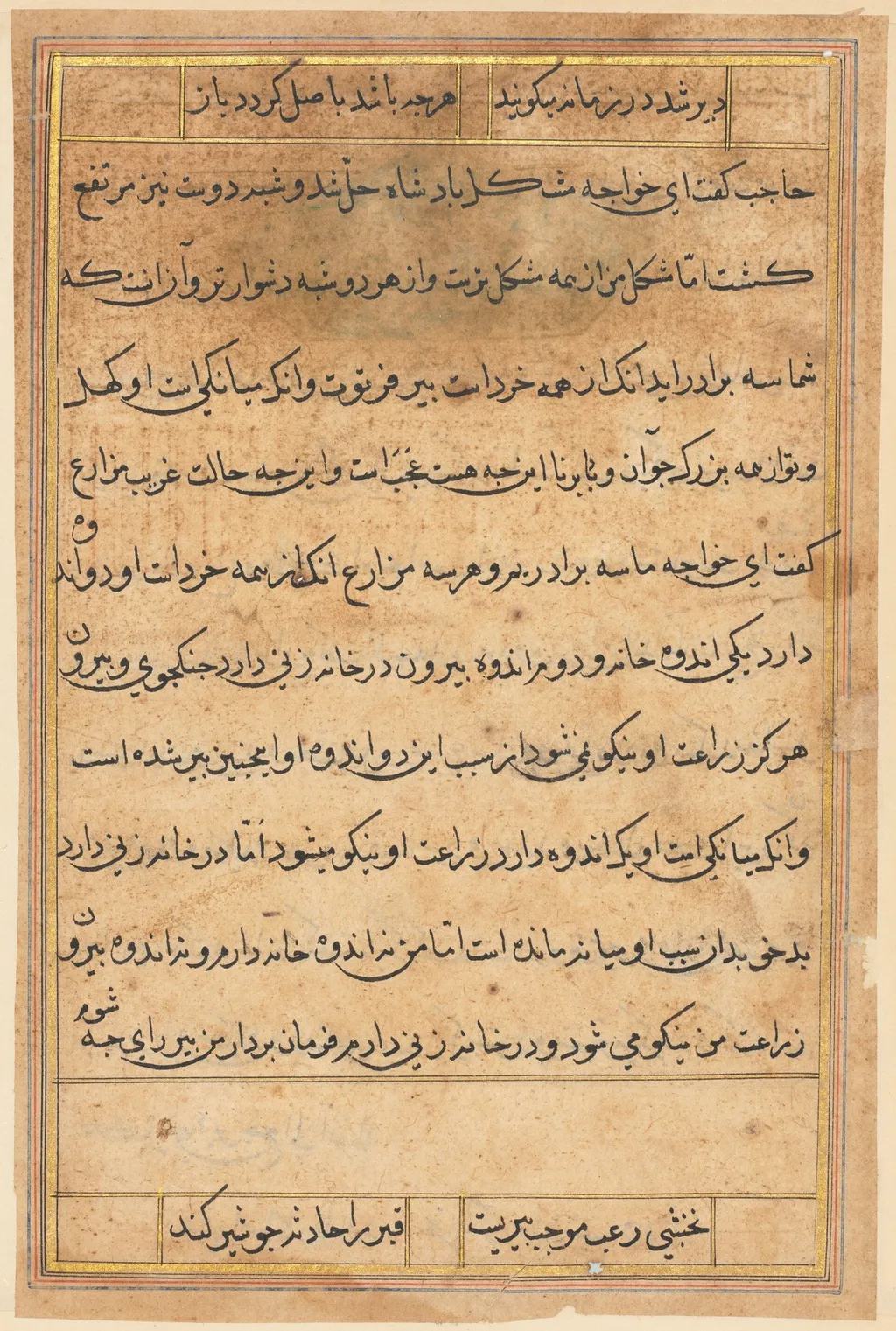
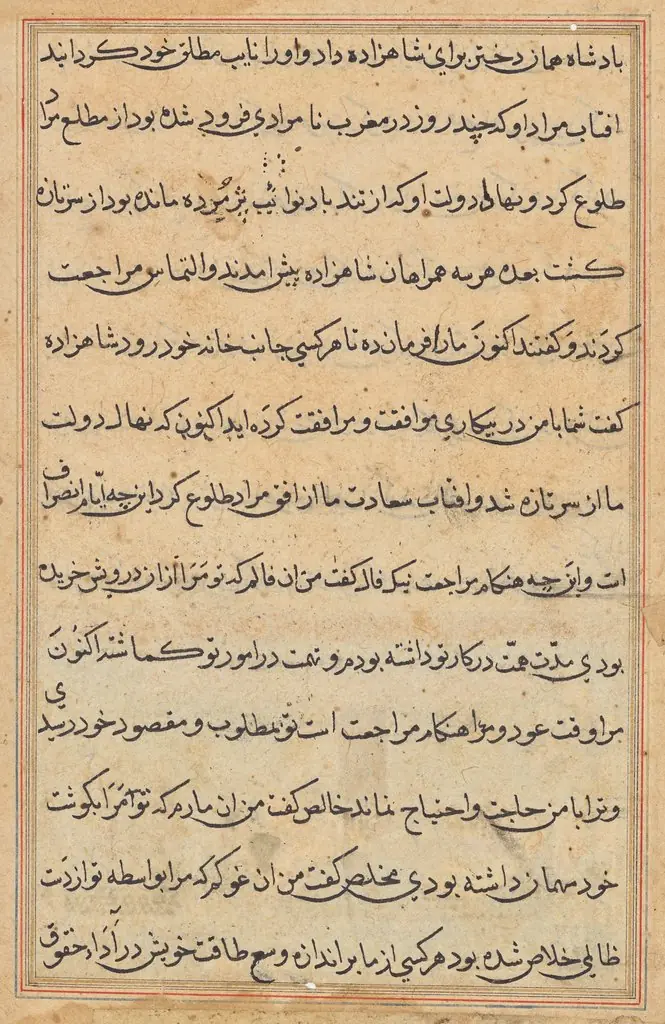
Page from Tales of a Parrot (Tuti-nama): text page is an unspecified painting. It dates from 1560 and is held in the collection of the Cleveland Museum of Art. The work is a single folio from the 1560 illustrated manuscript series known as Tales of a Parrot (Tuti‑nama).
About this work
The text is written in a flowing script, with each line carefully arranged to create a sense of harmony and balance.
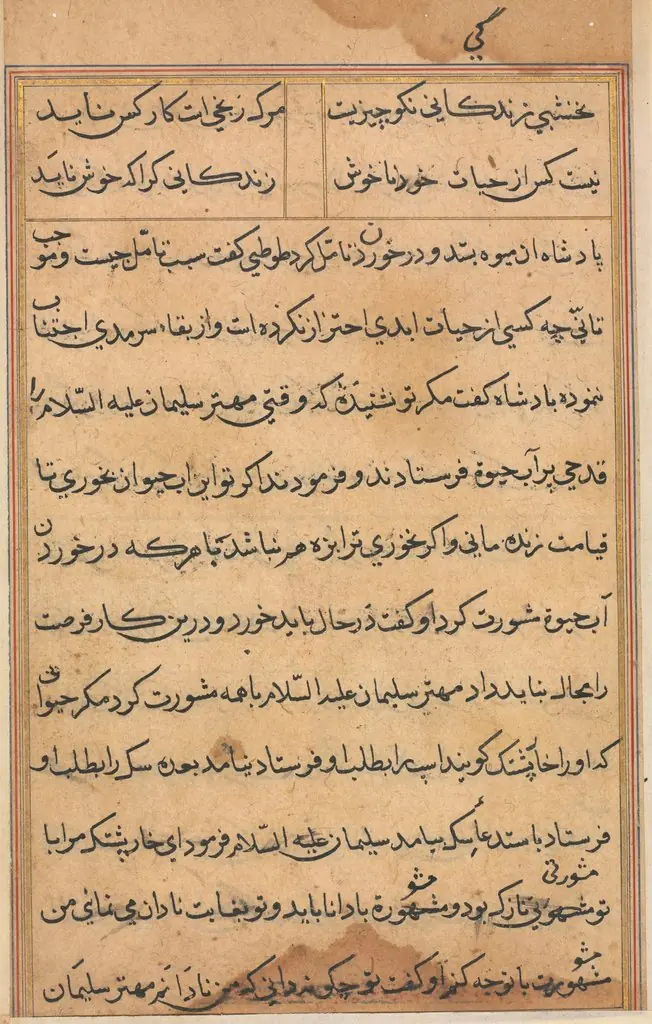
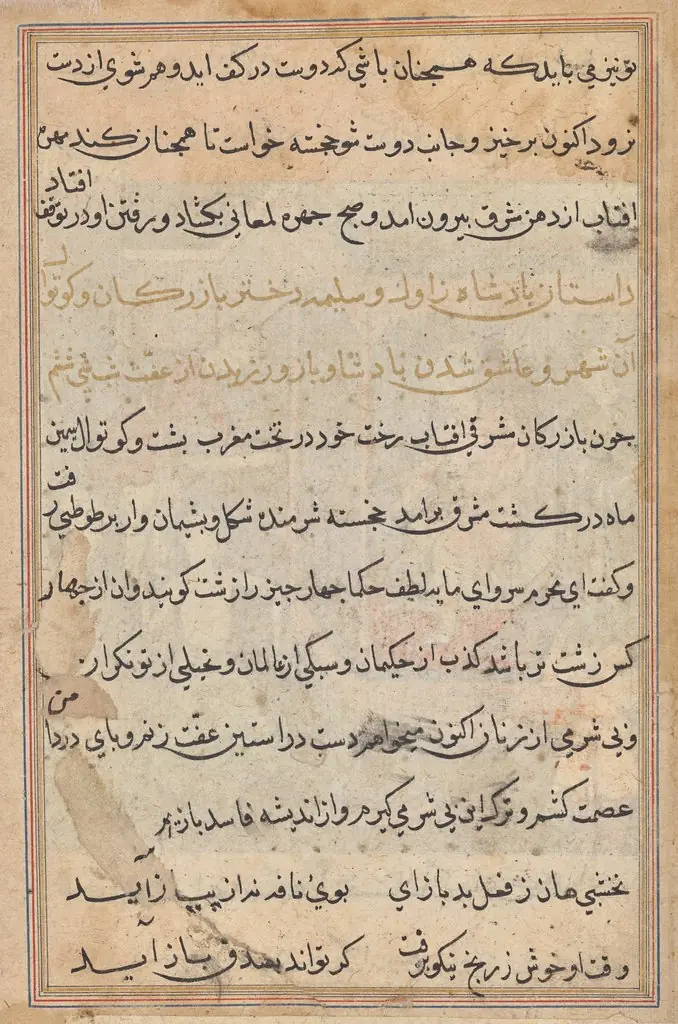
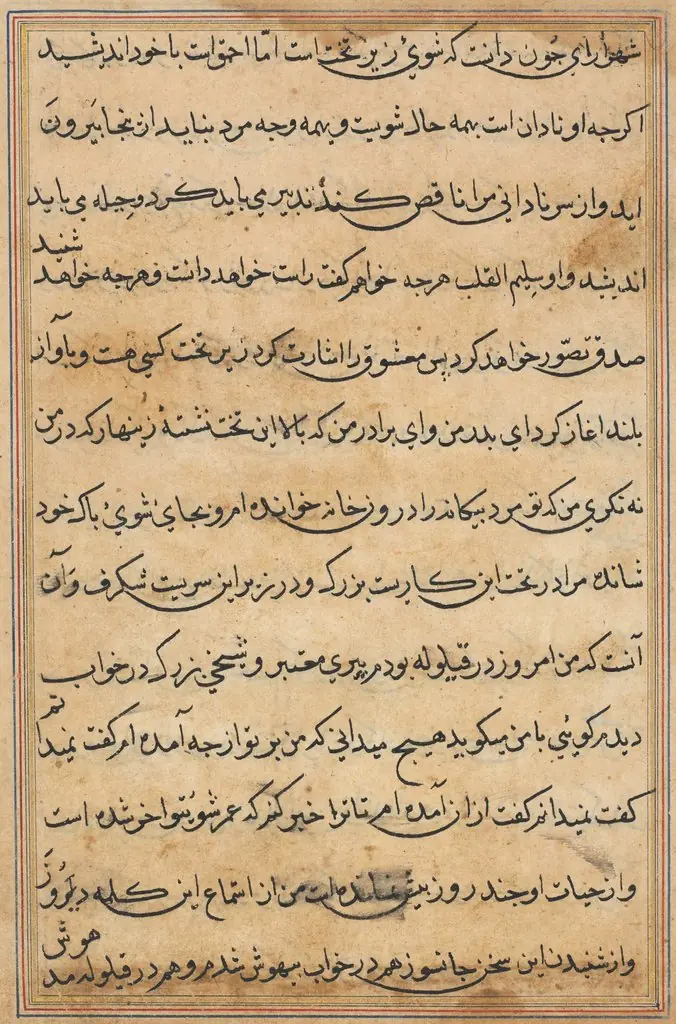
This painting is a page from the "Tales of a Parrot" (Tuti-nama) series, created in 1560. The image features a text page with intricate calligraphy and ornate borders. The text is written in a flowing script, with each line carefully arranged to create a sense of harmony and balance. The page is adorned with decorative elements, including intricate patterns and motifs that add to its visual appeal. The use of color is subtle, with muted tones that complement the text and create a sense of calm.
Overview
The work is a single folio from the 1560 illustrated manuscript series known as Tales of a Parrot (Tuti‑nama). It presents a page of text rather than a narrative scene, emphasizing the visual qualities of the script and its surrounding ornamentation. The composition balances written content with decorative framing, offering a glimpse into the aesthetic priorities of mid‑sixteenth‑century manuscript production.
Subject & Meaning
The page contains a passage rendered in an elegant, flowing hand, each line arranged to achieve visual symmetry and rhythmic flow. While the specific narrative of the text is not depicted, the careful layout suggests an intention to make reading a contemplative act, where the beauty of the lettering reinforces the literary content.
Technique & Style
Calligraphic strokes are executed with fine brushwork, producing a smooth, continuous script that integrates with intricate border motifs. The ornamental frame features interlacing patterns and stylized vegetal designs, rendered in subdued pigments that avoid stark contrast. This restrained palette of muted tones enhances the legibility of the text while imparting a tranquil atmosphere.
History & Provenance
Created in 1560 as part of the Tuti‑nama series, the folio reflects the manuscript culture of its region during the early modern period. Though the original codex’s later ownership is not documented here, the page survives as an example of the period’s combined literary and visual artistry, illustrating the convergence of textual transmission and decorative art.
Artist & collection

 Page from Tales of a Parrot (Tuti-nama): text page
 Page from Tales of a Parrot (Tuti-nama): text page
 Page from Tales of a Parrot (Tuti-nama): text page
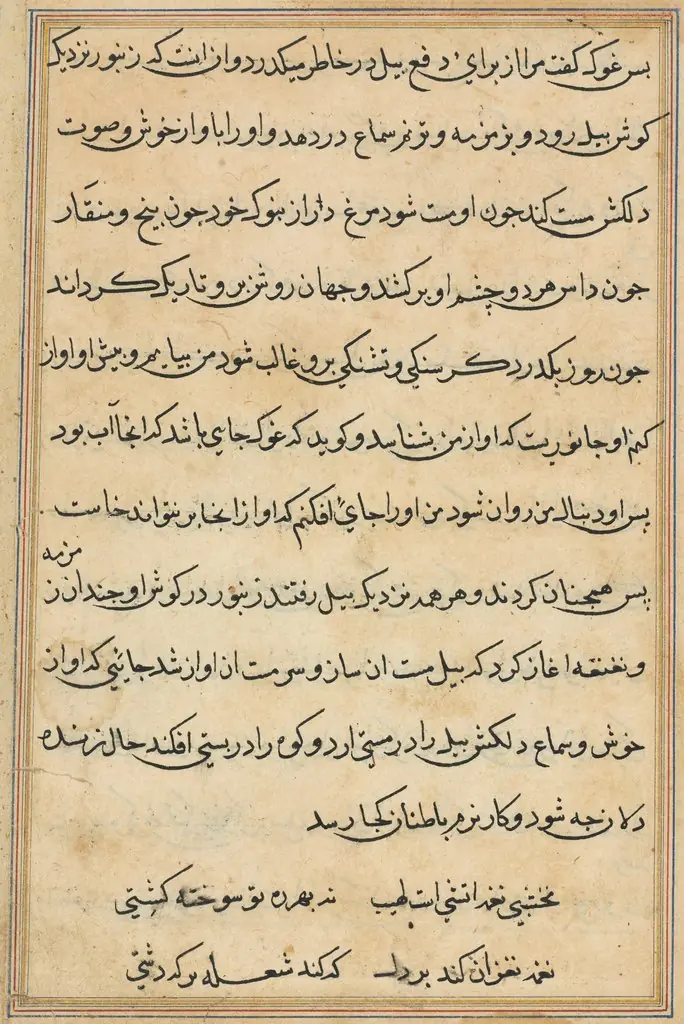 Page from Tales of a Parrot (Tuti-nama): text page
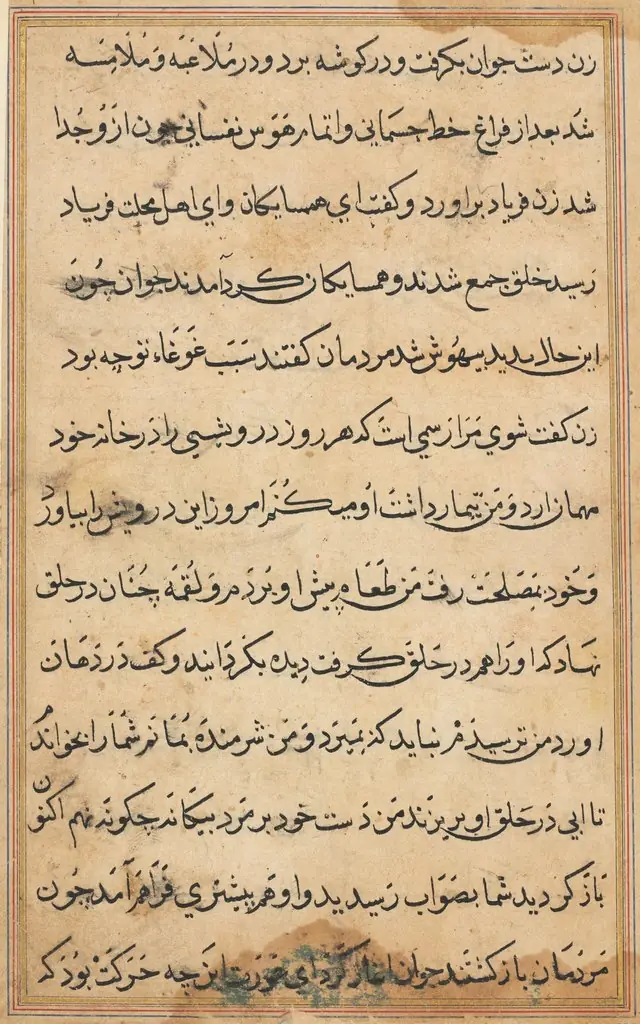 Page from Tales of a Parrot (Tuti-nama): text page
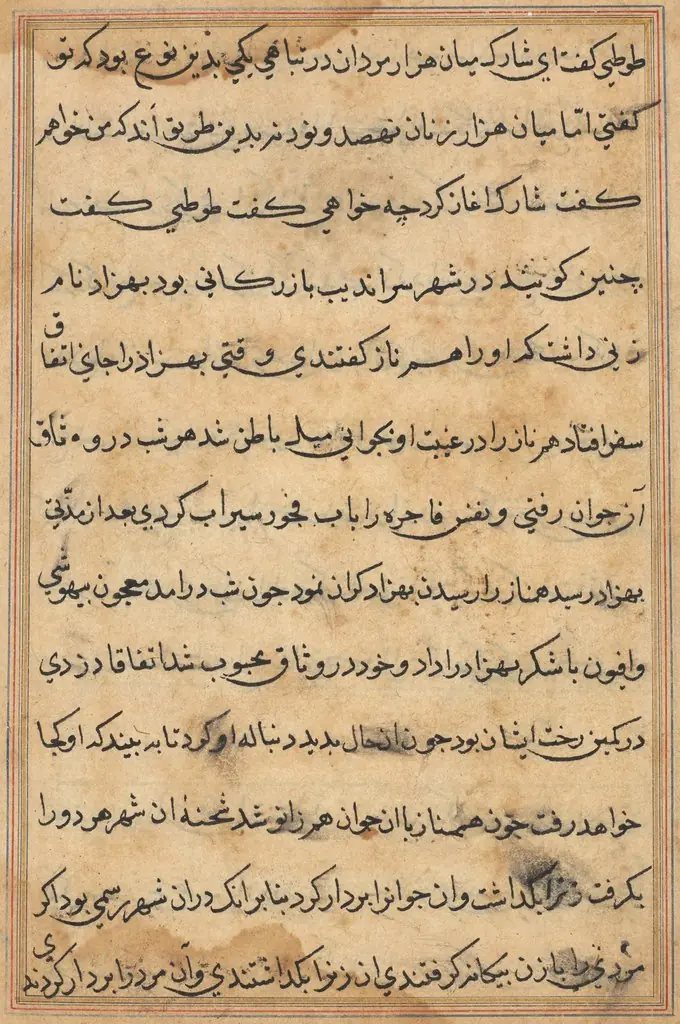 Page from Tales of a Parrot (Tuti-nama): text page
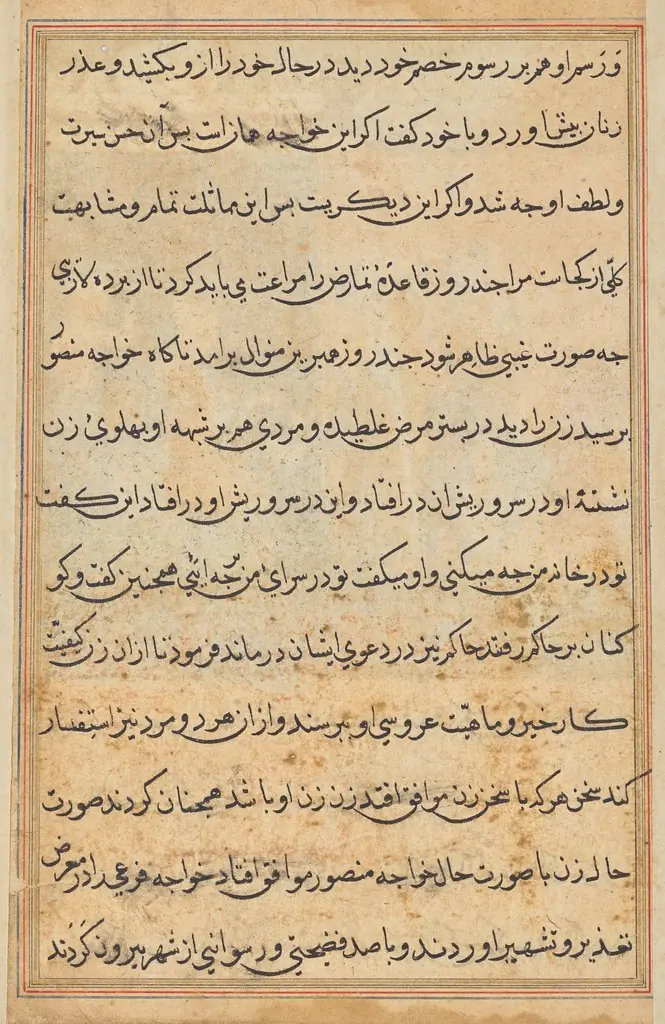 Page from Tales of a Parrot (Tuti-nama): text page
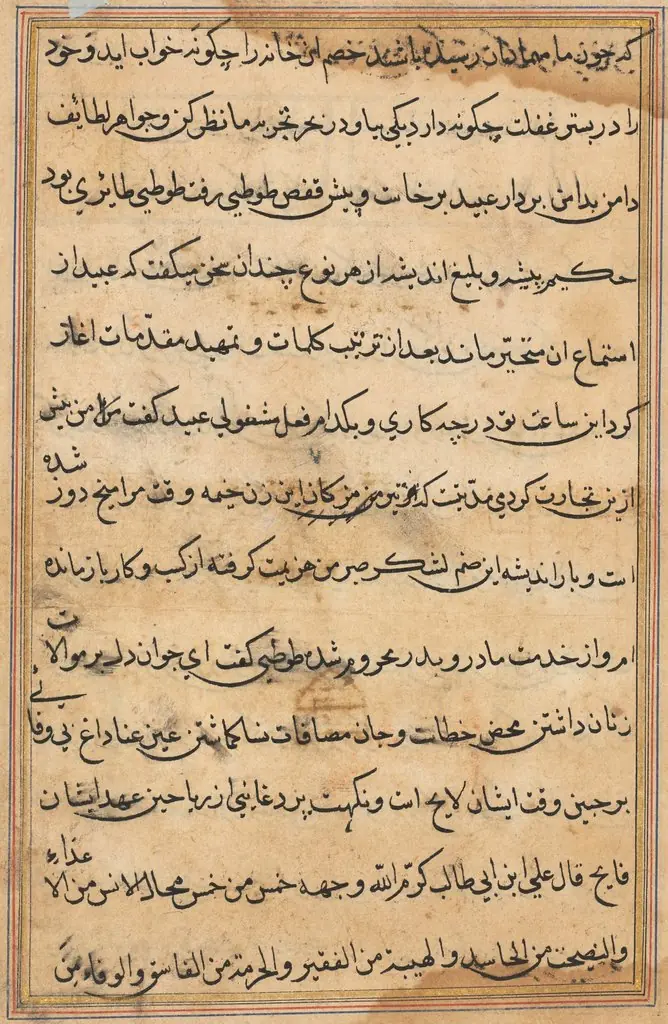 Page from Tales of a Parrot (Tuti-nama): text page
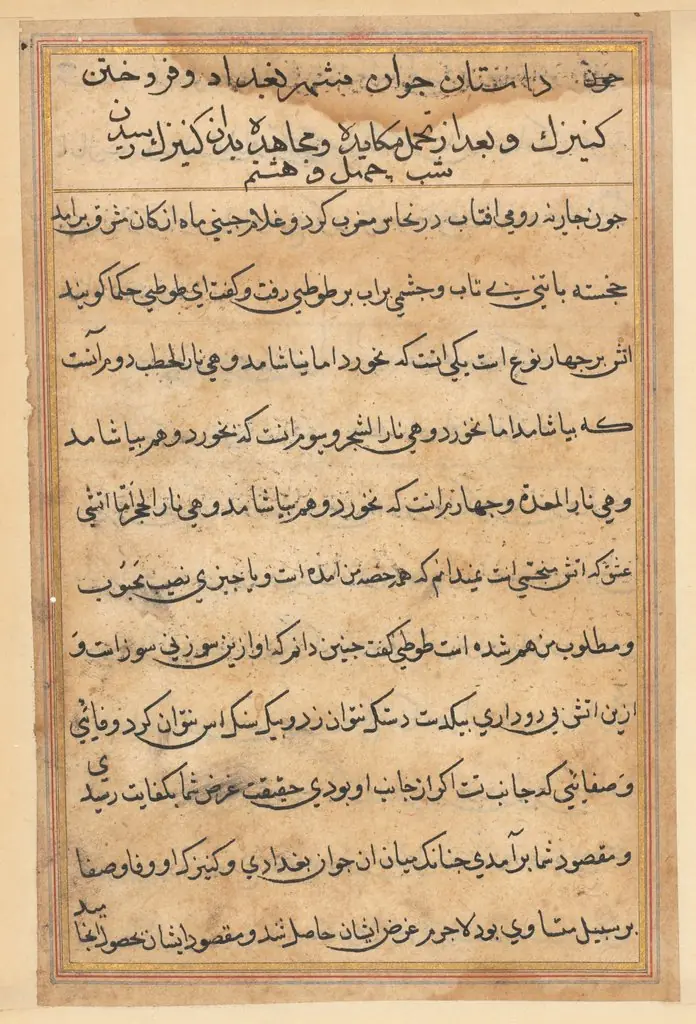 Page from Tales of a Parrot (Tuti-nama): text page
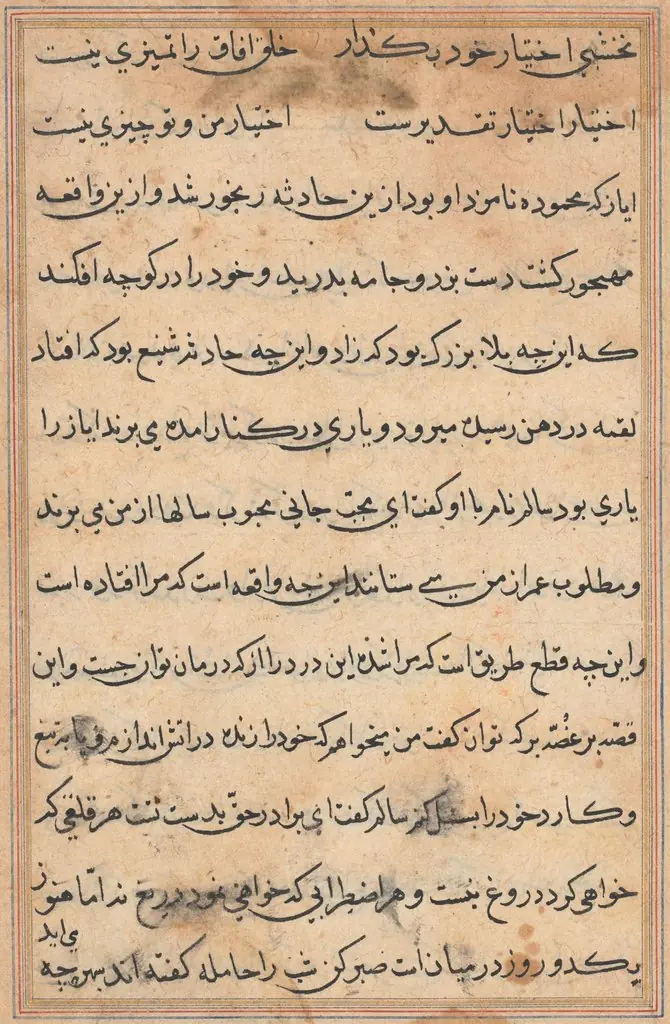 Page from Tales of a Parrot (Tuti-nama): text page
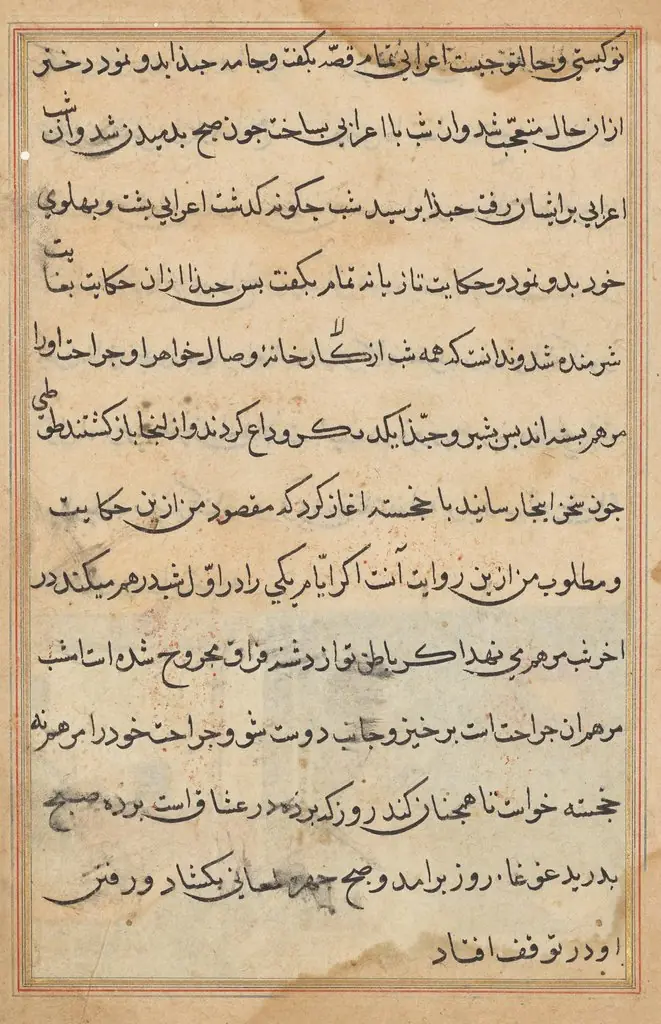 Page from Tales of a Parrot (Tuti-nama): text page
 Page from Tales of a Parrot (Tuti-nama): text page