Artwork
St Jerome
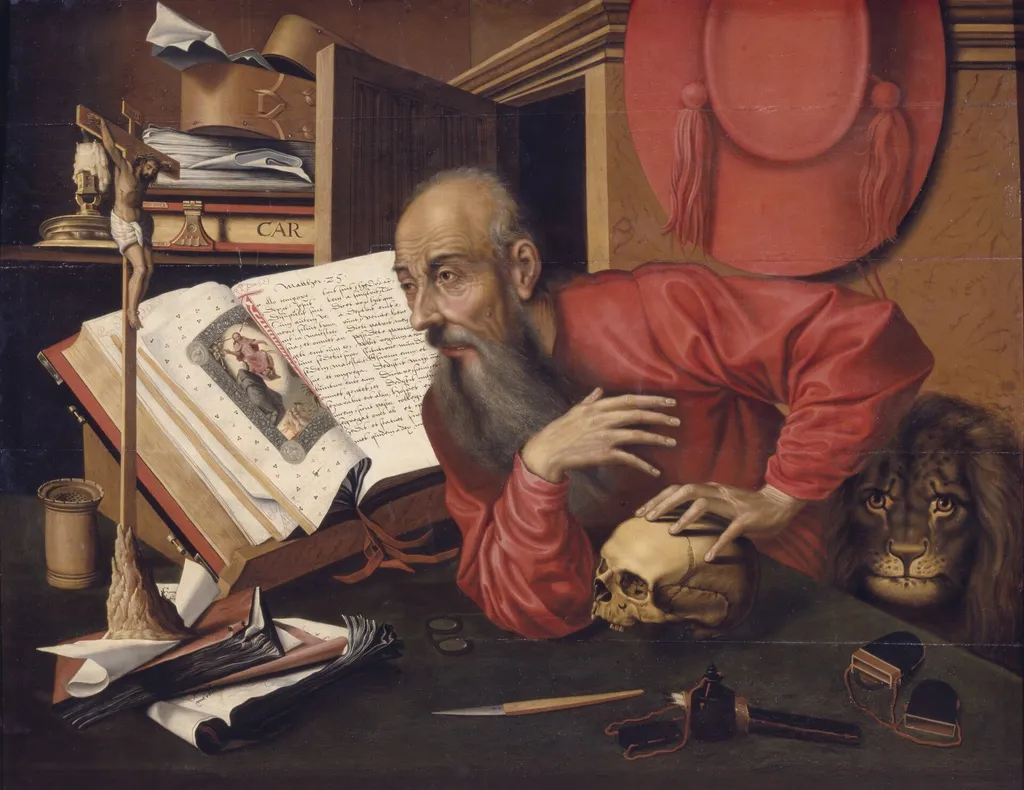
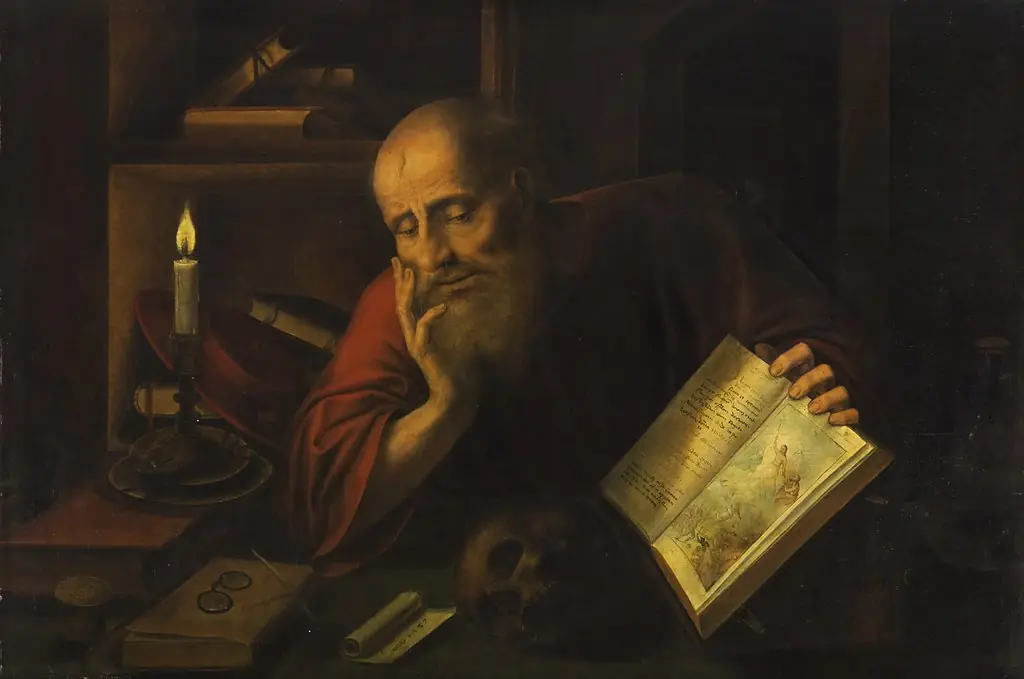
St Jerome is an oil painting by the Early Baroque Italian artist Unknown. It dates from 1537 and is held in the collection of the Nationalmuseum. This oil painting depicts Saint Jerome, a Church Father and biblical translator, seated at a cluttered desk in a quiet interior.
About this work
Overview
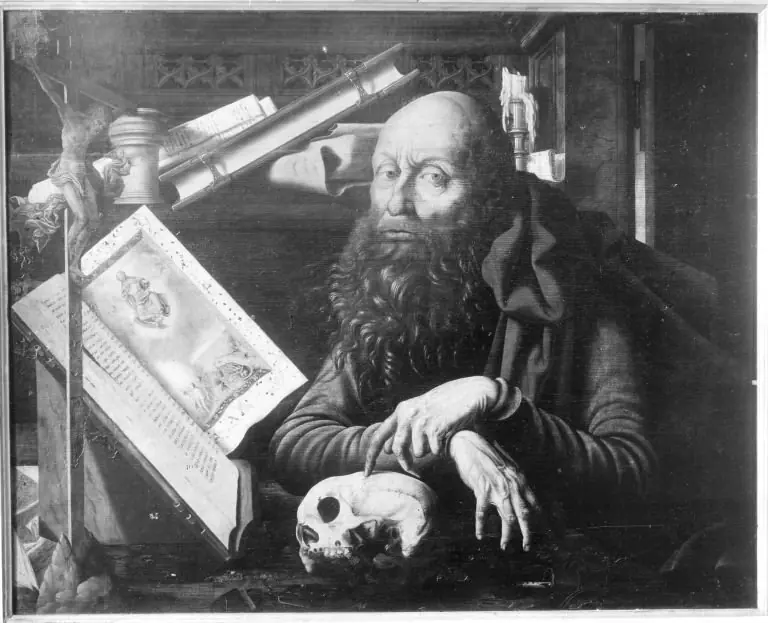
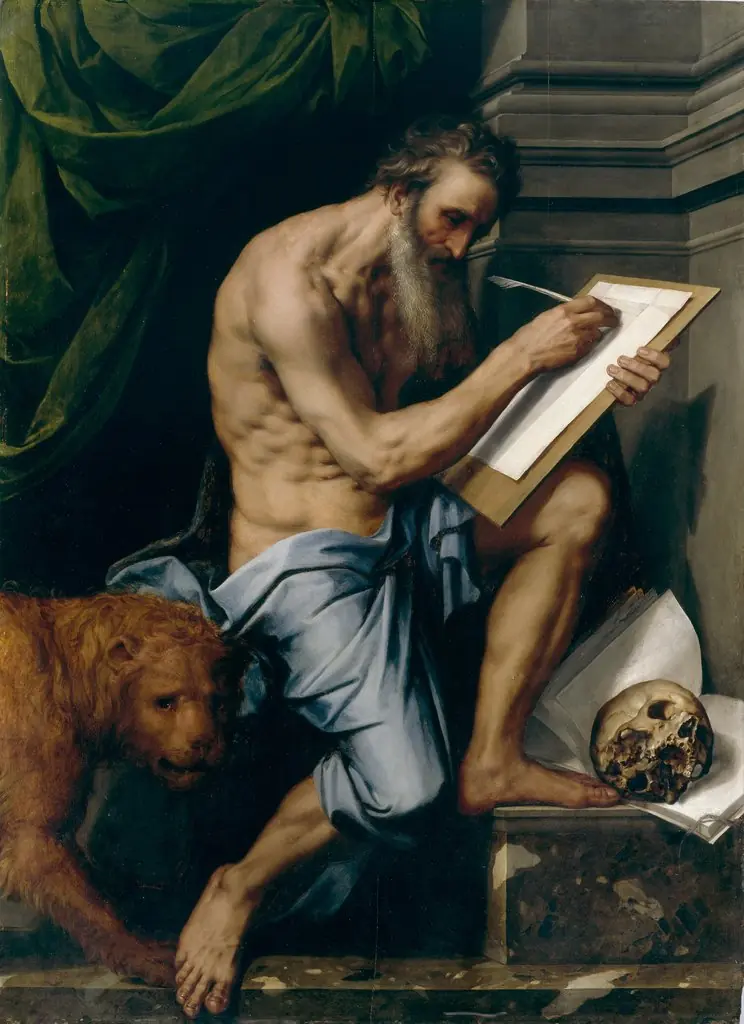
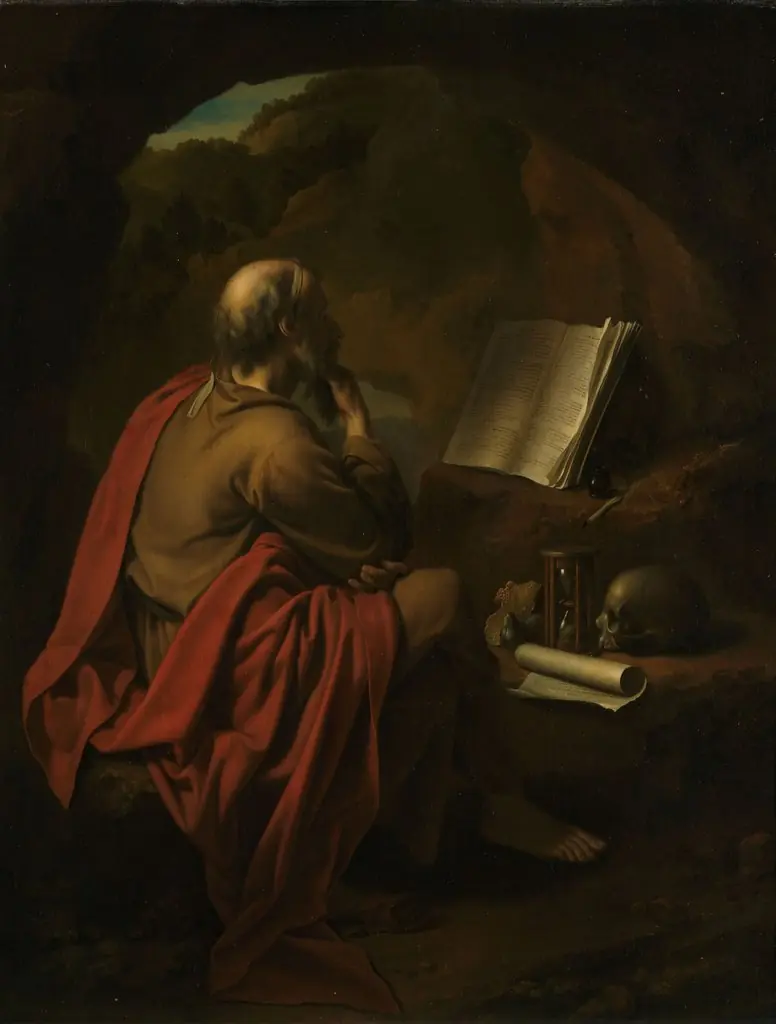
This oil painting depicts Saint Jerome, a Church Father and biblical translator, seated at a cluttered desk in a quiet interior. He wears a red robe and holds a skull in his right hand while resting his left on an open book. Surrounding him are scholarly objects—parchments, volumes, a crucifix, and a lion’s head—creating an atmosphere of focused solitude and intellectual devotion.
Subject & Meaning
The figure represents Saint Jerome, known for translating the Bible into Latin. The skull symbolizes mortality and the contemplation of death, common in devotional imagery of the period. The lion, traditionally linked to Jerome through legend, signifies loyalty and tamed passion. Together, these elements frame his life as one of scholarly discipline and spiritual introspection.
Technique & Style
The artist employs oil paint to render textures with subtle precision: the softness of fabric, the grain of wood, the sheen of metal on the crucifix. Light falls gently across the scene, modeling form without dramatic contrast. The composition is tightly arranged, emphasizing the intimacy of the space and the weight of quiet concentration over theatrical gesture.
History & Provenance
The painting’s early ownership is undocumented, but its style aligns with Northern European traditions of the late 15th or early 16th century. It likely originated in a devotional context, possibly commissioned for a private chapel or scholarly collection. Its survival suggests it was valued for its spiritual and intellectual resonance rather than public display.
Context
During the late Middle Ages and Renaissance, depictions of Saint Jerome in his study were common among humanist patrons. The scene reflected ideals of piety intertwined with learning, mirroring the era’s reverence for textual scholarship. Such images served both as models for contemplation and as affirmations of the sacred value of study.
Legacy
This painting contributes to a broader visual tradition of the scholar-saint, influencing later depictions of intellectual devotion in Western art. Its restrained tone and symbolic clarity helped define how religious figures were portrayed in private, contemplative settings, reinforcing the connection between spiritual life and scholarly practice.
Artist & collection

 Domestic Scene
 Giacomo and Cardinal Marco, investing Andrea, Abbot of San Zeno, with his Benefice
 The Nymph of Fontainebleau
 Portrait of a Woman
 Madonna and Child with Saints in the Enclosed Garden
 Venus and Minerva
 Family Group of Four on Sofa
 Wall painting from Room H of the Villa of P. Fannius Synistor at Boscoreale