Artwork
Portraits of Queen Petronila of Aragon and Count Ramón Berenguer IV of Barcelona
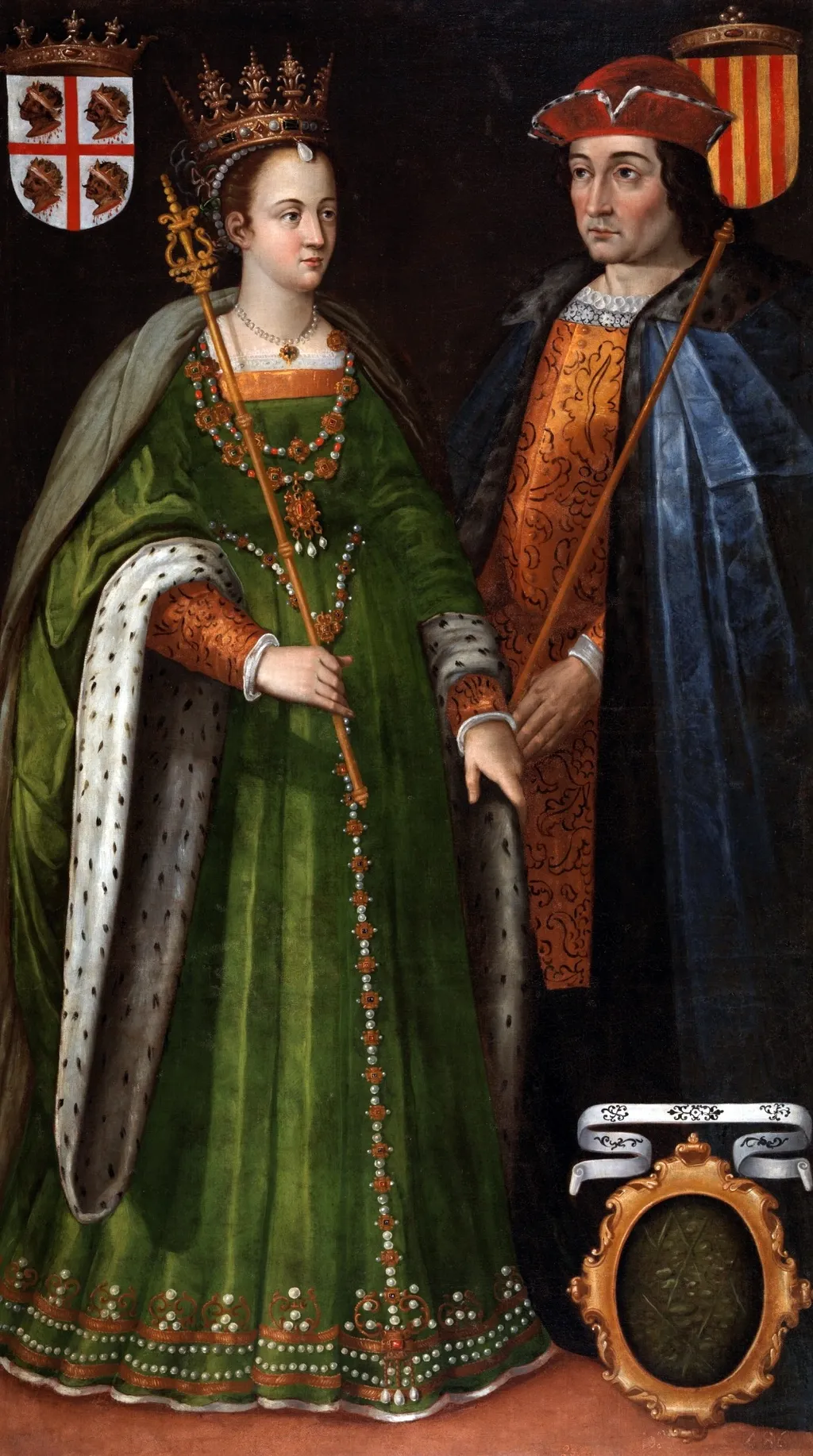
Portraits of Queen Petronila of Aragon and Count Ramón Berenguer IV of Barcelona is an oil painting by the Early Baroque Italian artist Unknown. It dates from 1634 and is held in the collection of the Museo del Prado.
About this work
Overview
The oil painting presents two medieval figures in regal attire: a woman in a green gown trimmed with gold, crowned and draped with a fur-lined mantle, holding an ornate scepter; beside her stands a man wearing a striped red cap, an orange doublet and a blue cloak. A shield bearing a cross and a smaller framed portrait rest on a table behind them, emphasizing their noble status.
Subject & Meaning
The sitters are identified as Queen Petronila of Aragon and Count Ramón Berenguer IV of Barcelona, partners whose marriage united two powerful Iberian realms in the 12th century. Their joint depiction underscores political alliance, with the queen’s scepter symbolising sovereign authority and the heraldic elements on their headgear referencing their respective dynastic arms.
Technique & Style
Executed in oil on panel, the work employs chiaroscuro to model the figures, using contrasts of light and shadow to give volume to the fabrics and facial features. The rich coloration—emerald, gold, orange and blue—highlights the sumptuous court dress, while the detailed rendering of textiles and metalwork reflects the period’s attention to material splendor.
History & Provenance
The painting’s provenance traces to the royal collections of Aragon, later entering museum holdings through 19th‑century acquisitions. Documentation links it to a series of portrait commissions intended to legitimize the dynastic union, though the exact date of execution remains uncertain, with scholars placing it in the late 12th or early 13th century.
Context
Created during a time when portraiture served diplomatic purposes, the image functions as both a visual record and a political statement. The inclusion of heraldic symbols and the shared throne-like setting reflect contemporary conventions for representing sovereign partners, reinforcing the narrative of a unified rule over Aragon and Barcelona.
Legacy
The portrait has informed later representations of Petronila and Berenguer, becoming a reference point for historians studying medieval Iberian iconography. Its survival offers insight into early oil techniques in the region and continues to be cited in scholarly discussions of royal portraiture as a tool of statecraft.
Artist & collection

 Domestic Scene
 Giacomo and Cardinal Marco, investing Andrea, Abbot of San Zeno, with his Benefice
 The Nymph of Fontainebleau
 Portrait of a Woman
 Madonna and Child with Saints in the Enclosed Garden
 Venus and Minerva
 Family Group of Four on Sofa
 Wall painting from Room H of the Villa of P. Fannius Synistor at Boscoreale
 Mary of Portugal (1527–1545)
 Portrait of Doedt van Holdinga (1570-1646)
 Anna of Denmark, Duchess of Saxony
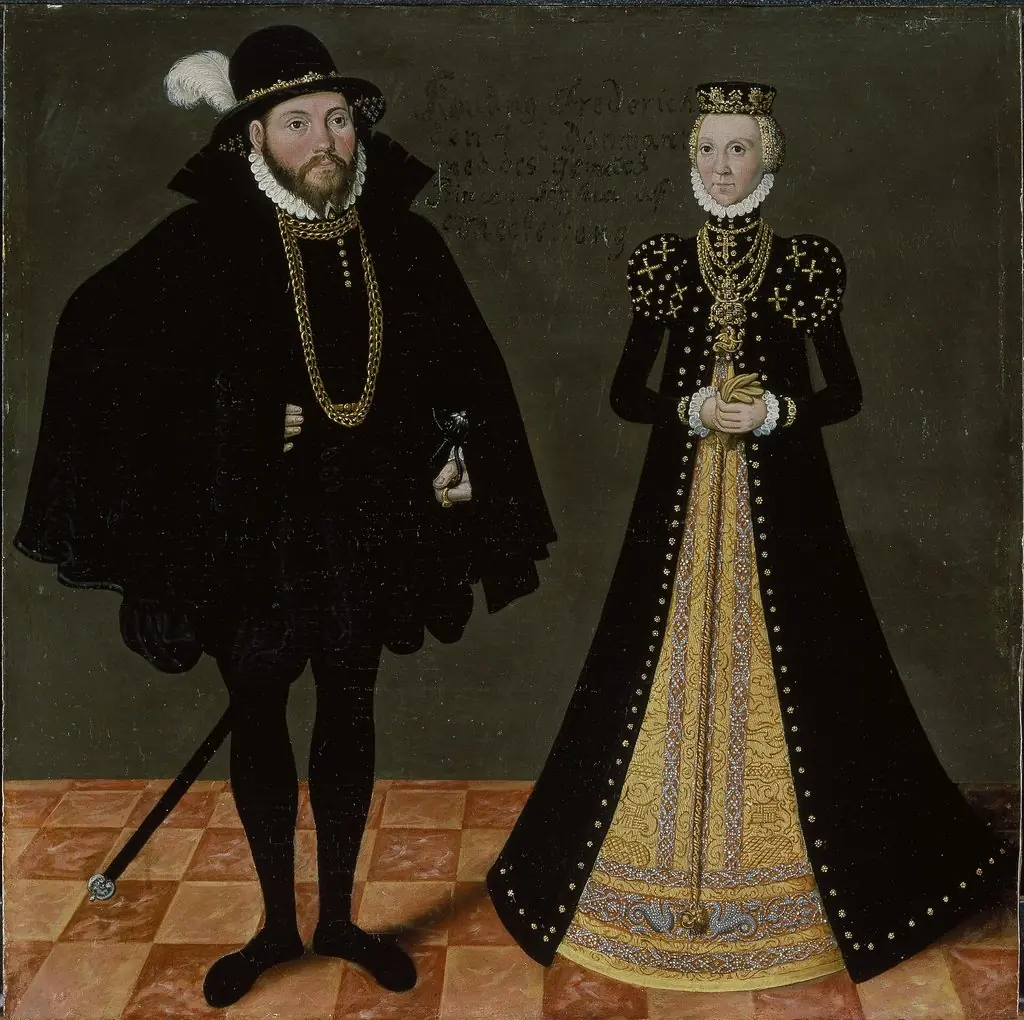 Okänt tyskt furstepar
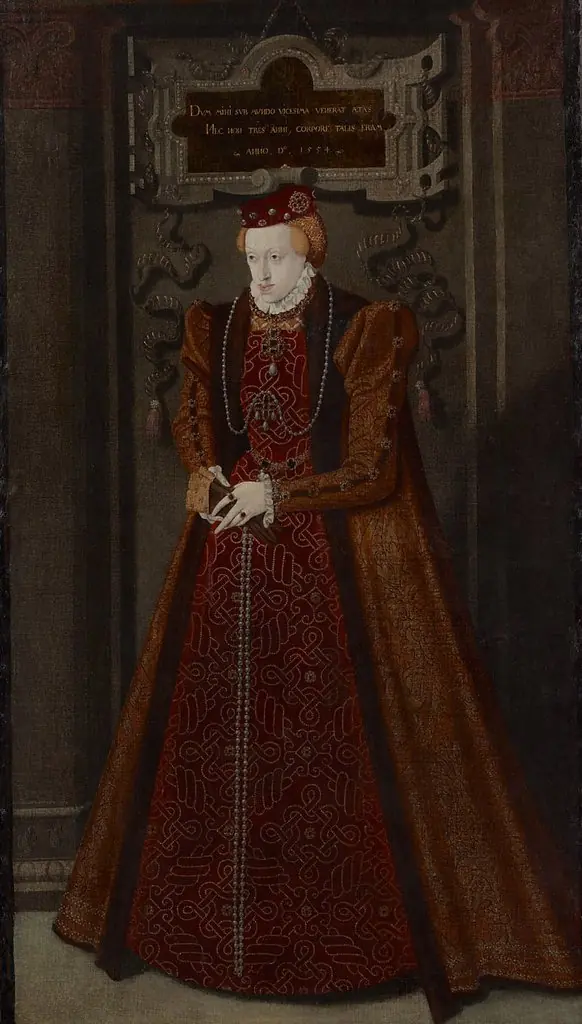 Erzherzogin Maria (1531-1581), Herzogin von Jülich - Cleve - Berg, Bildnis in ganzer Figur
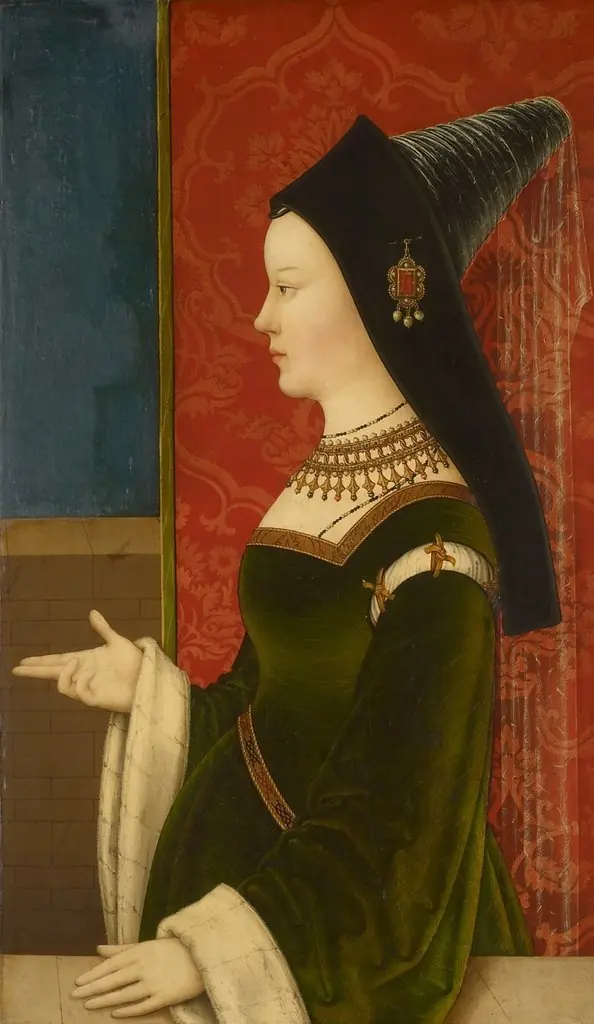 Mary Duchess of Burgundy
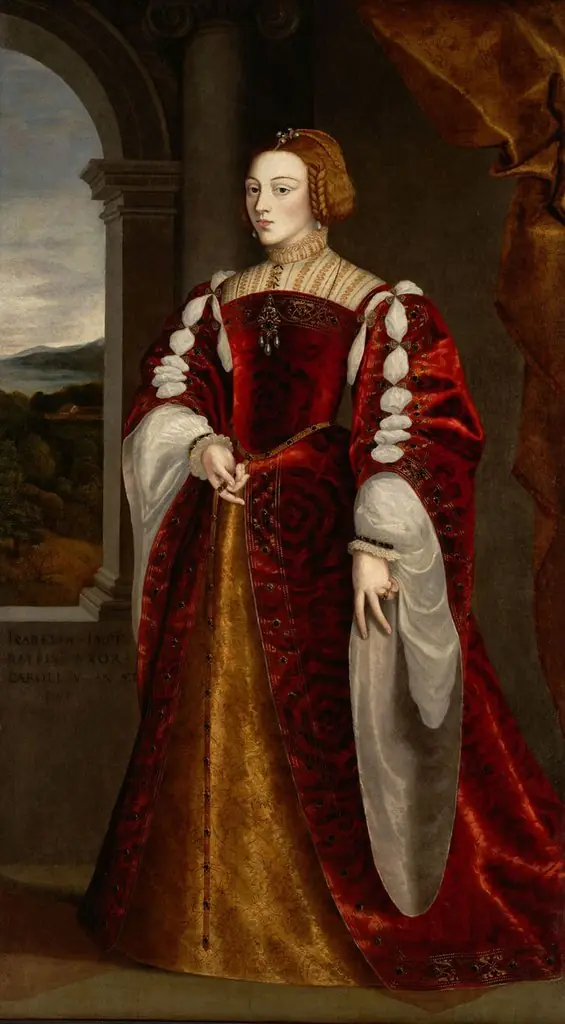 Isabella of Portugal (1503-1539), Holy Roman Empress
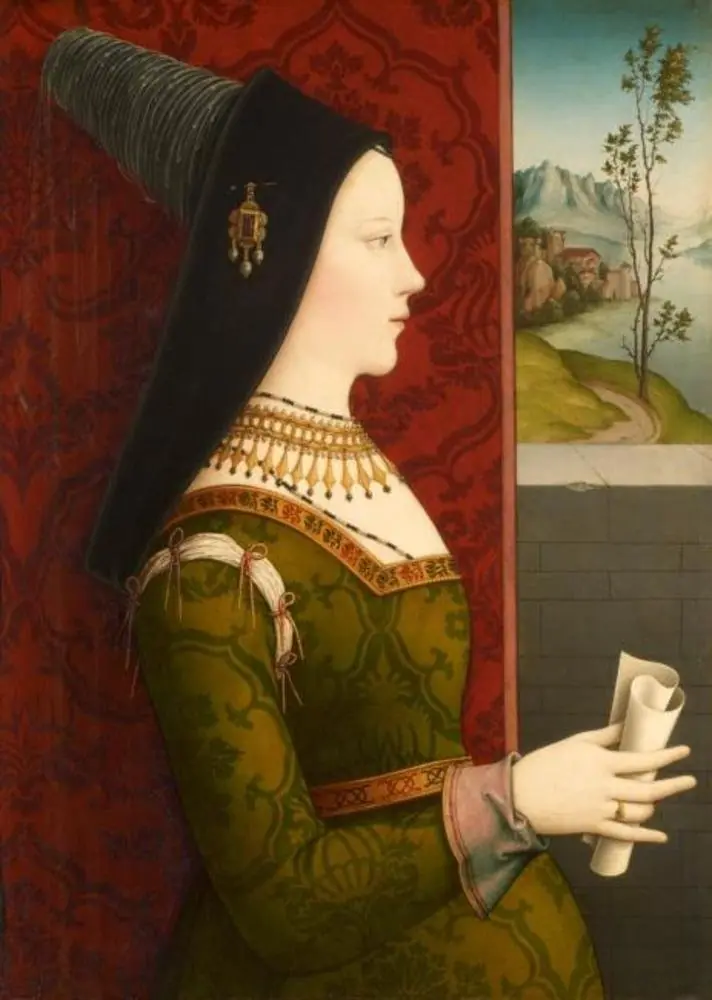 Portrait of Mary of Burgundy
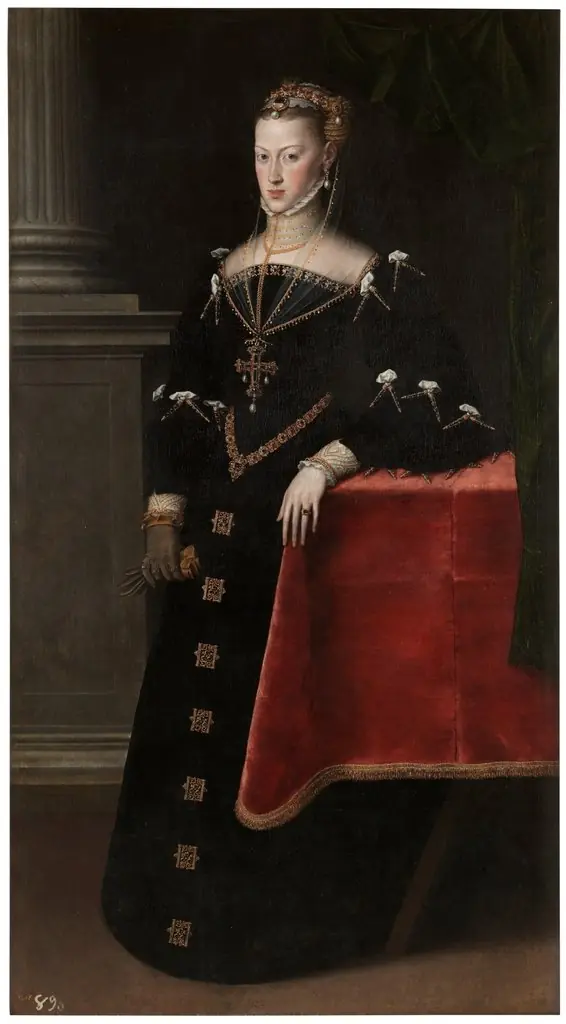 Empress Maria of Austria, Wife of Maximilian II
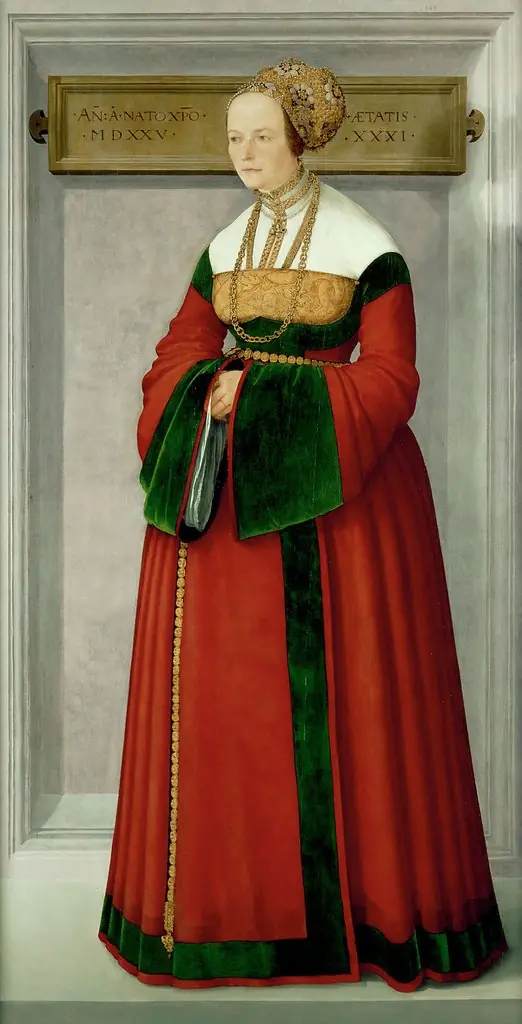 Portrait of a Woman