Artwork
A Virgem e o Menino, Santos e Episódios do Calvário e da Anunciação
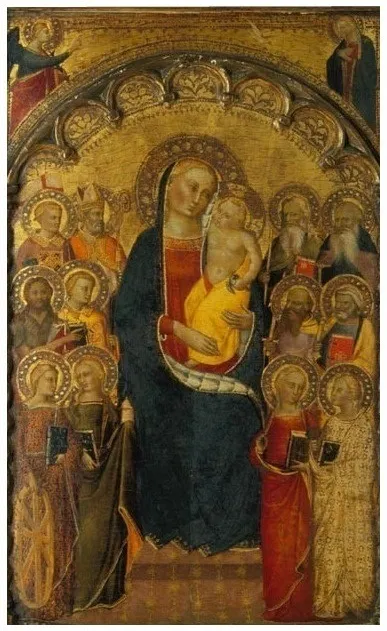
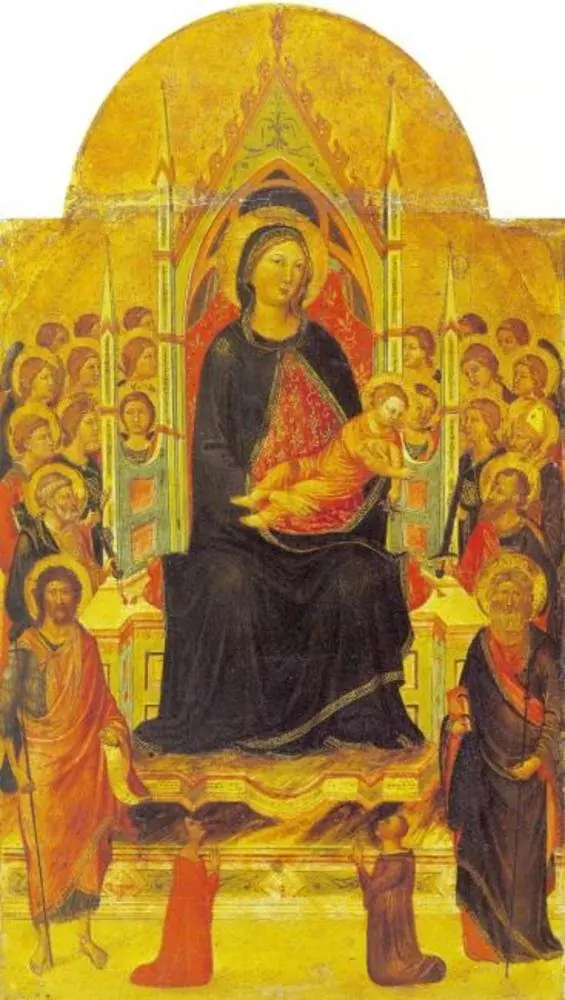
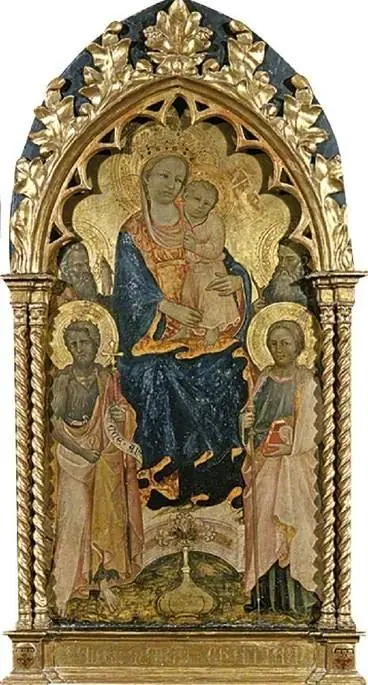
A Virgem e o Menino, Santos e Episódios do Calvário e da Anunciação is a tempera painting by Unknown. It dates from 1400 and is held in the collection of the National Museum of Ancient Art. The work presents the Virgin Mary cradling the infant Jesus, encircled by a gathering of saints and angels.
About this work
Overview
The work presents the Virgin Mary cradling the infant Jesus, encircled by a gathering of saints and angels. The figures are arranged in a semi‑circular composition beneath an elaborately decorated archway, creating a focal point on the central mother‑child pair. The palette combines gold, red and blue, lending depth and a luminous quality to the scene.
Subject & Meaning
The painting emphasizes the intercessory role of Mary, surrounded by holy figures who reinforce her status as the mother of Christ. The inclusion of saints and celestial beings underscores themes of devotion and protection, while the archway suggests a sacred space, framing the divine interaction between mother and child within a heavenly context.
Technique & Style
Executed in tempera, the piece benefits from the medium’s quick‑drying, matte finish, which imparts a warm glow and fine detail.
Executed in tempera, the piece benefits from the medium’s quick‑drying, matte finish, which imparts a warm glow and fine detail. The artist employs layered pigments to achieve subtle tonal variations, while the use of gold leaf highlights architectural elements and enhances the sense of reverence. The composition balances linear arrangement with a gentle curvature, characteristic of late medieval devotional panels.
Context
Such depictions of the Virgin and Child accompanied by saints were common in liturgical settings, serving both as objects of veneration and didactic tools. The ornate arch and the rich coloration reflect the aesthetic preferences of a period that valued visual splendor to inspire contemplation, situating the work within a broader tradition of religious panel painting.
Artist & collection

 Domestic Scene
 Giacomo and Cardinal Marco, investing Andrea, Abbot of San Zeno, with his Benefice
 The Nymph of Fontainebleau
 Portrait of a Woman
 Madonna and Child with Saints in the Enclosed Garden
 Venus and Minerva
 Family Group of Four on Sofa
 Wall painting from Room H of the Villa of P. Fannius Synistor at Boscoreale
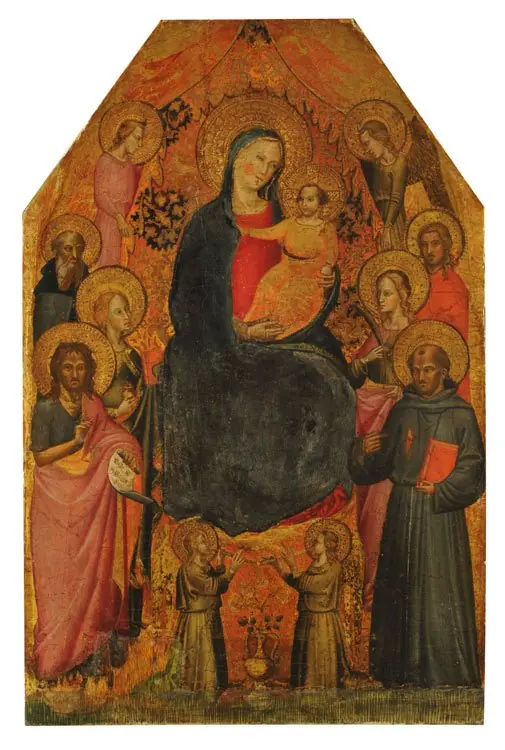 Virgen y Niño rodeados de santos y ángeles
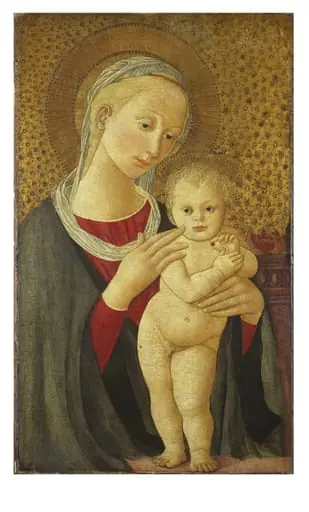 The Virgin and Child
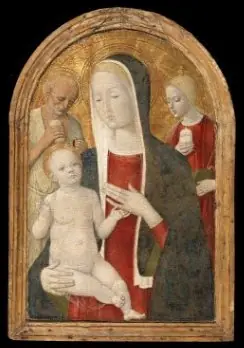 The Virgin and Child with Saints Jerome and Mary Magdalene
 Madonna and Child (78.151.9)
 Virgin and Child with Annunciation
 Virgin and Child
 Madonna and Child Enthroned with Angels, Saints and Donors
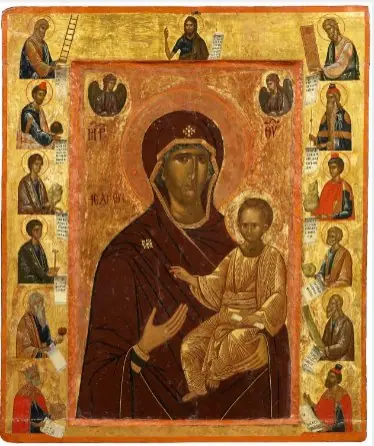 The Virgin and Child, Saint John the Baptist and Prophets
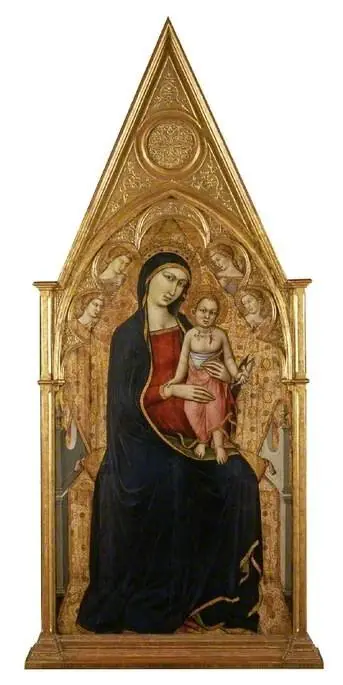 Virgin and Child enthroned
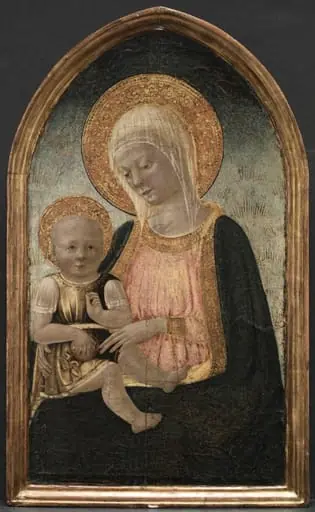 Virgin and Child
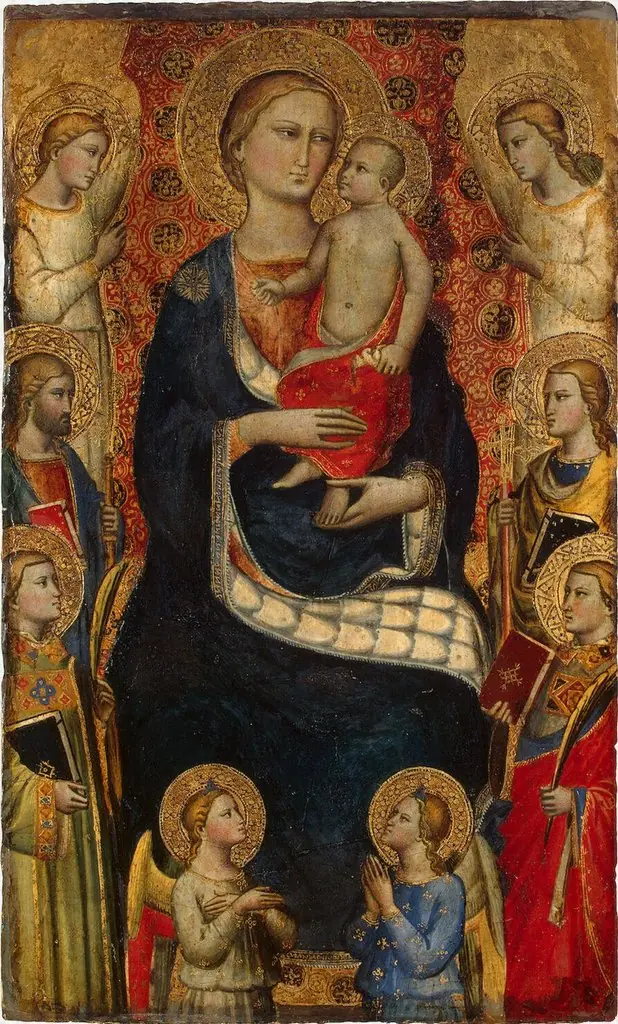 Madonna and Child, Four Saints and Four Angels
 Virgin and Child with SS. John the Baptist, James, Andrew and (?) Anthony Abbot