Artwork
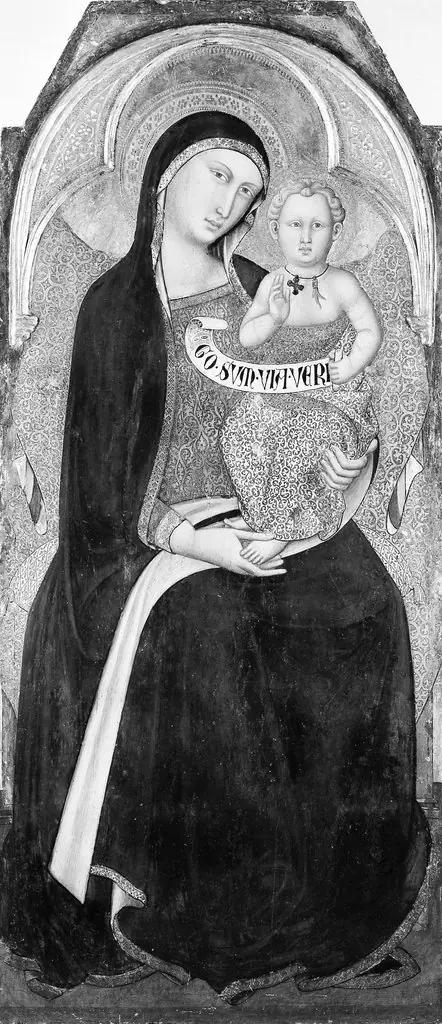
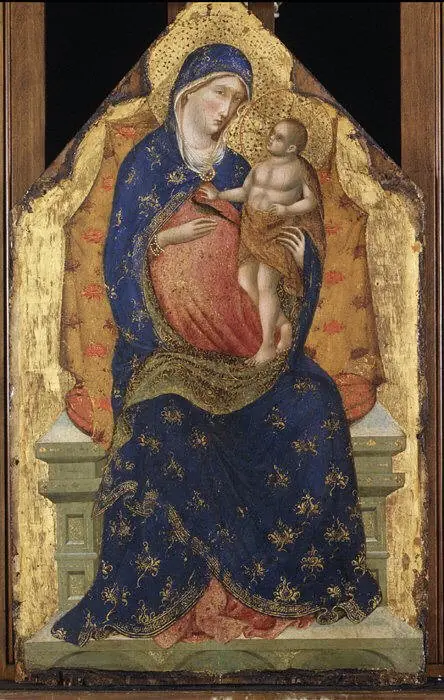
Virgin and Child enthroned
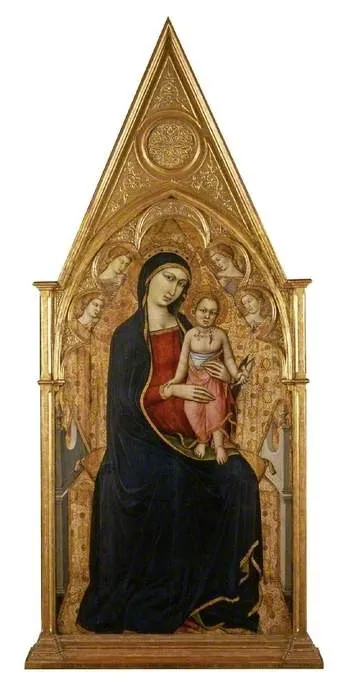
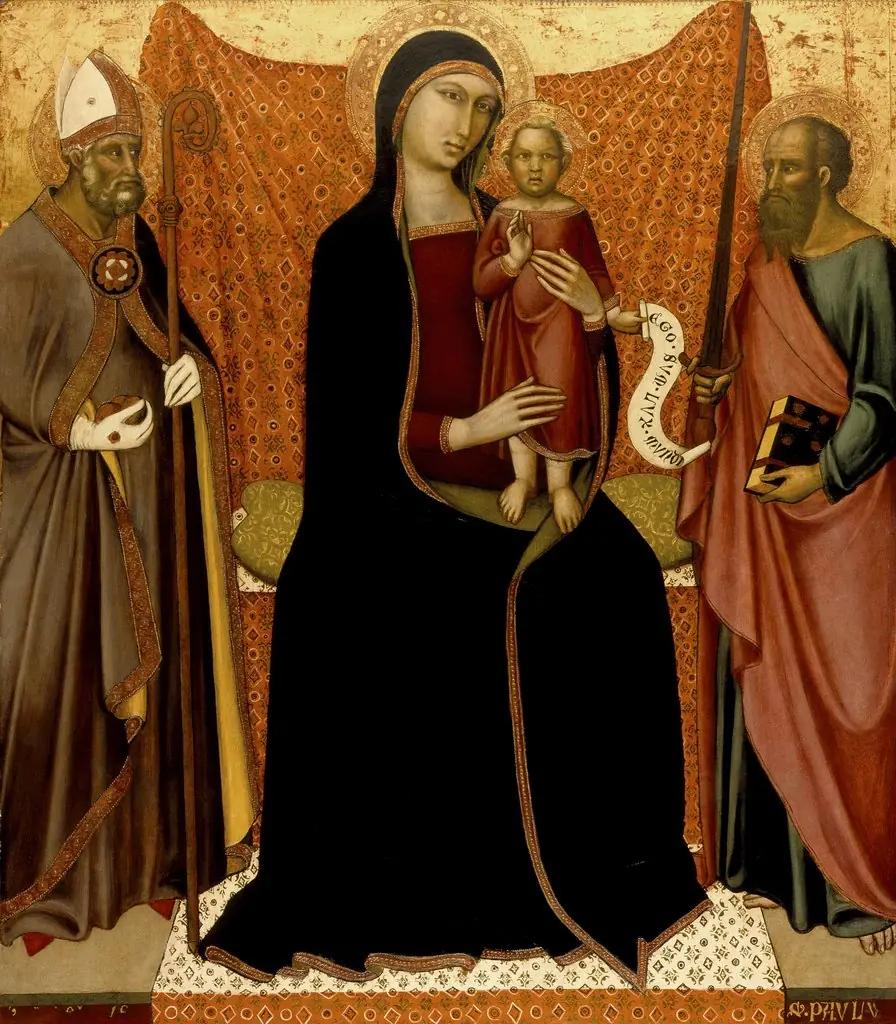
Virgin and Child enthroned is an unspecified painting by the Byzantine icon painting artist Luca di Tommè. It dates from 1368 and is held in the collection of the Fitzwilliam Museum.
About this work
Overview
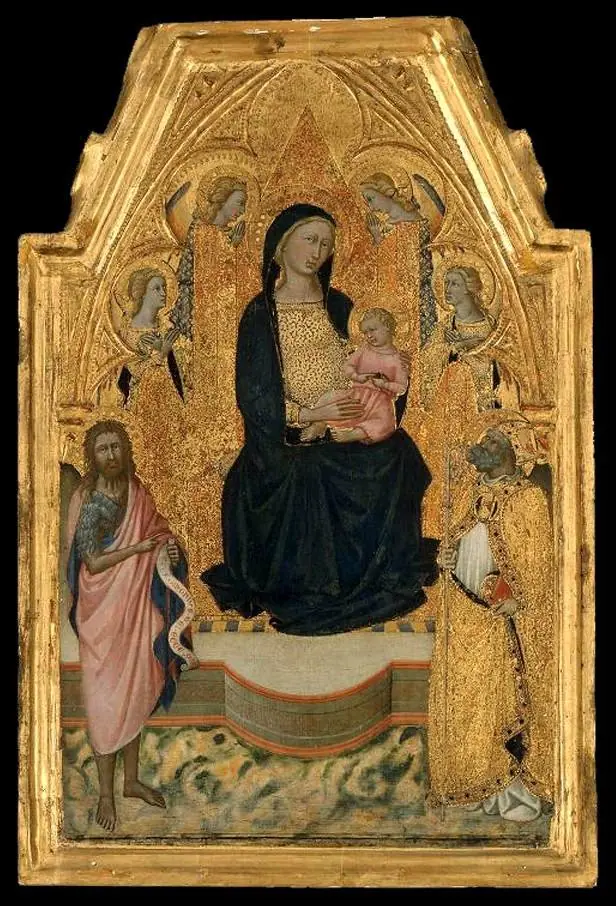
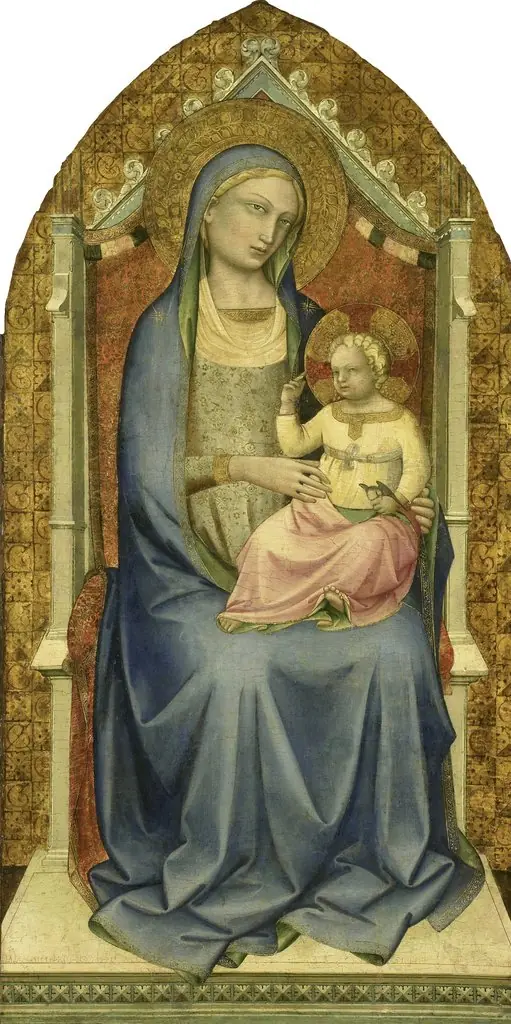
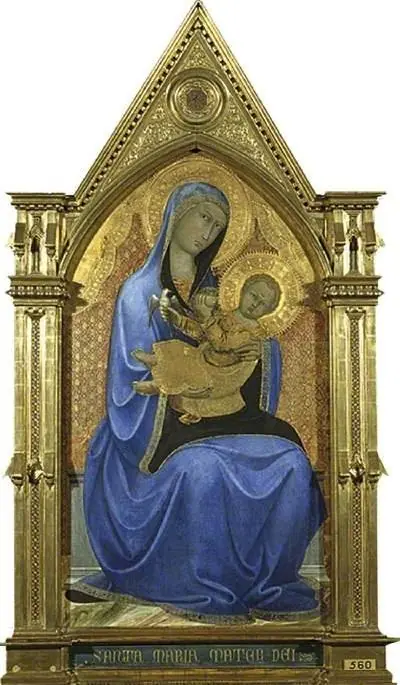
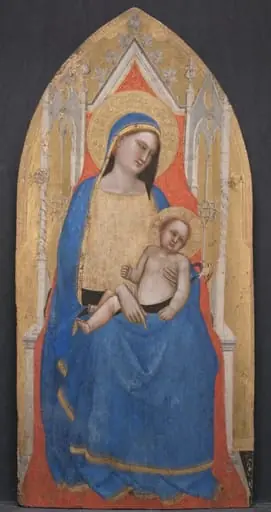
Created in 1368 by the Sienese painter Luca di Tommè, this tempera on wood panel presents the Virgin Mary enthroned with the infant Christ. The work exemplifies the decorative aesthetic of 14th‑century Siena, a tradition inherited from masters such as Duccio and Simone Martini, and is now part of the Fitzwilliam Museum’s collection.
Subject & Meaning
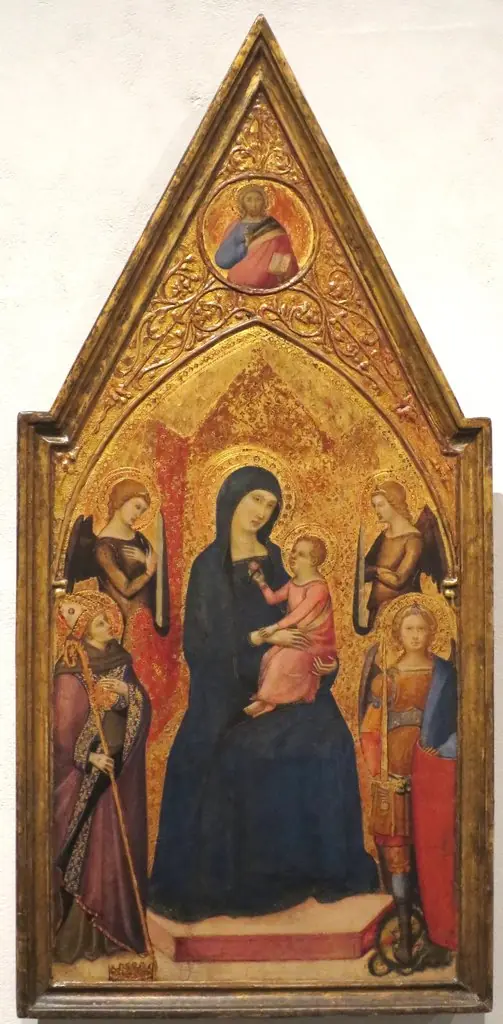
The composition follows Byzantine iconography, showing Mary seated on a richly carved throne, her dark blue mantle draped over a red under‑garment, while the Christ Child is swaddled in pink cloth with a white band across his chest. The scene emphasizes the sacred bond between mother and son, a common devotional theme in medieval art.
Technique & Style
Executed in tempera, the painting displays the luminous, flat color fields and intricate gold detailing typical of Sienese workshops. The background consists of a gold ground enlivened by delicate ornamental patterns, and a gilded architectural frame rises above the figures, reinforcing the celestial setting.
History & Provenance
Luca di Tommè was active in Siena between 1356 and 1389, producing more than fifty works attributed to him. This panel, dated to 1368, survived the centuries and entered the Fitzwilliam Museum, where it remains on display as part of the institution’s medieval Italian holdings.
Artist & collection
Artist
Luca di Tommè (or Luca Thome) (c. 1330–1389) was an Italian painter active between 1356 and 1389 in Siena. He worked in the style established by earlier Sienese painters Duccio, Simone Martini, Pietro Lorenzetti and…