Artwork
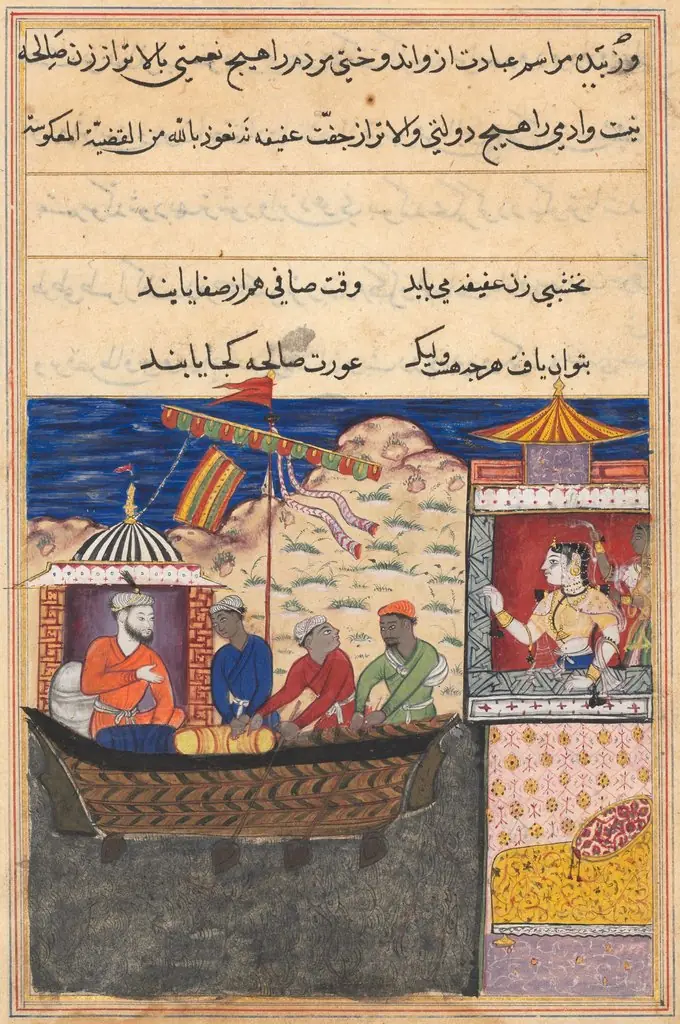
The young man of Baghdad reveals his true identity to the Hashimi, from a Tuti-nama (Tales of a Parrot: Forty-eighth Night
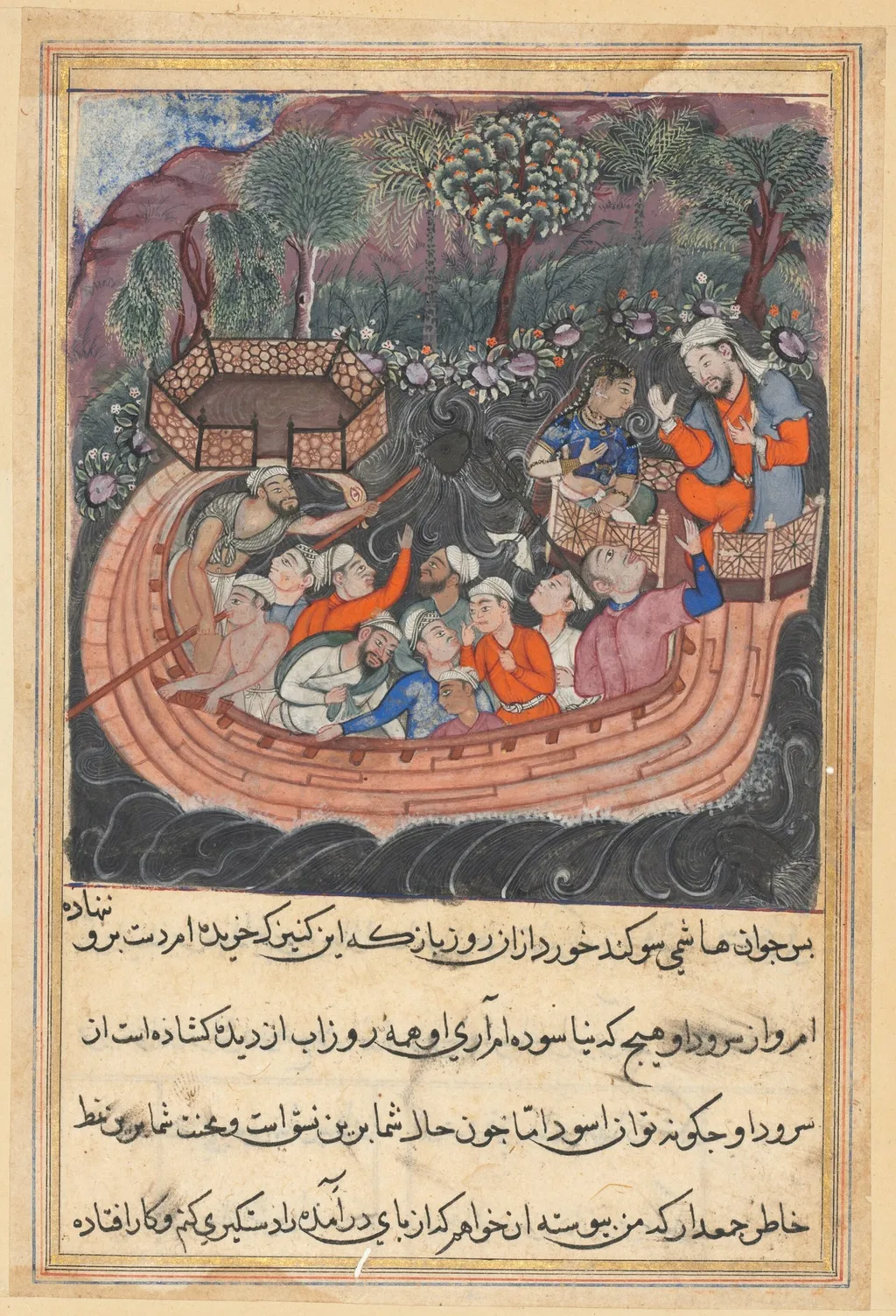
The young man of Baghdad reveals his true identity to the Hashimi, from a Tuti-nama (Tales of a Parrot: Forty-eighth Night is an unspecified painting. It dates from 1560 and is held in the collection of the Cleveland Museum of Art.
About this work
Overview
The work, titled *The Young Man of Baghdad Reveals His True Identity to the Hashimi*, is a miniature painting taken from the Persian manuscript *Tuti‑nama* (Tales of a Parrot), night forty‑eight of the collection. Executed on paper with opaque water‑based pigments, the image portrays a white‑turbaned figure in a blue robe seated in a boat, surrounded by attendants of varied dress, against a watery landscape punctuated by trees and a distant structure.
Subject & Meaning
The scene illustrates a narrative moment in which a youthful protagonist discloses his concealed lineage to the Hashimi, a figure of authority.
The scene illustrates a narrative moment in which a youthful protagonist discloses his concealed lineage to the Hashimi, a figure of authority. The composition emphasizes the tension between revelation and concealment, using the boat as a liminal space that separates the protagonist from the onlookers, while the surrounding foliage and architecture suggest a broader urban setting typical of Baghdad’s imagined geography.
Technique & Style
The artist employs the traditional Persian miniature technique, layering finely ground mineral and plant pigments to achieve luminous blues, greens, and earthy browns. Delicate brushwork renders intricate patterns on the garments and the boat’s hull, while subtle gradations of light and shadow create a sense of atmospheric depth uncommon in earlier manuscript illustrations. The careful delineation of facial features and gestures reflects the courtly aesthetic of the late Safavid period.
History & Provenance
The miniature originates from a 17th‑century illustrated manuscript now housed in the Cleveland Museum of Art. The manuscript was likely produced in a workshop associated with the Persian court, where *Tuti‑nama* was a popular literary source. The painting entered the museum’s collection through a mid‑20th‑century acquisition, documented in the museum’s accession records as part of a larger purchase of Persian illustrated books.
Context
*Tuti‑nama* belongs to a genre of Persian storytelling that blends moral instruction with entertainment, often featuring animal narrators like the titular parrot. The depicted episode reflects the text’s focus on identity, loyalty, and the complexities of social hierarchy in an imagined Baghdad. Such illustrations served both decorative and didactic purposes, guiding readers through the narrative while showcasing the visual sophistication of courtly art.
Artist & collection

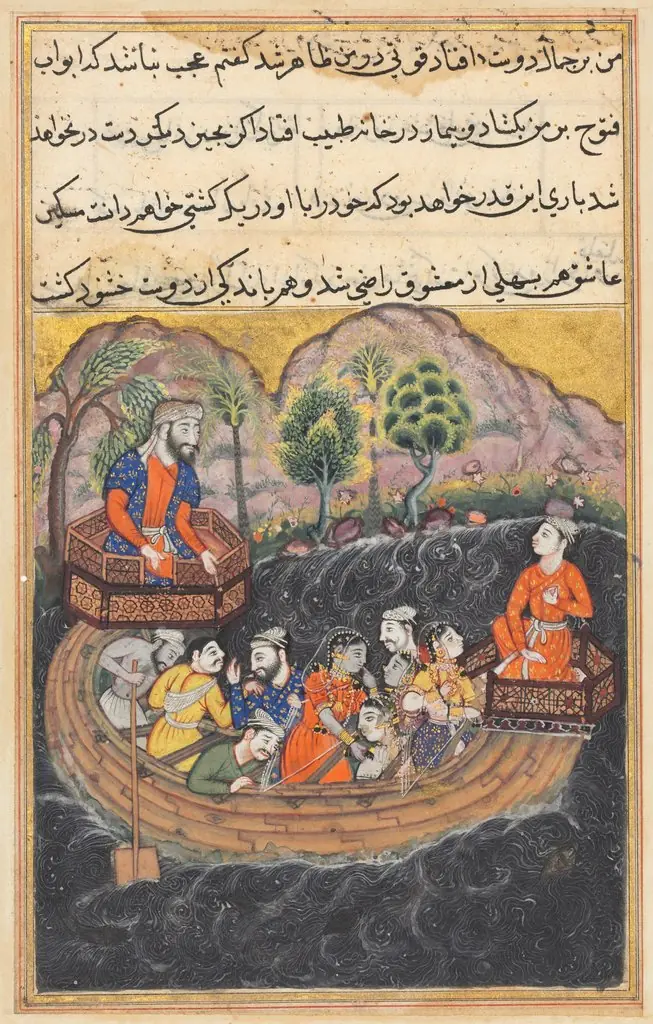 The young man of Baghdad joins the Hashimi’s boat as a sailor to find his slave-girl on board, from a Tuti-nama (Tales of a Parrot): Forty-eighth Night
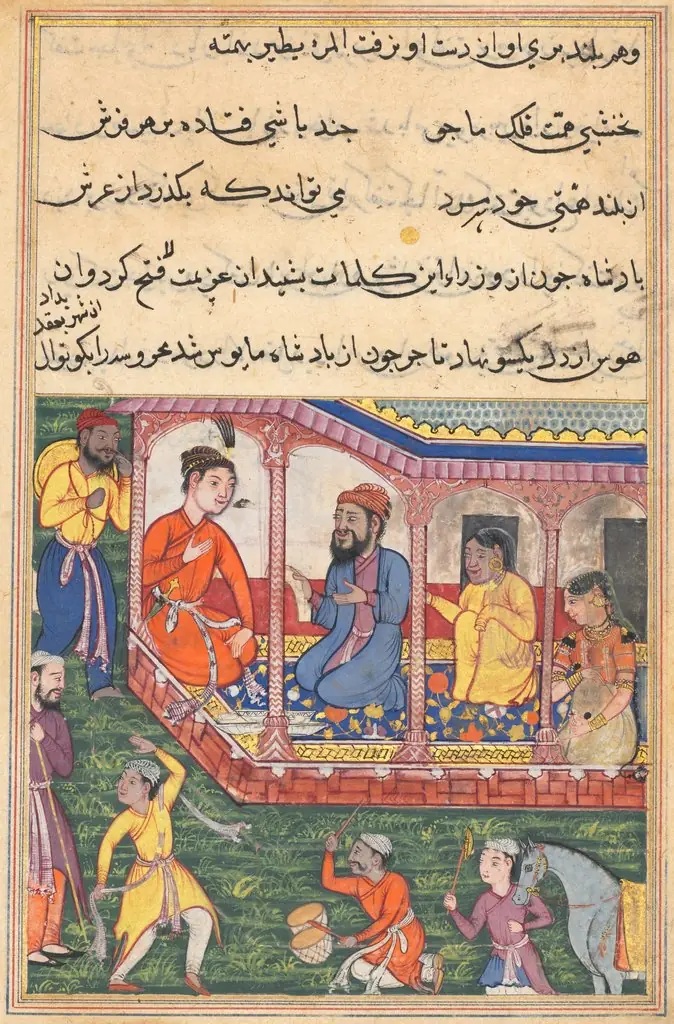 Mahrusa’s marriage to the prefect of the city, from a Tuti-nama (Tales of a Parrot): Thirty-sixth Night
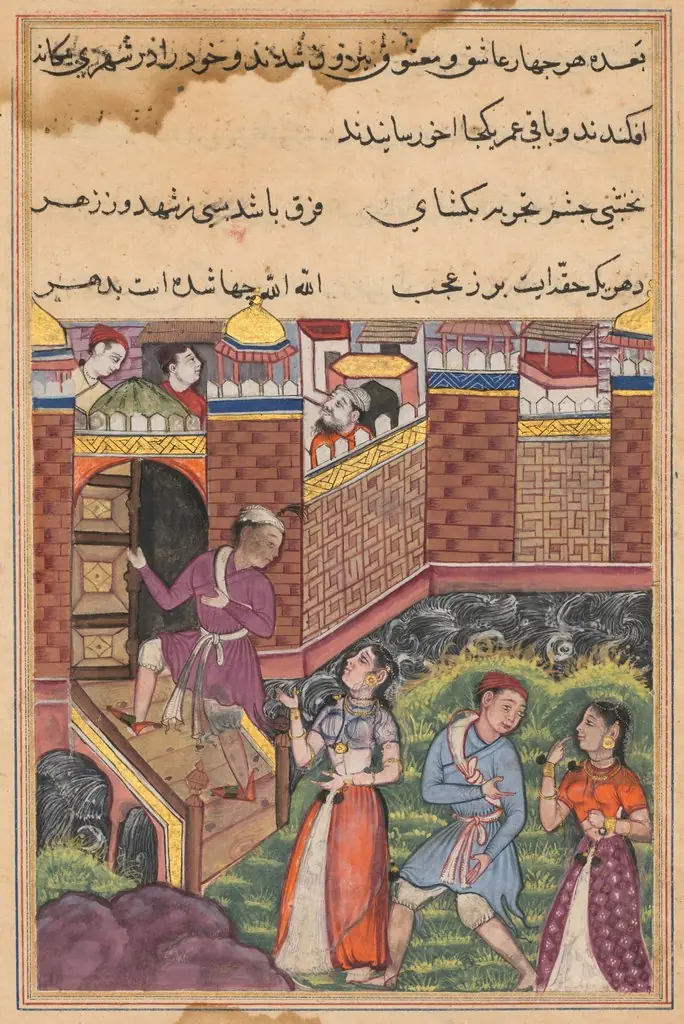 The two couples reach a foreign city where they make their home, from a Tuti-nama (Tales of a Parrot): Thirty-third Night
 The merchant Mansur departs on a sea voyage, leaving his wife behind, from a Tuti-nama (Tales of a Parrot): Seventeenth Night